During China's Golden Week holiday, Nio and BYD networks withstood peak loads, but with different infrastructure utilization efficiencies. On October 5, Nio battery swap stations performed 183,664 operations, while BYD's ultra-fast charging stations serviced 188,344 vehicles. At the same time, BYD had 12,165 charging stations, and Nio had 4,168 battery swap stations.
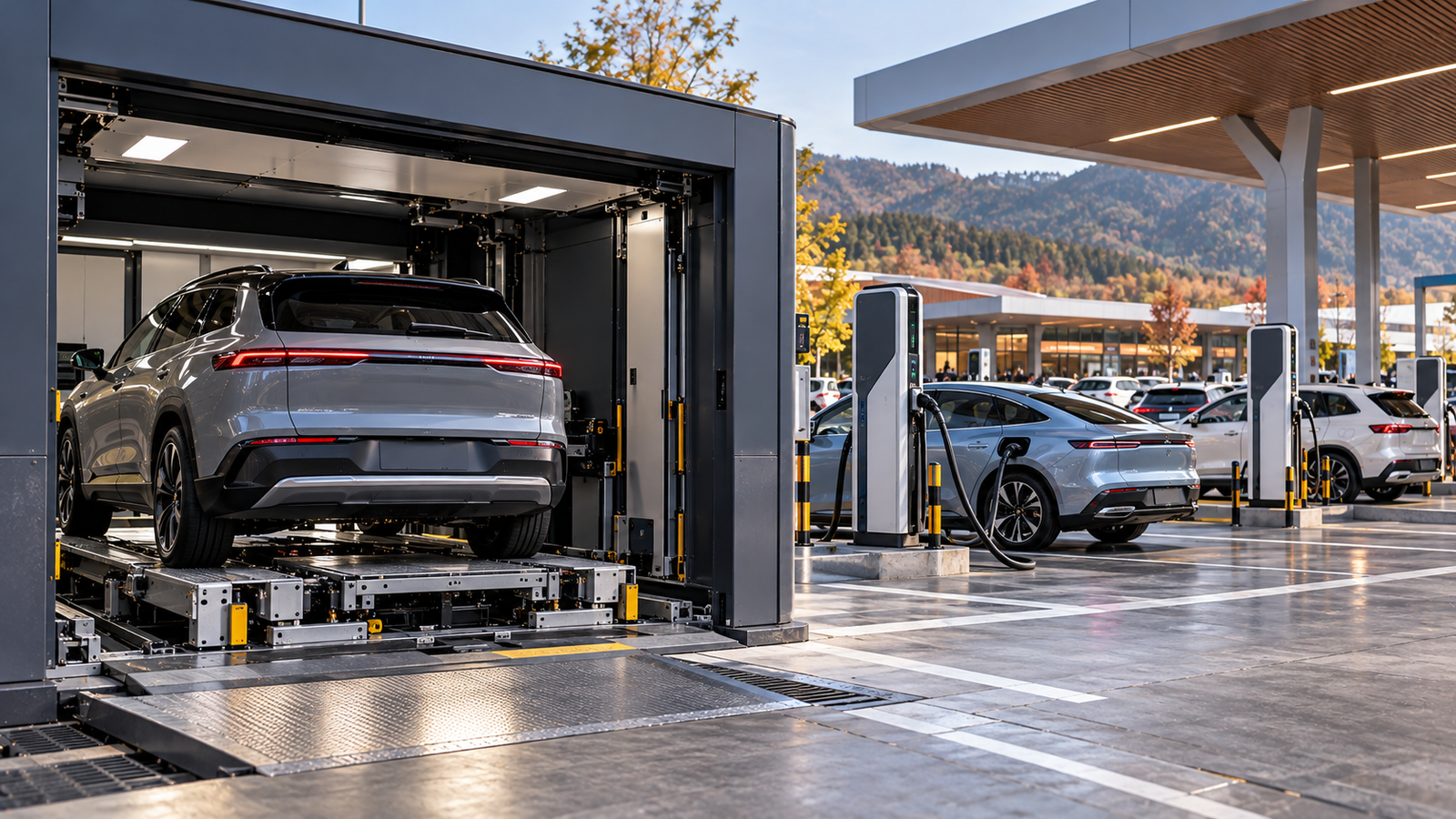
Per point, the result was about 44 battery swaps per day for Nio versus 15.5 charging sessions for BYD. The difference is approximately 2.8 times. The busiest Nio station performed 211 swaps in a day, while one BYD charging connector serviced up to 74 cars.
At Nio, the driver arrives at a station where a robotic system replaces a discharged battery with a charged one. The fourth generation of stations stores up to 23 batteries, and the stated performance reaches 480 swaps per day. Such infrastructure requires a stock of batteries and complex equipment, but it allows servicing vehicles without waiting for the charging to complete.
BYD relies on ultra-fast charging. Its network conducted over 1.22 million charging sessions and served over 540 thousand users during the holiday week. The company plans to increase the number of such stations in China to 20 thousand by the end of 2026. Unlike Nio's battery swap network, BYD chargers are also available to some electric vehicles of other brands, although not all models support maximum power.
Read more materials:
- Chinese brands occupied a third of the Paris Motor Show
- Tesla figured out how to press an electric car to the road with fans
- Jeff Bezos suggested to Ferrari the idea of the first electric car back in 2016