BMW has been studying the odors of car interiors for more than 25 years. To do this, the company uses specialized laboratories in Munich, opened in 1999, and Shenyang, China, operating since 2014. A team of specialists, informally referred to as the “team of noses,” tests materials and components, evaluating their odor under various conditions. Special attention is paid to the summer heating of the cabin: high temperatures can intensify the release of volatile organic compounds from plastic, glue, upholstery, and other elements.
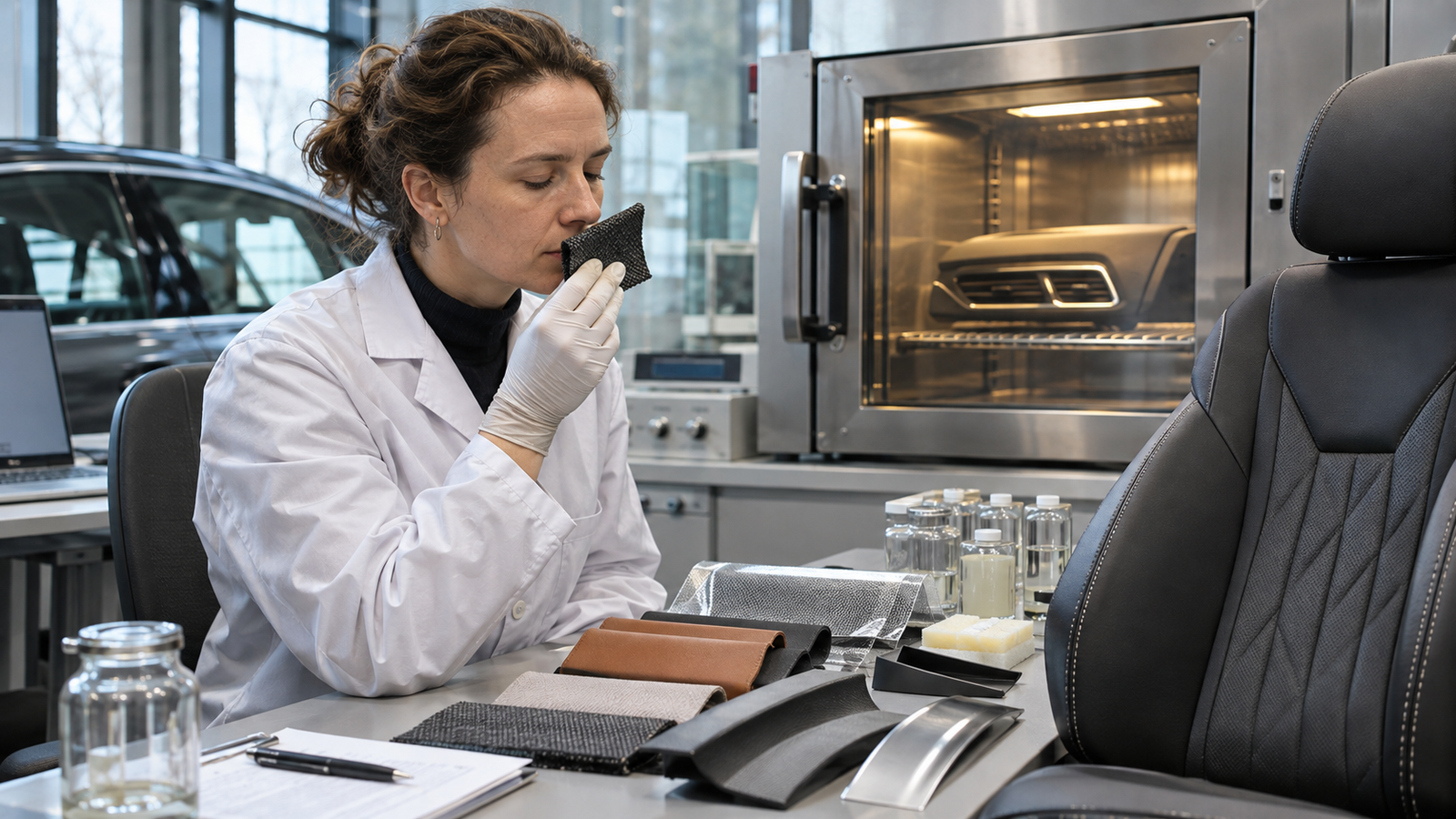
The testing takes place in three stages. First, specialists examine individual materials in heating chambers that simulate conditions inside a warmed-up car. Then they evaluate large components—seats, door panels, and headliners. In the final stage, the entire cabin is inspected, as the combination of different materials can produce a scent that cannot be predicted from individual samples. Laboratory measurements of substance concentrations are supplemented by expert assessments: instruments determine the composition of the air, but cannot fully replace human perception of smell.
One of BMW’s goals is to reduce the emission of substances that affect interior air quality. In particular, the company is advancing the use of low-emission microfiber. Such materials help reduce the release of volatile organic compounds and do not contain animal-derived proteins, which can become a source of odor as natural leather ages. In the new Neue Klasse models, including the electric iX3, a multi-stage Nano Filter filtration system is also used.
The company aims to ensure the interior smells neutral and places no extra strain on passengers. This is especially important when the cabin heats up in the sun, when the intensity of the release of certain compounds can increase. At the same time, the presence of a characteristic smell does not in itself mean that the vehicle is hazardous: air quality should be assessed by the concentration of specific substances, rather than solely by sensory perception.