Choosing wheel rims is one of those tasks where a mistake can be costly. It's not just a decorative element that can change the appearance of a car, but an important technical component that directly affects the safety, reliability, and correct operation of many components.
Rims affect the car's behavior at speed, the operation of the braking system and suspension, tire wear, and even fuel consumption. An incorrect choice can lead to poor handling and additional stress on the chassis. That's why when buying, you should focus not only on the design, but also on strictly defined parameters.
Why you shouldn't choose rims spontaneously
An impulsive approach is unacceptable here. Each car has factory specifications that cannot be ignored. Even if you are looking for, for example, 14-inch alloy wheels in an online catalog, this parameter alone is clearly not enough. Diameter is just the tip of the iceberg.
The main mistake is trying to choose rims "by eye" or trusting the seller's argument that "it looks impressive." This approach can lead to technical problems after the first few kilometers.
Key parameters that cannot be missed
The diameter and width of the rim are indicated in inches. For passenger cars, sizes from 13 to 22 inches are most often used. The diameter must exactly match the tires recommended by the manufacturer. You can find it either in the owner's manual or on the tire marking itself. So, in the designation 205/55 R16, the number 16 is the diameter of the rim.
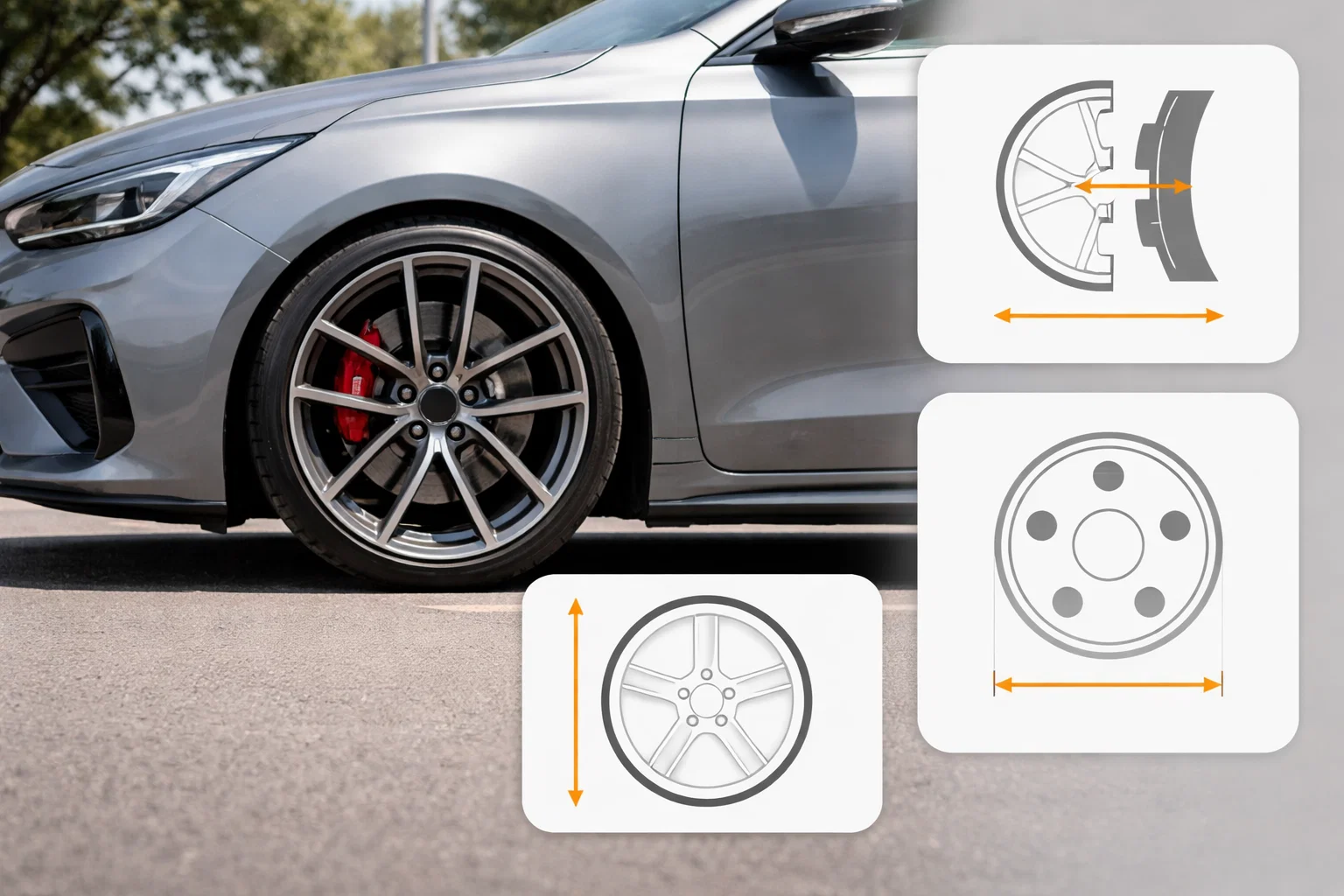
The offset, designated as ET, is no less important. This is the distance from the mounting plane of the rim to the hub to its center line, measured in millimeters. An incorrectly selected offset can cause the wheels to touch the suspension elements, increase the load on the hub bearings, change the steering geometry, and lead to uneven tire wear.
PCD and the number of mounting holes require special attention. These parameters are strictly individual for each car model. A marking of the form 5×112 means that the rim has five holes located on a circle with a diameter of 112 mm. If these data do not match the hub, installation is impossible.
The center bore of the rim (DIA) must also match the diameter of the hub. If the hole is larger, centering rings are used, but it is preferable to immediately select a rim with an exact match in size.
Rim construction and its features
According to the type of construction, rims are divided into stamped, cast and forged. Stamped versions are affordable and have good maintainability, but are inferior in weight and appearance. Alloy wheels are lighter and stiffer, and also offer more design solutions. Forged ones are considered the most durable and lightweight, but cost significantly more than the rest.
How to reduce the risk of error when buying
The first thing to do is check the car's documentation. The owner's manual or the factory plate in the doorway indicates all the permissible parameters of the rims. Next, it makes sense to check the marking: the main characteristics are applied to the inside of each rim, which are easy to compare with the manufacturer's requirements.
It is also important to consider the season of operation. For winter, many drivers prefer stamped rims - they are less sensitive to reagents and easier to repair after contact with curbs. In summer, alloy options are more often chosen, appreciating their appearance and better cooling of the brake mechanisms.
If in doubt, it is wiser to contact tire service specialists or managers of a specialized store. They will help you choose a set taking into account the specific car model and operating conditions.
Additional nuances that are often forgotten
You shouldn't chase the lowest price. Cheap, low-quality rims can deform or crack. At the same time, a high cost does not always guarantee the best result - there are enough reliable models in the mid-price segment on the market.
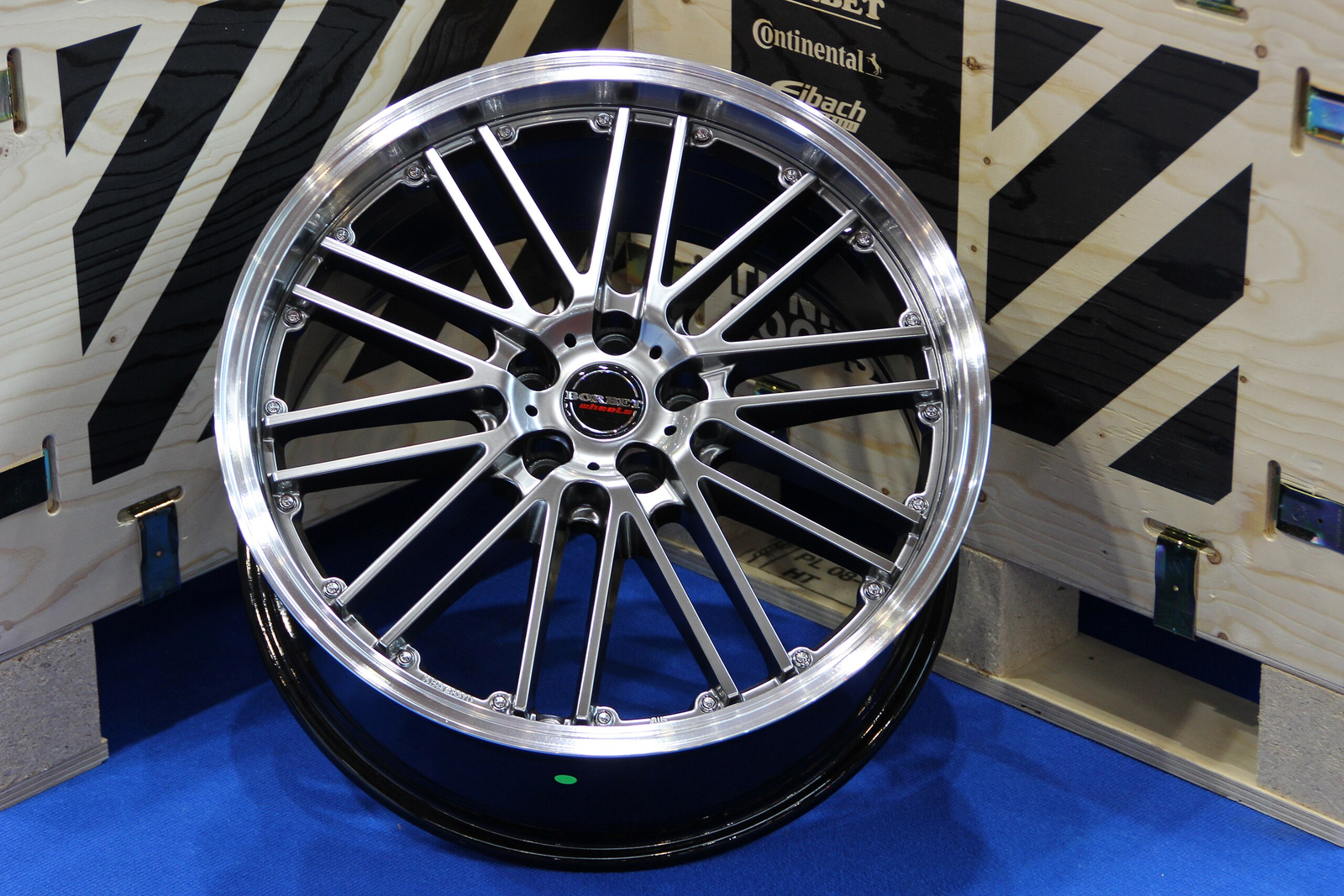
It is necessary to take into account the compatibility of rims with tires. Low-profile tires usually require a wider rim. Appearance also matters, but there are nuances here: complex-shaped spokes quickly become clogged with dirt, and glossy coatings require more careful maintenance.
Some motorists deliberately choose rims one or two inches larger than the standard ones. This solution improves the appearance of the car, but can negatively affect the smoothness of the ride and increase the load on the suspension. Here it is important not to cross the line of what is permissible.
A conscious approach is the basis of the right choice
Choosing wheel rims is always a balance between design, technical requirements and operating conditions. Studying the assortment in trusted stores helps to understand the price range and differences between models. By comparing options and asking questions to specialists, it is much easier to make an informed decision.
The main thing is not to rush and not sacrifice technical compatibility for the sake of external effect. Following simple recommendations allows you to avoid unnecessary risks and be sure that the selected rims really suit the car, and not just look attractive.
Read more materials on the topic:
- How far can you drive when the tank is "empty"
- How the USSR came to front-wheel drive
- Is it worth washing your car in winter: facts without myths
Comments