Mid-1960s. At NAMI (Central Scientific Research Automobile and Automotive Engines Institute), engineer Vladimir Mironov receives an unambiguous instruction from a representative of the Ministry of Automotive Industry: the topic of front-wheel drive should be closed. The decision has already been made at the highest level. When deciding on a foreign partner for the construction of the Volga Automobile Plant, the French with their front-wheel drive Renault 4 were not even seriously considered - the choice fell on FIAT with a classic rear-wheel drive layout.
The reasoning seemed simple and, as they thought then, logical: when driving uphill, the mass of the car shifts backward, the front wheels are unloaded and lose traction. For Soviet roads, this layout was deemed unsuitable.
While it was forbidden in the capital - they experimented in Tallinn
The prohibitions of Moscow did not stop enthusiasts on the ground. In 1965, at the Tallinn motor depot, engineers Roman Bertelov and Dmitry Suigusaar created the ET-500 front-wheel drive micro-truck. A year later, an improved version appeared - the ET-600. The car is equipped with an engine from "Zaporozhets" with a capacity of 27 hp, its own weight is 750 kg, and the carrying capacity reaches 600 kg.
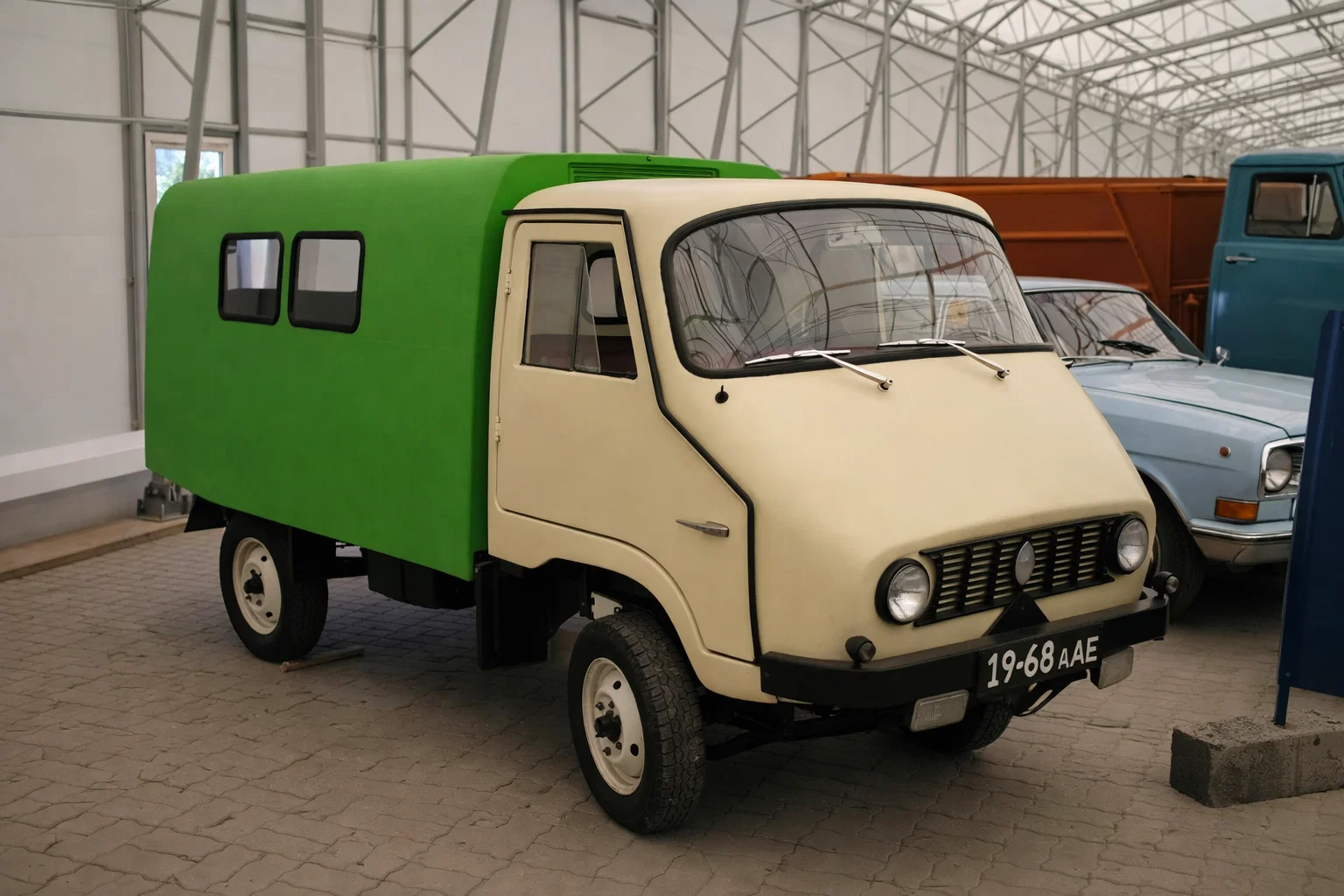
From 1966 to 1969, 35 copies were assembled. In fact, it was the first Soviet car with front-wheel drive. Its cost was half that of the "Moskvich", but further development of the project was stopped: the East German Multicar took the niche, and the series was simply curtailed.
NAMI and an attempt to catch up with Europe
At the same time, NAMI carefully studied the British Morris Mini-Minor for three years. The result was the work of 1964-1966 on the NAMI-0107 "Vasilek" prototype. The body of the ZAZ-966 is taken as a basis, and technical solutions are borrowed from the Italian Autobianchi Primula. The car receives a V-shaped engine with a volume of 1.1 liters and a capacity of 52 hp.
Tests show an unexpectedly confident result: "Vasilek" surpasses the serial "Zaporozhets" in both handling and cross-country ability.
Front-wheel drive based on Zhiguli and even Volga
In 1970-1971, NAMI specialists went further and created a front-wheel drive version of the VAZ-2101, using the transmission from the Peugeot 204. But the boldest step was the 1971 experiment - the front-wheel drive Volga GAZ-24. In this project, the engine from the "Moskvich" is placed longitudinally, but with a tilt, and the Weber carburetor is installed horizontally.
The prototype is sent to the Gorky Automobile Plant, but it does not arouse any interest there: the car is simply disassembled, without considering prospects for mass production.
The first mass-produced front-wheel drive car of the USSR - out of necessity
Paradoxically, it was in 1967 that an event occurred that went down in history. The Lutsk Automobile Plant began production of the ZAZ-969V - the first mass-produced Soviet passenger car with front-wheel drive. The reason was not at all ideological: the company could not establish the production of rear axle gearboxes.
Until 1971, more than 7,000 front-wheel drive LuAZs were manufactured, after which the plant switched to an all-wheel drive scheme.
VAZ: cautiously, but persistently
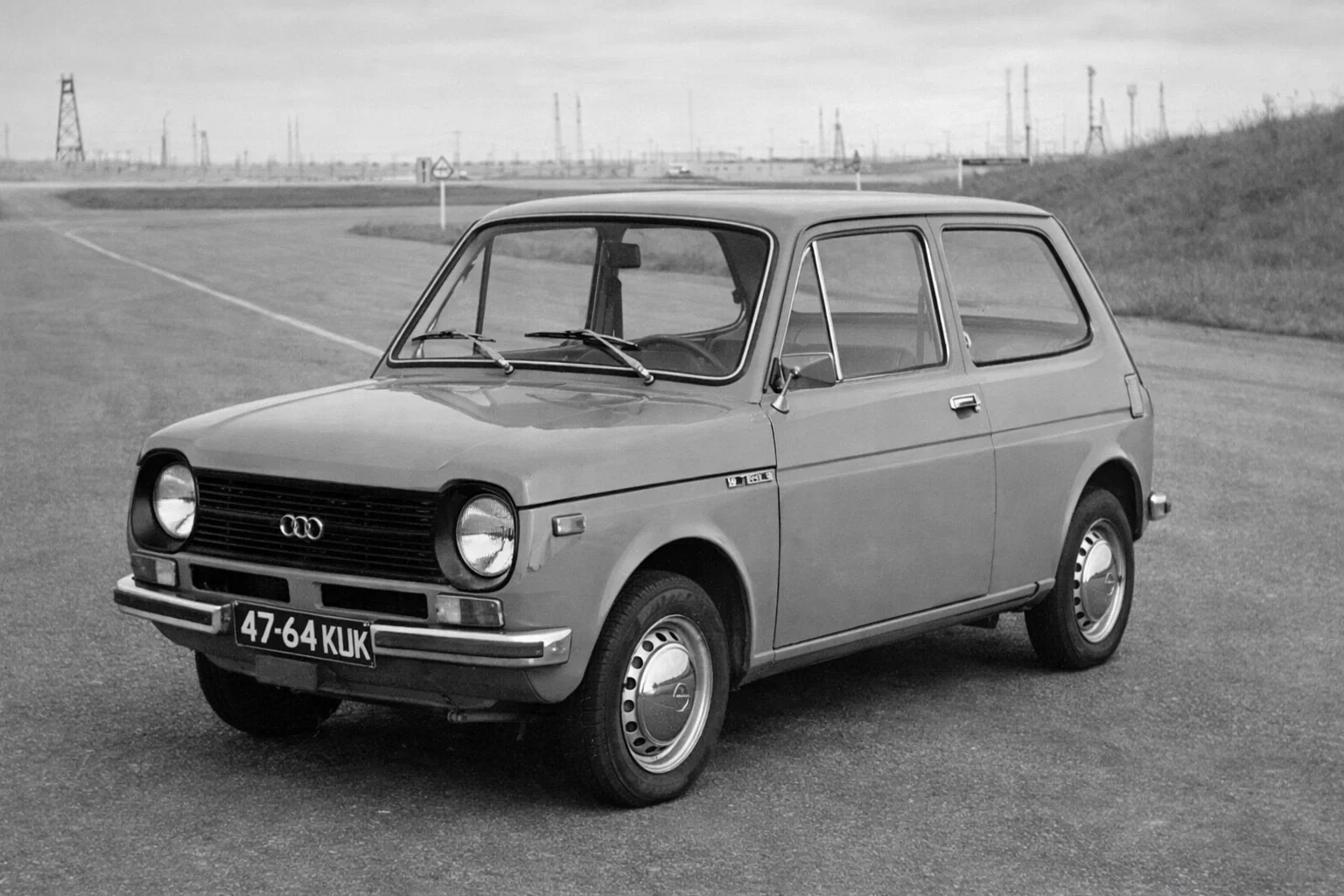
VAZ acted more decisively. In 1971, the 1E-1101 prototype with a transversely mounted engine appeared. By 1973, the VAZ-2E1101 was ready, outwardly already resembling the future Niva. In 1976, the Ladoga project was created and transferred to ZAZ as a guideline for the development of Tavria.
Zaporozhye "Tavria": a journey almost twenty years long
At the Zaporozhye Automobile Plant, work on front-wheel drive dragged on from the late 1960s. Chief designer Vladimir Steshenko even defended his dissertation on this layout and developed a concept called "Perspective". In 1973, the Ministry of Automotive Industry issued a technical assignment, but funding went to another project - VAZ-2108.
By 1981, the car was practically ready, but the production buildings were still under construction. Serial "Tavrias" began to roll off the assembly line only in 1987 - almost two decades after the start of development.
"Eight" and the money that went to the revolution
The main budget of the industry was absorbed by the "eight". In 1978, VAZ signed a contract with Porsche. Initially, it was about 15-20 million marks, but in the end, equipment costs reached 265 million rubles. German specialists helped with the body, engines and transmission, and the Italian company UTS was involved in the work.
In December 1978, the first prototype VAZ-2108 was assembled, and already in 1984, mass production started. Six years from prototype to assembly line - a pace almost unprecedented for Soviet industry.
Moskvich and an alternative path
At AZLK, the "Moskvich-2141" was created, choosing the longitudinal arrangement of the VAZ engine. The French Simca 1308 is taken as a basis, the front part is radically redesigned and adapted to its own units. As a result, more than 60% of the mass falls on the front axle.
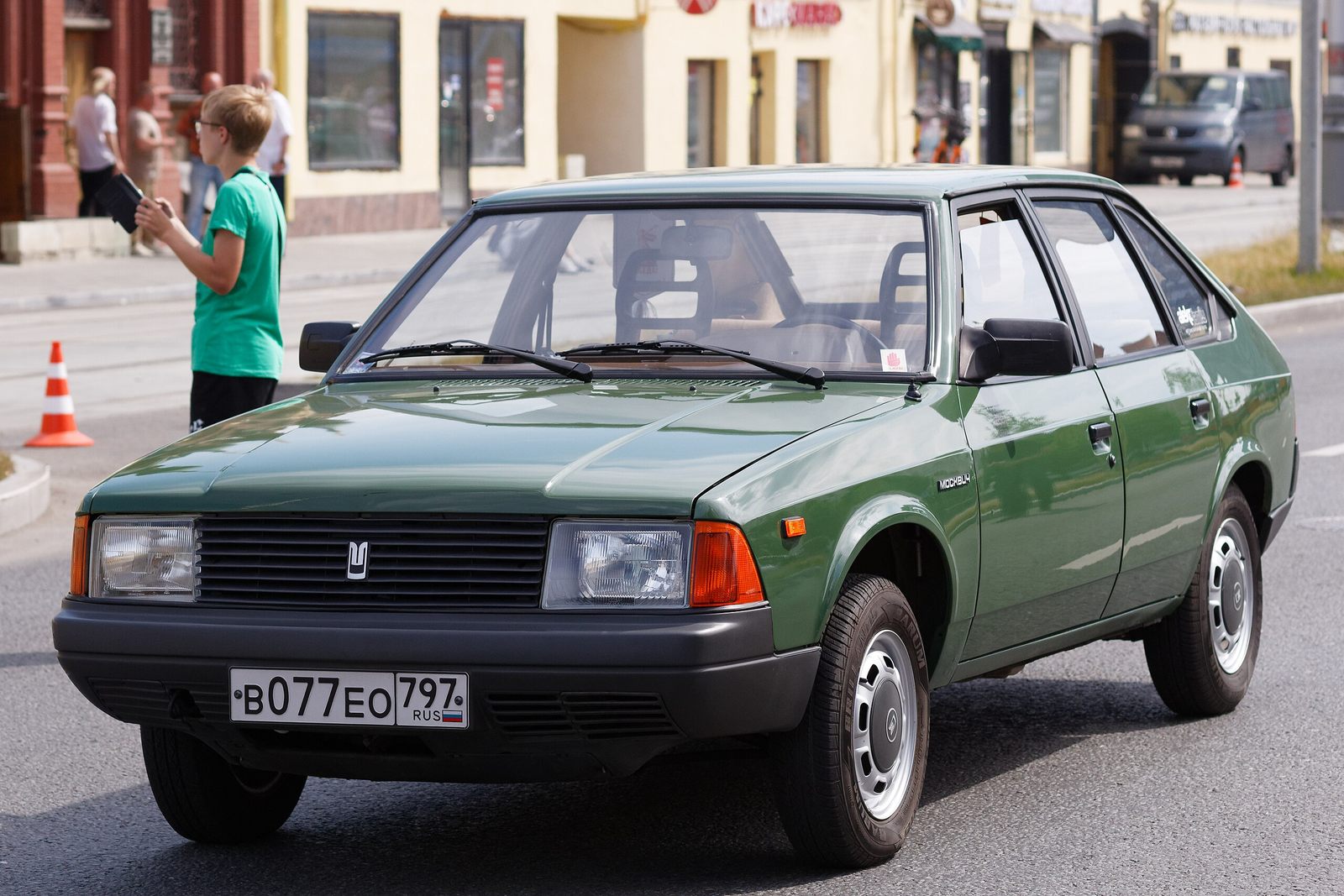
This provides good cross-country ability, but worsens handling in corners. The car turns out to be more expensive than the "eight", and the power unit is from a competitor.
Izhevsk: a missed opportunity
From 1967 to 1977, the Izhevsk Automobile Plant repeatedly requested permission for joint development of a front-wheel drive model with Renault. Each time a refusal came from Moscow. As a result, the company was allowed to produce only the IZH-2715 van and the IZH-2125 hatchback.
Why front-wheel drive was rejected
The main arguments against front-wheel drive were based on erroneous ideas. It was believed that when driving uphill, the front wheels lose traction. However, studies by the Zaporozhye Machine-Building Institute showed that with a mass distribution of about 55% on the front axle, cross-country ability does not deteriorate.
They also referred to the complexity of manufacturing constant velocity joints, but this problem was solved by a contract with Hardy Spicer in 1975. As a result, the main obstacles remained the conservatism of the leadership and a chronic shortage of funding.
Final touch
The first experimental VAZ-2108 was built in September 1978. By the end of 1984, a batch of 2,000 cars, fully ready for sale, rolled off the assembly line. Of the 3,500 parts of the rear-wheel drive "Zhiguli", only one was used in the new model - the piston pin of the engine. And even it had to be shortened.
Read more materials on the topic:
- Lada Azimut: Myths about the Chinese origin of the new crossover
- Pickup from "Zaporozhets": a strange experiment ZAZ-968
- How the supposedly comfortable Lada Aura greatly tired the driver in just six months
Comments