Many car owners believe that air conditioning and climate control are essentially the same thing. Both devices cool the air in the cabin and help survive the heat. However, there is a fundamental difference between them, and it concerns not so much the design as the logic of operation.
Let's understand without complex terms: how both systems are arranged, how they differ in practice, and whether it makes sense to overpay.
Common Ground: Operating Principle
From a technical point of view, they have the same foundation. Both air conditioning and climate control use the same basic scheme.
In both cases, a compressor, radiator (condenser), evaporator, refrigerant, and fan are used. The compressor compresses the gas, the system takes heat from the cabin, and cooled air enters.
In other words, the "iron" part is almost identical. The differences begin not in mechanics, but in control.
Air Conditioning: Everything Depends on the Driver
A regular car air conditioner is completely subordinate to the person.
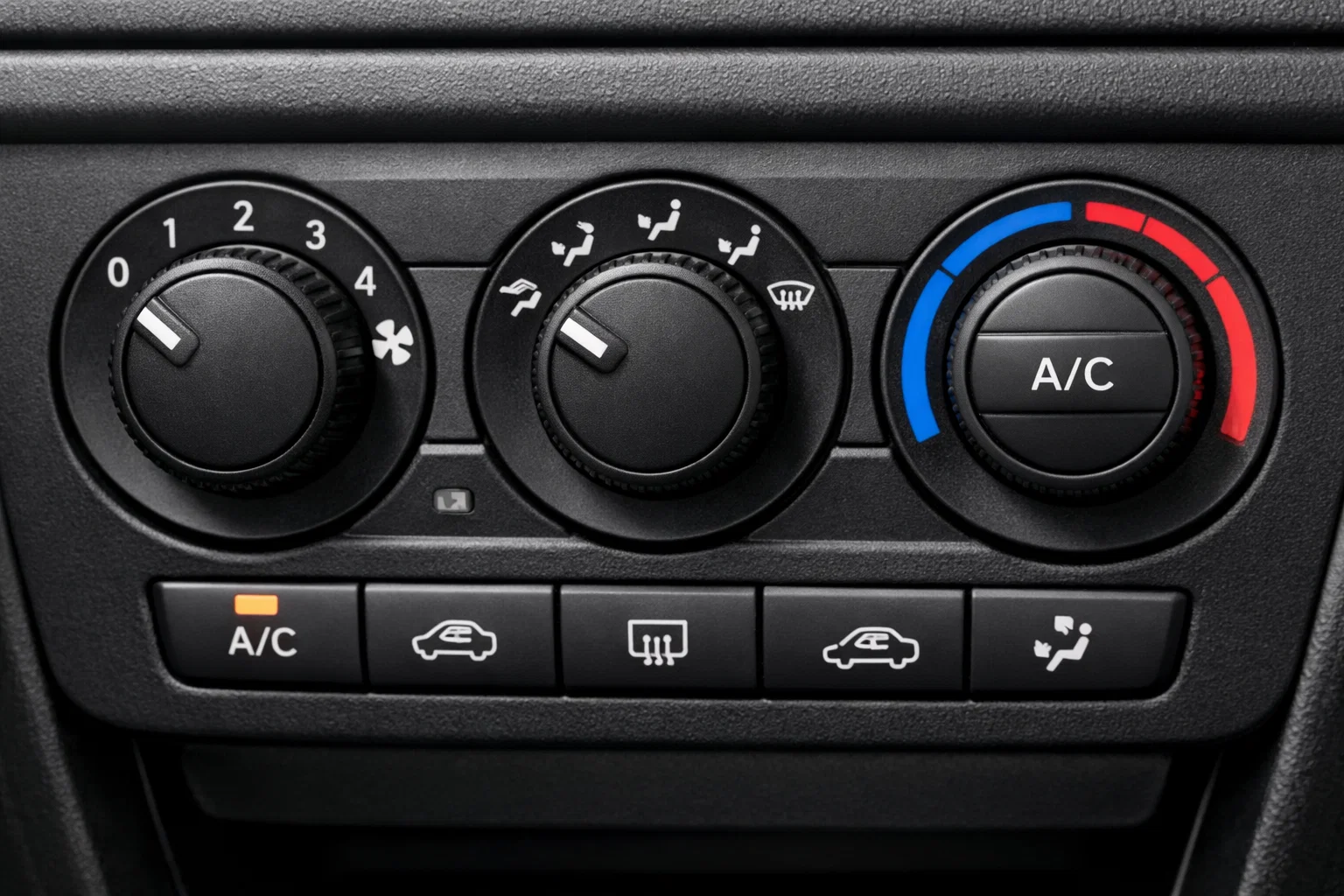
The driver independently turns the compressor on or off, adjusts the temperature, selects the fan speed and the direction of the air flow.
This scheme has obvious advantages. The design is simpler, there is less electronics, which means that repairs are often cheaper. The control is clear and direct — all changes occur manually.
But there are also disadvantages. Settings have to be constantly adjusted: it got hot — added cooling, got cold — reduced. Sudden temperature changes are possible. If you forget to activate dehumidification, the windows may fog up. In addition, the system does not always work economically, because it does not analyze the conditions automatically.
In fact, all responsibility lies with the driver.
Climate Control: The System Thinks for Itself
Climate control is already an automated option.
The driver sets a specific temperature, for example +22 °C, and then the system maintains it independently.
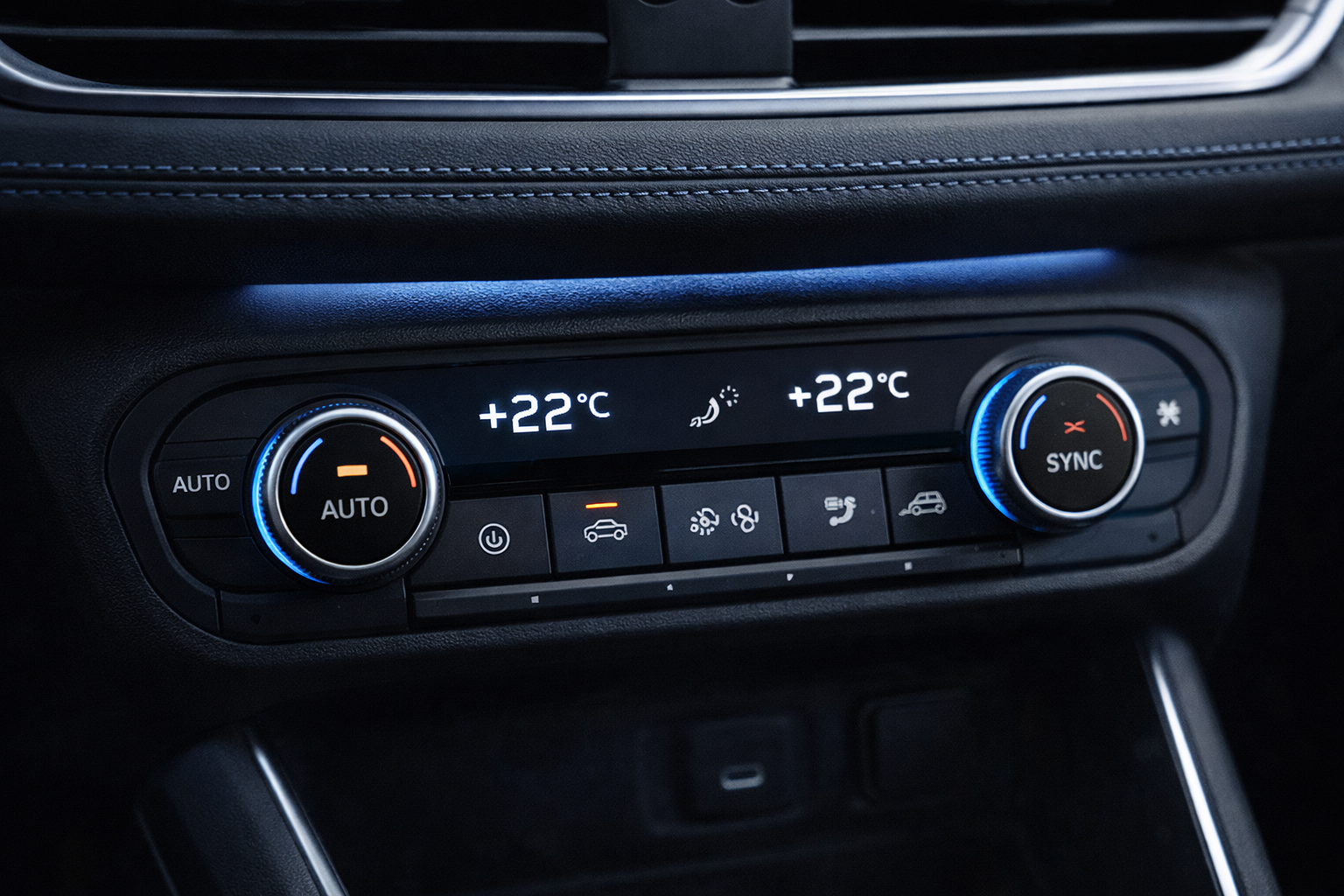
To do this, it takes into account the temperature in the cabin, the conditions outside, the intensity of sunlight, and the humidity of the air. Based on these data, the electronics decide when to turn on the air conditioner, when to turn on the heating, where to direct the flow, and at what speed to rotate the fan.
The advantages are obvious: the temperature remains stable, without jumps; there is no need to constantly interfere with the operation of the system; the probability of fogging is reduced; comfort is maintained in any weather. Some versions provide zonal adjustment.
However, automation adds complexity. There is more electronics, repairs are more expensive, and the operation of the system directly depends on the serviceability of the sensors.
Behavior in Real Conditions
In summer, the air conditioner effectively cools the cabin, but the intensity of the airflow will have to be changed manually. Climate control regulates the power automatically, trying to avoid overcooling or overheating.
In rainy and humid weather, the climate system independently activates air dehumidification. When using a regular air conditioner, you need to remember this yourself.
Differences are also noticeable in winter. The climate gradually increases the airflow as the engine warms up. With air conditioning, the adjustment again falls entirely on the driver.
Zoning: One Cabin — Different Temperatures
Climate control can be single-zone, dual-zone, or multi-zone.
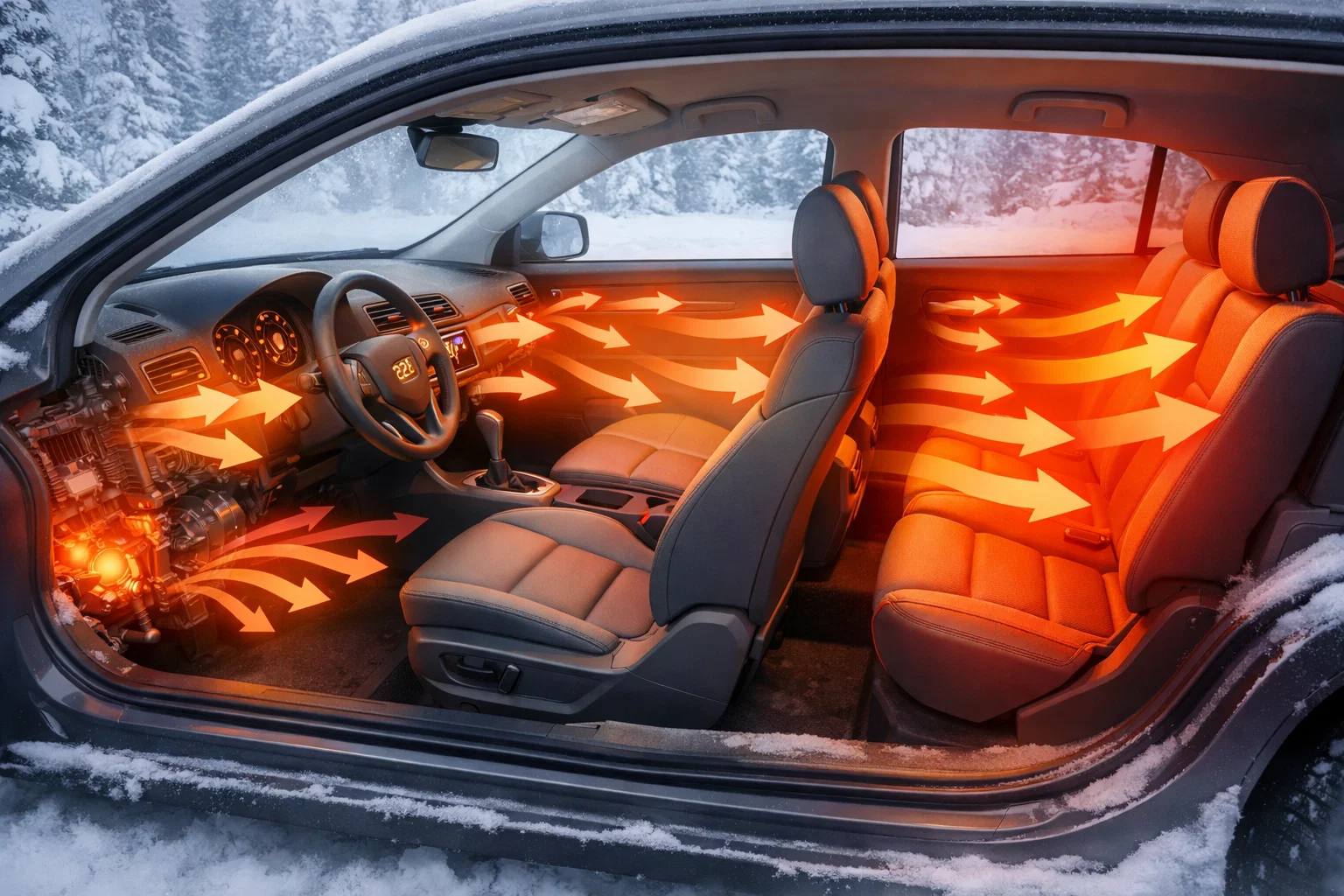
The single-zone version maintains one temperature for the entire cabin. The dual-zone version allows the driver and front passenger to set different values. Three- and four-zone systems allow you to separately adjust the conditions for rear passengers.
As a rule, the difference between zones is limited to 7–8 degrees, but this is enough for noticeable comfort.
Reliability and Repair
The most common issues with classic air conditioners are freon leaks, compressor wear, and radiator contamination.
In the case of climate control, potential malfunctions of sensors, dampers, control units, and servo drives are added. Sometimes, resolving the issue requires disassembling a significant portion of the front panel. That's why, in older cars, the automatic system often works worse than a simple air conditioner.
Is Replacement Possible?
Theoretically, it is possible to install climate control instead of a regular air conditioner. In practice, this is a complex and costly procedure. It will require replacing the control unit, dampers, sensors, and wiring. In most cases, such modernization is not economically justified.
What to Choose
If it's a new or relatively new car, climate control provides a higher level of convenience.
For cars older than 7–10 years, a simple air conditioner may be more practical in terms of reliability and maintenance costs.
Ultimately, the type of system is less important than its technical condition.
Both systems are built on the same technical base but differ in the degree of automation.
Air conditioning involves constant manual control. Climate control takes over the adjustment and maintains the set parameters without intervention.
The decision to overpay depends on the age of the car, budget, and comfort requirements.
Read more materials:
- Sensors are leaving: China returns buttons to cars
- Engines that have become a headache for owners
- Volkswagen SP2 — the Brazilian challenge to rational Germans