Sometimes, while the engine is running, liquid starts dripping from the exhaust pipe. Many car owners, noticing this, immediately start to worry and assume a serious malfunction. However, in most cases, there is no cause for concern. The appearance of drops from the muffler is most often associated with natural processes that occur during engine operation.
Nevertheless, there are situations when liquid in the exhaust system really indicates a problem that cannot be ignored. To properly assess the situation and understand whether an urgent visit to a car service is required, it is necessary to understand why liquid may appear in the muffler at all and what signs help determine its origin.
Below are the main reasons for the appearance of drops from the exhaust pipe, methods for their simple diagnosis, and cases when the car really needs repair.
Condensation is the most common cause
In the vast majority of cases, ordinary water drips from the exhaust pipe. This is condensation that forms as a result of engine operation.
When gasoline burns, water vapor is released. When exhaust gases pass through a cold exhaust system, this vapor gradually cools and turns into liquid. That is why water begins to accumulate inside the muffler and then can flow out.
This phenomenon is especially noticeable during engine warm-up, in the cold season, or during short trips. In such conditions, the exhaust system does not have time to warm up completely, so condensation occurs more actively.
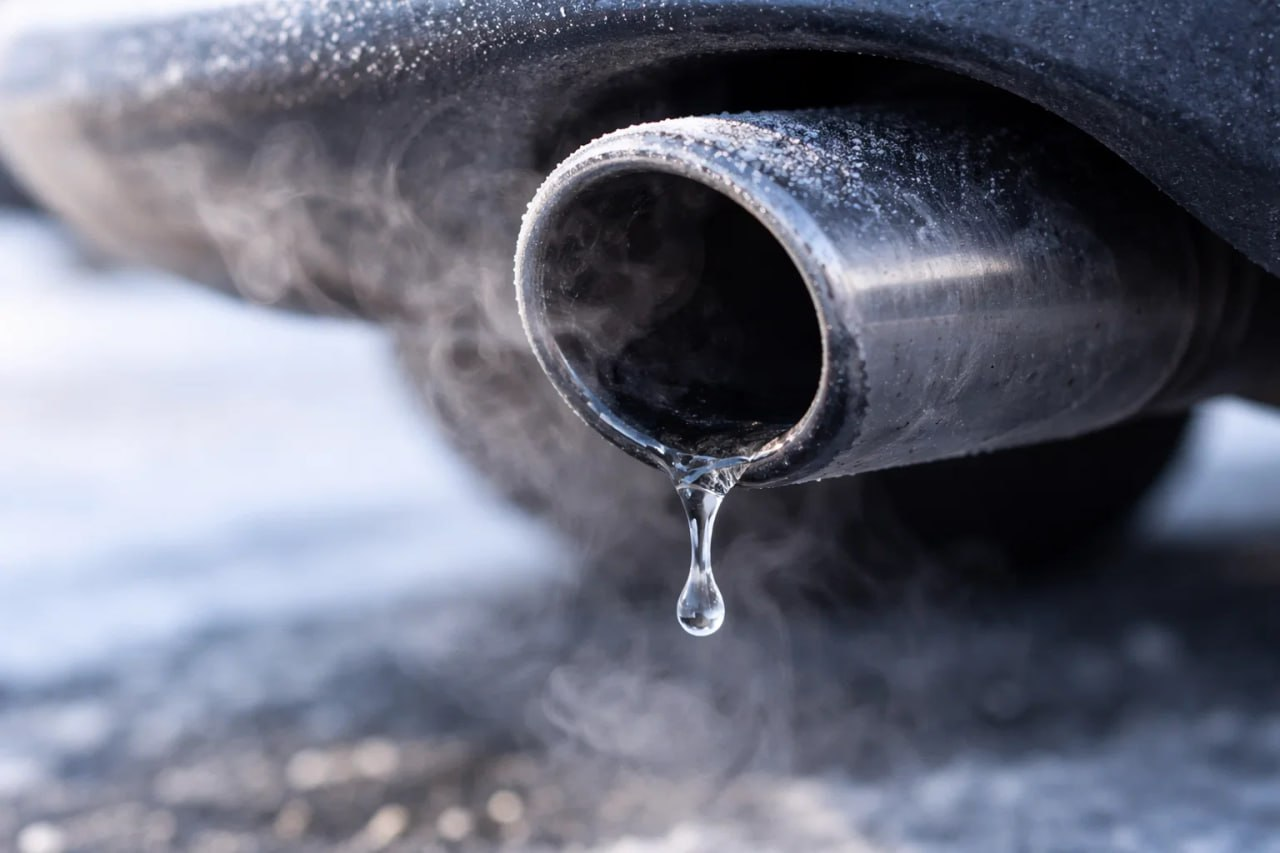
There is no danger in this process. This is a natural physical phenomenon that is observed in almost any car. The only unpleasant consequence is that moisture can accelerate corrosion of the muffler over time. However, in practice, the exhaust system is more often destroyed due to road salt and chemical reagents used in winter.
Sometimes car owners make a small hole in the muffler so that water can drain faster. However, most drivers do without such modifications. The main sign of safe condensation is simple: clear, odorless water drips from the pipe, and the exhaust color remains normal.
Gasoline in the exhaust system
Much less often, gasoline can leak from the muffler. Unlike water, this is already a serious reason to check the car.
Fuel should not enter the exhaust system. If this happens, it means that part of the gasoline does not burn in the cylinders and is released along with the exhaust gases. This situation usually indicates problems in the engine.
Most often, the cause is a malfunction of the ignition system. The problem may be related to spark plugs, coils, high-voltage wires, or various sensors. When there is no spark or it works unstably, the fuel mixture does not ignite and enters the exhaust system almost unchanged.
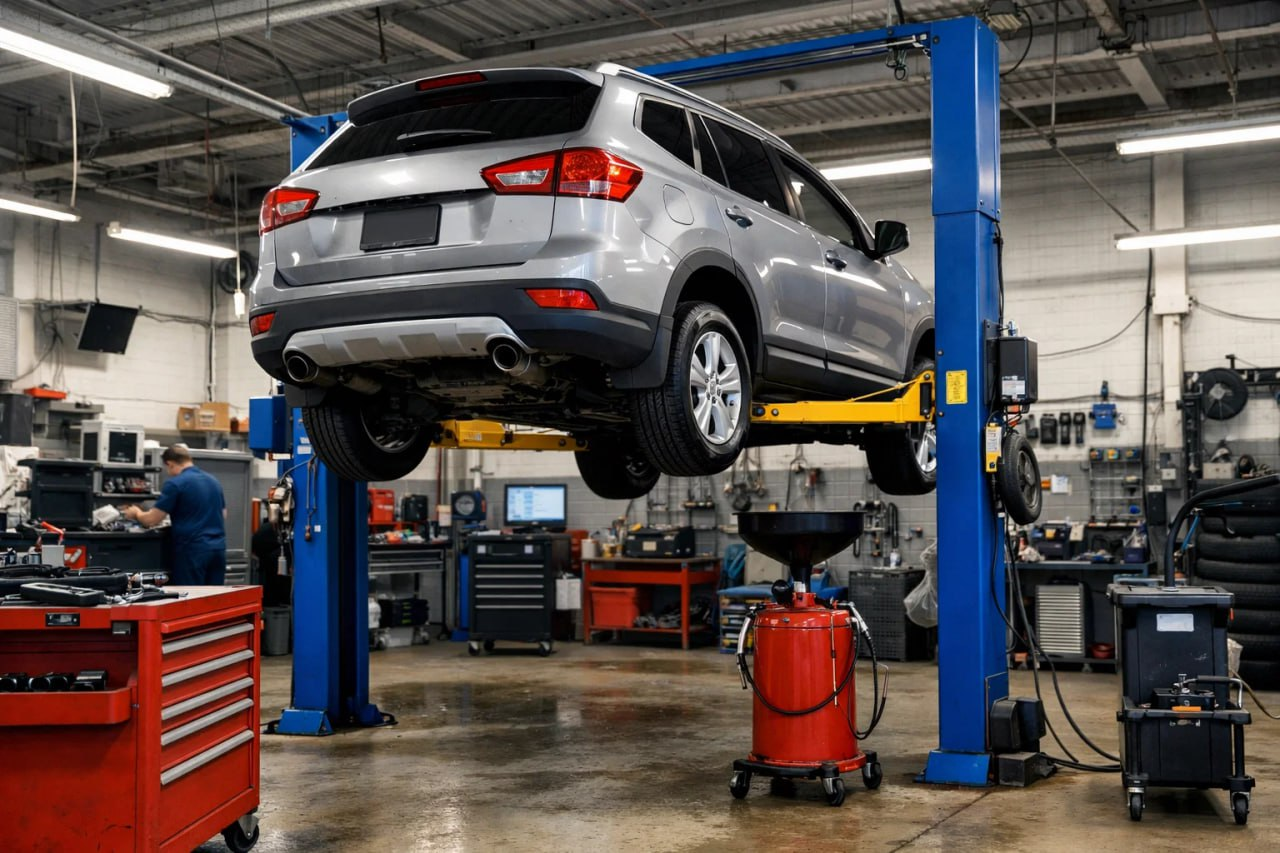
Sometimes gasoline ends up in the muffler due to wear of the cylinder-piston group. In this case, the compression drops, which causes the mixture to not burn completely. Such malfunctions are serious and require expensive repairs.
However, the appearance of gasoline in the exhaust almost never goes unnoticed. The car begins to give clear signals about the problem. Usually, the engine power decreases, fuel consumption increases, the engine starts to run unstably or "misfire". In addition, the Check Engine indicator may light up. Even a driver without much experience, noticing such symptoms, usually goes to the service.
Antifreeze in the muffler
Another liquid that sometimes enters the exhaust system is coolant. The appearance of antifreeze in the muffler is almost always associated with damage to the cylinder head gasket.
When the gasket is no longer sealed, antifreeze begins to enter the combustion chamber. Then, along with the exhaust gases, it exits through the exhaust system.
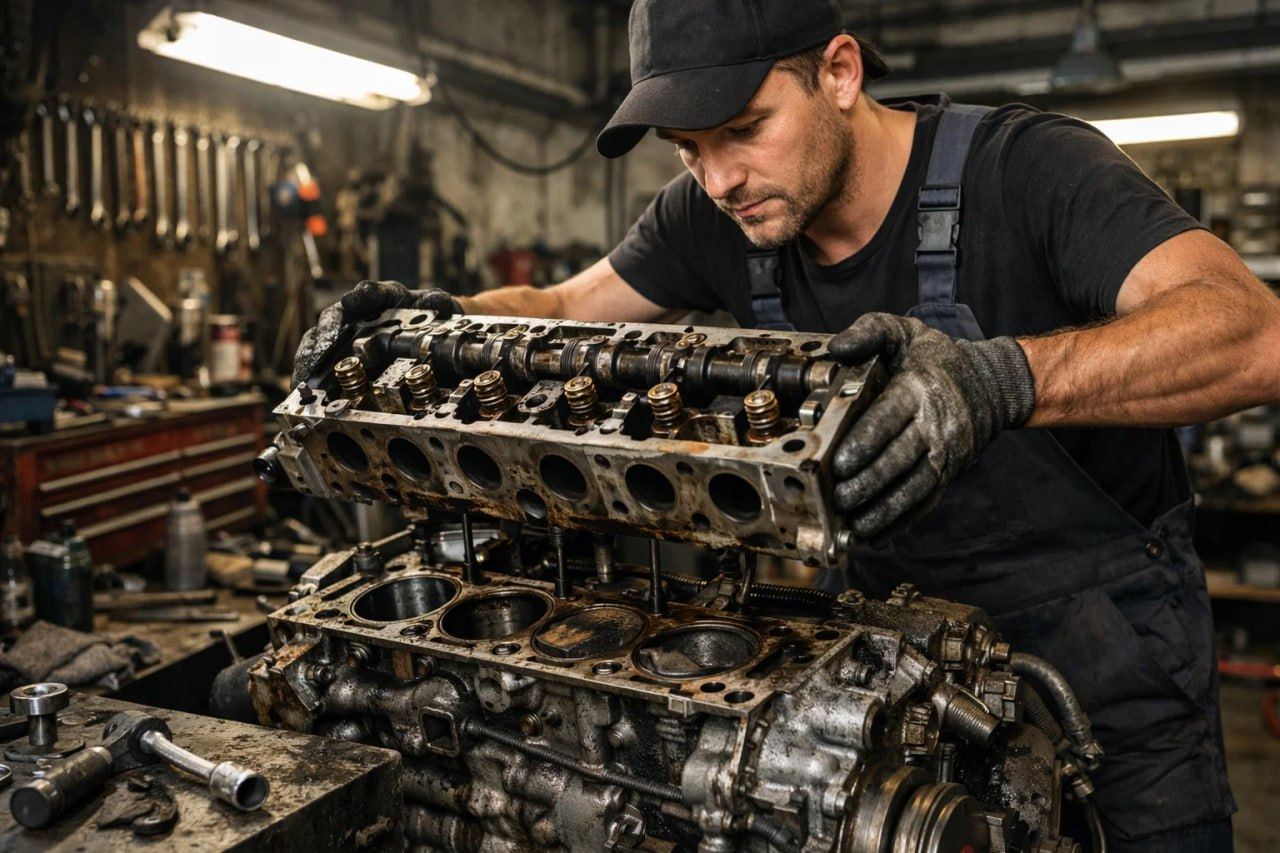
Such a malfunction cannot be called hopeless, but its repair usually requires significant costs. A much rarer but more difficult situation occurs when coolant enters the cylinders through cracks in the engine block. In such cases, it is often necessary to replace the engine itself.
If the gasket is broken, antifreeze can mix with engine oil. As a result, a white emulsion appears in the lubrication system - a characteristic sign of a serious breakdown. If such symptoms are detected, the car cannot be operated. The car must be delivered to a car service as soon as possible, while carefully monitoring the engine temperature to avoid overheating.
How to understand what exactly is leaking from the muffler
If in doubt, determining the type of liquid is quite simple. First, pay attention to its color.
Ordinary water remains clear. Gasoline sometimes has a slight yellowish tint. Antifreeze, on the other hand, is most often colored - it can be green, red, or blue.
An equally useful sign is the smell. Water has no smell. Gasoline is easily recognized by its characteristic pungent aroma, and coolant usually has a sweetish smell.

It is also worth evaluating the appearance of the exhaust. When gasoline or antifreeze is present in the system, the exhaust gases often become thicker. Grayish or white smoke may appear. If there is no dense smoke and no foreign odors are felt, it is most likely ordinary condensation.
For additional verification, you can drip liquid onto the glass. Water will evaporate without a trace, gasoline will leave a greasy stain, and antifreeze usually forms a sticky or colored trace.
When to worry
In reality, the appearance of water in the exhaust system is a common occurrence, which is especially often observed in winter. It is much less common for gasoline or antifreeze to appear from the pipe, and in these cases, the problem is usually accompanied by additional signs - deterioration of the engine, loss of power or overheating.
Therefore, the probability of missing a serious malfunction is relatively small. Nevertheless, it is useful to understand what drops from the muffler can mean. This helps not to worry about trifles when everything is working normally, and to pay attention to the problem in time if the car really needs repair.
A careful attitude to the condition of the car allows you to notice changes in its operation in time and avoid more serious consequences.
Read also materials:
- Survey reveals the main fears of women when owning a car
- The price of the new Omoda C5 for Russia has been announced
- Import of used cars to Russia increased by 31%
Комментарии