In the automotive world, a story has long taken root that inspires both respect and a slight sense of envy: Toyota engines capable of covering half a million kilometers or more without a major overhaul. In Russian conditions, where machinery regularly faces cold weather, poor roads, and a variable climate, such examples are perceived almost as an exception to the rule. Nevertheless, they do exist. A characteristic case is the 1GR-FE engine installed in the Land Cruiser Prado 150: with proper maintenance, its service life reaches 400,000–600,000 km.
Against this background, the difference is especially noticeable compared with domestic units such as the VAZ-21126, where serious intervention is often required already at 150,000–200,000 km. A natural question arises: what explains such a gap, and what is Toyota's fundamental approach?
Engineering philosophy as the foundation of longevity
The reason does not come down to one successful solution. It is about an integrated system shaped by years of research and practice. At its core is the philosophy of "Kaizen," which implies continuous improvement.

This very approach defines the development principles: precision, stability of characteristics, and long-term efficiency. Engines are created not only with new conditions in mind, but also with consideration for how they will behave after hundreds of thousands of kilometers.
Precision at the micron level
The level of manufacturing tolerances plays a key role. A comparison with familiar standards clearly shows the difference: if Toyota has a piston-to-cylinder clearance of 0.001–0.005 mm, then previously used standards allowed values of 0.01–0.05 mm.
This difference directly affects wear. The smaller the clearance, the lower the friction and heat losses, which means the parts remain functional for longer. It is precisely this "micron-level" precision that allows the unit to operate with minimal loss of service life over hundreds of thousands of kilometers.
Materials and resistance to loads
The choice of materials and the approach to cooling are no less important. The design uses aluminum cylinder blocks supplemented with cast-iron or silicon powder-alloy liners. A Nicasil-type coating is used, performing several tasks at once: protecting against wear, preventing corrosion, and preserving the geometry of the parts.
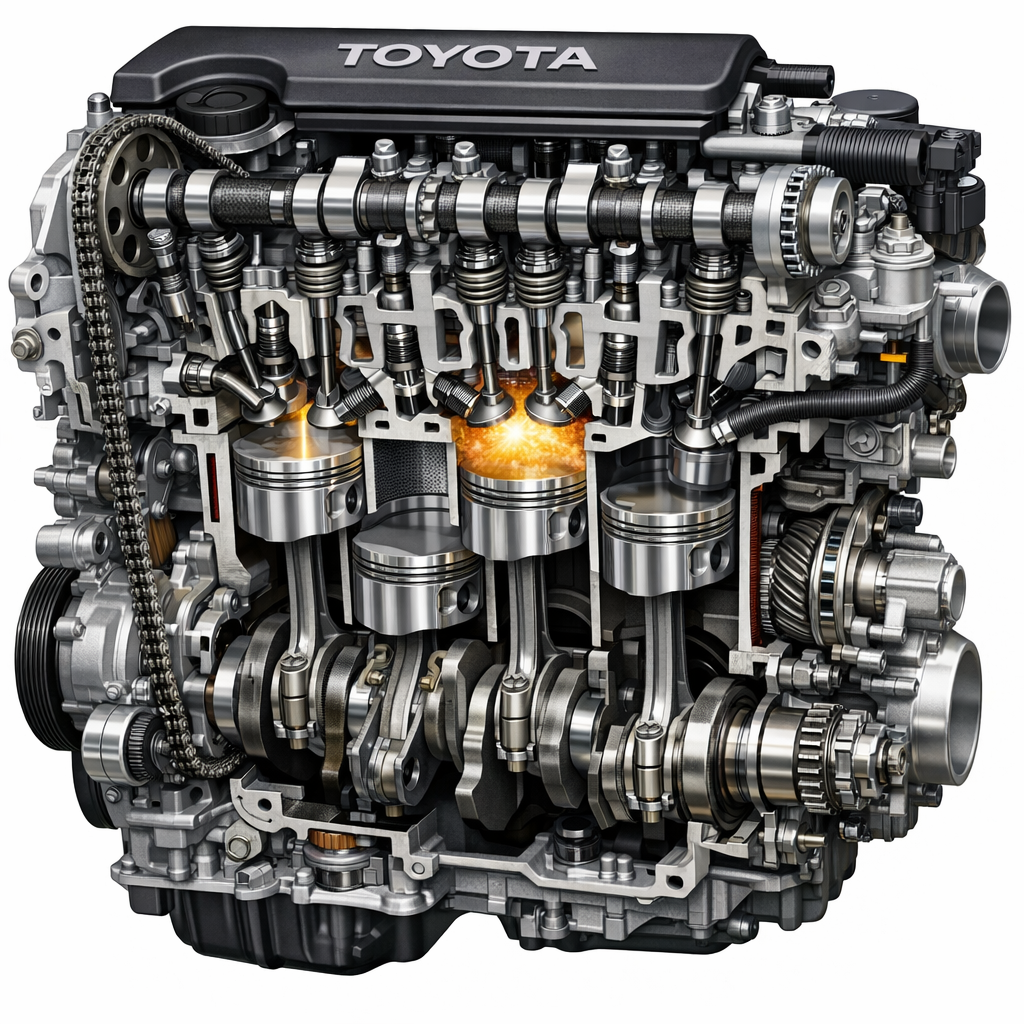
Even under repeated heating and cooling cycles, the dimensions remain stable. In Russian operating conditions — with their frosts, humidity, and dust — this is especially important, since these are exactly the factors that most often accelerate wear in less durable engines.
The role of the lubrication system and maintenance
Even the most carefully thought-out design requires proper care, and here the approach also differs. The oil system is configured so that in the very first seconds after a cold start, pressure reaches 3–4 bar. For comparison, in simpler engines this figure may be only 1.5–2 bar, which means critically important assemblies work almost "dry" for some time.
At the same time, engine start-up accounts for the main share of wear — up to 60%. Rapid oil delivery reduces this load and extends the unit's service life.
Compliance with maintenance regulations also plays an important role:
- oil is changed every 5,000–10,000 km
- synthetic formulations of the SM/SN level are used
- ignoring these rules (for example, a 20,000 km interval) sharply reduces engine life

In Russian conditions, strict adherence to these recommendations becomes one of the key factors in achieving mileage of 500,000 km and more.
A comprehensive approach instead of one "trick"
The secret of durability cannot be reduced to a single technology. It is formed through a combination of solutions, each of which complements the others:
- minimal tolerances ensuring precise operation of parts
- use of materials resistant to thermal and mechanical loads
- a well-designed lubrication system that protects the engine at critical moments
- disciplined maintenance that preserves the original characteristics
In mass production, compromises often have to be made, whether in materials or machining precision. In Toyota's case, this approach is minimized: longevity is built in at the design stage.
Practice and real-world figures
Service statistics confirm the theory: the average life of Toyota engines reaches 500,000 km without a major overhaul, and with careful operation, figures on the order of 700,000 km are also possible.
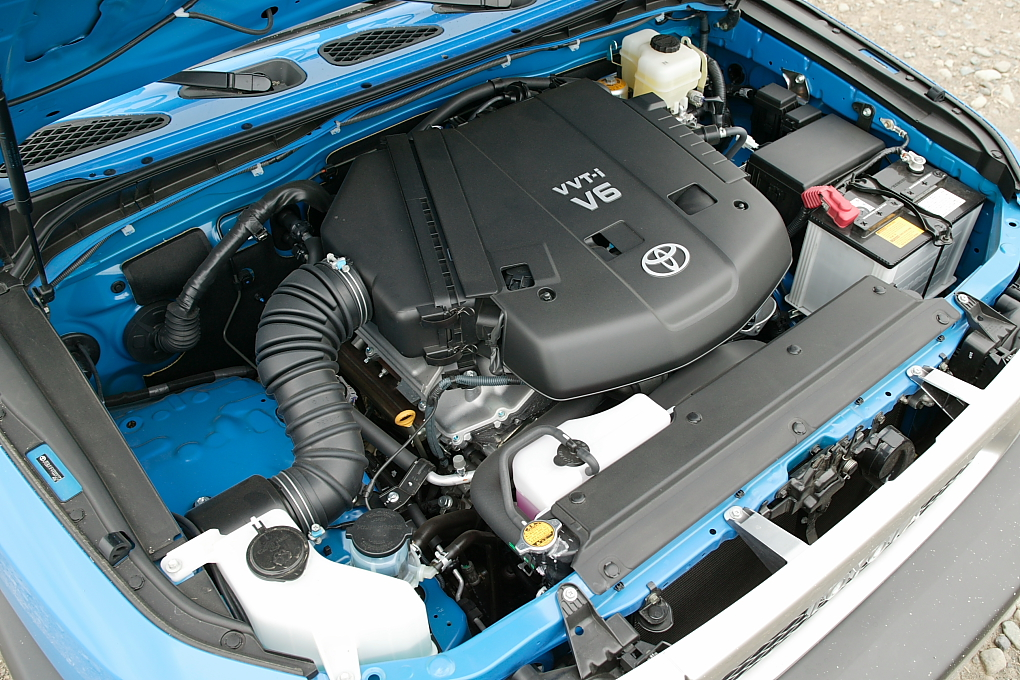
These figures are achieved not in laboratory conditions, but in real operation — on the roads of Siberia, at low temperatures, as well as in the hot climate of the southern regions.
For comparison, a mileage of 150,000–200,000 km for many domestic cars already means the need for serious repairs or the search for alternative solutions. Against this background, Toyota owners' stories about 600,000 km without intervention look like a logical consequence of built-in longevity rather than an exception.
The durability of Toyota engines is not the result of a random successful solution and not some kind of "magic." It is a matter of systemic engineering, precise assembly, competent selection of materials, and attention to detail.
It is the combination of these factors that forms a service life measured in hundreds of thousands of kilometers. This approach demonstrates that with proper design and operation, machinery really is capable of serving for a long time while retaining its characteristics over many years.
Read more materials:
- Car theft: what to do if you did not find your car where you left it
- Renault Duster: there are serious drawbacks, but there are advantages too
- How to drive to use less gasoline
Комментарии