In winter, car headlights experience significantly increased stress. A mixture of sand, de-icing agents, and ice chips flying out from under the wheels acts on the surface of the headlights like an abrasive, gradually turning the transparent plastic into a cloudy surface. As a result, not only the appearance deteriorates, but also the lighting efficiency. Let's find out why this happens and how to restore the original transparency of the headlights without damaging the coating.
Why headlights become cloudy specifically in winter
Modern car headlights are made of polycarbonate — a material that is durable but also quite soft. In the cold season, it is subjected to several types of aggressive impact at once.
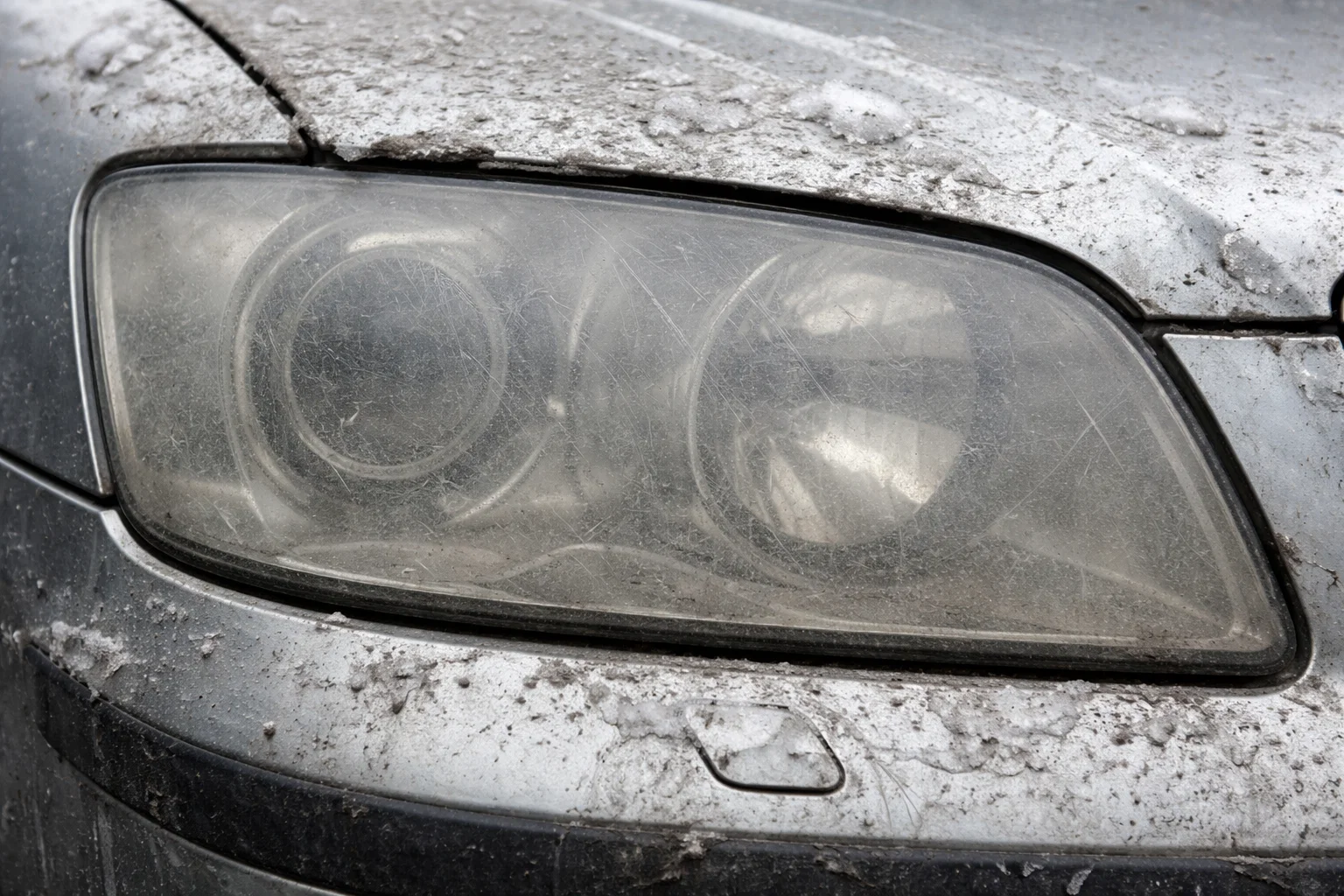
The main factors include:
- abrasive wear: sand and granite chips at high speed literally remove microscopic layers of plastic
- chemical exposure: road de-icing agents penetrate the structure of the material, causing yellowing and clouding
- mechanical damage: attempts to clean the headlights with a dry cloth or snow brush leave noticeable scratches
It is the combination of these factors that accelerates surface degradation after the winter season.
What are the dangers of cloudy headlights
The problem is not only the loss of aesthetics. Clouded plastic disrupts the correct passage of light.
This leads to the following effects:
- the light beam is scattered instead of forming a clear boundary
- the illumination of the roadside and road obstacles deteriorates
- the visibility range is reduced by approximately 30–50%
Thus, the decrease in transparency directly affects driving safety in the dark.
How to restore headlight transparency
1. Polishing
Ordinary over-the-counter products do not give a complete result. Professional treatment includes step-by-step grinding using abrasives of various grain sizes. This allows you to remove the damaged layer and restore transparency.
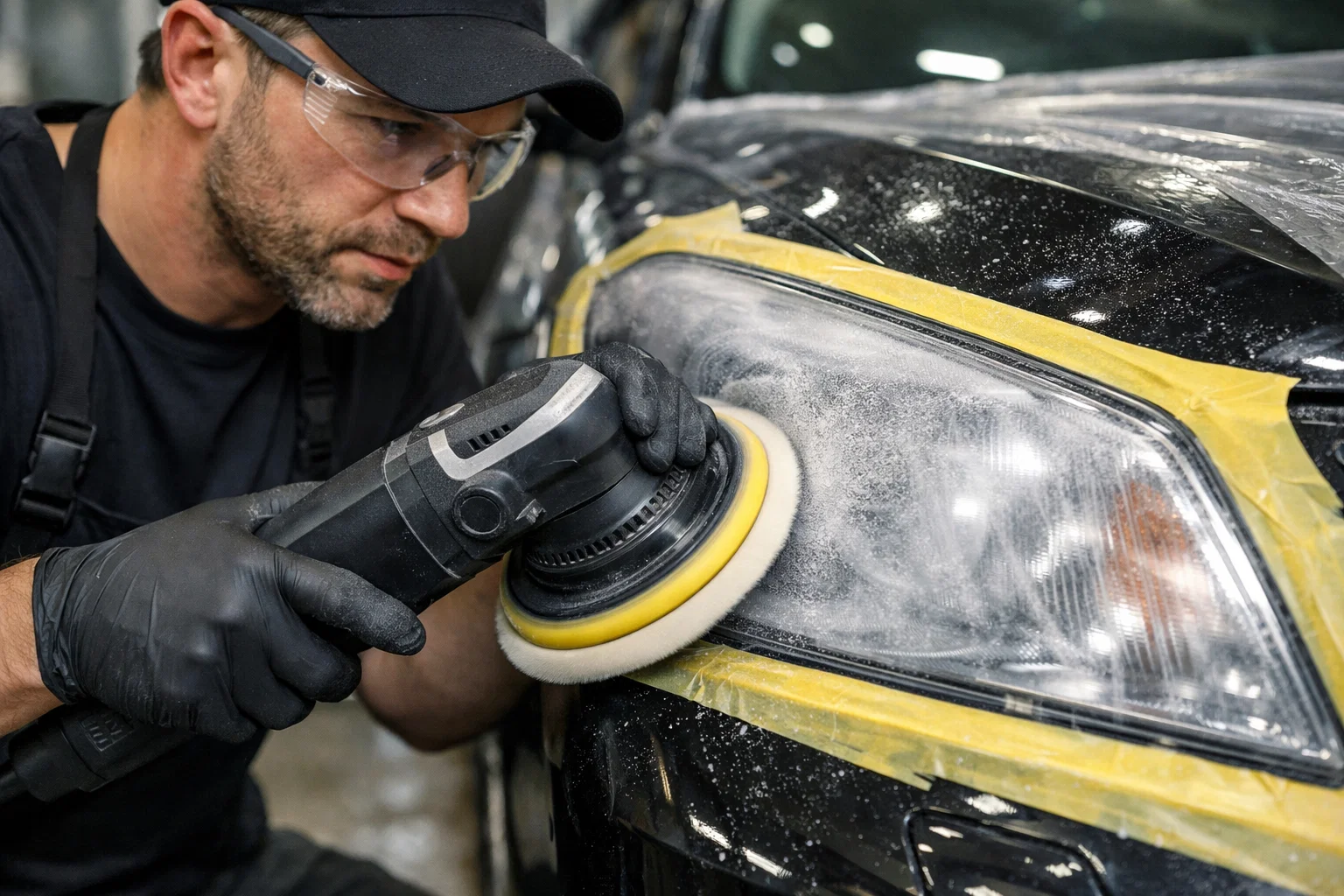
However, it is important to consider that the factory protective layer is also removed along with the defects.
2. Protection with polyurethane film (PPF)
A common mistake is to leave polished headlights without additional protection. In this case, the surface quickly becomes cloudy again, sometimes in just 2–3 months.
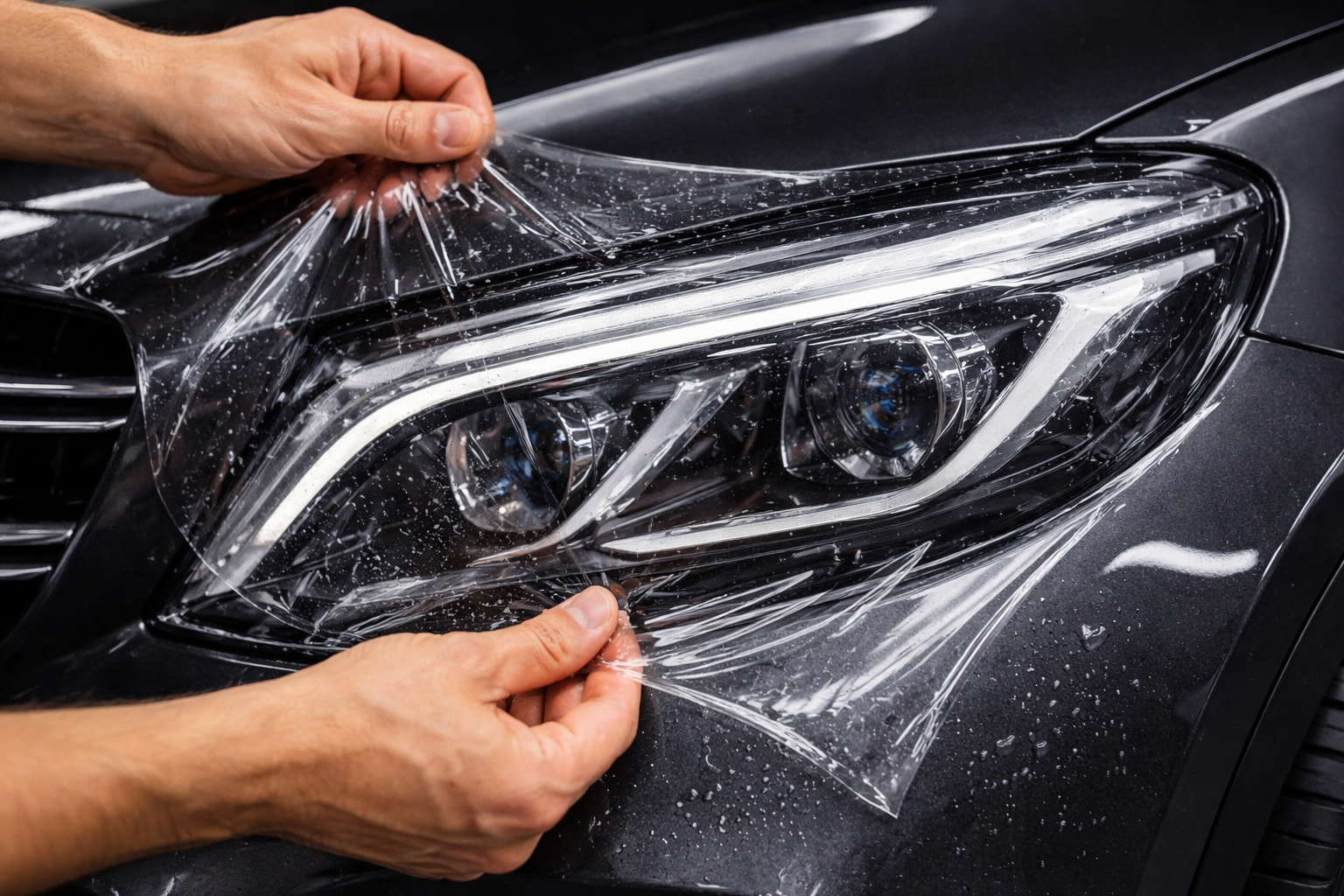
The optimal solution is to apply a polyurethane film, which performs several functions at once:
- has the ability to self-heal when heated (minor scratches disappear)
- protects against stones, sand, and chemical reagents
- maintains transparency for 3–5 years
It is this step that secures the polishing result and prevents repeated damage.
How to extend the service life of optics
You can keep your headlights in good condition by following basic operating rules:
- do not clean the surface when dry — first you need to wash off dirt with water or non-freezing liquid
- avoid using household chemicals that can damage polycarbonate
- monitor tightness: fogging from the inside accelerates the destruction of the reflector and internal elements
Headlight transparency is not only a matter of appearance, but also an important safety factor. Polishing in combination with a protective polyurethane film allows you to restore and maintain optical properties for a long time.
Ignoring maintenance leads to a gradual deterioration of lighting, and restoration in advanced cases is much more expensive. Timely prevention, on the contrary, helps to avoid unnecessary costs and maintain the efficiency of headlights for several seasons ahead.
Read more materials:
- Anniversary KAMAZ-54901 tractors go on sale
- Top five alternatives to Volga K50: what you can take right now
- Fuel shortages begin in Australia
Комментарии