When buying new tires — regardless of the season — you can notice characteristic thin "black hairs" on the surface of the tires. They are found both on the sidewall and on the tread. There are many myths surrounding their purpose: some consider them an element that improves grip, others consider them indicators of quality or wear. However, all these versions are not true.
It is worth noting in advance: the presence of such hairs is often associated not with functionality, but with production features. Moreover, on expensive tires, there are either almost none, or they are removed after manufacture.
Where Do "Rubber Hairs" Come From
The tire manufacturing process is complex and includes several stages. If we describe it in a simplified way, first a so-called "raw" or "green" tire is formed — a soft blank without a pattern and final shape. Then it undergoes a vulcanization stage: at high temperature and pressure in the mold, the tire acquires its final appearance, including the tread and markings.
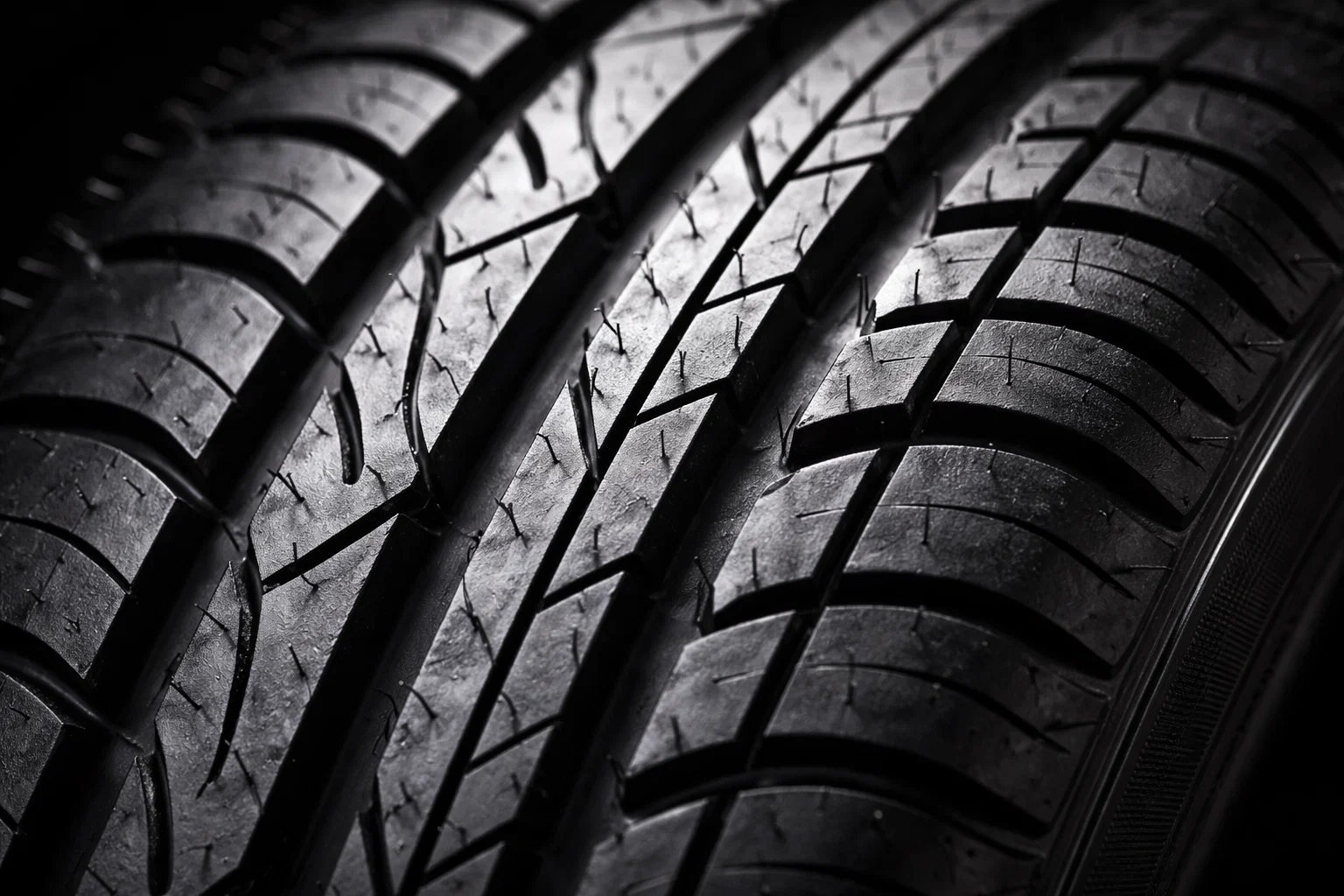
At this point, a key nuance arises. In order for the tire not to deform when heated and maintain accurate dimensions, special microscopic channels are provided in the molds.
Their task is to remove excess material. It is through these holes that excess rubber is squeezed out, which forms the very thin "hairs."
At the same time, there are significantly more such channels than it might seem: if you add up the volume of all these protrusions, you get a noticeable amount of excess material. Manufacturers have repeatedly emphasized that these elements have no practical function — this is purely a technological side effect.
Why There Are More of Them on Winter Tires
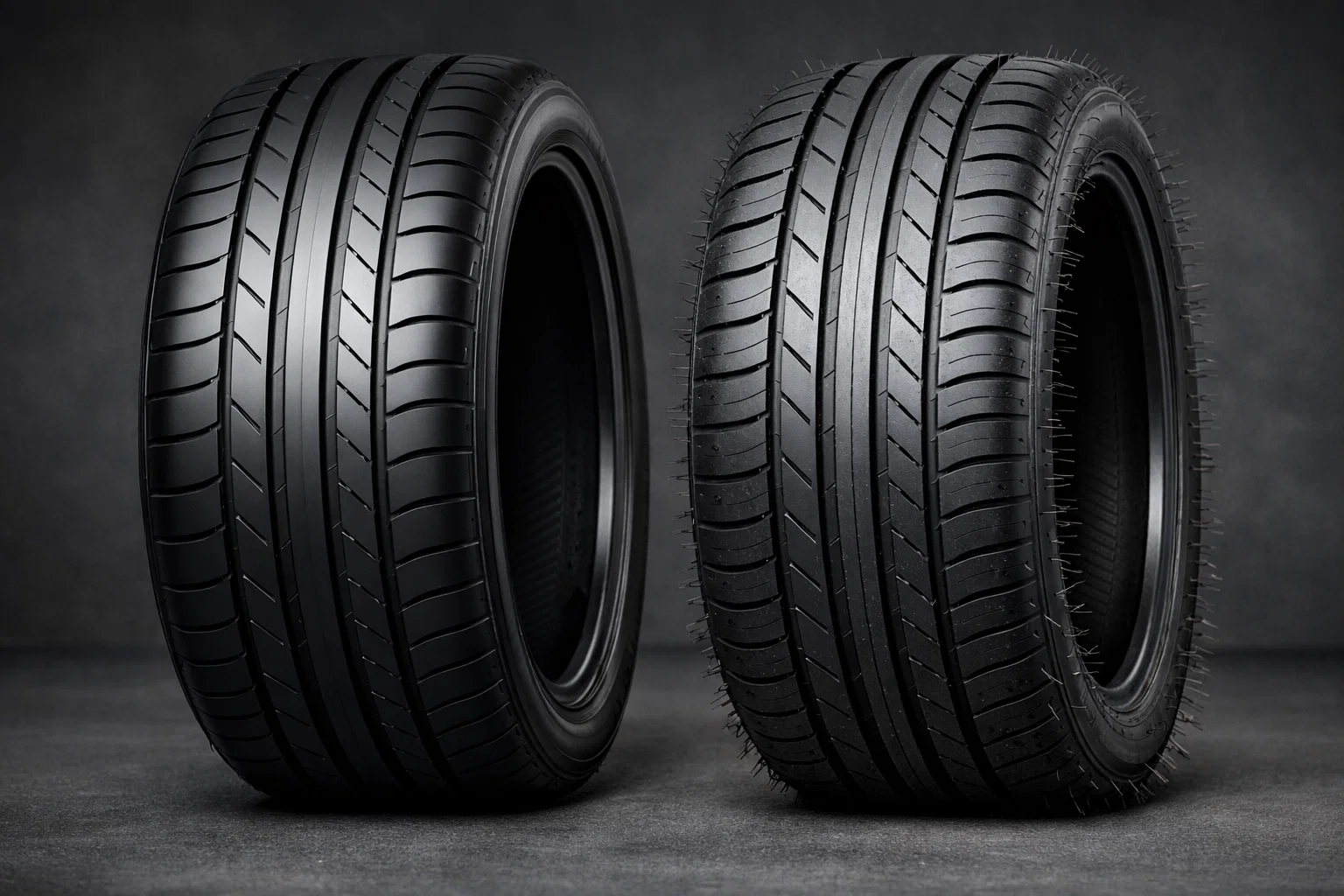
If you compare summer and winter tires, you can notice that the latter usually have more of these "hairs." This is due to the composition of the rubber compound.
Winter tires are made of a softer material that retains elasticity at low temperatures and does not "harden" in the cold. However, at positive temperatures, such rubber becomes noticeably softer and tolerates heating worse.
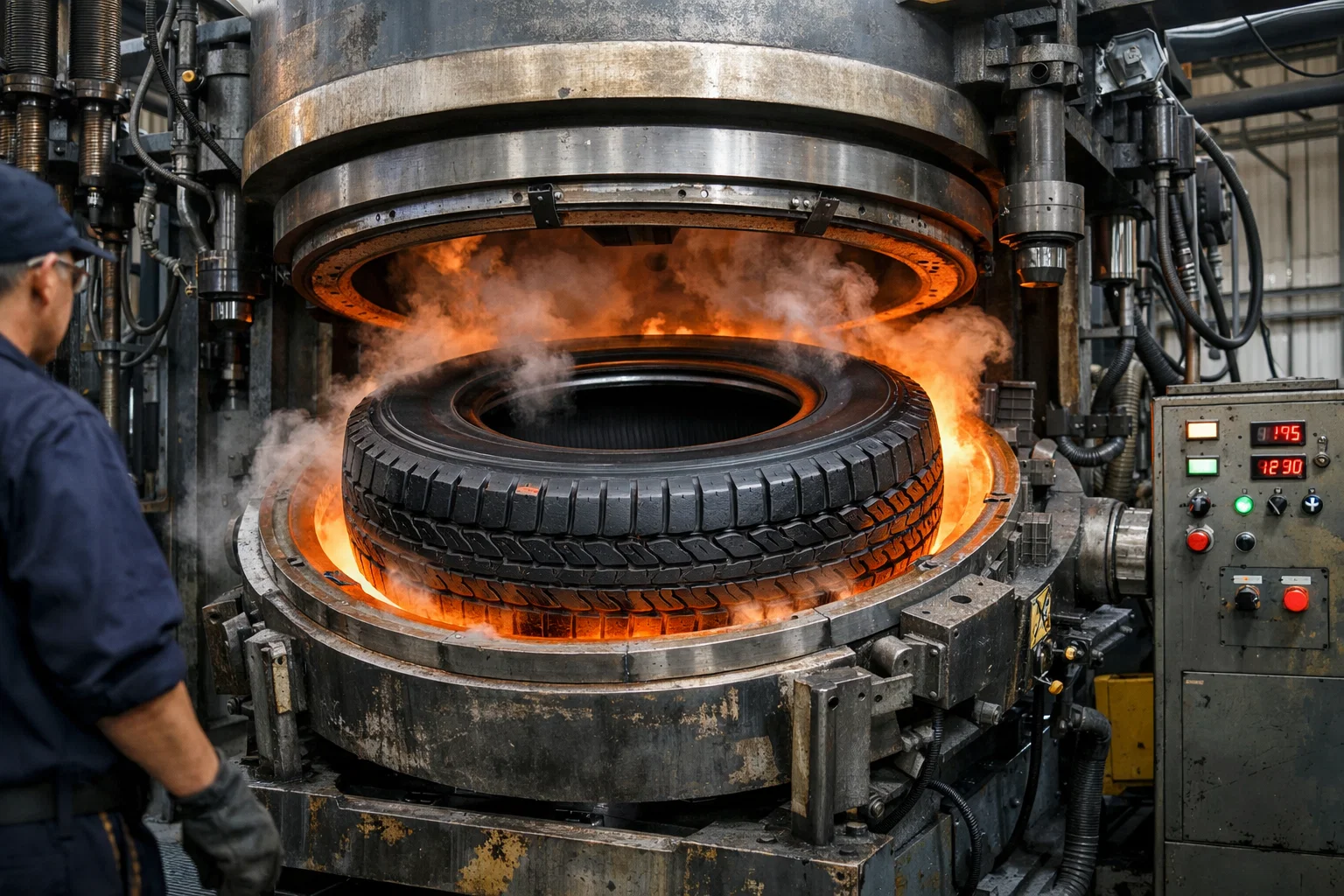
Because of this, during vulcanization:
- the soft mixture is easier to squeeze into the technological channels
- more excess rubber is formed
- the number of "hairs" increases accordingly
Summer tires, on the contrary, are made of a more rigid compound designed for high temperatures. It is less prone to deformation during production, so fewer such protrusions are formed.
Why Some Tires Have Them and Others Almost Don't
Differences between brands in this matter are also explained by the production approach.
The situation is as follows:
- premium manufacturers provide additional processing of finished tires
- such companies use equipment and manual labor to remove "hairs"
- the absence of protrusions becomes a kind of sign of careful finishing
The situation is different in the more affordable segment:
- manufacturers often leave tires without additional processing, this allows to reduce the cost
- removing "hairs" requires time and resources, which increases costs
Their presence does not indicate better or worse grip — it is only a reflection of the level of finishing of the product.
Are "Hairs" Related to Rubber Quality
The tire itself is a complex mixture that includes hundreds of components. Their total number can reach 300 or more, but the key ones remain:
- natural rubber (about 14%)
- synthetic rubber (approximately 27%)
- carbon black (about 28%).
You can indirectly assess the composition even by the behavior of these thin protrusions. If the "hair" is elastic and stretches, this indicates a correctly selected formulation. If it is rigid and breaks easily, deviations in the composition are possible — for example, an imbalance in the content of carbon black, which affects the strength and elasticity of the material.
"Black hairs" on new tires do not perform any useful function and do not affect grip on the road. They appear exclusively as a side effect of the production process.
Read more materials:
- Wide tires: myth or real advantage
- How to use a contactless car wash without risking damage to the paintwork
- How to check the air conditioner when buying a car
Comments