Even such a seemingly simple operation as tightening wheel bolts or nuts, in practice, turns out to be far from obvious. There is a widespread belief that it is impossible to make a mistake here, but the reality is different — the same mistakes are regularly made not only by beginners, but also by drivers with extensive experience. And the consequences of such errors can be very unpleasant.
Let's analyze the three most typical violations of the tightening technology.
Mistake #1: Lubricating the thread before tightening
A common habit is to treat the threads of bolts or studs with graphite grease. This is usually explained by the desire to protect the connection from corrosion and facilitate subsequent unscrewing.
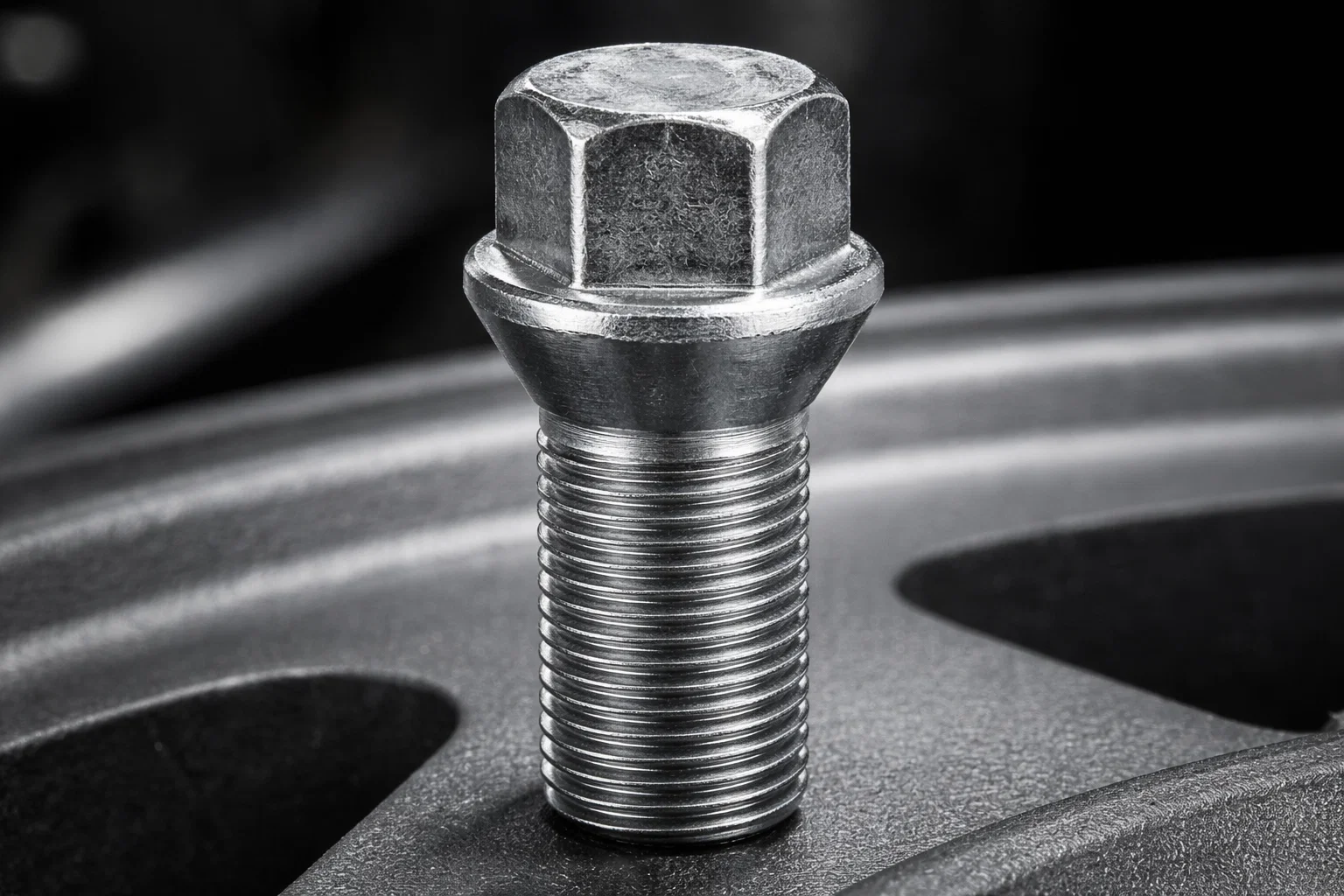
However, this approach has the opposite effect. Lubricated threads change the friction conditions, which is why:
- the risk of overtightening the fastener increases
- the probability of spontaneous loosening of the connection during movement increases
Car manufacturers directly indicate the inadmissibility of such actions. In factory manuals — whether it is Toyota or Volkswagen — it is clearly stated: it is forbidden to lubricate the threads of wheel bolts and nuts.
Even without referring to the instructions, you can rely on practical experience. Cases where properly tightened bolts cannot be unscrewed due to corrosion are extremely rare. Even if difficulties arise — for example, due to excessive effort by the previous owner — the connection still yields with the right approach.
Mistake #2: Using extensions and "amplifiers"
Many people try to tighten the fastener "for sure" by using pipes, extensions, or other ways to increase the lever. This seems logical, but leads to exceeding the permissible torque.
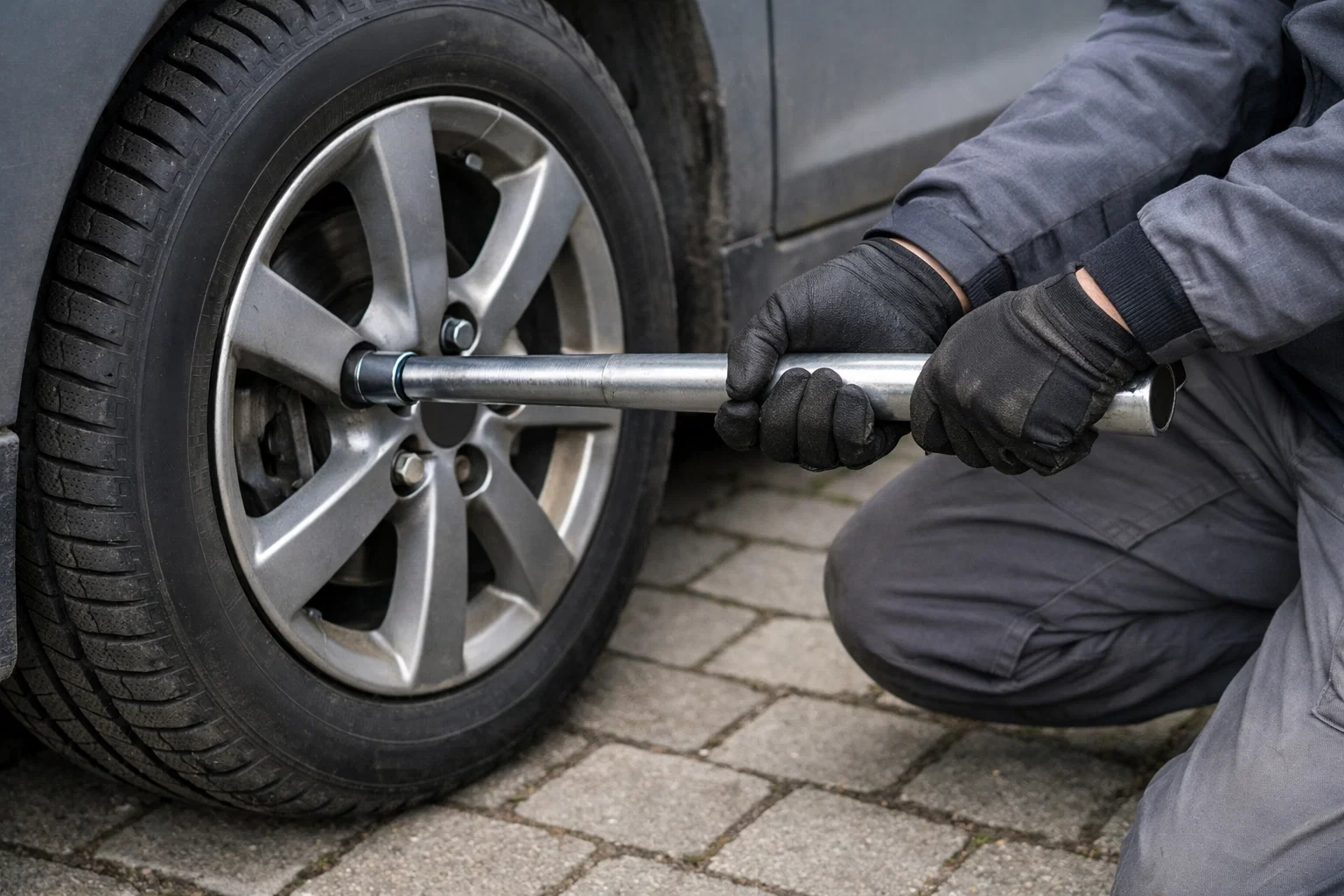
In fact, for most passenger cars, the standard tightening torque does not exceed 120 N·m. This value can be achieved with a regular standard lug wrench, without additional devices.
Excessive force is fraught with the following consequences:
- damage to the thread in the hub
- deformation of bolts or studs
- difficulties during subsequent wheel removal
If precise adherence to parameters is required, the best solution is to use a torque wrench. This allows you to maintain the recommended tightening torque and avoid both loosening of the fastener and its overload.
Mistake #3: Tightening with an impact wrench
The use of pneumatic or electric tools is another common practice, especially at service stations. Often, instead of precise tightening, mechanics limit themselves to a quick pass with an impact wrench.
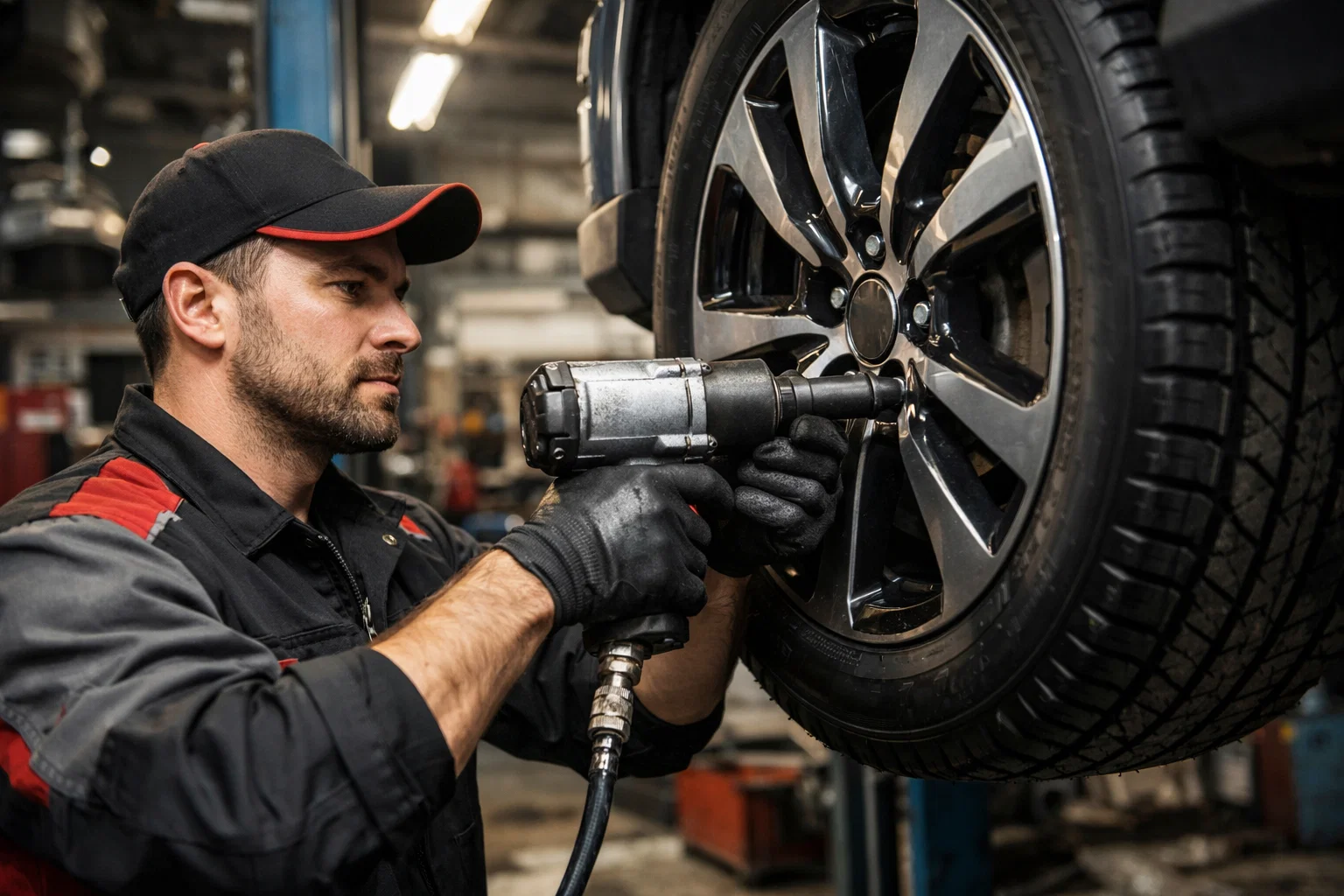
The reason is obvious — saving time. However, this approach excludes control of the tightening torque. Even expensive tools do not always provide accurate adjustment, and in real service station conditions, it is rarely used correctly.
As a result, the following risks arise:
- significant exceeding of the permissible force
- uneven tightening of fasteners
- damage to threaded connections
Therefore, the correct procedure involves using an impact wrench only for preliminary tightening, and the final tightening — strictly with a torque wrench.
Despite its apparent simplicity, tightening wheel bolts requires compliance with certain rules. Violation of the basic technology leads to excessive load on the fastener, damage to the thread, and potential problems in operation.
Following these recommendations allows you to maintain the reliability of the wheel attachment and avoid unnecessary problems both on the road and during subsequent car maintenance.
Read more materials:
- Wide tires: myth or real advantage
- How to use a touchless car wash without risking damage to the paintwork
- How to check the air conditioner when buying a car