A car stuck in mud, sand, or snow is an unpleasant but quite typical situation. Most often, cars with low ground clearance find themselves trapped, but even SUVs are not immune to such problems. At the same time, attempts to get out can take a lot of time — from half an hour or more, and incorrect actions only worsen the situation.
Let's figure out which methods really help free the car and how to act without unnecessary risk.
Rocking: a basic way to get out
One of the most accessible and often effective methods is rocking the car. It is suitable if the car is not stuck deeply.
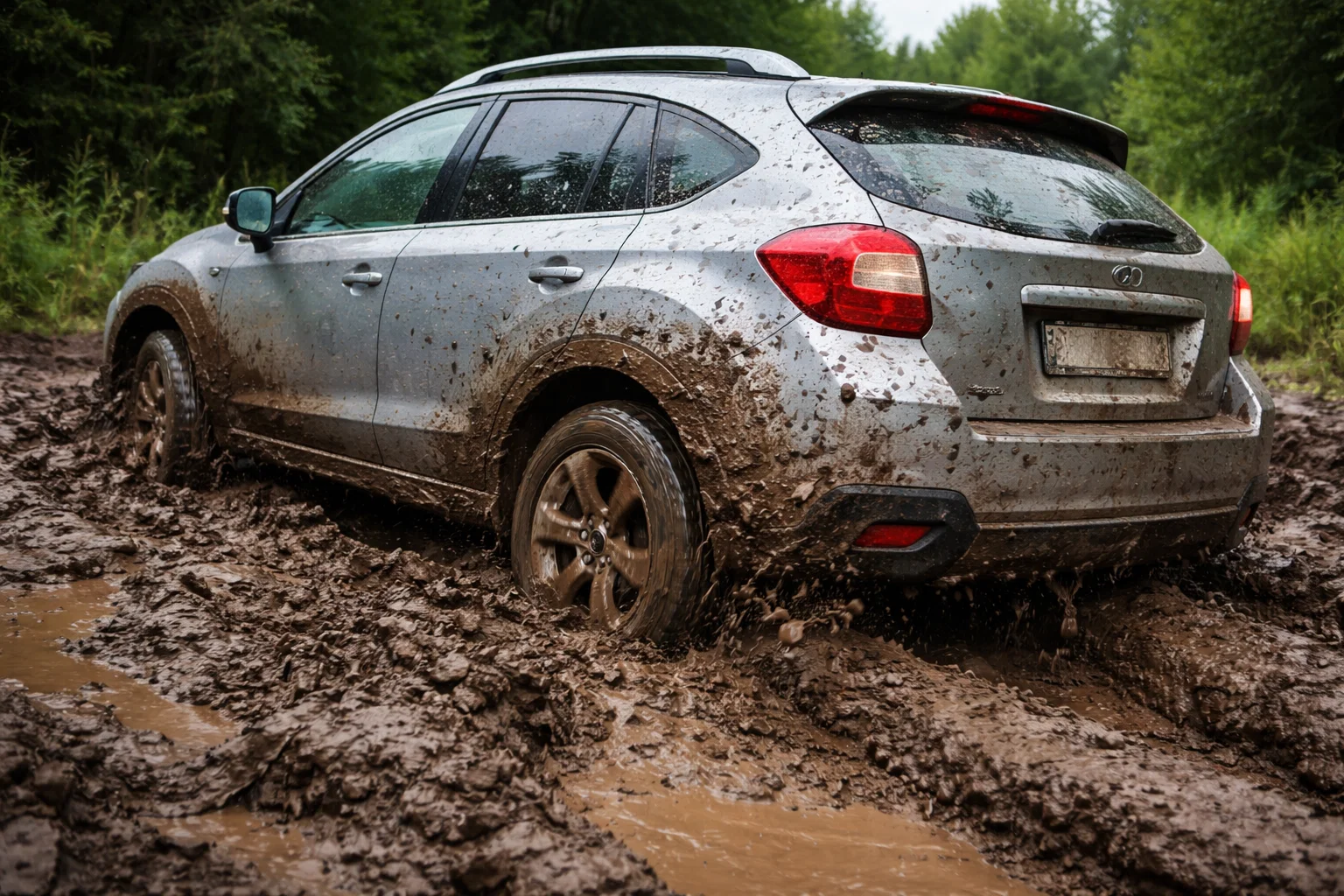
The essence is simple: it is necessary to move forward and backward alternately, gradually increasing the amplitude of movement. The algorithm looks like this:
- the forward movement mode is turned on and the car starts moving carefully
- when resting against an obstacle, reverse gear is selected
- the movement is repeated in the opposite direction
It is important to avoid wheelspin — it only "buries" the car deeper. With each cycle, inertia helps to travel a slightly greater distance until the car gets out.
If the deepening is serious, you can enhance the effect. After a slight advance forward, the area under the wheels is filled with improvised materials: branches, boards, or any solid objects that can create support.
Such a "substrate" forms an improvised track, which is easier to drive back on.
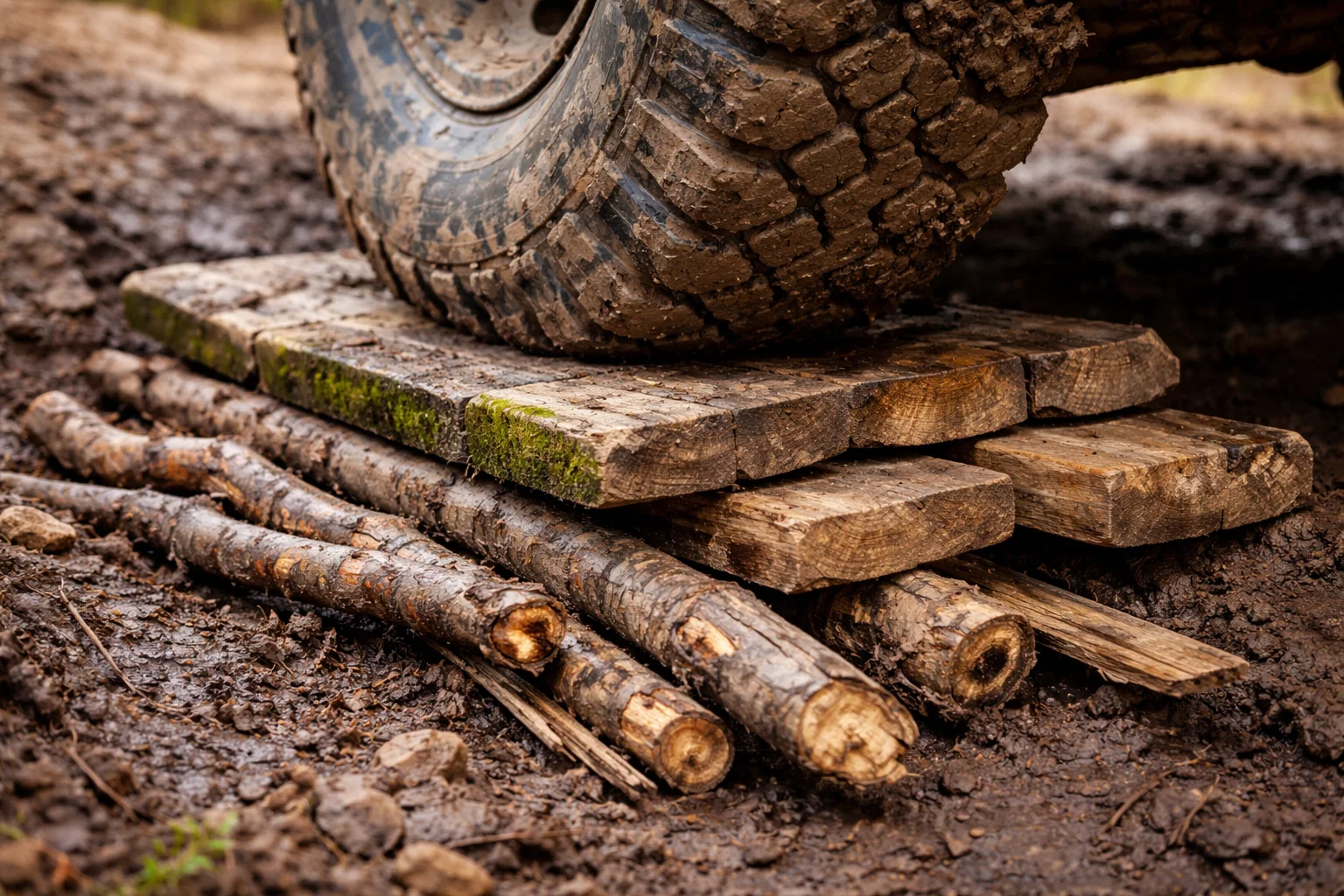
In more complex cases, a jack is used: each wheel is alternately lifted, and materials are also placed under it to improve grip.
Reducing tire pressure
Under normal conditions, the tire pressure of a passenger car is approximately 2.2–2.5 bar. However, if you get stuck, it is allowed to temporarily reduce it.
Reducing the pressure has the following effect:
- the contact area of the tire with the surface increases
- grip with the ground improves
- the chance to get out of the trap increases
In practice, they are guided by a value of about 1.3 bar, controlling it with a pressure gauge. After the car is released, the pressure must be returned to normal.
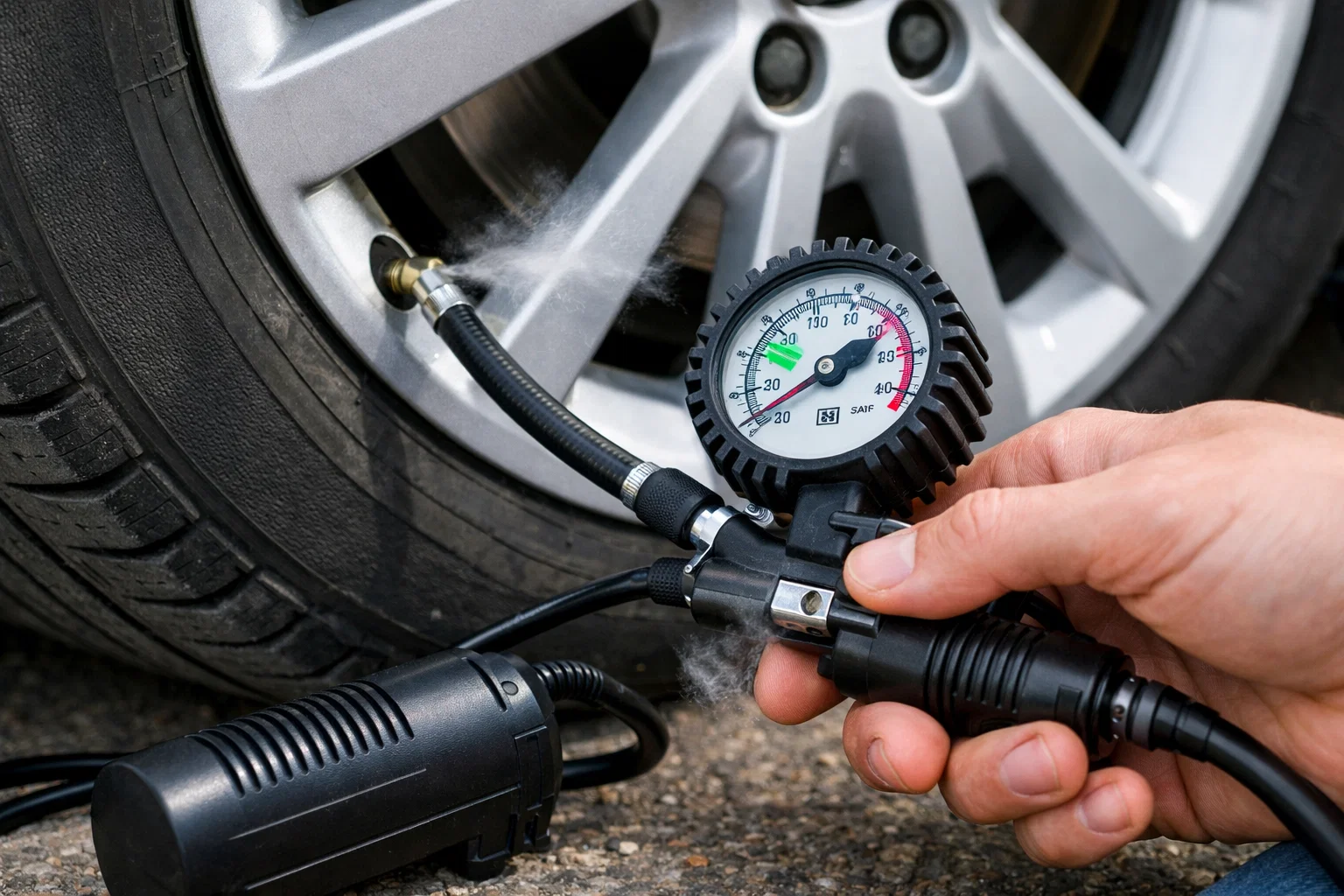
It is important to remember that prolonged driving on flat tires is undesirable: this increases fuel consumption and can lead to tire damage.
Help from the outside
Sometimes the easiest way is to attract people. If there is a road or settlement nearby, it is worth contacting those around you.
Possible options:
- one or more people push the car
- the driver carefully helps with gas at the same time
- with a shallow depth of getting stuck, the efforts of even one assistant are enough
If there are two people in the car, it is logical to distribute the roles: a more physically prepared person pushes, the second drives the car.
Towing and use of equipment
When independent attempts do not give results, it remains to resort to the help of other transport. Most often, an SUV, tractors, or in some cases, other passenger cars are used.
When towing, it is important to follow the rules:
- the cable is attached exclusively to the standard towing eye
- it is forbidden to fix it to the disc, body elements or decorative parts
- pulling should occur smoothly, without jerks
An alternative may be a winch. However, for its use, a reliable fixed base is needed — for example, a tree or a pole to which the cable is fixed.
Useful tips for trips
To reduce the likelihood of such situations, it is worth considering a number of factors in advance.
Main recommendations:
- avoid unfamiliar routes in deserted areas, even if they look shorter
- when the coverage is questionable, choose a detour, even if it is longer
- prefer cars with front or all-wheel drive when traveling on difficult sections
- remember that rear-wheel drive cars are more likely to lose traction, especially in winter
- have a shovel in the trunk for clearing snow or dirt
- keep an ax or similar tool handy for preparing branches for the wheels
The main thing is not to aggravate the situation with abrupt actions and wheelspin. A calm and consistent approach allows you to get out of even a difficult trap without damaging the equipment.
Read more materials:
- SWM and Kaiyi sales collapsed to a minimum
- Car scams left without a separate article
- Head of AvtoVAZ confirmed the introduction of a subscription to Lada Vesta
Comments