A wheel lock is a metal device that secures the wheel, completely preventing the vehicle from moving. It is installed for parking violations as an alternative to towing. The car remains in place, but it cannot be used.
Such a lock can only be removed officially — after paying the fine and the arrival of an employee. Attempts to cope on your own usually lead to damage.
Mistake #1: Trying to Break the Lock by Moving Forward
The most common idea is to start abruptly, hoping that the lock will not withstand the load. In practice, the opposite happens.
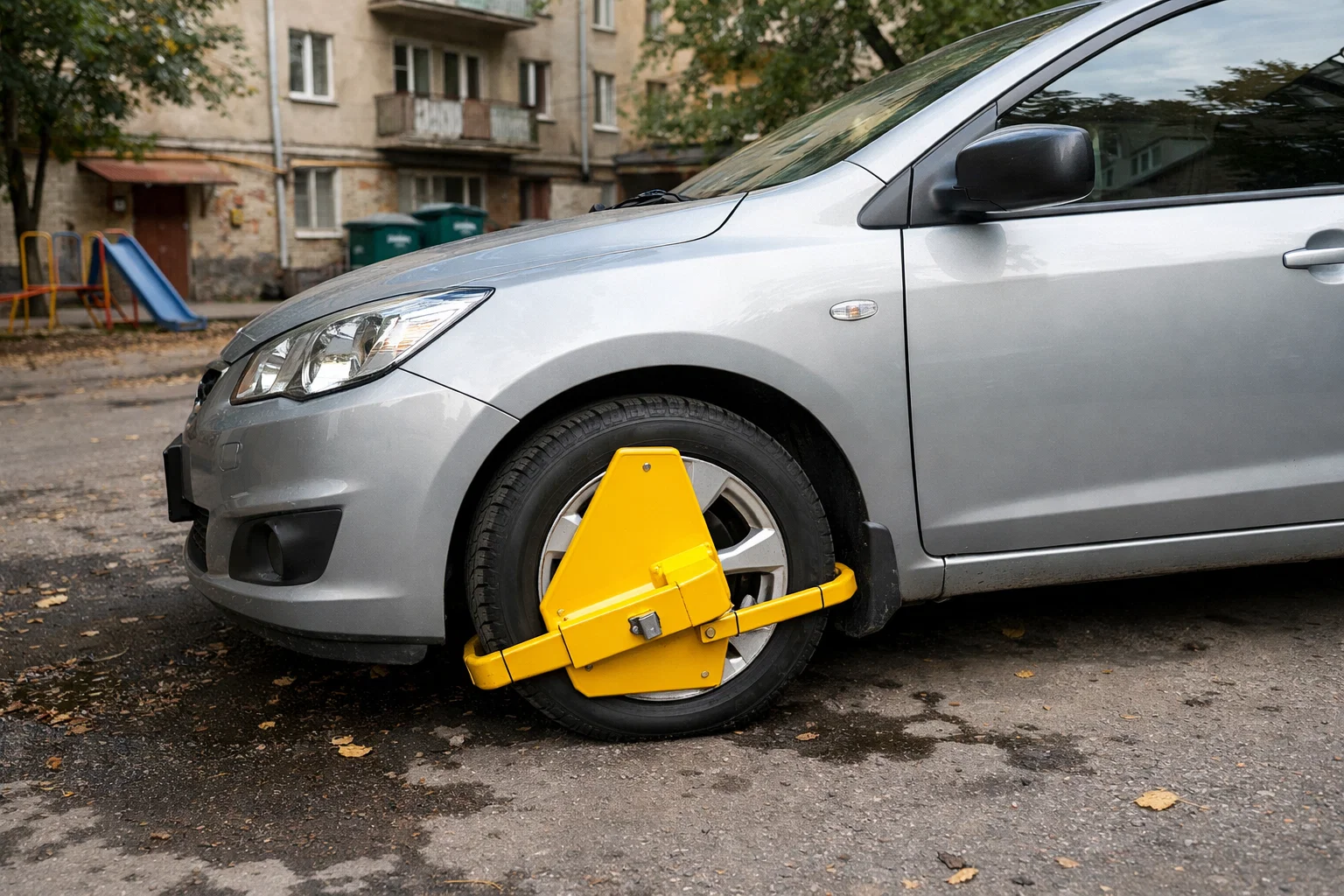
At the moment of movement:
- the lock crashes into the disc
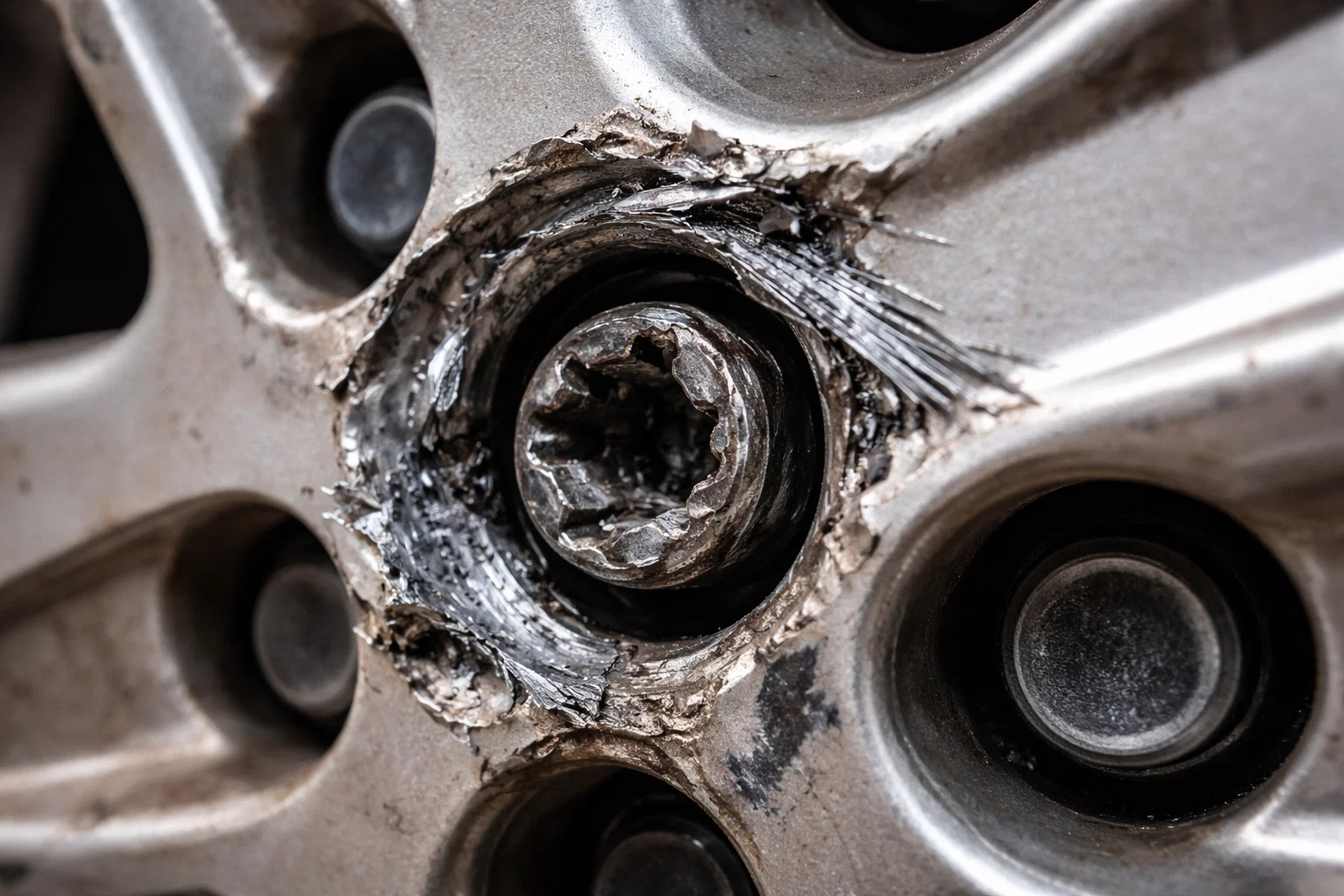
- the wheel turns, and the metal begins to damage the surface
- deep scratches or deformation appear
The financial consequences can be significant: repairing an alloy wheel costs approximately from 5,000 to 15,000 rubles, and replacing the disc costs from 10,000 to 50,000 rubles, depending on the model.
Moreover, it is not only the appearance that suffers. A sharp jerk creates a load on the hub bearing, which is not designed for such impacts. Replacing it along with the work will cost another 4,000–15,000 rubles.
Mistake #2: Trying to Carefully Back Up
Some drivers hope that slow reverse movement will allow them to free themselves without consequences. But the design of the lock is specifically designed for the opposite.
When trying to roll back:
- the device clings to the elements of the brake system
- the risk of damage to the caliper increases
- the brakes are disrupted
The consequences are already more serious: caliper deformation — from 8,000 to 25,000 rubles, possible replacement of the brake disc — another 3,000–12,000 rubles per unit (usually replaced in pairs).
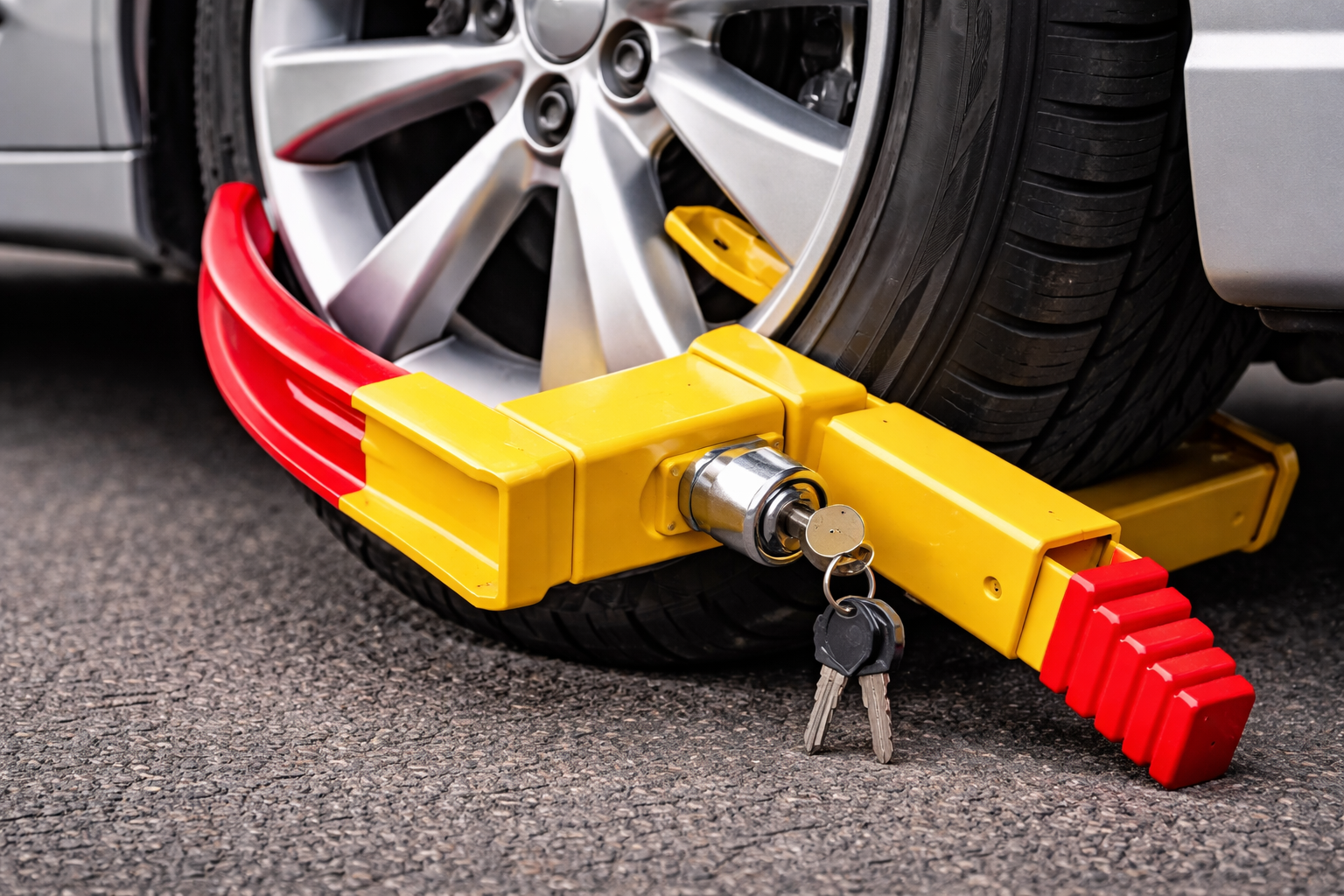
As a result, a «careful» attempt can lead to safety problems.
Mistake #3: Independent Removal with a Tool
Sometimes attempts are made to cut off the lock, for example, with an angle grinder. In practice, this is an extremely risky option.
Possible consequences:
- damage to the wheel disc during cutting
- sparks falling on the tire, which can lead to its damage or fire
- additional liability for damage to someone else's property
In this case, compensation for the damaged lock may be added to the parking fine.
Mistake #4: Trying to «Solve the Issue Through Acquaintances»
Another misconception is to rely on the help of familiar employees. In practice, locks are installed not by traffic police officers, but by representatives of municipal services or parking operators.
This means:
- third parties do not have access to removal mechanisms
- there are no keys and data in the system
- any unofficial actions can lead to additional problems
How to Act Correctly
The optimal algorithm is simple and does not require unnecessary risks.
It is recommended:
- record the situation in a photo: car, lock, road signs and markings
- if necessary, use these materials to challenge
- pay the fine through the official service
- contact the number indicated on the device and wait for an employee
Typically, removing the wheel clamp takes from half an hour to several hours.
If the car is damaged
Sometimes the installation is done carelessly, and scratches or other defects may appear. In such a situation, it is important to: record the damage with photos and videos, call a service representative, and draw up a report.
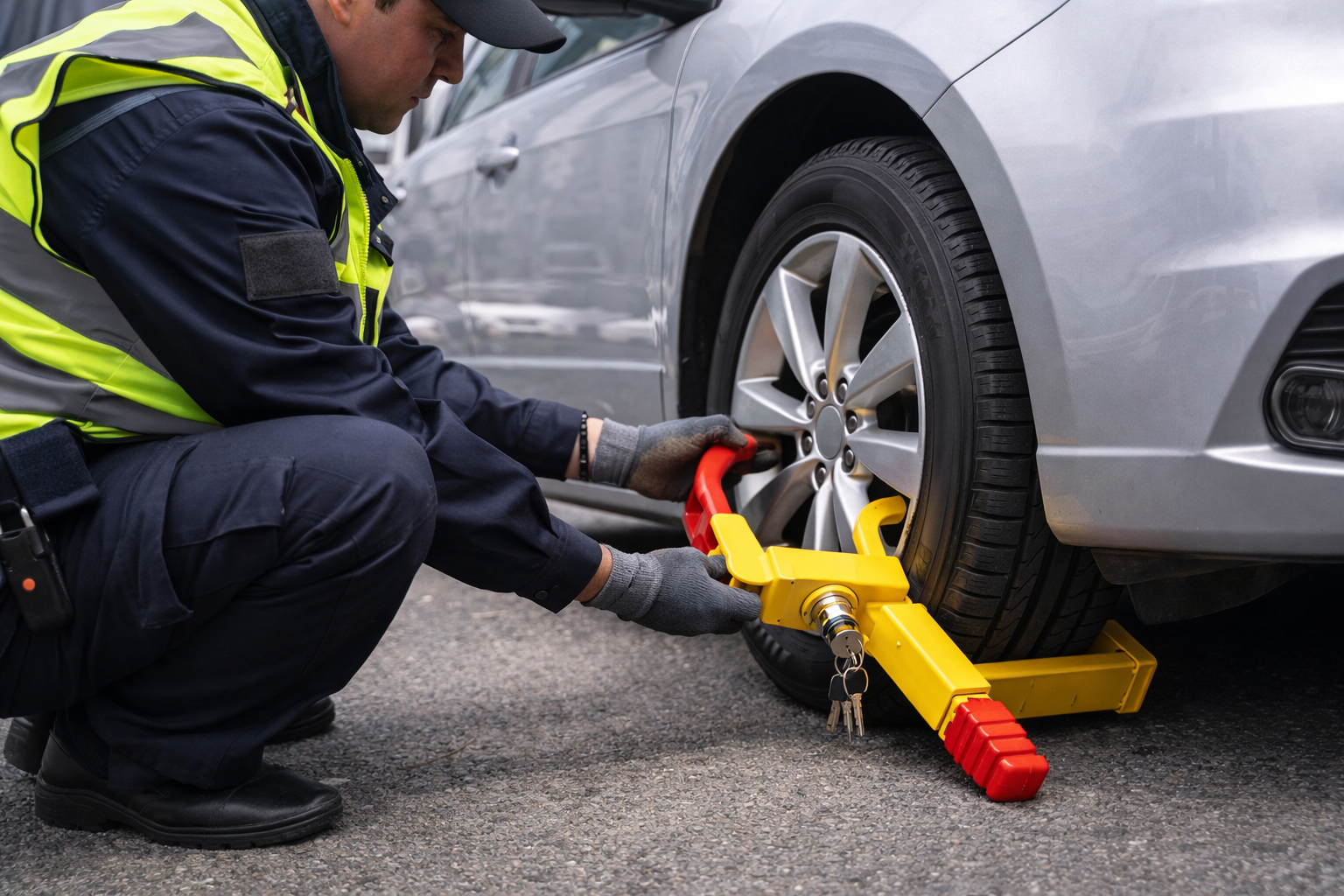
Without documentary evidence, there is no need to count on compensation.
A wheel clamp is an unpleasant but not critical situation. Real problems start when the driver tries to remove it on their own. It is much wiser to pay the fine and wait for the official removal of the device - this will save both money and the technical condition of the car.
Read more materials:
- Is it necessary to break in an electric car
- What do the hairs on new tires mean
- How to restore headlights after winter
Comments