The MAZ-500 is a truck capable of moving even without a battery. Its engine is resistant to an electromagnetic pulse, and under certain conditions the vehicle can start moving on its own if the parking brake is not engaged. This was the first Soviet cab-over truck created with the aim of bringing the country closer to the European level of long-haul transport. The assessment of the result is left to the reader, but the fact remains: decades later, these vehicles are still working, carrying bulk cargo and showing no hurry to leave service.
From shortage to breakthrough
In the 1950s and 1960s, the USSR acutely felt a shortage of heavy trucks. At the same time, vehicles like the MAZ-205 no longer met the demands of the era: outdated solutions, high fuel consumption, and unstable operation of the two-stroke diesel made them inefficient. The need for a new vehicle was obvious.
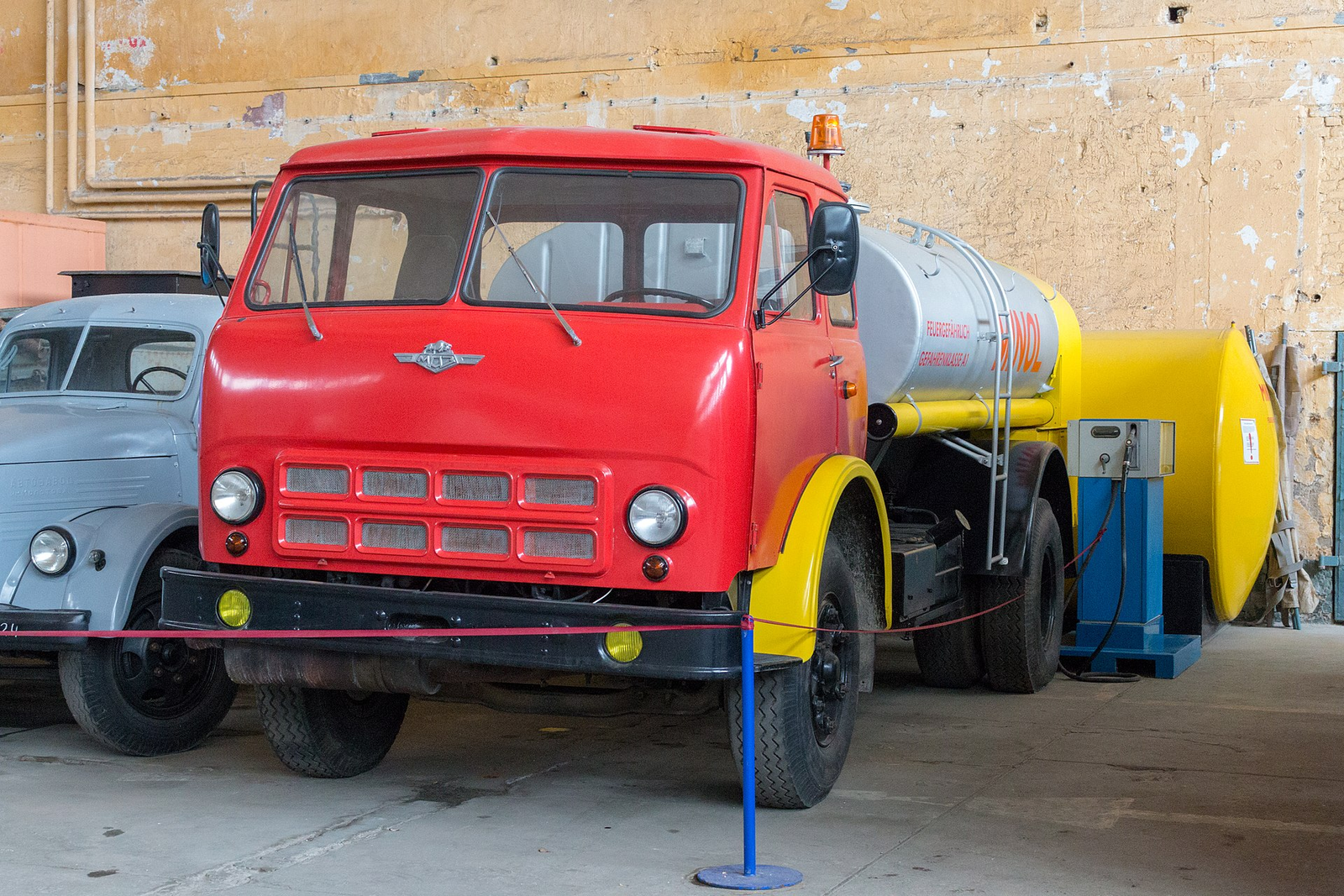
The MAZ-500 became the answer to this challenge. Its appearance marked an important stage in the development of the industry, since it offered a fundamentally different layout and a more modern approach to design.
The cab-over layout and its features
The main distinguishing feature was the cab placed above the engine. For the global industry this solution was no longer new - European manufacturers had already used similar layouts, but the Minsk truck stood out for its strength and practicality.
This layout provided a number of advantages:
- more efficient use of wheelbase length and increased payload
- improved maneuverability
- simplified access to the power unit
The cab turned out spacious, with a full sleeping berth. However, access to the engine through the tilting cab came with certain inconveniences: depending on the load, raising and lowering it required considerable effort.
Development of the model took several years. The first prototypes appeared in 1958, a pilot batch in 1963, and mass production began only by the mid-1960s. The main difficulty lay in implementing the control system with the increased length of the linkages.
Engine: simplicity and endurance
Under the cab was the YaMZ-236 diesel - a V6 engine with a displacement of 11.15 liters, producing 180 hp and 667 N·m of torque. The design was distinguished by a classic configuration: cast-iron block, "wet" liners, and cast-iron heads.
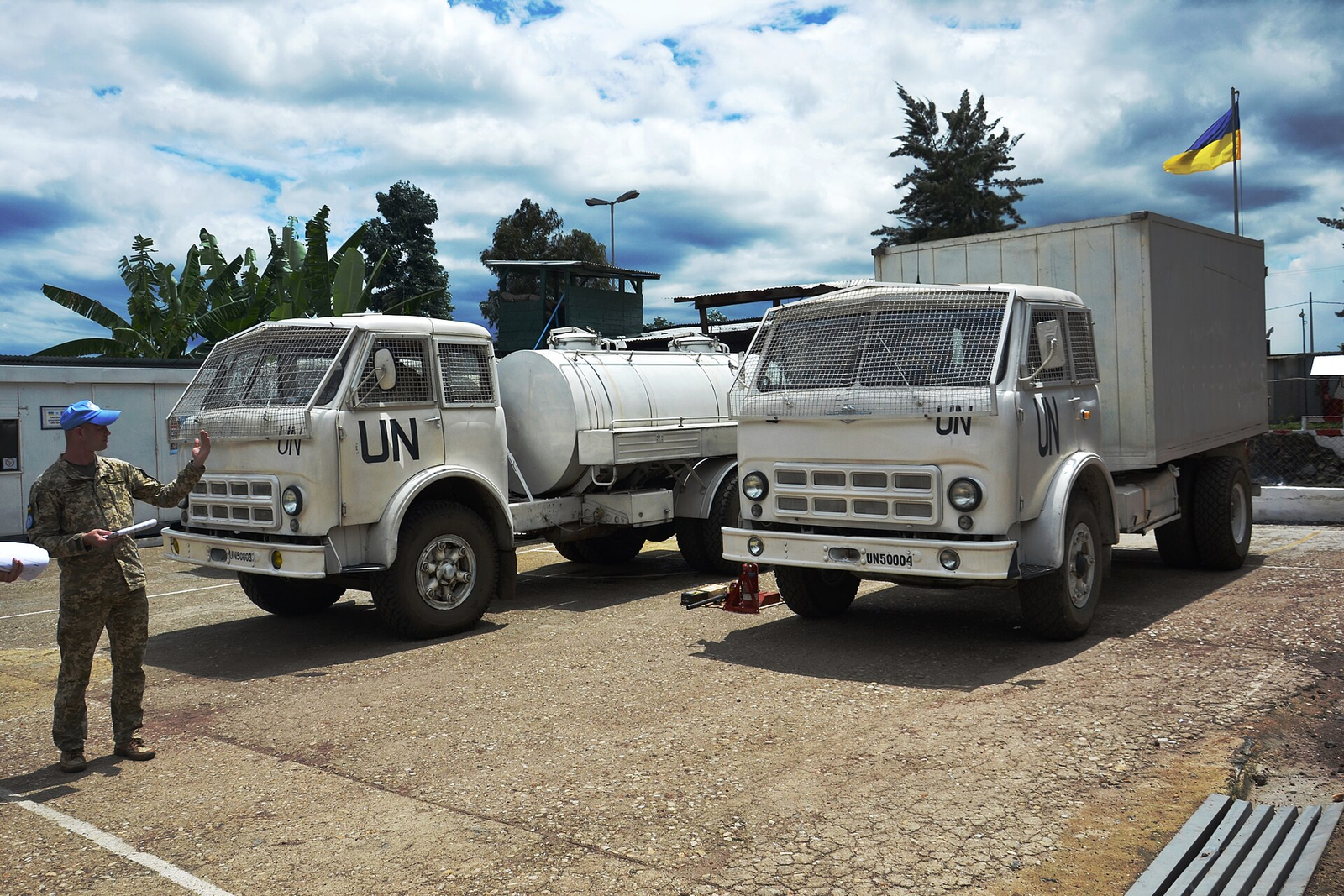
The fuel system included a mechanical high-pressure fuel pump with six plunger pairs, providing pressure above 160 atmospheres. Injection was carried out directly into the combustion chambers. The absence of electronics allowed the engine to operate independently of the electrical system - it was enough to bump-start it.
This feature gave rise to a well-known operational nuance: with a gear engaged and the parking brake released, the truck could begin moving on its own. Such cases were indeed recorded.
The design provided for an advanced filtration system: fuel, oil (including a centrifuge), and air filters. Auxiliary equipment was belt-driven. Despite overall reliability, the engine remained sensitive to basic factors - fuel quality, the absence of air in the system, and the condition of the drive elements.
Transmission and chassis
The drivetrain was also built around simple but reliable solutions. A twin-disc clutch with a pneumatic booster was paired with a five-speed gearbox. Synchronizers were present only on gears from second through fifth.
Design features included:
- the presence of its own oil pump in the gearbox
- lubrication dependent on engine operation, which limited prolonged towing
- a long and complex gear-shift linkage
The rear axle had a two-stage layout with planetary final drives, which ensured high reliability. At the same time, the parking brake was a mechanical system with a drum on the reduction gear output shaft, which reduced effectiveness in harsh operating conditions.
Dump truck versions and modifications
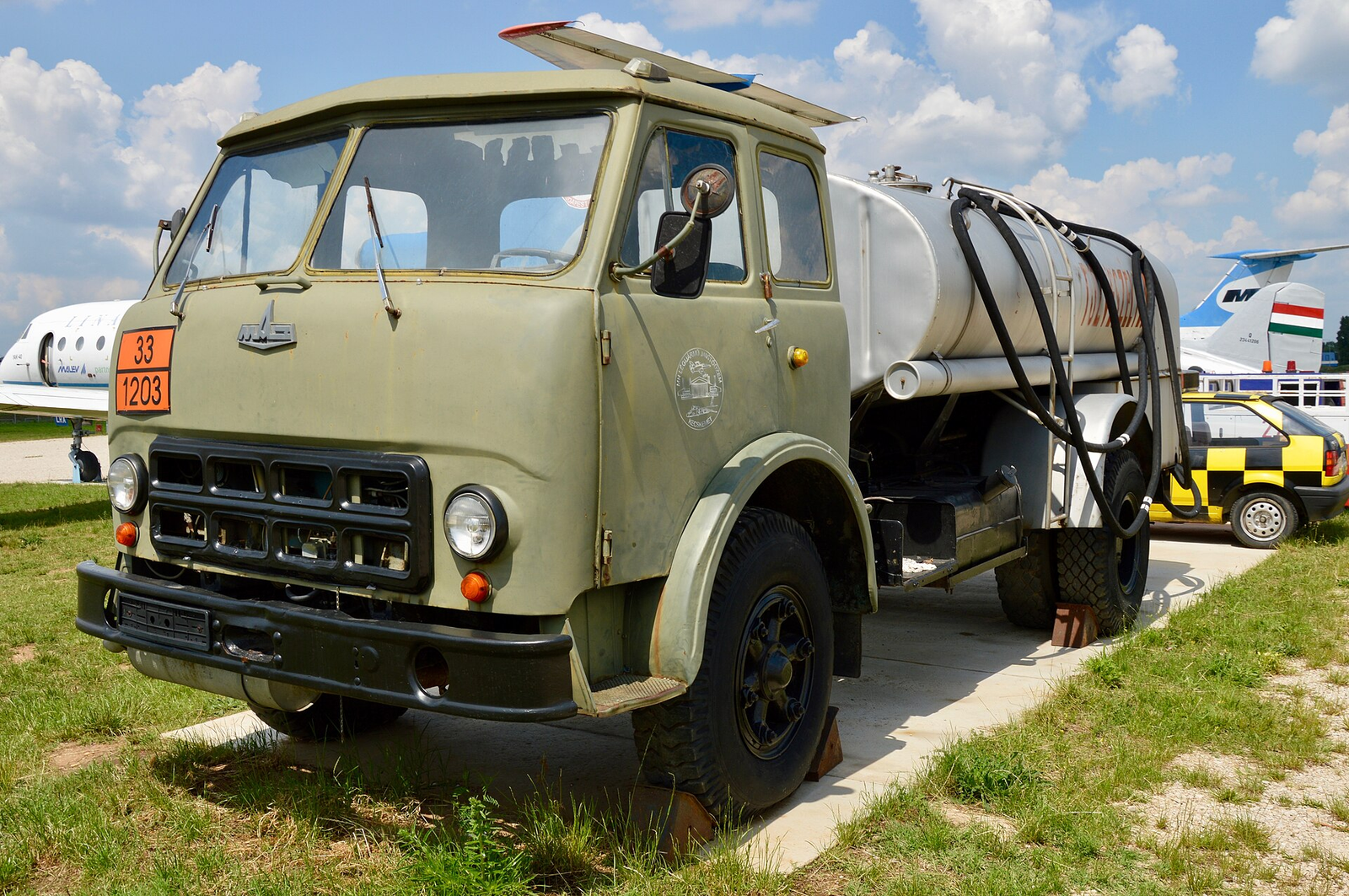
The dump-truck versions deserve special attention. Their hydropneumatic system allowed the body to be raised in about 15 seconds, while the tailgate was equipped with pneumatic locks. Control was carried out from the cab, which increased productivity on construction sites.
The lineup also included various modifications:
- truck tractors designed for carrying substantial loads
- three-axle versions with more powerful engines
- timber trucks adapted for civilian use
All-wheel-drive variants remained at the prototype level, giving way to specialized vehicles from other manufacturers.
Role in long-haul transportation
The MAZ-500 occupied an important place in the system of long-distance transport. With the development of international transport operations and the creation of corresponding structures, a need arose for truck tractors capable of working on long routes.
Later modifications received improved conditions for the driver: adjustable seats, better sound insulation, and additional equipment. This made it possible to use the vehicle on more difficult and longer trips.
The machine that does not leave
Production of the model ended in 1990, but a significant number of trucks remain in service.
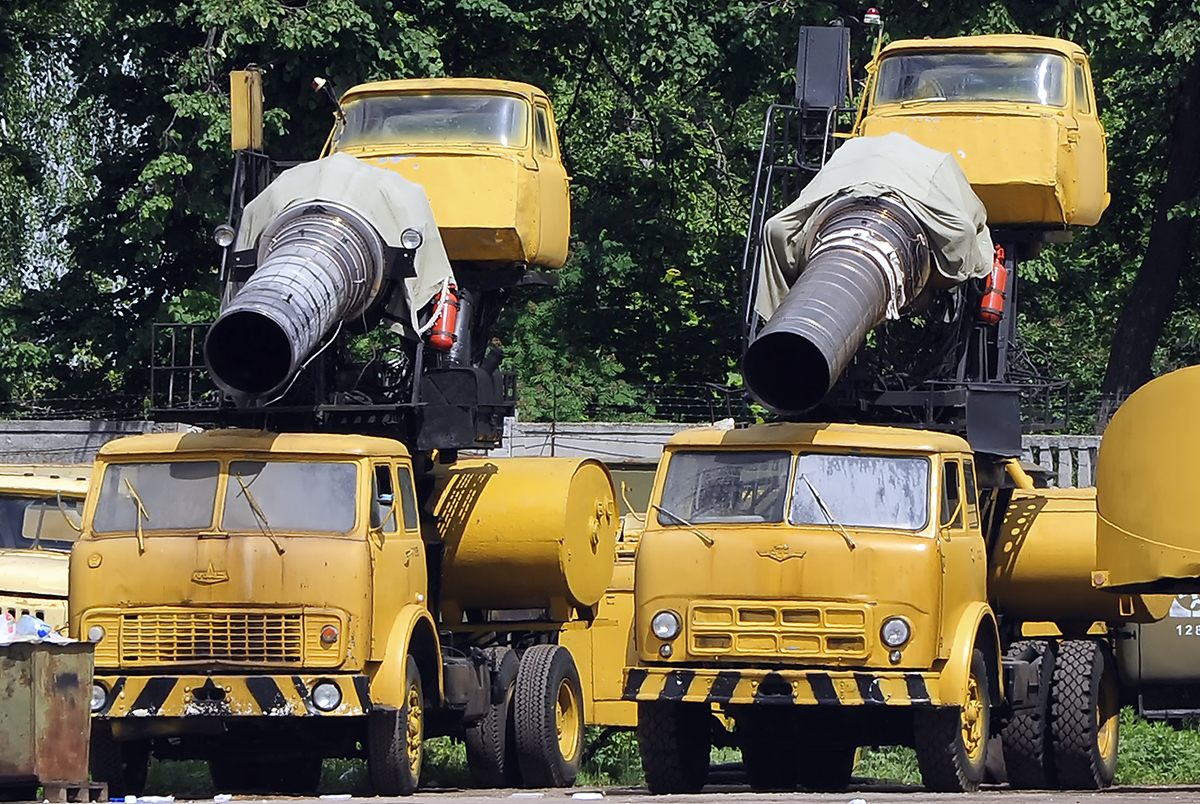
The design of such vehicles often retains the original units, although owners make changes: they reinforce the body, modernize cab elements, and improve the heating system. At the same time, the basic assemblies - engine, transmission, and frame - remain operational.
Operating conditions today are far from comfortable: high noise levels, stiff suspension, and weak effectiveness of the standard heater. Nevertheless, owners adapt the equipment to themselves by installing more comfortable seats, modernizing the interior, and adding extra equipment.
The MAZ-500 was produced for almost three decades and established itself as a durable and repairable truck. The availability of spare parts and the simplicity of the design make it possible to keep it in working condition even years after production ended.
The prospects for further operation depend largely not on technical lifespan, but on regulatory restrictions. From a design standpoint, these vehicles remain operational and continue to perform their tasks, confirming their reputation as truly tenacious machinery.
Read more articles:
- Battery removal: the order that must not be violated
- How Skoda became part of a German corporation
- Why the ZiL-157 became one of the drivers' own
Комментарии