A situation where a car starts to slide on a wet surface is related to aquaplaning. This happens when the tires cannot displace water from the contact patch quickly enough. A film of water forms between the rubber and the asphalt, causing the wheel to lose grip and the car to lose control.
Several factors influence this process:
- driving speed
- water depth on the road
- tire condition and tread depth
- road surface quality
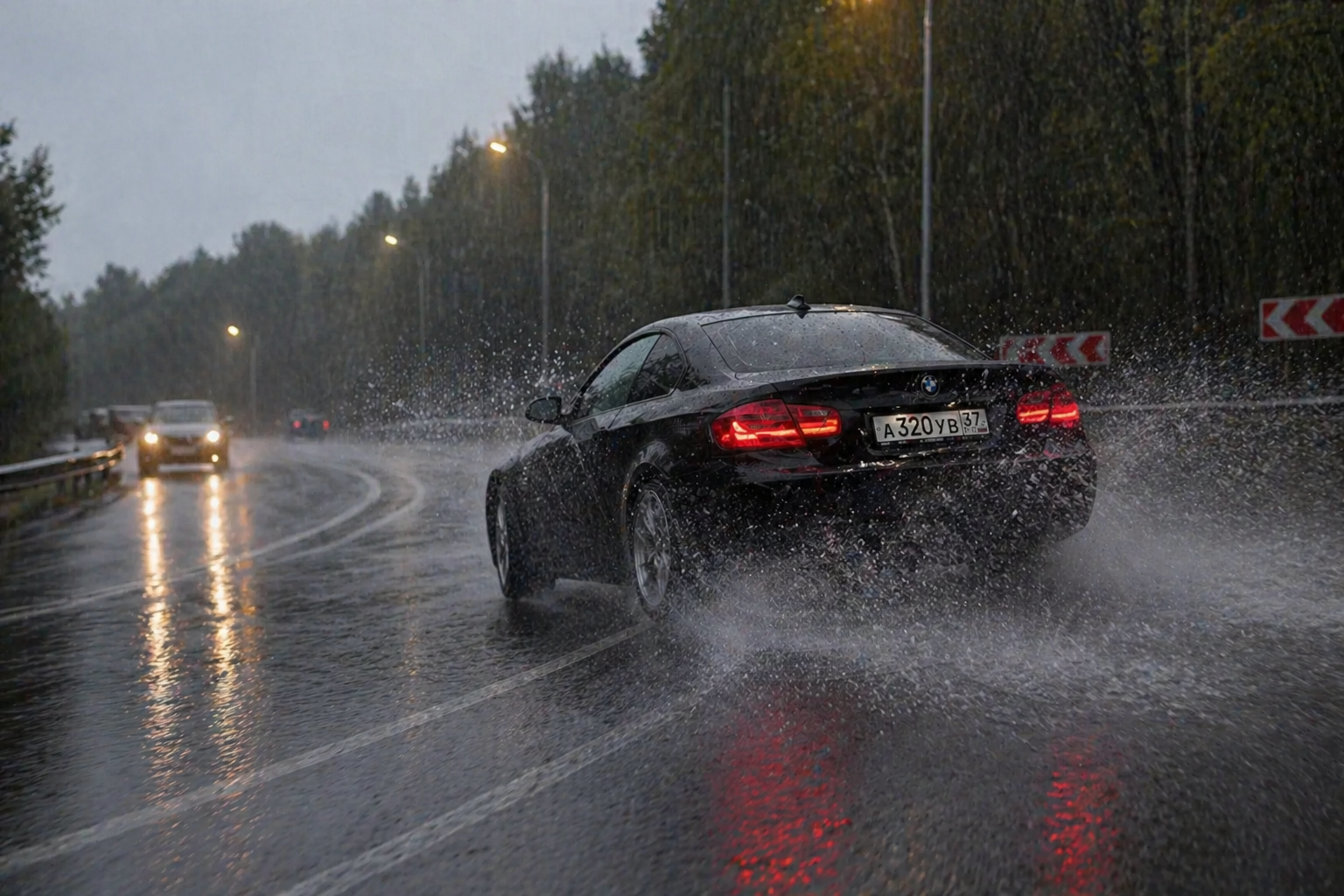
Even under moderate conditions, the difference can be critical. For example, at 80 km/h and a water layer of 1–2 mm, tires with a tread of about 4 mm can still cope. But at 110 km/h, the volume of water sharply increases, a water wedge forms – and the car starts to "float".
Physics of the process
As speed increases, so does the load on the tires: they require more and more effort to displace water. However, the capabilities of the tread are limited. When the water flow exceeds this limit, a stable film forms, sharply reducing friction.
The risk particularly increases:
- at speeds above 100 km/h in the rain
- when tires are worn to less than 3 mm
- when using unsuitable tires, for example, winter tires in the warm season
In conditions of frequent rain, such a situation becomes a very real threat.
How to recognize aquaplaning
There are several characteristic signs by which you can understand that grip has been lost:
- the steering wheel becomes "empty", feedback disappears
- braking has almost no effect
- the car continues to move straight, not reacting to turns
- vibrations and wheel shudder appear
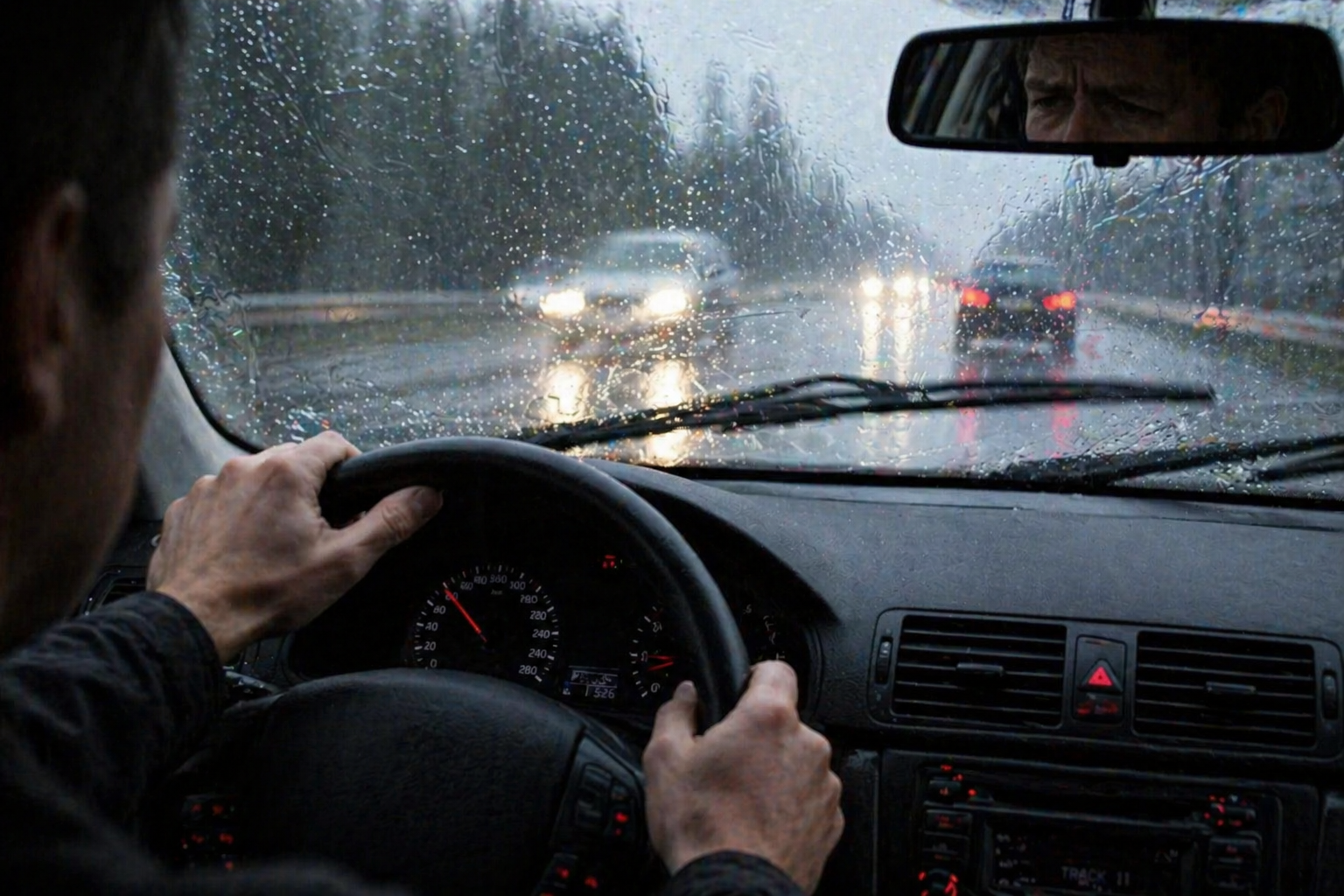
The appearance of these symptoms means that the car has already partially or completely lost contact with the road.
Correct actions
The key rule is to avoid sudden movements. Driver errors in such a situation are often more dangerous than the phenomenon itself.
You should act as follows:
- gently release the accelerator pedal
- do not make sharp turns of the steering wheel
- maintain the direction of travel
- brake gently, without sudden presses
- after regaining grip, gradually regain control
Any sudden actions only increase the loss of stability.
How to reduce risk
Preventing aquaplaning is easier than dealing with its consequences. The main measures are as follows:
- use tires with a tread of at least 3–4 mm
- reduce speed to 90 km/h and below in heavy rain
- avoid deep puddles and areas with water
- monitor the condition of brakes, suspension, and tires
Such preparation significantly reduces the likelihood of a dangerous situation.
Statistics and conclusions
According to the US Department of Transportation, about 10% of fatal accidents in the rain are related to aquaplaning. In Russia, the share of accidents due to skidding on wet roads is estimated at approximately 8–12%.
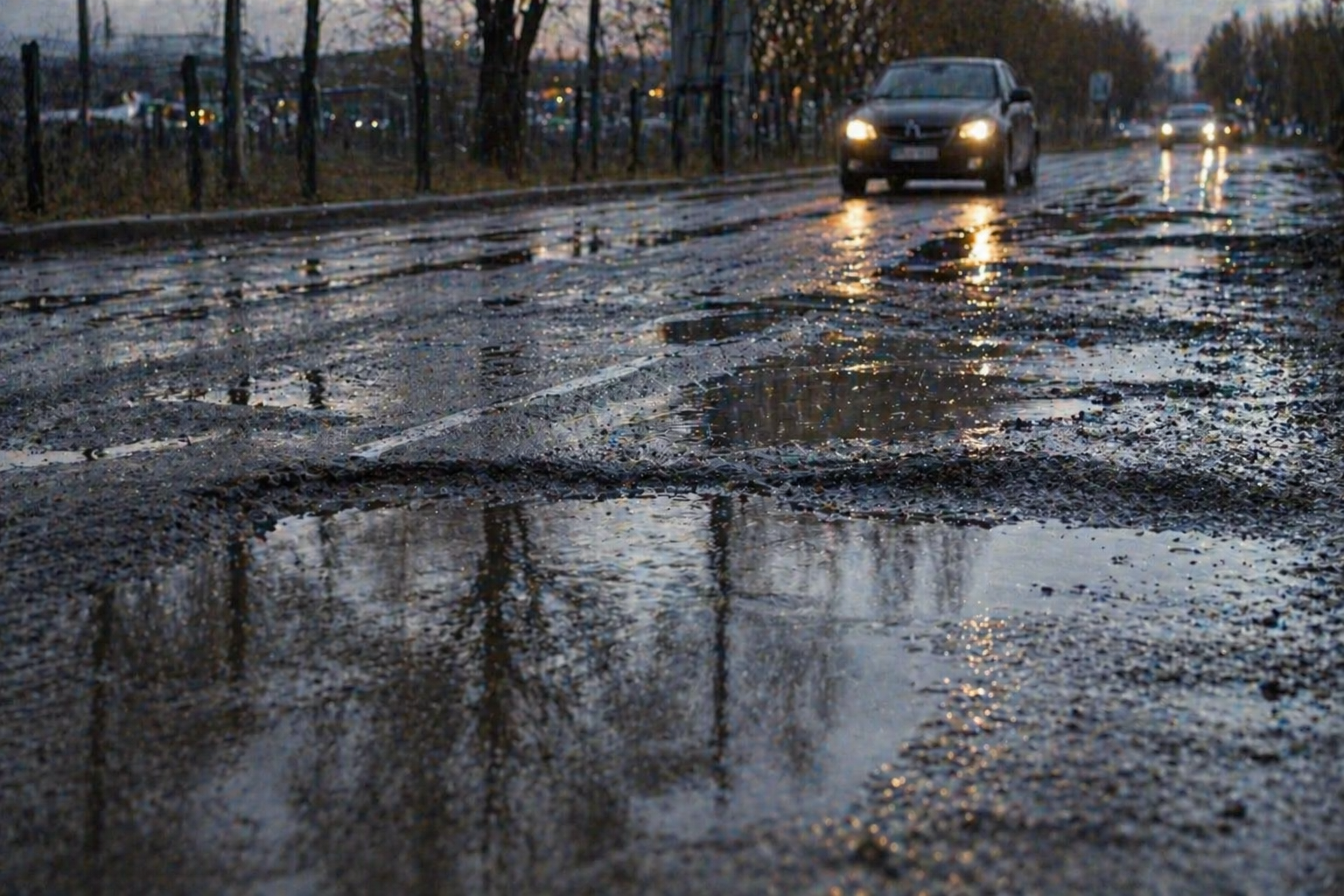
The reasons are not only weather conditions but also the human factor: unsuitable tires, high speed, and incorrect actions behind the wheel.
Aquaplaning is not a rarity, but a natural phenomenon under certain conditions. It deprives the car of grip and makes control almost impossible. However, knowing the causes, signs, and correct actions can significantly reduce the risk.
In rainy weather, attentiveness, moderate speed, and the good condition of the car play a decisive role – this is what helps maintain control and avoid dangerous situations.
Read more materials:
- Lexus LX 450: a bet that paid off
- Why was the windshield divided in half before?
- How the USSR created an "invisible" command post
Комментарии