In the late 1930s, the Soviet Union was rapidly increasing industrial production, and with it grew the need for new trucks. The backbone of the Soviet fleet at that time consisted of "polutorki" (one-and-a-half-ton trucks) and ZIS-5s – successful vehicles for their time, but by the beginning of World War II, they were already noticeably outdated.
The army and industry needed new trucks: more powerful, reliable, and preferably all-wheel drive. Moreover, they had to be produced in large quantities.
That is why in February 1937, Soviet specialists began developing the new GAZ-51 truck. The first prototype was tested in 1940, and at the same time, the vehicle was shown at an all-Union exhibition. However, the outbreak of war disrupted the launch of the model into production, and the GAZ-51 only went into production in 1946.
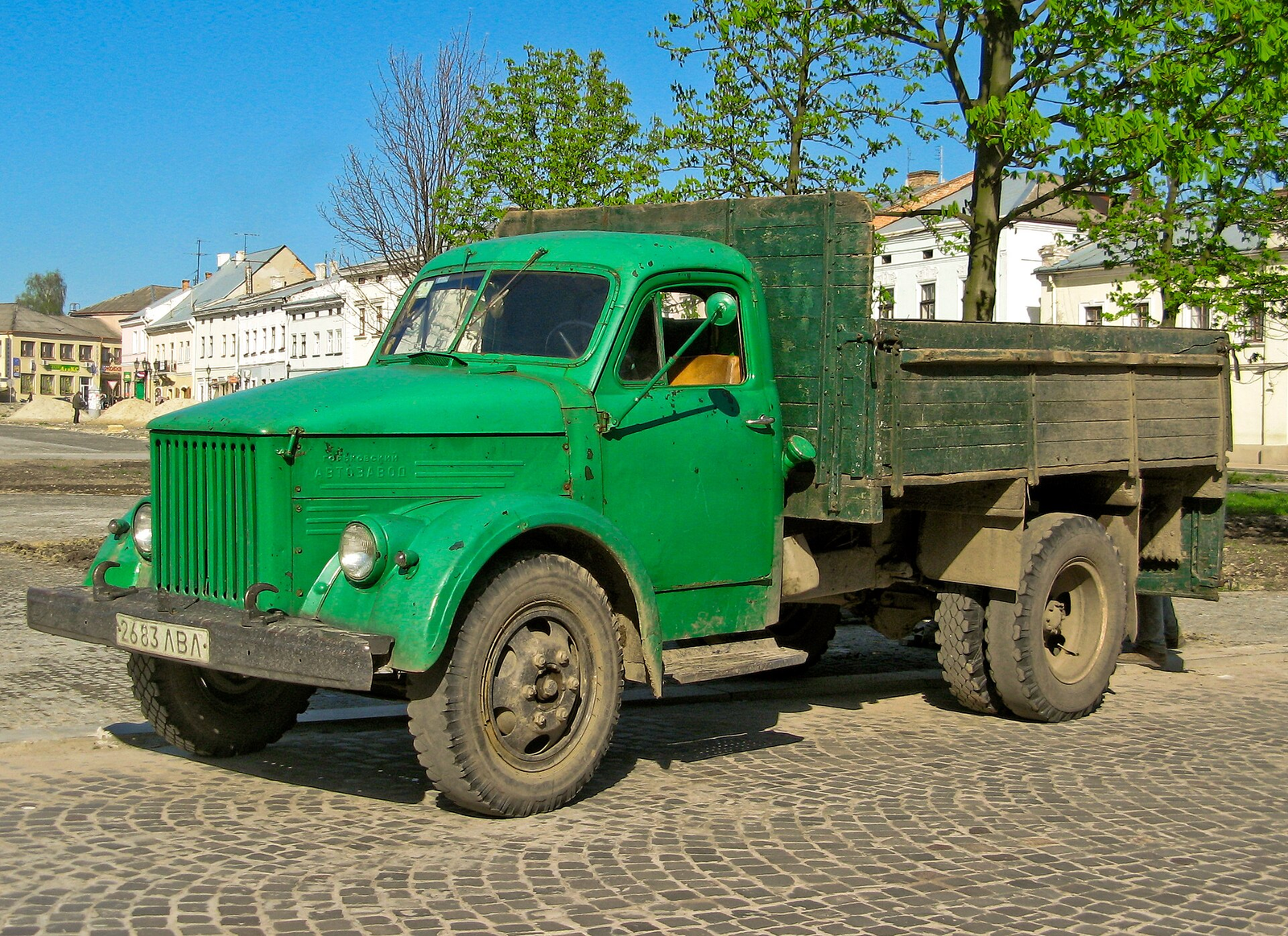
However, the vehicle still had a significant drawback – the lack of all-wheel drive.
A Project Developed in Parallel
Work on an all-wheel drive truck began back in 1938. For Soviet industry, such equipment was an extremely complex task at the time, so the GAZ-63 was developed simultaneously with the GAZ-51.
In just one year, engineers prepared several prototypes. But the war again interfered with the factory's plans. Despite this, development did not stop. Already in 1943, an updated version of the GAZ-63 with single wheels appeared.
The vehicle only reached full-scale serial production in 1948 – two years after the launch of the GAZ-51.
Both projects were closely related. The GAZ-63 is often simply called the all-wheel drive version of the 51st, and there is some truth to this. The level of unification between the vehicles reached approximately 80%.
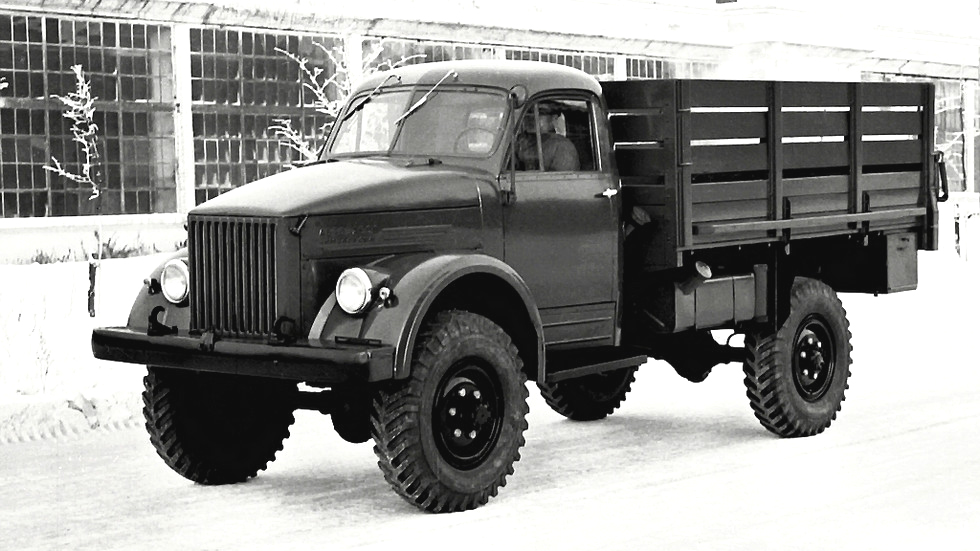
The new GAZ-63 inherited many components and assemblies from the GAZ-51:
- two-stage transfer case
- disconnectable front axle
- a significant part of the chassis design
But the GAZ-63 also had plenty of its own solutions.
First of Its Kind
For the Soviet automotive industry, the GAZ-63 proved to be a revolutionary vehicle in many ways.
This truck became:
- the first Soviet mass-produced all-wheel drive truck
- the first domestic truck with the same front and rear track width
Previously, Soviet trucks traditionally had a wider rear track than the front.
The vehicle's design also differed significantly from most predecessors. The GAZ-63 received a frame-based structure, short overhangs, all-wheel drive, and single wheels.
The vehicle did not yet have a centralized tire inflation system, but engineers came up with an unusual solution. A special device connected to the engine was used to inflate the tires. In this mode, the sixth cylinder temporarily worked as a pump.
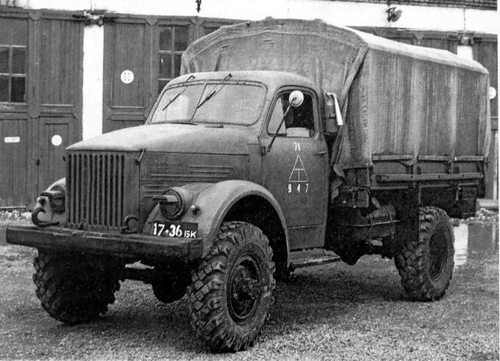
Moreover, the system was designed so that clean air, not a fuel mixture, entered the tires.
A Vehicle for the Harshest Conditions
The GAZ-63 went into serial production in 1948 and was produced until 1969. During this time, the truck earned a reputation as a simple, extremely durable, and unpretentious vehicle.
The car was especially valued for its ability to operate in harsh conditions – off-road, in mud, and in difficult climates.
Various modifications were created based on the GAZ-63:
- tractor units
- special army vehicles
- various transport versions
In total, Soviet specialists developed almost two dozen vehicles on this platform.
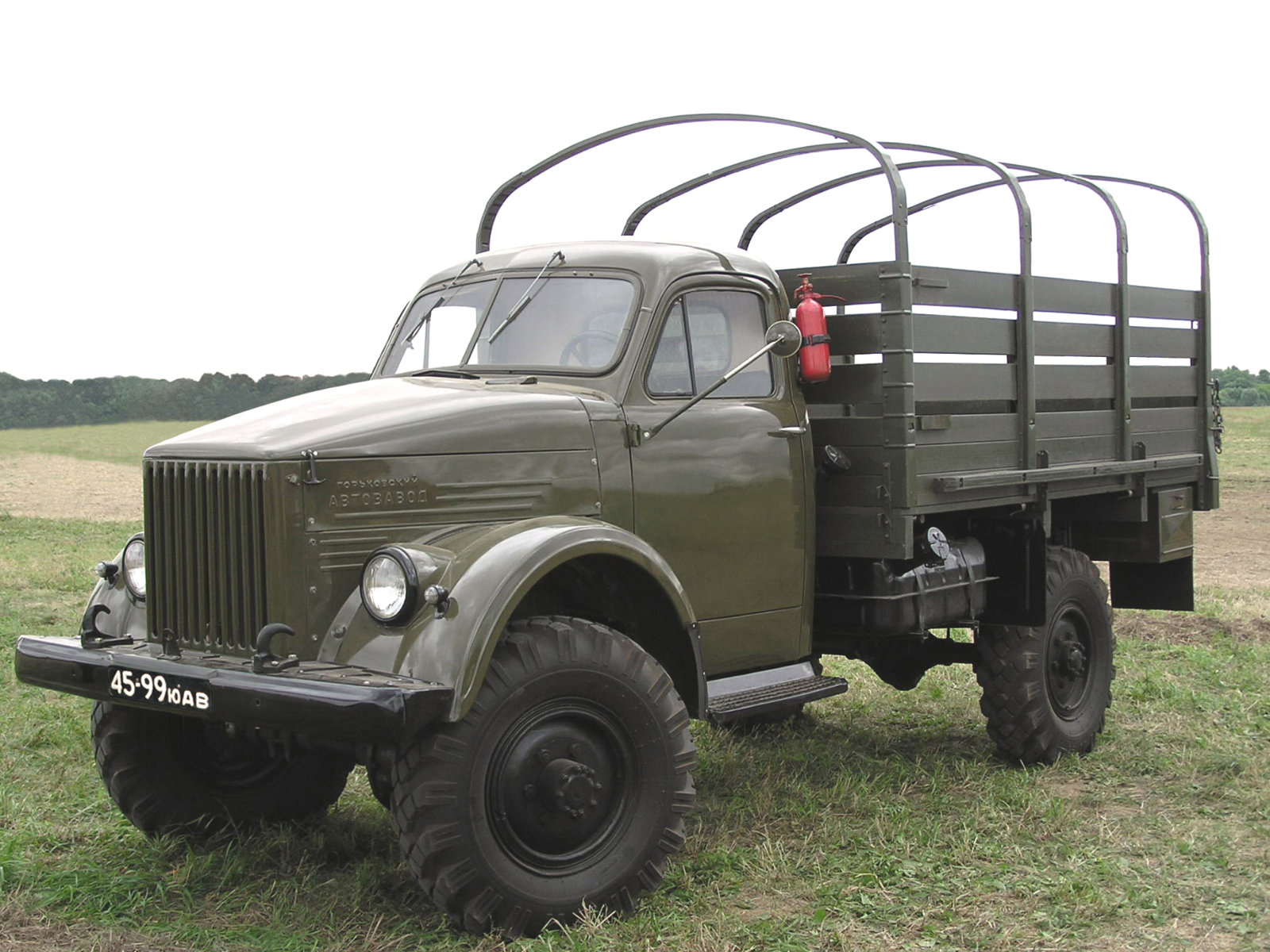
In addition, the components and assemblies of the GAZ-63 formed the basis of the first Soviet mass-produced armored personnel carrier BTR-40. Its concept resembled the American M3 Scout Car, but it was entirely built from domestic components.
Ancestor of the Famous "Shishiga"
The GAZ-63 was also actively supplied abroad. There was even a separate version of the vehicle for export deliveries.
According to some reports, individual copies of these trucks are still found in third-world countries.
In the USSR, the GAZ-63 remained one of the most reliable army trucks for many years. But even more important was another fact: this vehicle became the basis for the creation of the GAZ-66 – the famous "Shishiga," which is still used in some places.
Thus, the GAZ-63 not only became the first Soviet mass-produced all-wheel drive truck but actually opened a new direction in the development of domestic military equipment.
Read more materials:
- Why you shouldn't overtighten the timing belt tensioner
- What to do if your car breaks down on the road
- USSR car industry: models with an unfortunate fate
Comments