By the beginning of the Great Patriotic War, the backbone of the Soviet truck fleet remained the ZIS-5 and GAZ-AA. Both vehicles were well-mastered in production, and the design of the ZIS-5 had significantly diverged from the original American Autocar over the years, becoming virtually an independent machine. These trucks provided transportation for the Red Army, but the first winters of the war revealed a serious problem: 4x2 wheeled vehicles almost lost mobility in snow and spring mud.
Attempts to solve the issue were made even before the war. In the late 1930s, the USSR was already creating half-track versions of serial trucks – the GAZ-60 and ZIS-22. They did not become mass-produced, but they allowed engineers to gain experience. When by 1942 the army needed equipment for heavy off-road conditions, these developments proved useful in creating the ZIS-42.
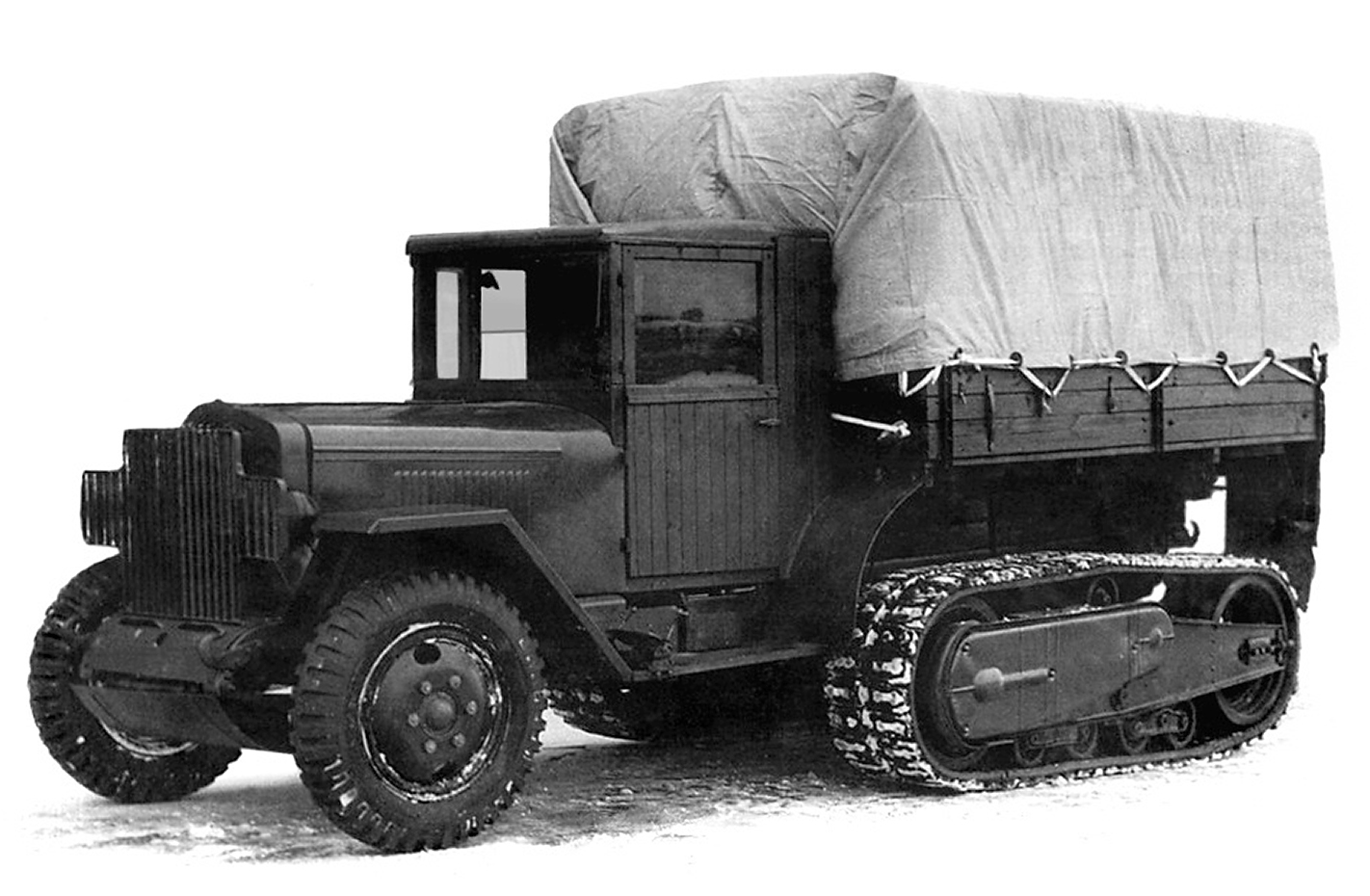
The new vehicle was maximally unified with the standard ZIS-5. From the base truck, it retained:
- cabin
- engine
- front axle
- part of the units and controls
At the same time, the rear axle was dismantled and replaced with a track drive with rubber-metal tracks 415 mm wide. The front wheels remained steerable, like a standard truck. This solution simplified production and allowed for faster deployment.
Under the hood was an inline 6-cylinder engine with a displacement of 5555 cubic cm and a power of 73 hp. Later, a ZIS-42M modification appeared, which was equipped with a more powerful 85-hp engine from the ZIS-16 bus. The maximum speed of the basic version was about 35 km/h, and the modernized version up to 45 km/h.
Outwardly, the ZIS-42 was easily distinguishable from the ordinary ZIS-5. The vehicle received characteristic track bogies and enlarged fuel tanks with a volume of 300 liters. Fuel consumption turned out to be enormous: on the highway, the truck consumed approximately 55–60 liters of gasoline per 100 km, and even more off-road. Load capacity also decreased, but the military considered this an acceptable price for increased cross-country ability.
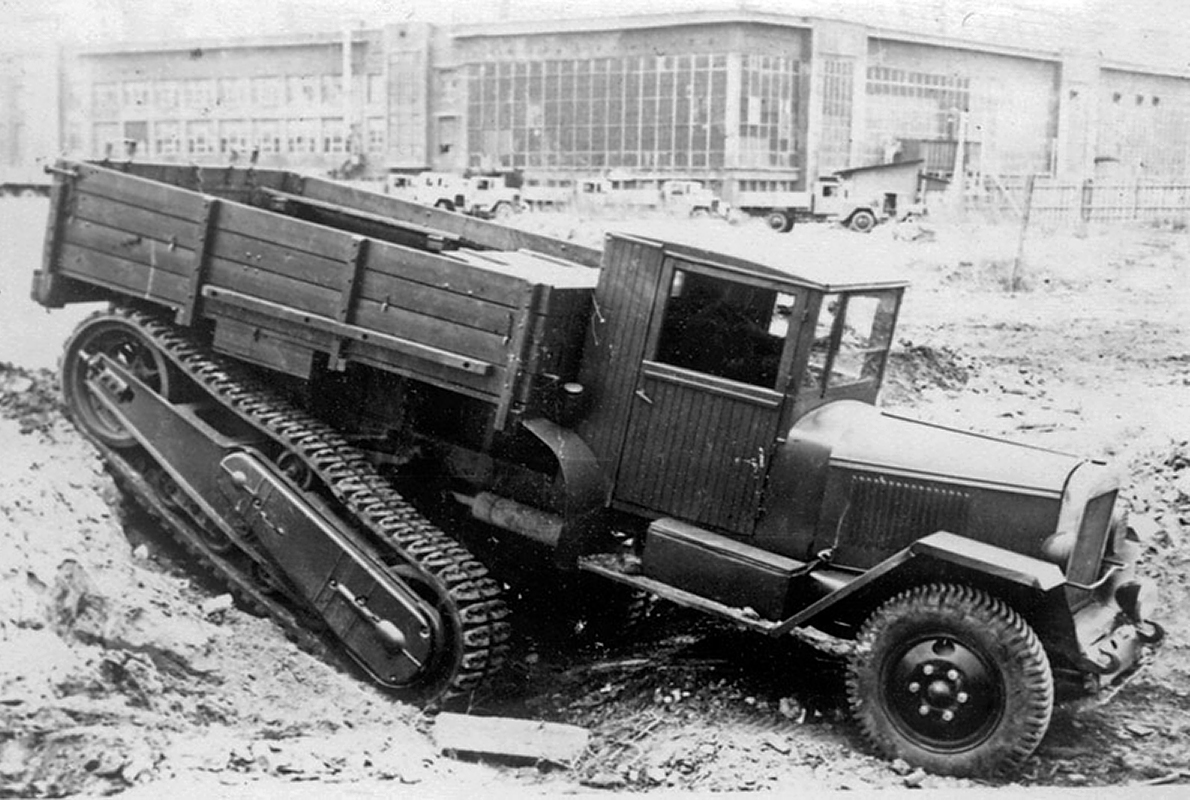
Wartime production inevitably influenced the design. After the evacuation of the ZIS plant, the production of half-track vehicles was launched in Ulyanovsk, Miass, and other cities. The design was constantly simplified:
- the right headlight was removed
- bumpers and windshield wipers were abandoned
- wood was used instead of some metal elements of the cabin
From 1942 to 1944, 5931 units of the ZIS-42 were assembled. Against the backdrop of more than half a million ordinary ZIS-5s, the figure seemed modest, but these vehicles still became a noticeable part of frontline transport.
The main task of the ZIS-42 was to operate where ordinary trucks could no longer cope: in deep snow, mud, and on broken roads. The vehicles were used as transport and artillery tractors. However, operation quickly revealed design flaws.
The half-track scheme indeed improved cross-country ability, but at the same time created many new problems. In loose snow, the heavy vehicle often sank, the tracks became clogged, and handling on slippery surfaces left much to be desired. Added to this were high fuel consumption and the difficulty of repairs in the field.
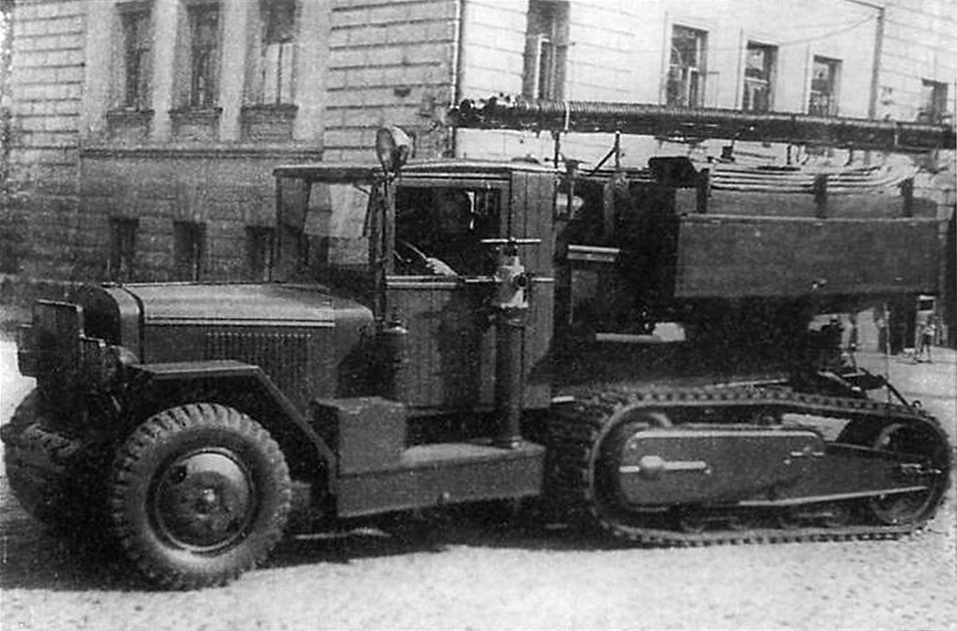
In fact, the ZIS-42 turned out to be a compromise. It outperformed ordinary trucks off-road but paid for it with a host of shortcomings. After the war, the Soviet military drew conclusions and abandoned further development of such vehicles. Instead of half-track schemes, the USSR focused on full-fledged all-wheel-drive trucks and specialized tracked tractors.
Nevertheless, the history of the ZIS-42 did not end there. After the war, such vehicles continued to be used in the national economy for a long time. They could be found:
- in logging
- in geological expeditions
- at remote construction sites
- in areas with difficult road conditions
Operation continued until the early 1960s. The ZIS-42 did not become an ideal solution and did not turn into a mass army transport, but it remained an important stage in the search for high-cross-country vehicles for Soviet industry.
Read more materials:
- The history of GAZ-61 – the most unusual SUV of the USSR
- Why you shouldn't pull the timing belt tensioner "from the heart"
- A car of transitional times: the history of ZIL-41041 AMG
Comments