Most concepts are created by car manufacturers as a demonstration of future technologies and design ideas. However, the Volkswagen W12, first introduced in 1997, turned out to be a much more ambitious project. For the Volkswagen concern, it was not just an experimental car, but a real challenge to the industry and its own engineering capabilities.
The mid-engine coupe with the "people's car" emblem actually became a symbol of the Volkswagen Group's ambitions. It was with the W12 project that the path began, which later led the concern to create the Bugatti Veyron – the first production civilian car to break the 400 km/h mark.
How the W12 engine appeared
Work on the project began with the power unit. In the early 1990s, Volkswagen production models featured VR engines with an inline-offset cylinder arrangement. Such engines combined features of an inline and V-engine: two cylinder blocks with a narrow 15° bank angle were placed under a single cylinder head.

Engineers quickly appreciated the advantages of the design:
- compact dimensions
- lower weight
- ease of layout
The next step was to combine two 24-valve VR6 engines at a 72° angle on a common crankshaft. This is how a new architecture, designated W, appeared.
Initially, the W12 engine had:
- a displacement of 5.6 liters
- a power of 420 horsepower
- a layout with two V-shaped cylinder blocks
After creating the engine, engineers had to integrate it with the Syncro all-wheel drive system and build a full-fledged mid-engine supercar around this technology.
Giugiaro and Italdesign Project
Ferdinand Piëch, head of Volkswagen, entrusted the development of the car's exterior to the famous Italian designer Giorgetto Giugiaro and the Italdesign studio.
In 1997, the first concept in the series, the all-wheel drive Volkswagen W12 Syncro coupe, debuted at the Tokyo Motor Show.
Later, two more versions of the project appeared:
- in 1998, the rear-wheel drive Volkswagen W12 Roadster was presented at the Geneva Motor Show
- in 2001, the final evolution of the project, the Volkswagen W12 Nardo, was shown at the Tokyo Motor Show
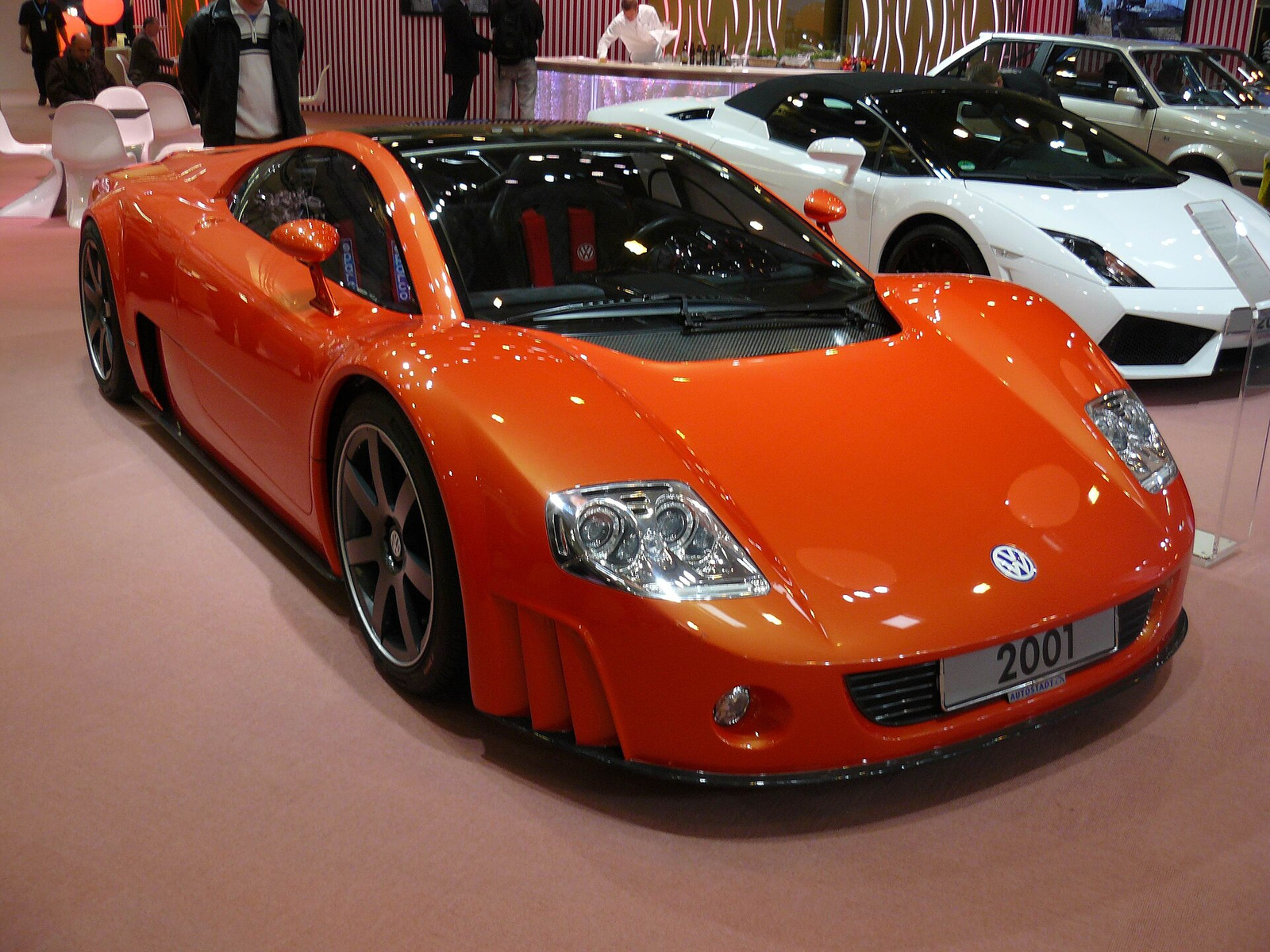
The Nardo version was the most extreme. The car received a 6-liter W12 engine with 600 horsepower.
As with previous concepts, the engine was located longitudinally in front of the rear axle – between the seats and the rear-mounted six-speed sequential gearbox.
Design and technical features
The Volkswagen W12 Nardo received a full-fledged racing architecture.
The design used:
- double wishbone suspension
- Brembo ventilated brakes
- 19-inch magnesium wheels
- composite monocoque
- aluminum subframes
Safety was provided by:
- ABS
- stability control system
- electronic differential lock
- traction control system
The car's body looked extremely unusual even by the standards of early 2000s supercars. The car had a very low and long silhouette, a short front end, and scissor doors. The latter solution looked especially symbolic, as Lamborghini had been part of the Volkswagen Group since 1998.
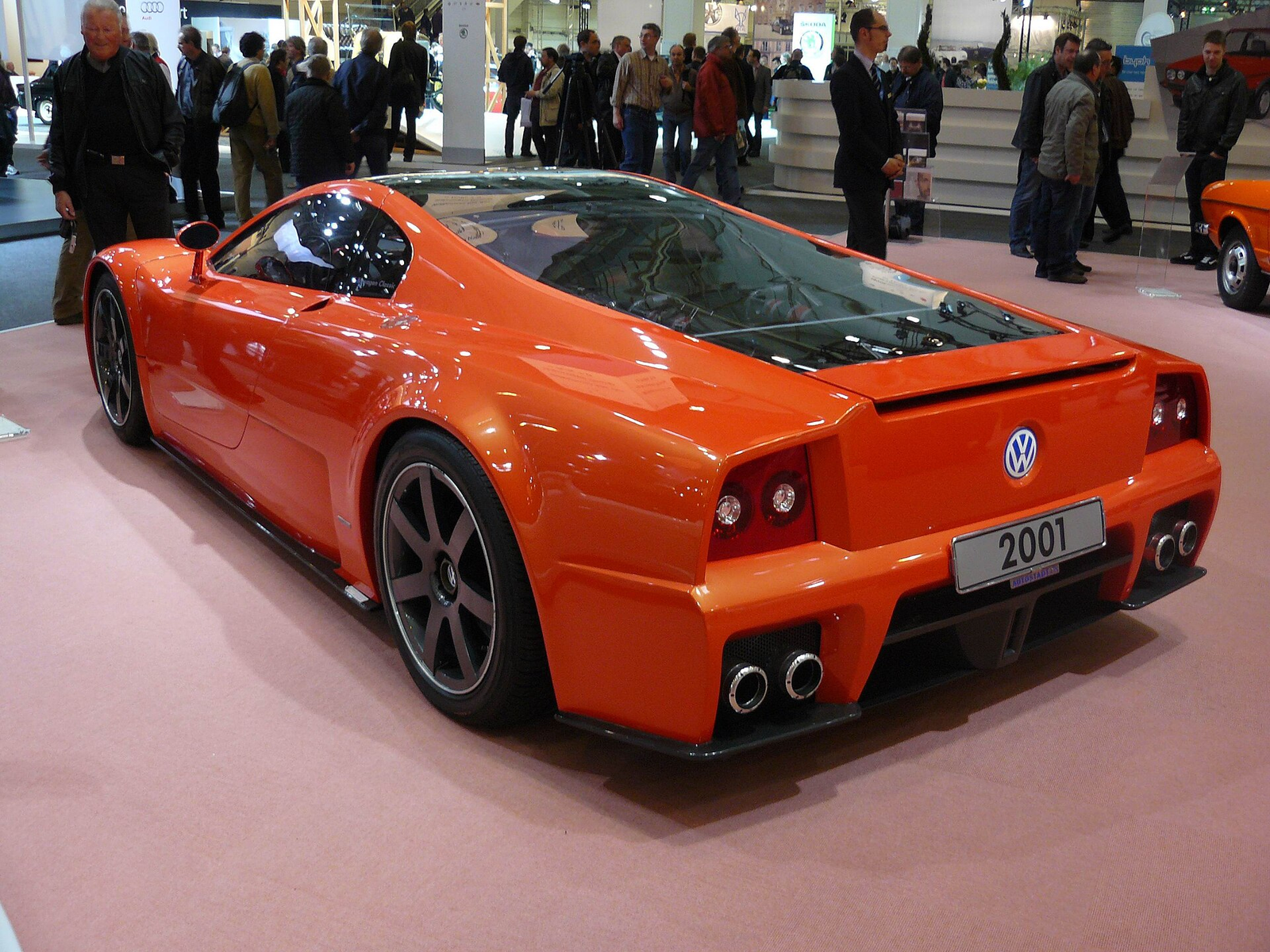
One of the most striking details was the continuous glazing of the roof and engine compartment. Through the transparent panels, the tubular roll cage and structural elements could be seen. The active rear spoiler automatically extended at a speed of 120 km/h.
The interior trim used:
- leather
- aluminum
- carbon fiber
One of the fastest cars of its time
At the time of its debut in 2001, the Volkswagen W12 Nardo was considered one of the fastest cars in the world. Its top speed reached 357 km/h, and acceleration to 100 km/h took only 3.5 seconds.
The concept received the name Nardo in honor of the Italian test track Nardò Ring. It was there in 2002 that the car set 12 world records.
Among the achievements was the record for average speed over 24 hours. The team of drivers covered 7740 kilometers at an average speed of 322.89 km/h.
Such a high indicator is explained by the features of the proving ground itself. The Nardò track is a huge ring that allows cars to move almost without releasing the accelerator. However, the record-breaking drive simultaneously demonstrated the high reliability of Volkswagen's technical solutions.
What happened to the Volkswagen W12
According to available information, only two copies of the Volkswagen W12 Nardo were built. One of the cars is in a private collection.
In 2026, the car was shown to the public at the Concorso d'Eleganza Villa d'Este elegance competition on Lake Como. Volkswagen cars are a rarity at such events, but the W12 organically fit into the atmosphere of expensive historical and exclusive cars.
Project legacy and connection to Bugatti Veyron
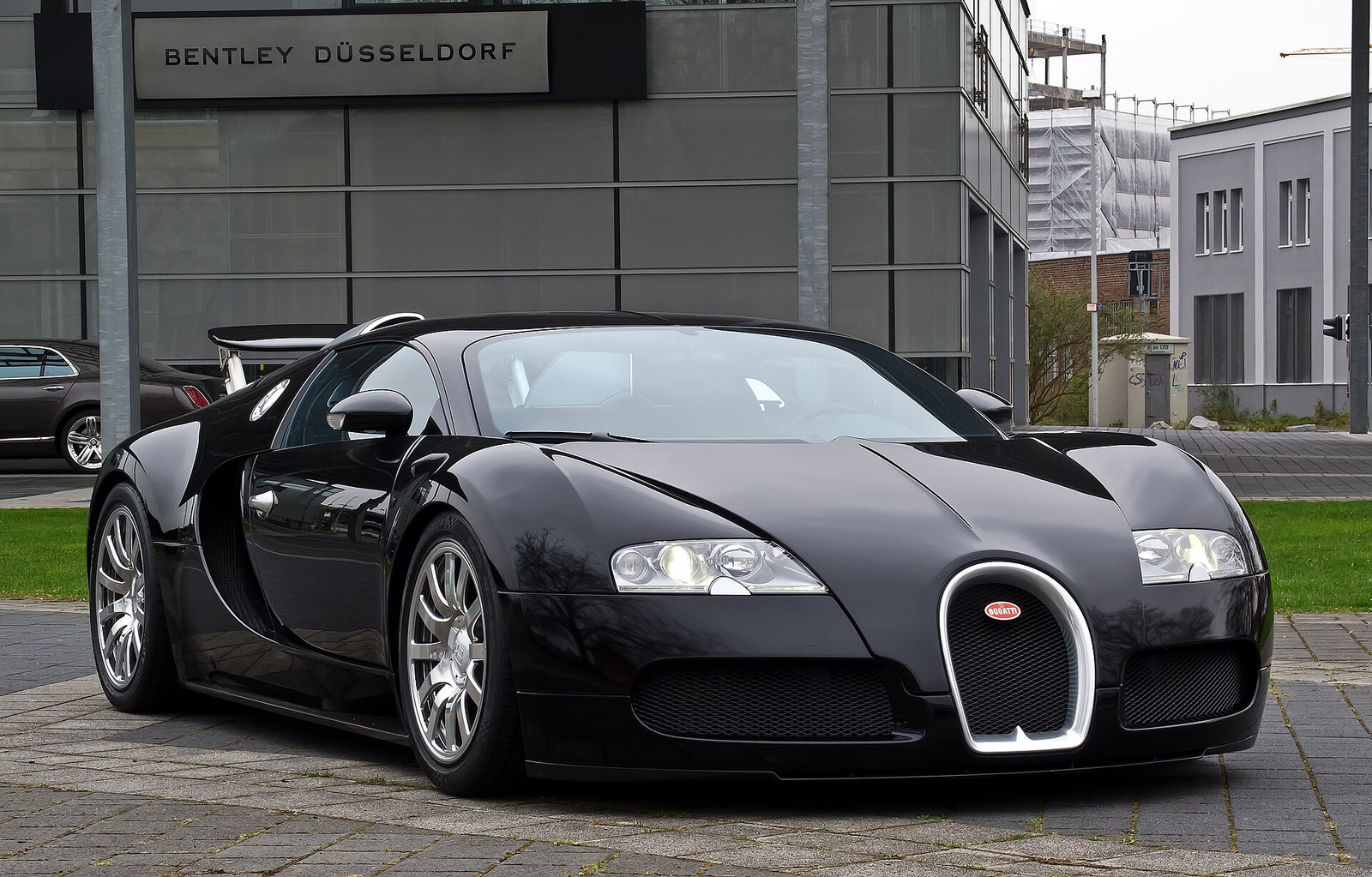
Although the Volkswagen W12 never became a production model, this project became the foundation for the further development of the Bugatti Veyron.
According to unofficial data, the production of the Veyron turned out to be extremely unprofitable for the Volkswagen concern. It was reported that losses on each hypercar sold could reach 4.6 million euros, and total losses – about 1.7 billion euros.
Nevertheless, it is such projects that shape the history of the automotive industry. The Volkswagen W12 proved that even a mass-market car brand can create technology capable of competing with the best supercars in the world.
Read more materials:
- The largest gasoline ZIL in the history of the USSR: ZIL-133
- What to do if your car was damaged in a parking lot and the culprit fled
- From a gramophone to a talking car: failures of the automotive industry