The Mitsubishi Delica D5 has long ceased to be just a utilitarian minibus. Despite popular comparisons to a “loaf of bread,” this Japanese minivan has managed to carve out a niche as a full-fledged family vehicle that doesn't look out of place even next to more prestigious competitors.
What makes the Delica D5 particularly interesting is its combination of a diesel engine, all-wheel drive, and very moderate fuel consumption. And we're not talking about a compromise between practicality and off-road capability, but a car that truly combines both qualities.
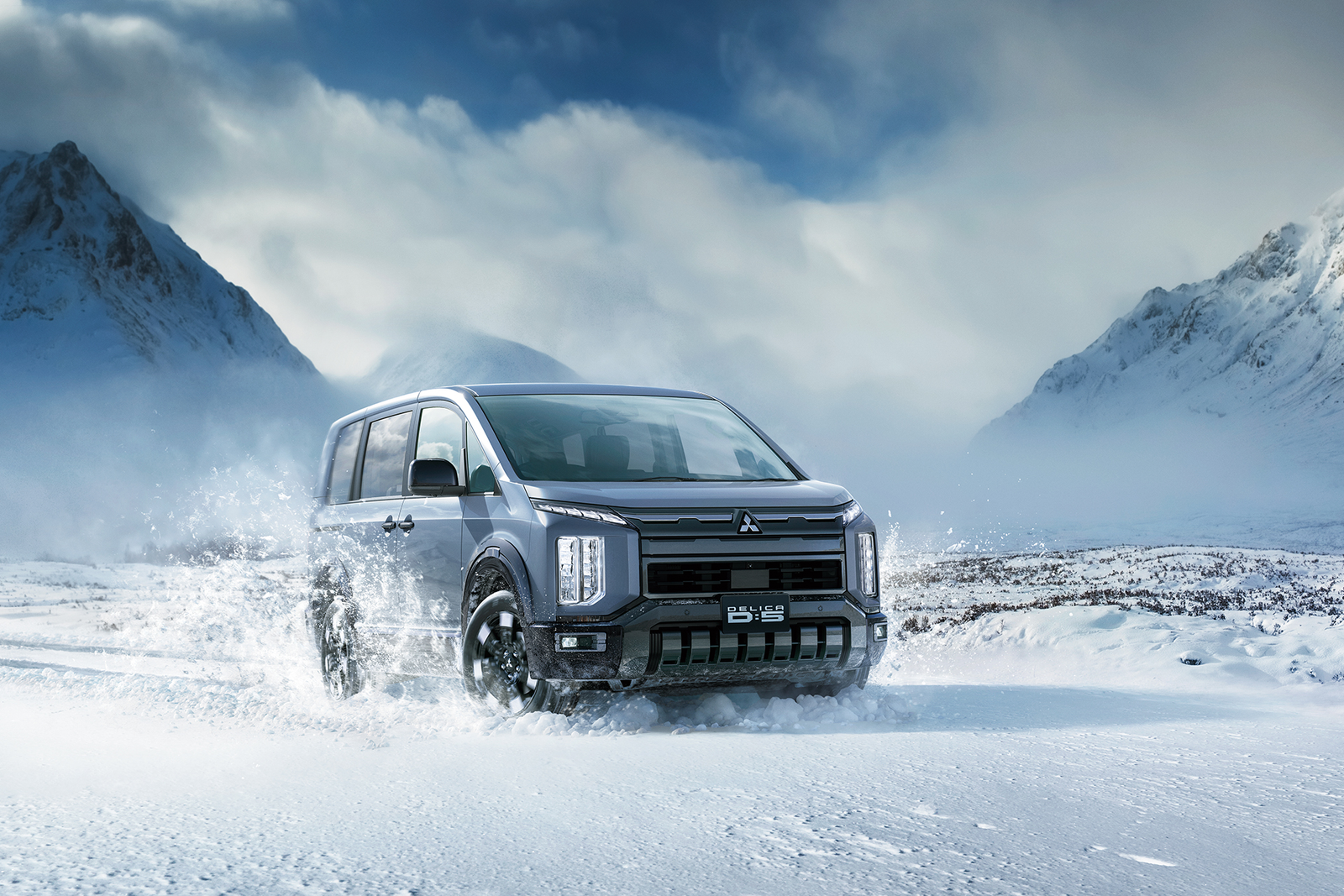
Another aspect that draws attention to the model is the version with a 2.3-liter 4N14 diesel engine producing 145 horsepower. It falls into the category of vehicles under 160 hp, which means individuals benefit from a preferential recycling fee. In current conditions, this alone becomes a serious argument in favor of purchasing.
A Turbodiesel That Knows How to Save
The main feature of the Delica D5 is its 2.3-liter 4N14 diesel engine. It works in conjunction with a classic 8-speed Aisin hydromechanical automatic transmission.
Amidst the widespread enthusiasm for CVTs and robotic gearboxes, such a combination seems almost old-school, but this is precisely its advantage. A conventional torque converter automatic provides:
- smooth operation
- confident traction
- high durability
- predictable behavior in all modes
With 145 hp, the engine delivers 380 Nm of torque at just 2000 rpm. In everyday driving, this feels much more important than the horsepower figures: the minivan accelerates smoothly without unnecessary fuss and practically doesn't require revving the engine.
Owners particularly note the fuel consumption. In a combined cycle, the Delica can achieve approximately 6–7 liters per 100 kilometers. Even in real-world operation, maintaining figures around 8 l/100 km is quite realistic, and on the highway, the numbers can be even more modest.
Proven Design Without Complex Experiments
The 4N14 engine is well-known from the Mitsubishi L200. It's an inline diesel four-cylinder with a Common Rail system, a timing chain drive, and an aluminum cylinder block.
At the same time, the engine does not give the impression of being an overly complex or capricious unit. The design was initially created with serious loads and a long service life in mind.
According to owner and service reviews, with normal maintenance, the engine is capable of lasting:
- 250 thousand kilometers
- 300 thousand kilometers
- and sometimes significantly more
This is why the Delica is perceived not as exotic technology, but as a perfectly functional car for daily use.
Minivan with Off-Road Ambitions
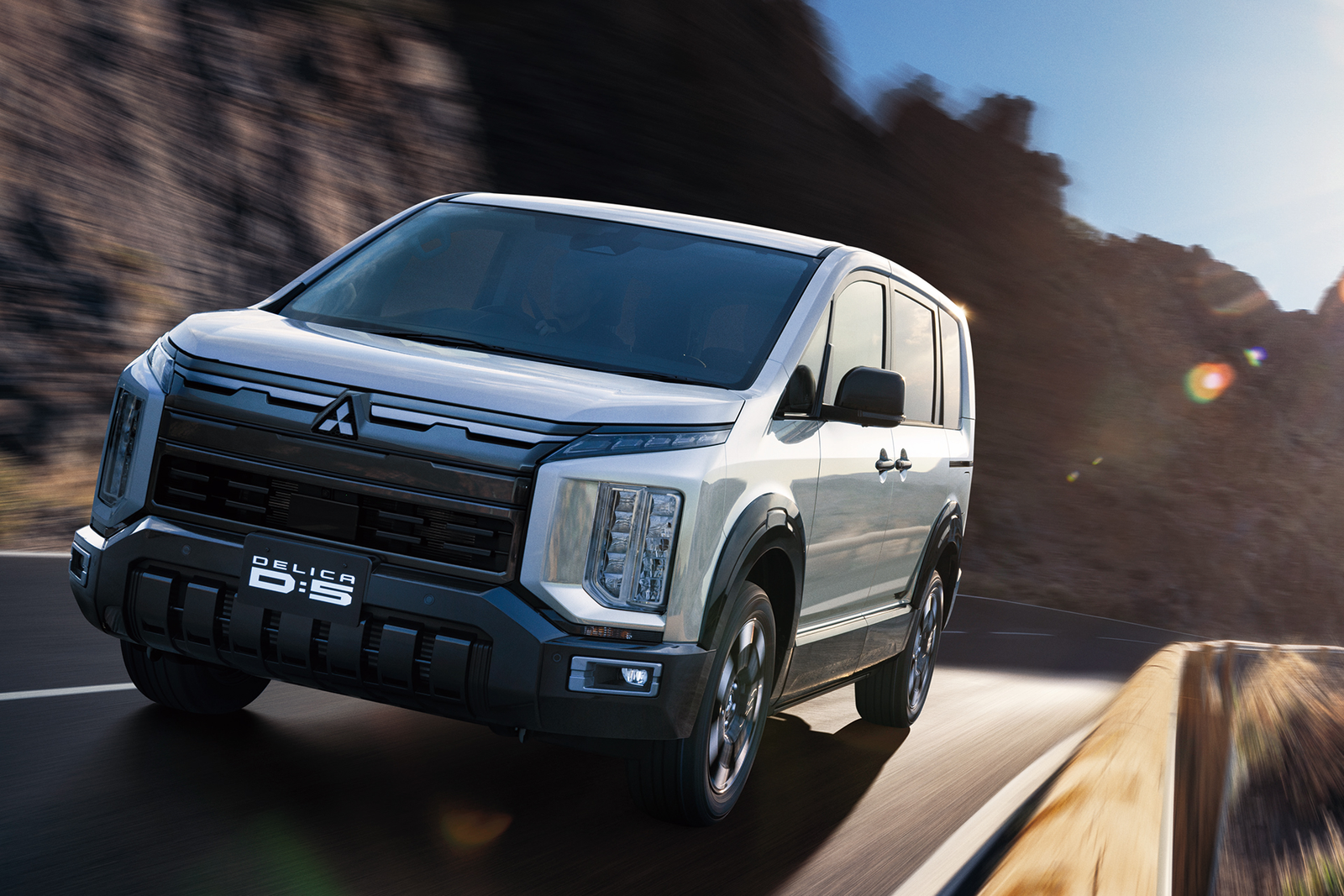
The appearance of the Delica D5 can hardly be called neutral. The car looks massive and distinctly utilitarian, but this has become part of its character.
Despite the absence of a classic frame, the GS platform with a rigid unibody provides very decent strength. And the combination of all-wheel drive, short overhangs, and 185 mm ground clearance allows the minivan to feel confident where ordinary family cars start to give up.
Depending on the trim level, various driving modes are available:
- snow
- gravel
- off-road transmission settings
- low-range mode
The S-AWC (Super All Wheel Control) system, familiar from the Mitsubishi Lancer Evolution, also plays its part. Electronics help the car maintain stability on different surfaces and are not quick to completely limit the operation of the all-wheel drive.
As a result, the Delica D5 is capable of going significantly further than most modern crossovers, despite being a family minivan.
Spacious Interior Without the “Minibus” Feel
The main advantage of the Delica inside is the feeling of space. The cabin provides seven or eight full-size seats, and the seat transformation makes the car as versatile as possible.
Interior features include:
- sliding second row
- folding third row
- flat floor
- spacious trunk with a volume of about 400–500 liters
With a body length of 4800 mm and a wheelbase of 2850 mm, there is enough space even for passengers in the third row.
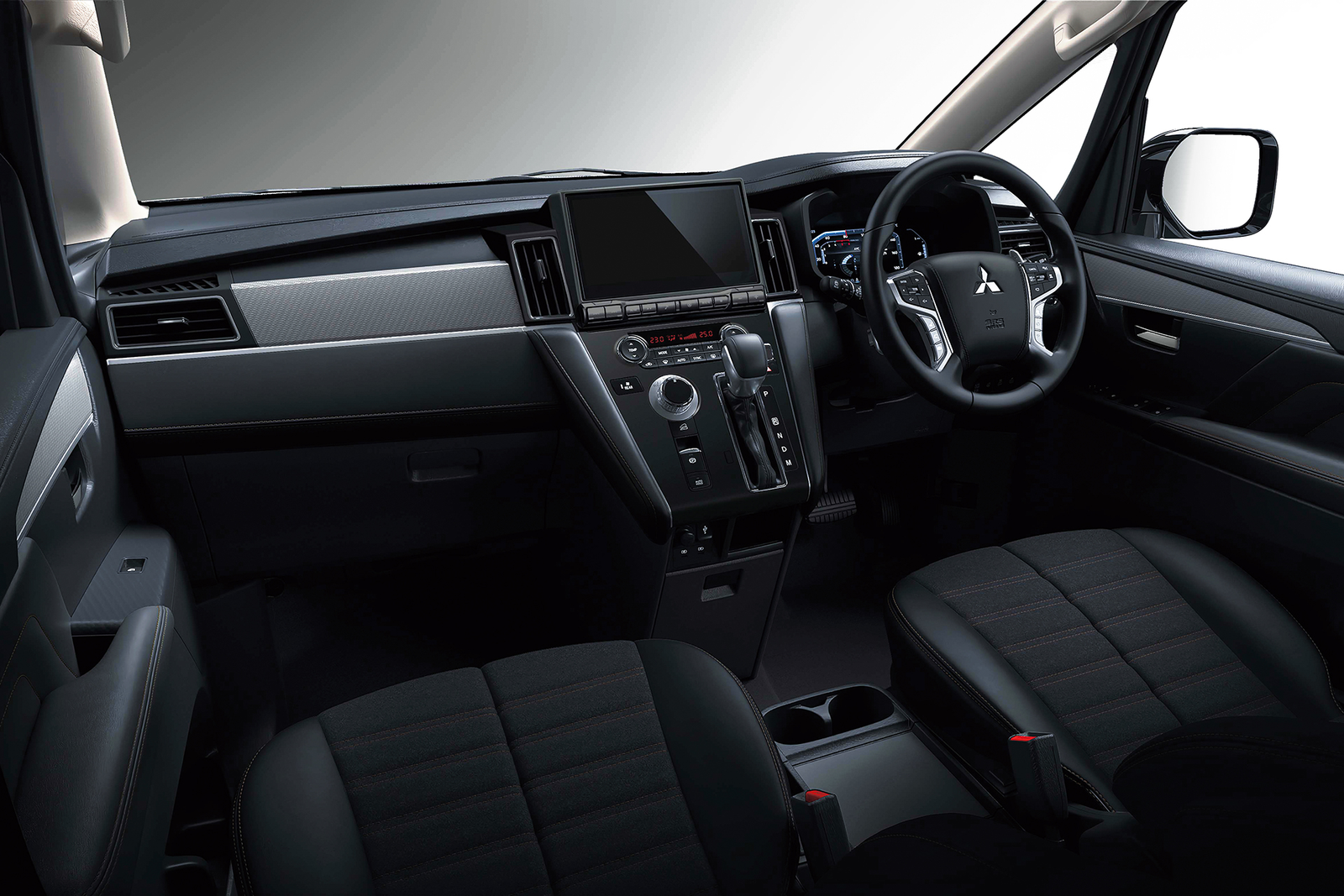
Restyled versions feature:
- multimedia systems with 8–10 inch screens
- digital instrument cluster
- adaptive cruise control
- climate control
- heated seats
- USB-C for rear passengers
However, the Delica remains primarily a practical car, not an attempt to play in the premium segment.
Reliability That Doesn't Scare Owners
Many are wary of diesel Delicas due to the particulate filter and piezo injectors. Indeed, fuel quality matters for such an engine. However, the model has an important advantage – unification with the popular diesel from the L200.
Thanks to this:
- spare parts are available
- a large number of analogues exist
- maintenance does not become a problem
An additional plus is the classic Aisin automatic transmission. Owners often note that even with mileage around 200 thousand kilometers, there are no serious complaints about the gearbox.
Against the background of modern robotic transmissions and complex CVTs, such reliability is perceived as particularly valuable.
Why the Delica D5 is Still in Demand
The Mitsubishi Delica D5 does not try to be a sports car or a luxury crossover. It is a car for people who need a spacious, reliable, and versatile vehicle.
The Delica is capable of:
- comfortably transporting a large family
- confidently driving on bad roads
- economically consuming fuel
- not bankrupting the owner with maintenance
And the preferential recycling fee for the version up to 160 hp makes it even more attractive compared to many competitors.
As a result, the Delica D5 remains one of the rare cars that combines the practicality of a minivan, the capabilities of an SUV, and quite reasonable operating costs.
Read more articles:
- Volkswagen W12 – the forerunner of the Bugatti Veyron
- Summer Heat vs. Car: Hidden Consequences
- How Porsche Helped the Soviet Automotive Industry