In the early 20th century, long-distance car journeys could rarely be described as comfortable. The road network remained underdeveloped, and imperfect suspensions struggled with uneven surfaces. Every trip was accompanied by constant shaking, so engineers and inventors sought ways to make travel smoother. One of the most unusual solutions was the project of American Milton Reeves, who decided to build a car with eight wheels.
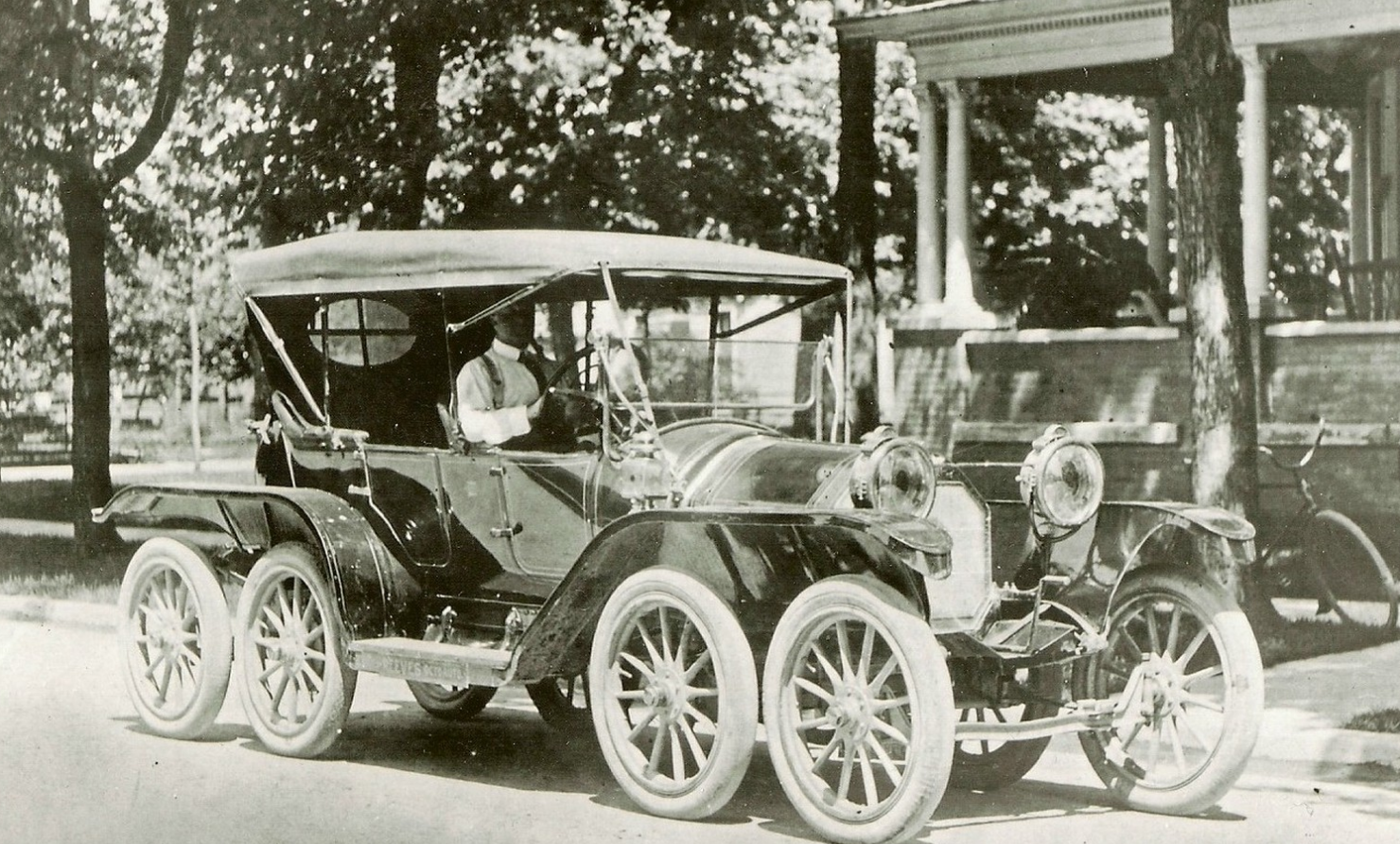
In creating his machine, Reeves was inspired by railway transport. Carriages used reinforced frames and a large number of wheels, which allowed for even load distribution and improved ride smoothness. The inventor asked a perfectly logical question: if such a principle works on the railway, why not apply it to automotive design?
Thus, in 1911, the Reeves Overland Octoauto appeared – one of the most unusual cars of its time and, without exaggeration, a true legend among the technical experiments of the early century.
The car's design differed significantly from conventional automobiles:
- the car had four axles;
- two steerable axles were located at the front;
- two more axles were at the rear;
- only the first rear axle was driven.
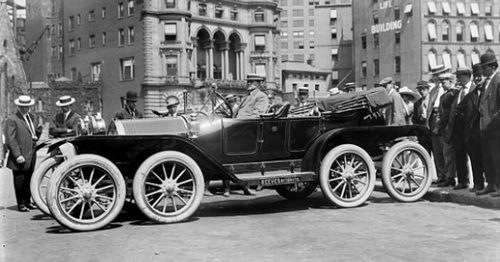
According to Reeves's plan, this scheme was supposed to provide several advantages at once. More even weight distribution reduced the load on each wheel, improved ride smoothness, and contributed to increased tire life.
Promotional materials were not shy about making bold claims. The Octoauto was called the smoothest car in the world. The unusual machine invariably attracted public attention, and in 1922, the eight-wheeled car participated in its first race. There, it generated no less interest than full-fledged racing cars.
The reaction of spectators and the press was quite favorable:
- visitors curiously examined the unusual design;
- journalists published enthusiastic articles;
- the car became one of the most discussed technical innovations.
However, public interest never translated into commercial success.
The main obstacle was the cost. The Reeves Overland Octoauto was priced at $3200 – an enormous sum for that time. For the same money, a buyer could purchase two Cadillac Model 30s or four Ford Model Ts. Additional difficulties arose during operation. Driving an eight-wheeled car proved significantly more difficult, especially when cornering.
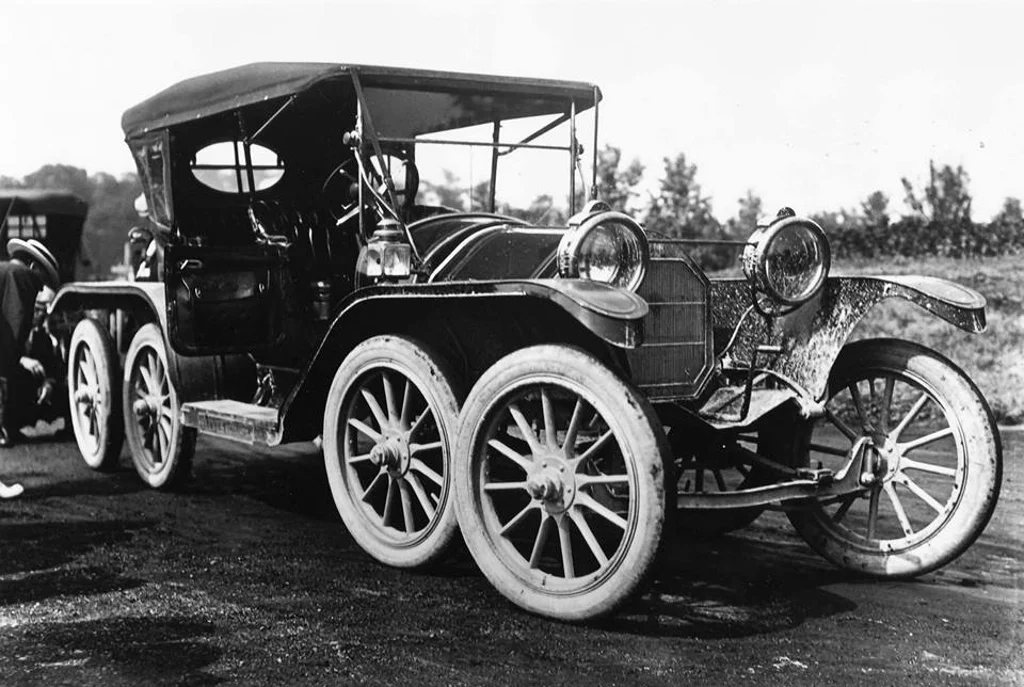
When it became clear that the project had not met expectations, Milton Reeves made another attempt to rectify the situation. The engineer introduced a new model called the Sextoauto, which now had six wheels. It was assumed that such a design would retain some of the advantages of the original idea but would be more practical.
Nevertheless, this project also failed to achieve success. Buyers still preferred simpler, more understandable, and more affordable cars. As a result, neither the Octoauto nor its six-wheeled successor gained widespread adoption, remaining curious pages in the history of world automotive engineering and vivid examples of how bold engineering experiments were at the beginning of the last century.
Read more materials:
- Why the "six-hundredth" Mercedes was adored in the CIS
- Kia Tasman in Russia: prices, problems, and prospects
- What the A/C button in a car actually does