The 1930s became a period of rapid development for Soviet automotive engineering. New models were being mastered at the country's enterprises, and the GAZ-A was rightfully considered one of the most successful vehicles of that time. This car formed the basis for a whole series of promising projects, including both civilian developments and military equipment.
Together with driver and automotive history enthusiast Alexey Kuznetsov, we tell the story of the unusual three-axle GAZ-TK vehicle, as well as the SU-4 self-propelled artillery unit and the experimental BA GAZ-TK armored car created on its basis.
How the GAZ-TK Idea Emerged
The beginning of this story is connected with the work of Soviet engineer and armaments designer L. V. Kurchevsky. In 1931, he completed the creation of a whole family of gas-dynamic, or recoilless, guns with calibers ranging from 37 to 305 mm. Later, such systems became widely known as recoilless guns.
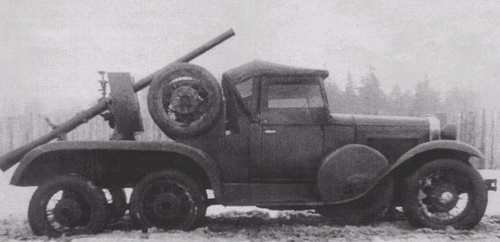
To accommodate Kurchevsky's self-propelled gun, or SPK for short, a suitable mobile platform was required. A light off-road vehicle developed by specialists of the Scientific Automotive and Tractor Institute was chosen as the basis. The vehicle used a 40-horsepower Soviet-made Ford-A chassis and was equipped with two driven rear axles.
The next step was the creation in 1933 of the new three-axle GAZ-TK vehicle, the name of which stood for "Kurchevsky's Three-Axle Vehicle." The design was based on GAZ-A units and was considered a promising carrier for 76-millimeter weaponry. The self-propelled unit on this chassis received the army designation SU-4.
Design Features
To create the new vehicle, engineers had to seriously rework the base machine. The frame was extended by 93 centimeters, with side members from another similar frame installed in the rear.
A number of units were borrowed from the production GAZ-A:
- clutch;
- gearbox;
- front axle;
- wheels.
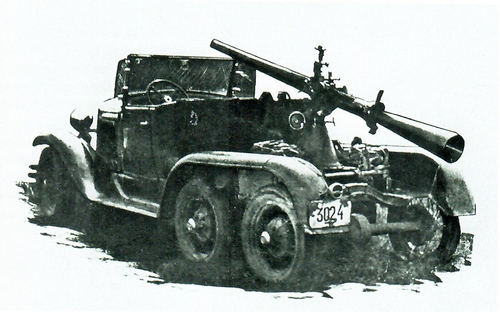
At the same time, the drive axles with bevel gears were taken from the GAZ-AA truck.
To improve cross-country ability, it was possible to install special chains or track belts on the wheels of the rear bogie. This solution allowed for more confident movement over difficult terrain.
The fully equipped SU-4 self-propelled unit weighed about two tons and could reach speeds of up to 70 km/h. Behind the open cabin with side half-doors were located:
- 76-millimeter gun;
- ammunition boxes;
- places for the crew.
During army tests, specialists identified a number of shortcomings that negatively affected both the operational characteristics and the service life of the vehicle. Despite this, by order of the head of armaments of the RKKA, M. N. Tukhachevsky, it was decided to master the production of the equipment.
Other Variants Based on GAZ-TK
The platform proved to be quite versatile, so it began to be used for other tasks as well.
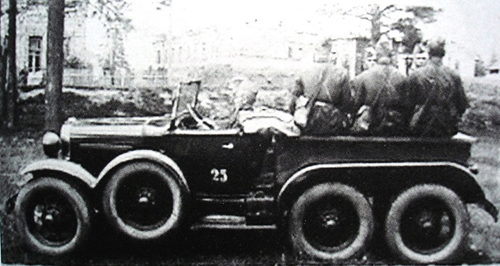
One direction was transport vehicles with open bodies. They were intended for transporting military personnel with personal weapons, as well as various property and ammunition.
Such vehicles were equipped with pickup-type bodies, similar to those used on the airborne GAZ-4. Longitudinal benches for six soldiers were installed in the body. The vehicles could be used for transporting:
- reconnaissance groups;
- patrols;
- airborne units.
From 1934 to 1937, the bus branch of the Gorky Automobile Plant manufactured 247 three-axle chassis. Of this number, 23 vehicles received Kurchevsky's weapon system.
Experimental Armored Car BA GAZ-TK
Another interesting direction in the development of the project was the BA GAZ-TK armored car.
It was built in 1935 in a single copy. For the new vehicle, the armored hull of the FAI armored car was used, which was extended by 82 centimeters. The turret and armament also almost completely corresponded to the FAI design.
The designers also introduced a number of changes aimed at improving cross-country ability. In particular, the side spare wheels were made freely rotating. Thanks to this, the armored vehicle could more easily overcome obstacles and difficult terrain.
The main characteristics of the experimental armored car were as follows:
- weight – 2.6 tons;
- maximum speed – up to 63 km/h;
- extended armored hull based on FAI;
- three-axle chassis layout.
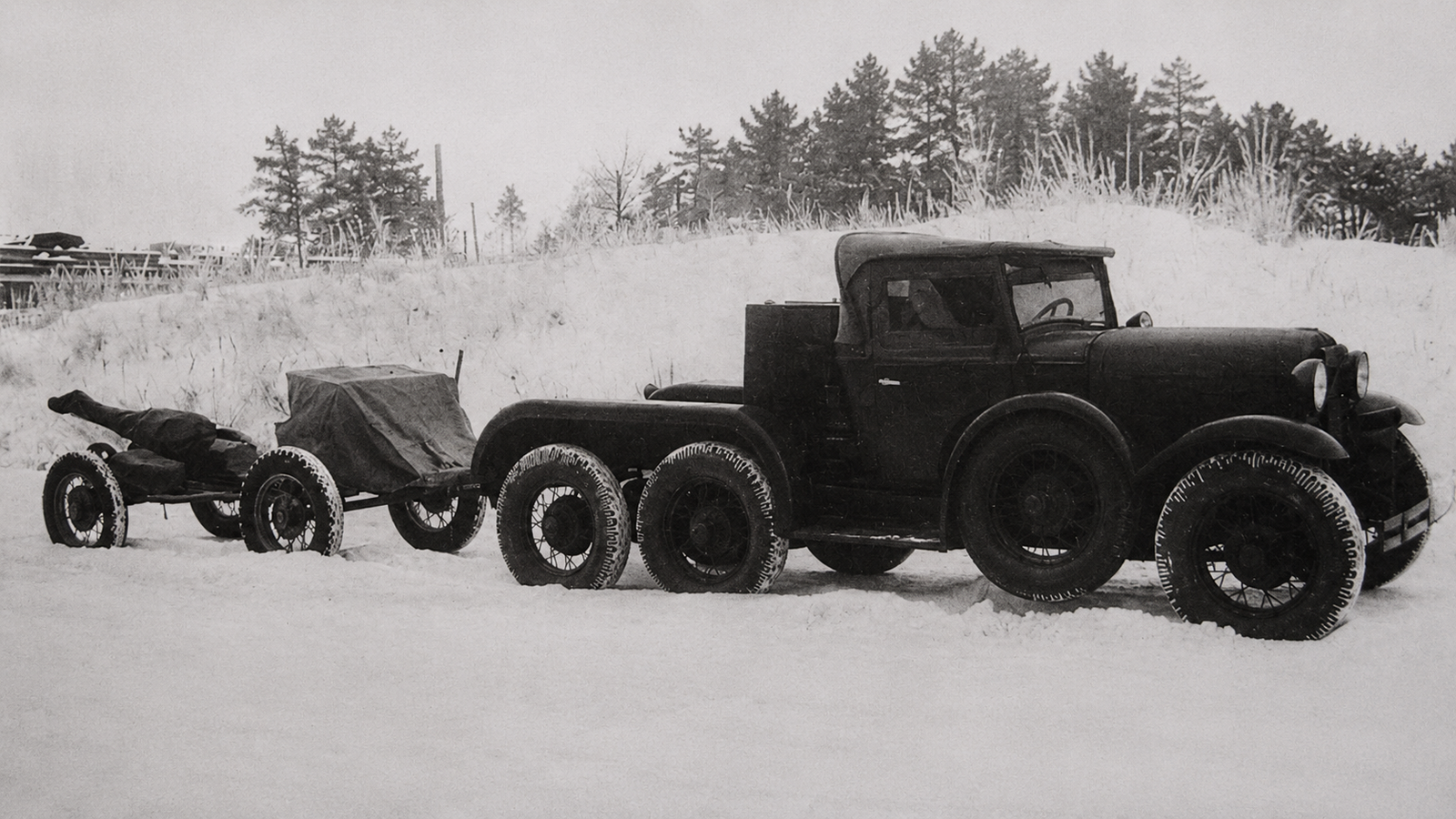
However, the tests showed that the vehicle's characteristics did not fully meet military requirements. For this reason, the project did not receive further development, and serial production was never organized.
Legacy of the Unusual Three-Axle Vehicle
Although the GAZ-TK did not become a mass army vehicle, this project played a significant role in the development of domestic technology in the 1930s. Engineers gained valuable experience in creating three-axle off-road vehicles and tested various uses for such a chassis.
Based on one design, several types of equipment were created at once:
- SU-4 self-propelled artillery unit;
- transport vehicles for personnel;
- experimental BA GAZ-TK armored car.
The history of the GAZ-TK clearly shows how actively Soviet designers in the pre-war years sought new solutions for the army, experimenting with unusual layouts and expanding the capabilities of existing vehicles.
Read more materials:
- The only victory of the socialist automotive industry: the Dacia phenomenon
- Why bird droppings are more dangerous than winter reagents
- What still makes ICE indispensable