In the mid-1980s, many Soviet motorists dreamed of the new VAZ-2108, known by the nickname "Zubilo" (Chisel). However, at the same time, behind the walls of the AZLK design bureau, work was underway on a project of a completely different scale. Under the leadership of engineer Alexander Kulyamychev, a car was being created that, in terms of a number of technical solutions, significantly outpaced not only domestic but also global automotive industry.
The AZLK-21414 "Istra" was not conceived as an exhibition model or a demonstration model. The project was a full-fledged concept car that implemented ideas that became widespread only many years later. The history of this car became an example of how a promising development can become a hostage to circumstances unrelated to engineering.
Duralumin body and unusual layout
One of the main problems of "Moskvich" cars was their susceptibility to corrosion. Therefore, when creating the "Istra", engineers abandoned traditional stamped steel and opted for duralumin.
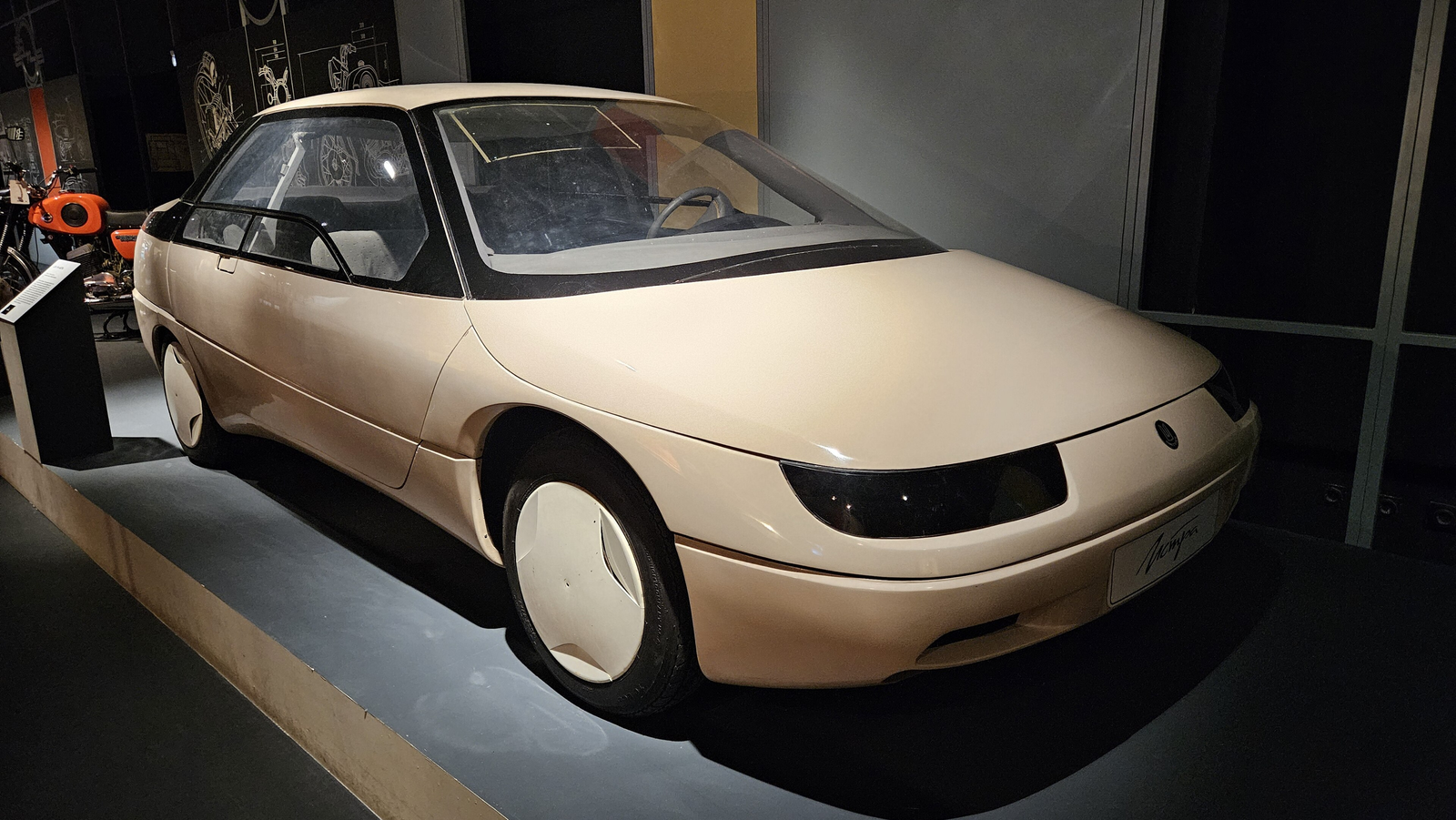
This solution provided several advantages at once:
- reduced vehicle weight;
- high structural rigidity;
- corrosion resistance;
- increased body durability.
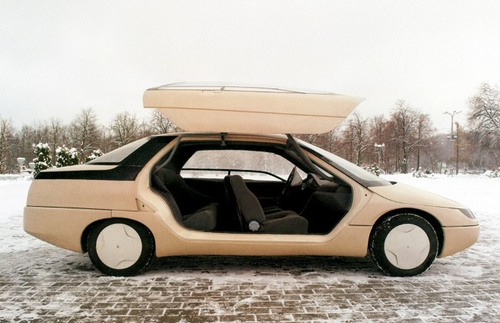
The exterior of the car was no less unusual. The designers completely abandoned the central body pillar. Instead of the usual scheme, two large "gull-wing" doors were used, which lifted upwards.
This solution pursued not only design goals. Thanks to this design, convenient access to both the front and rear rows of seats was provided. To compensate for the absence of the central pillar and maintain body strength, powerful structural elements were integrated into the roof and sills.
Special attention was paid to aerodynamics. The declared drag coefficient was only 0.149. For comparison, the modern Tesla Model S has a figure of 0.20, despite the use of a wind tunnel and modern design technologies.
Economical engine and continuously variable transmission
Unusual solutions were also applied in the technical part. Instead of traditional gasoline power units, AZLK acquired a license for an engine developed by German engineer Ludwig Elsbet.
Under the hood, a three-cylinder turbodiesel with a working volume of 1.45 liters was planned. One of the main features of the engine was its multi-fuel capability. It could run on various types of fuel, including:
- diesel fuel;
- kerosene;
- unrefined vegetable oil;
- rapeseed oil.
With a power of about 68 horsepower, the engine was characterized by extremely modest fuel consumption, estimated at 2.2–3 liters per 100 kilometers.
A V-belt variator was supposed to be used with the engine. For the mid-1980s, such a solution looked very progressive, since continuously variable transmissions had not yet become widespread even outside the USSR.
Electronics resembling science fiction
If the body and power unit looked advanced, the electronic equipment of the "Istra" made an impression of a car from the future.
Among the most unusual solutions were:
- multiplex data transmission system;
- head-up display on the windshield;
- night vision device;
- self-diagnosis system.
Engineers abandoned traditional complex wiring with a large number of separate cables. Instead, a single multiplex channel for transmitting digital signals between electronic systems was supposed to be used. In its ideology, such a solution resembled modern CAN buses, which are now used in almost all cars.
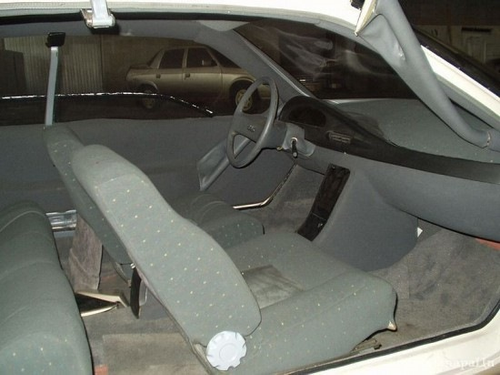
Information about vehicle speed, engine revolutions, and navigation data was to be displayed directly on the windshield. This allowed the driver to receive the necessary information without being distracted from the road.
For driving in difficult weather conditions, an infrared camera was provided, installed in the radiator grille. The resulting image was displayed on a special screen and allowed detecting pedestrians, animals, and vehicles in the dark or during a heavy snowstorm.
A self-diagnosis system display was located on the center console. In case of malfunctions, the car independently displayed error codes and information about the condition of units and assemblies.
In addition, the project provided for equipping the car with the following systems:
- airbags;
- anti-lock braking system ABS;
- full-fledged climate control system.
All these solutions were considered not as experimental developments, but as elements of a future production car.
Why the promising project never reached the assembly line
By 1991, Alexander Kulyamychev's team had completed the creation of a running prototype. The car existed in metal, underwent tests, and could become the basis for further preparation of serial production.
However, subsequent events thwarted these plans. After the collapse of the Soviet Union, the country's economy faced a severe crisis. The AZLK management had to focus on preserving the enterprise, not on expensive innovative developments.
At that time, the factory continued to produce models of the "Moskvich-2141" family, which were rapidly becoming obsolete. The situation was aggravated by the decline in the quality of components and the general deterioration of the enterprise's financial situation.
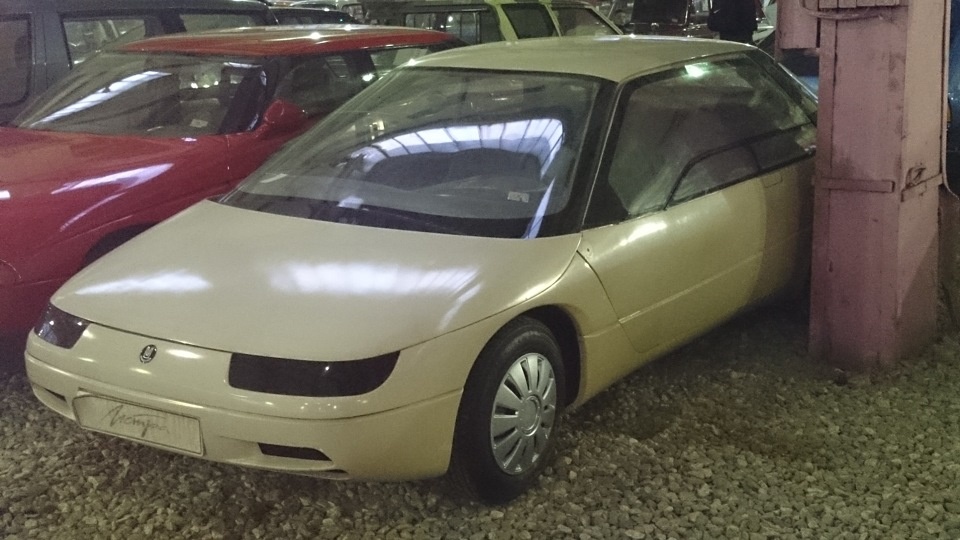
In 1993, the "Istra" project was officially closed. The reason cited was lack of funding. The promising concept with a duralumin body, night vision system, and head-up display turned out to be unclaimed and was sent to storage in the AZLK museum.
For many years, the car was in a hangar, gradually collecting dust. After the final bankruptcy of the factory and the beginning of its liquidation, the car was saved thanks to the efforts of enthusiasts. Subsequently, the concept was restored and took its place in the Moscow Transport Museum on Rogozhsky Val.
The history of "Istra" became a symbol of the unrealized potential of the domestic engineering school. The project showed what technological solutions could have appeared in Soviet automotive industry with the necessary resources and stable conditions for development. However, the circumstances of the early 1990s proved stronger than even the boldest technical ideas.
Read more materials:
- What still makes ICE indispensable
- How the first-generation Golf conquered the world
- Why the "six-hundredth" Mercedes was adored in the CIS