Translated with AI from the Russian original.
When it's time to part with an old car, the owner inevitably faces the question: try to sell the car independently or use a trade-in program at a dealership. Each option has its strengths and weaknesses, so there is no universal answer. It all depends on what is more important in a particular situation – maximum financial gain or saving time and nerves.
Private sale is traditionally considered the most profitable method. In most cases, the owner can get 15–20% more compared to a car dealership's offer. When it comes to popular models or relatively new cars, the difference often reaches 100–300 thousand rubles.
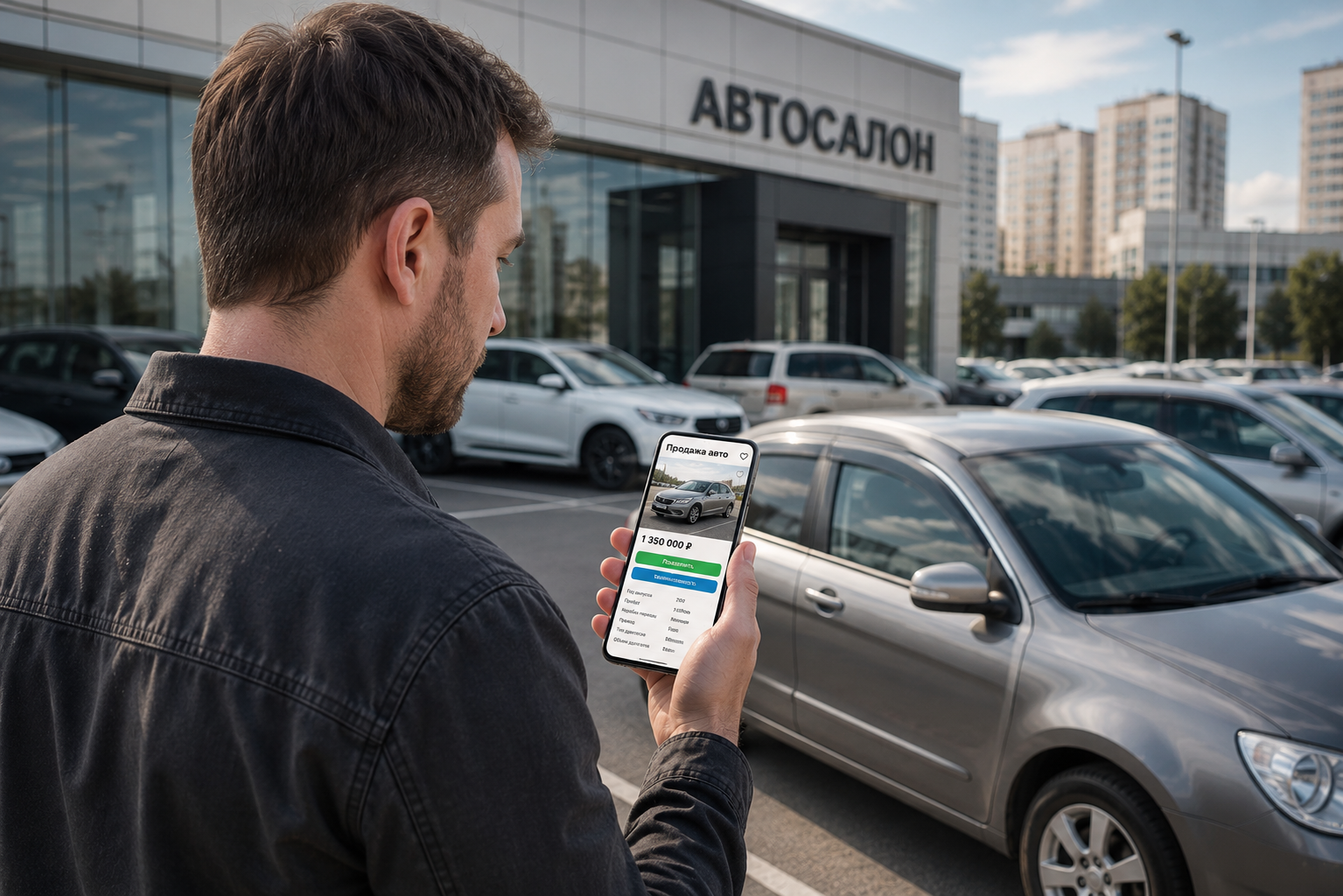
At first glance, the scheme looks extremely simple:
- post an ad
- take high-quality photos
- specify the car's characteristics and condition
- wait for a buyer
However, in practice, the process is rarely so easy.
After publishing an ad, resellers usually contact first. They call dozens of sellers daily and use a well-known pressure tactic. A potential seller may be told that money is ready to be brought immediately, but only if the car's value is significantly reduced.
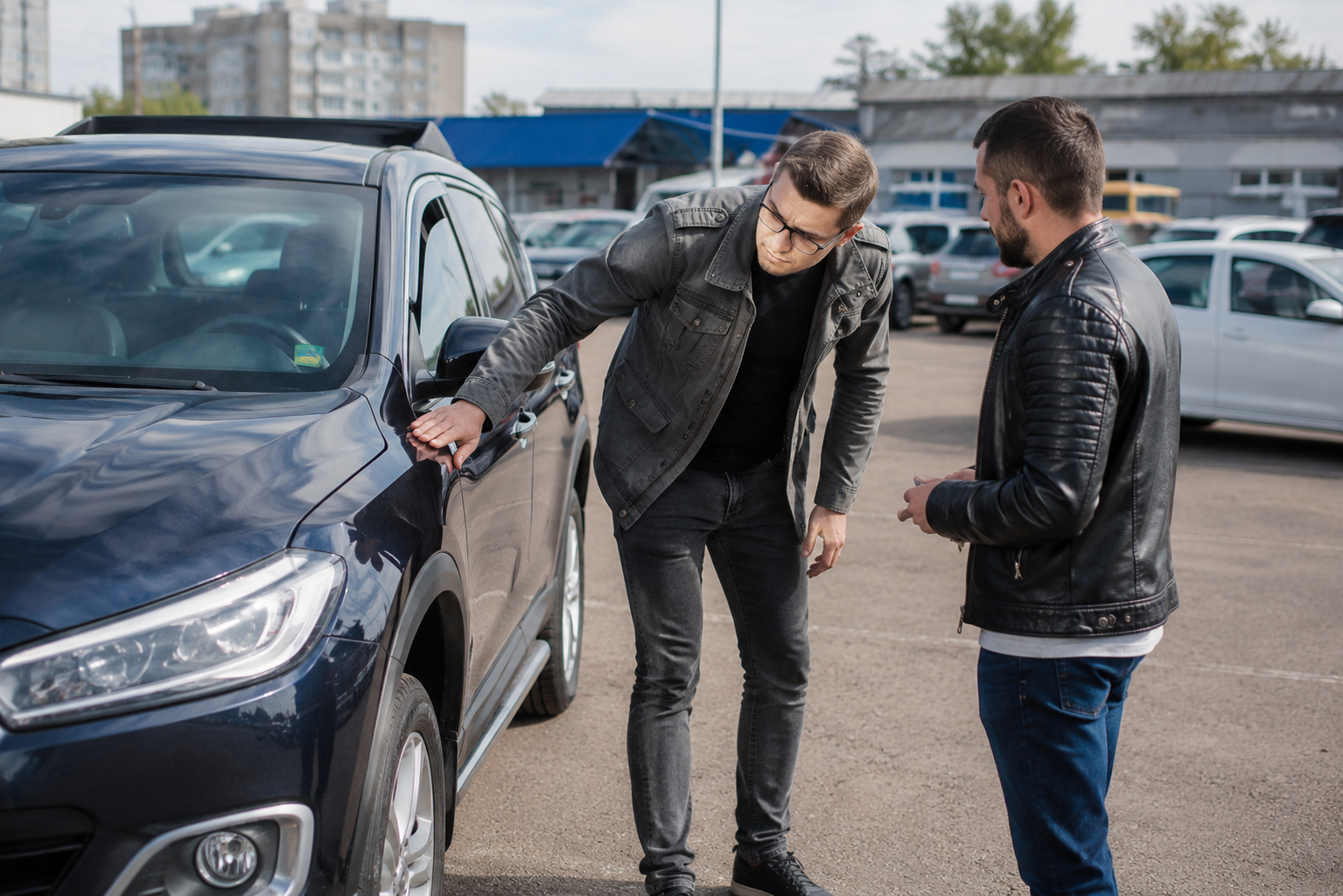
Then buyers appear who try to find flaws even where there are practically none. An insignificant scratch turns into a serious body defect, and recently serviced brakes are suddenly declared worn out. The main goal of such negotiations is to achieve the maximum possible discount.
Additional inconveniences are created by calls from various car dealerships and car buying companies. As a rule, the amounts they offer are noticeably lower than market prices.
Don't forget about time costs. Each showing requires a separate meeting, car inspection, test drive, and discussion of transaction terms. If there are ten or fifteen potential buyers, the sale can take several evenings or even a full work week.
In addition, a car is not always sold quickly. Sometimes ads remain active for months. The reason can be either an inflated price or a decrease in demand for a specific model.
Why many choose trade-in
The trade-in program involves exchanging an old car for a new one with an additional payment. The main disadvantage of this method is obvious – the dealer values the car below market price. This is due to the fact that the car dealership includes costs for preparing the car for sale, possible warranty obligations, and its own profit.
However, trade-in has serious advantages.
Firstly, many dealers provide a discount on a new car. In some cases, it partially or fully compensates for the difference between the desired car value and the dealership's appraisal.
Secondly, the buyer may be offered additional bonuses:
- discounts on additional equipment
- special insurance conditions
- preferential service programs
- favorable credit offers
But the main advantage remains time saving. The procedure often takes only a few hours. The car is inspected, appraised, documents are processed, after which the owner can immediately switch to a new car.
An additional plus is the security of the transaction. There is no need to meet with strangers, count cash, or independently check the legal purity of the registration. All procedures are carried out officially and under the supervision of dealership specialists.
When trade-in becomes the optimal solution
There are situations where exchanging through a dealer seems the most reasonable option.

For example, if a new car is needed without delay. Trade-in is also often chosen by owners of cars older than seven years, which are sold on the secondary market noticeably longer than modern and in-demand models.
This option is also suitable for those who do not want to spend their free time on negotiations, showings, and bargaining. For many, peace of mind and convenience are more important than additional profit.
Sometimes dealers offer very attractive conditions. The car is valued only slightly below market value, and the discount provided on a new car allows for a tangible benefit.
When it's better to sell independently
If buying a new car is not urgent, selling independently often allows you to earn more.
This option works especially well for liquid models in good technical condition. Such cars usually find buyers faster, and the owner gets the opportunity to retain the full market value of the car.
It is only important to objectively assess the situation and not overprice due to personal attachment to the car. For the market, the current condition of the car matters, not the amount of emotions and effort invested in it.
Private sale is also suitable for those who:
- are willing to wait for the right buyer
- feel confident in negotiations;
- understand transaction processing
- are able to independently assess possible risks
In such conditions, an additional 150–200 thousand rubles can indeed be a weighty argument.
Compromise option
In practice, many owners use a combined approach. The car is simultaneously put up for sale, and the owner simultaneously receives trade-in offers from several dealers.
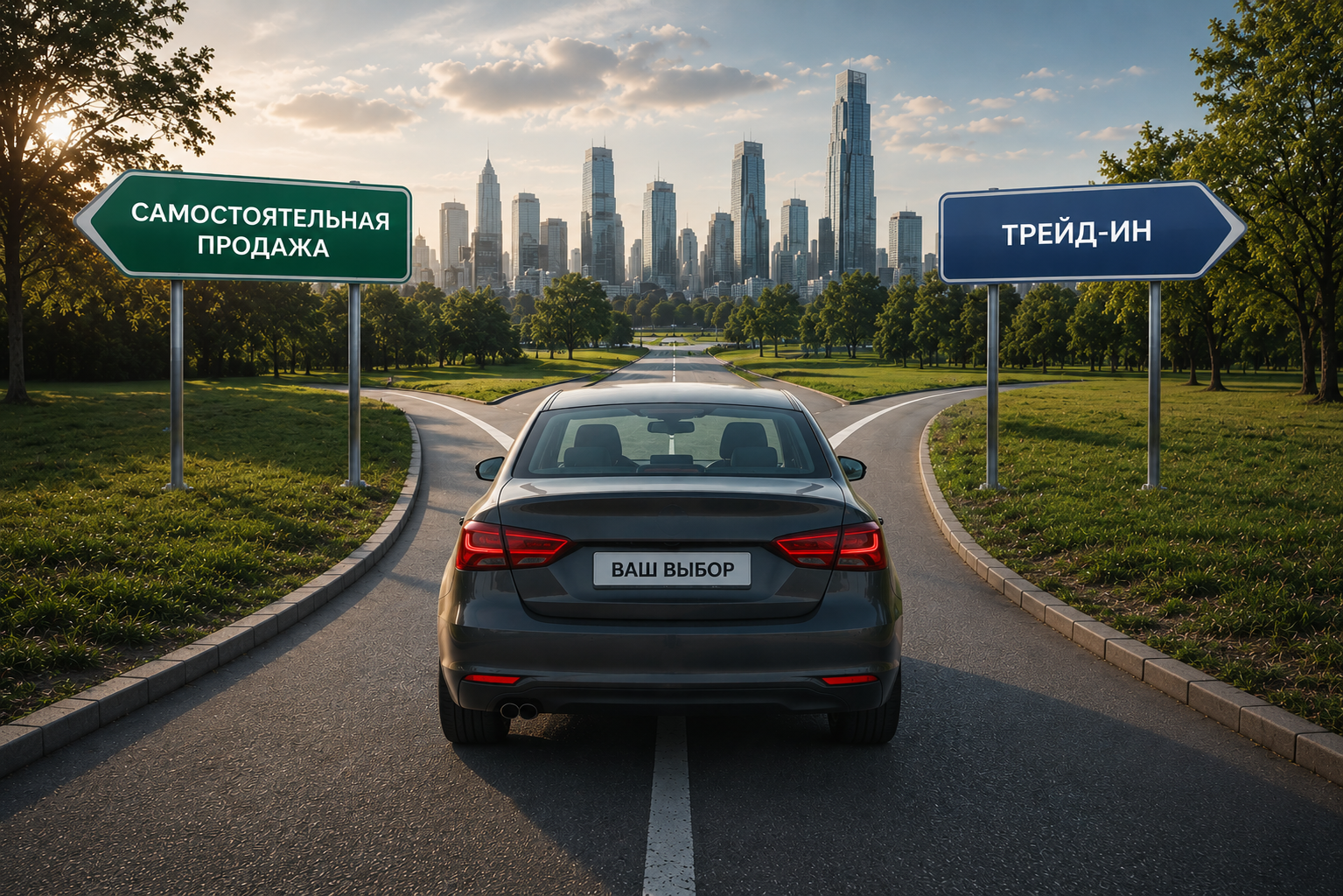
This method allows for an objective comparison of all options. If a buyer cannot be found at a satisfactory price within a couple of weeks, a car dealership's offer may be a perfectly rational solution.
At the same time, it is important to evaluate not individual figures, but the overall benefit. One dealer may offer a lower car appraisal but compensate for it with a significant discount on a new car. Another, on the contrary, will appraise the car higher but will not provide additional benefits.
The choice between private sale and trade-in always depends on the owner's personal priorities. The first option allows you to get the maximum amount, but requires time, patience, and willingness to handle all stages of the transaction independently. The second provides speed, comfort, and safety, although it usually involves certain financial losses.
Before making a decision, it is worth calculating both scenarios in advance, studying offers from several dealers, and objectively assessing your own capabilities. In some cases, additional hundreds of thousands of rubles will justify the effort, and in others, convenience and efficiency will be much more valuable.
Read more materials:
- How "Niva" inspired the creators of Suzuki Vitara
- GAZ-TK: an unusual three-axle vehicle for the army and reconnaissance
- The most unusual quarry transport that did not go into series: NAMI-0143-SXZ