As soon as you start talking about paint protection film for cars, experts immediately appear, ready to share another horror story. One assures that it will yellow in a few months, another talks about paint supposedly peeling off with the film, and a third is convinced that any bush can turn the expensive coating into rags.
Such conversations are so common that many motorists begin to perceive them as axioms. However, a significant part of these scare stories appeared back in the days of cheap materials and long-outdated technologies. Over the years, the films themselves have changed significantly, but the old myths continue to live their own lives.
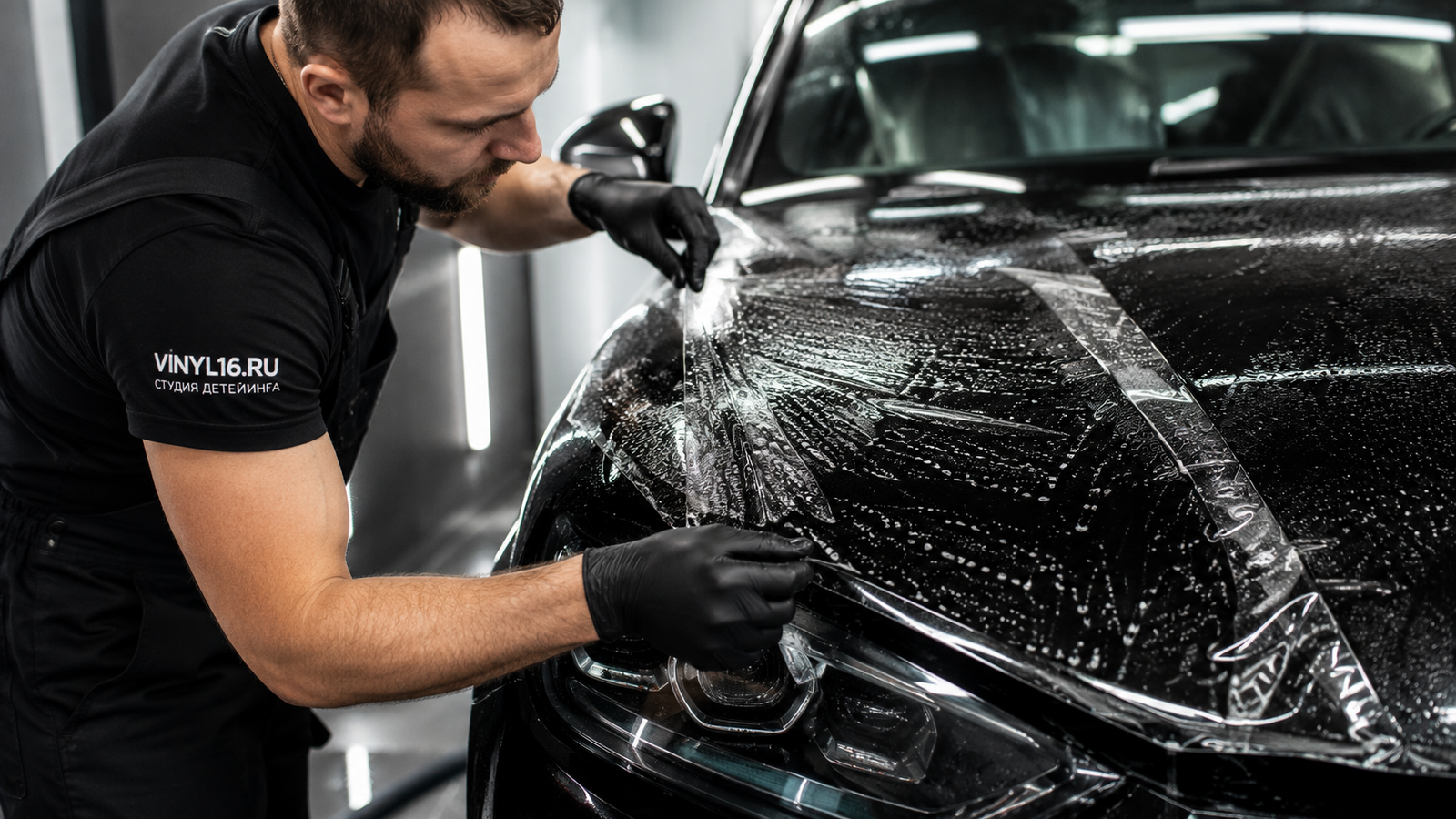
Let's debunk the most popular ones and see how much they correspond to reality.
Myth #1. Any paint protection film will inevitably yellow
Perhaps this fear is the most common, especially among owners of white cars.
Partially, this opinion has historical reasons. Several decades ago, inexpensive materials were indeed found on the market that began to change color under the influence of sunlight. Ultraviolet gradually destroyed the structure of the coating, and sometimes the adhesive layer also oxidized. As a result, the car body acquired a characteristic yellowish tint.
Today, the situation is different.
Modern high-quality polyurethane films contain special light stabilizers that significantly increase resistance to ultraviolet radiation. Thanks to this, transparency is maintained for many years, even with regular use of the car outdoors.
Of course, budget materials of dubious origin are still found on the market. They are most often the source of new stories about yellowed car bodies.
Therefore, the problem lies not in the technology itself, but in the quality of the chosen material.
Myth #2. After application, the car becomes invulnerable
Sometimes you can find the opposite extreme.
Some owners begin to perceive paint protection film as a kind of armor, capable of protecting the car body from absolutely any damage. After this, experiments appear with parking close to curbs, harsh brushes at car washes, and other strength tests.
In practice, everything is much more prosaic.
The main advantage of polyurethane is not its hardness, but its elasticity. It is thanks to this that the film effectively absorbs the impact of:
- road sand;
- small stones;
- shrub branches;
- minor mechanical damage.
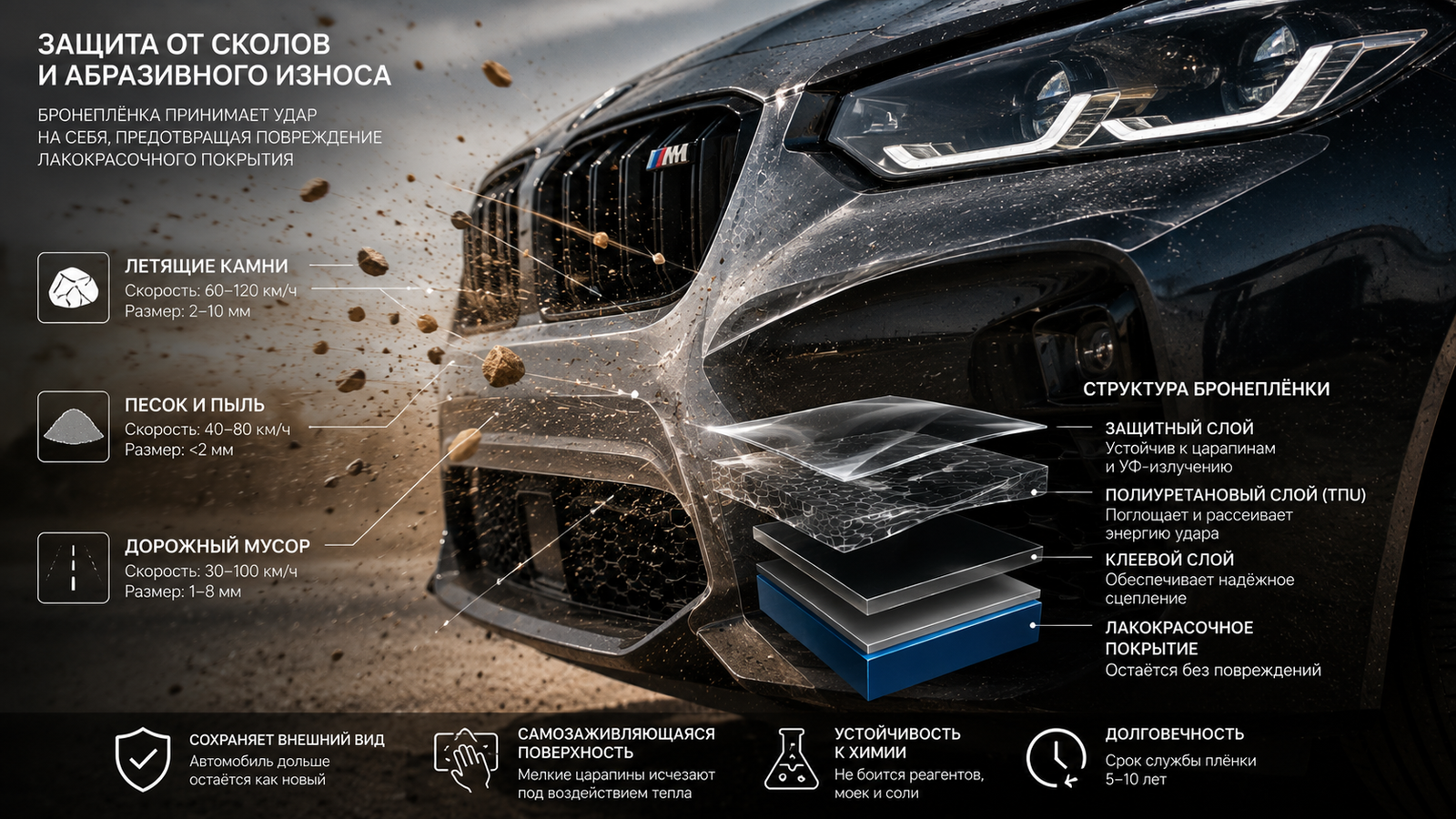
In addition, many modern coatings are capable of self-healing minor surface scratches under the influence of heat.
However, there are limitations that should not be forgotten:
- a deep impact can damage both the film and the paintwork;
- contact with sharp objects can lead to material tearing;
- serious mechanical impacts do not disappear magically.
Essentially, paint protection film acts as a consumable protective layer. It absorbs minor damage, preserving the factory paint.
Myth #3. When removing the film, the paint will definitely come off
This myth originates from the days of cheap vinyl coatings that were actively used in the past.
At that time, situations indeed occurred when the paintwork partially came off along with the material. However, most often the reason was not the films themselves, but the characteristics of the materials and technologies of that time.
Modern polyurethane is designed differently.
A high-quality adhesive layer ensures reliable fixation of the coating on the car body, but when heated, it becomes significantly softer. Thanks to this, the film can be carefully removed without damaging the factory paintwork.
Usually, the procedure is performed as follows:
- the surface is heated;
- the adhesive layer softens;
- the material is gradually removed from the car body;
- adhesive residues are removed without a trace.
Problems may arise only in individual cases. For example, if the car was previously poorly painted and the clear coat itself does not adhere well to the surface.
But in such a situation, the reason is not the film.
Myth #4. Paint protection film is invisible
Advertising materials often create the impression that after application, the coating completely disappears from the car body.
In practice, this statement is only partially true.
If the car is fully wrapped, the difference can indeed be extremely difficult to notice even upon close inspection.
However, much more often, owners protect only the most vulnerable elements:
- front bumper;
- hood;
- front fenders;
- mirrors;
- part of the roof.
Over time, at the border between the film and the exposed clear coat, the following can accumulate:
- road dust;
- wax residues;
- traces of polishing compounds;
- dirt after car washes.
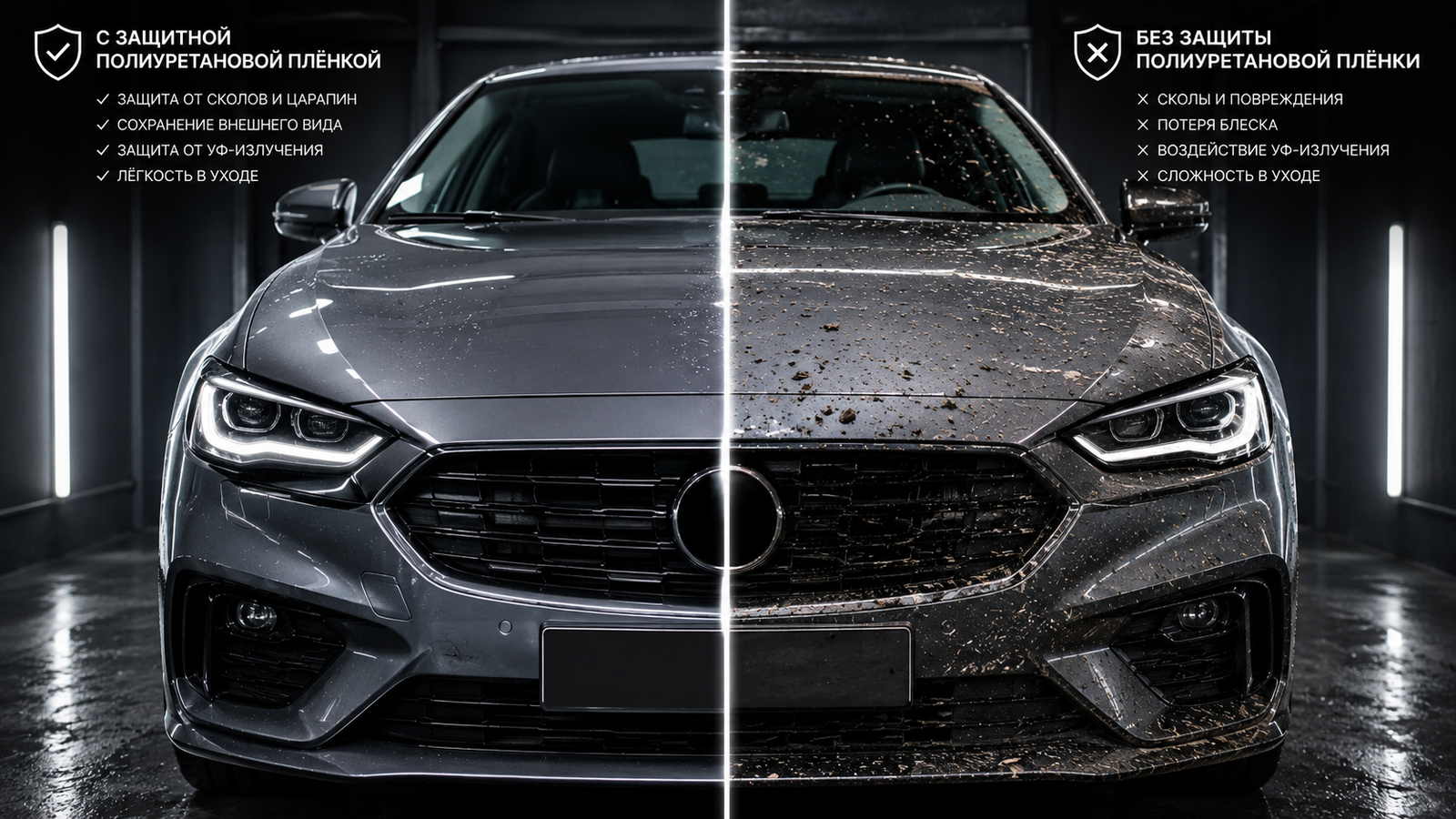
Because of this, a thin line appears that can be noticed upon close examination.
In addition, even with high-quality materials and paintwork, the surface texture and degree of gloss may differ slightly. At a certain angle of illumination, the difference becomes noticeable.
This is not a drawback of the technology, but rather its feature.
Myth #5. The film will definitely pay for itself when selling the car
The last misconception concerns the financial side of the issue.
You often hear two opposing points of view at once. Some consider the cost of wrapping unreasonably high, while others are sure that all costs will be fully recovered when selling the car.
The truth lies somewhere in the middle.
The high cost of quality wrapping is not only due to the price of the material. A significant part of the expenses is the work of specialists.
The process includes:
- body preparation;
- surface cleaning and degreasing;
- material cutting;
- precise application;
- removal of bubbles and wrinkles;
- final adjustment of all elements.
Such work can take many hours or even several days.
As for resale, it's far from straightforward. For most buyers, the presence of paint protection film rarely becomes a decisive argument when choosing a car. Many perceive it as a pleasant bonus, but are far from always willing to pay extra for it.
Therefore, wrapping should not be considered an investment tool.
What a car owner needs to understand
Most myths about paint protection film arose either due to unfortunate experiences with cheap materials from past years, or due to inflated expectations.
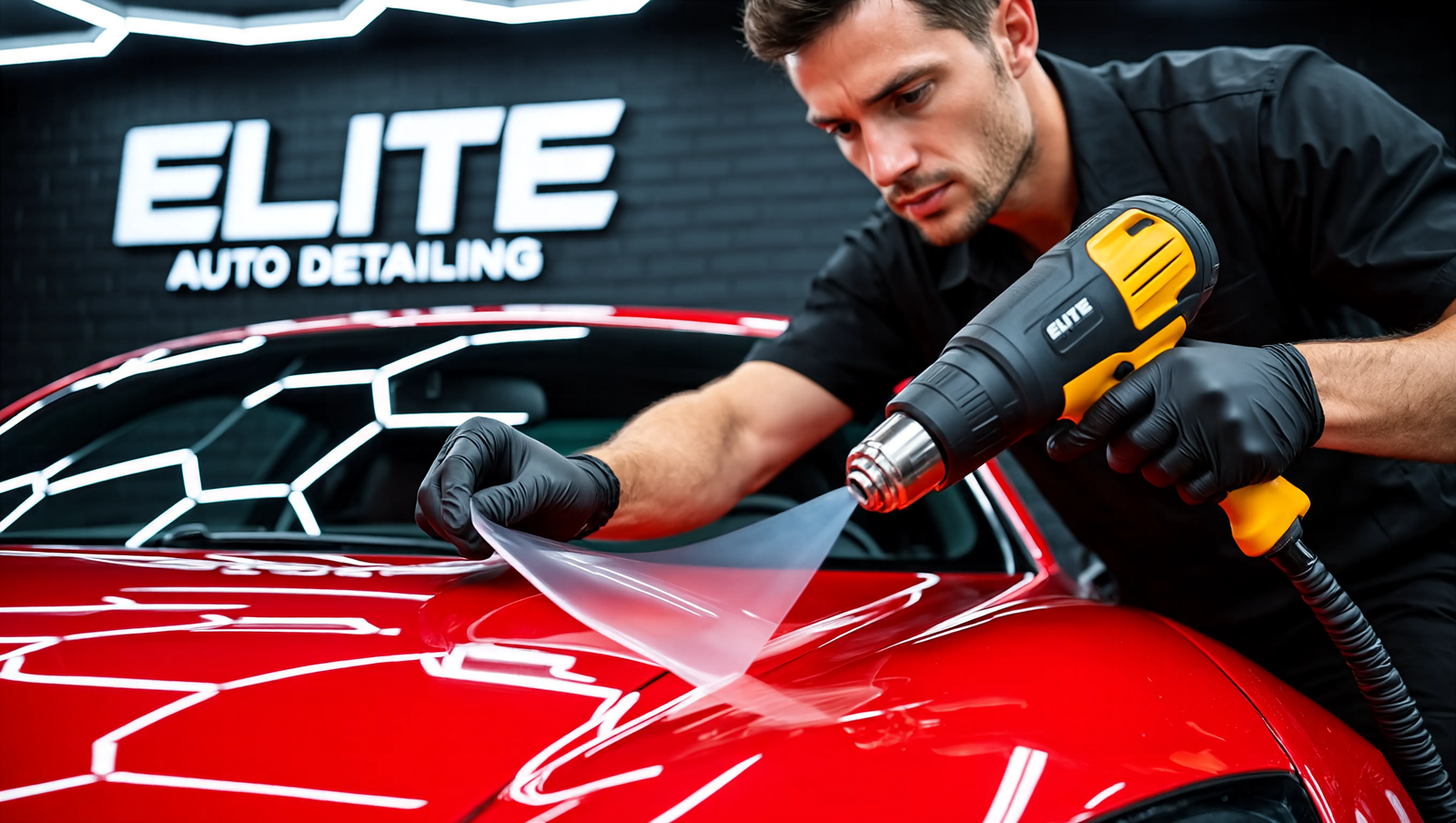
High-quality polyurethane protection can indeed:
- reduce the effects of sandblasting;
- preserve the paintwork from minor damage;
- protect the car body from many everyday nuisances;
- help maintain the car's appearance longer.
But at the same time, it does not turn the car into an armored vehicle, does not negate the need for care, and does not guarantee financial benefits upon subsequent sale.
Therefore, the main conclusion is quite simple. If you use quality material, turn to experienced craftsmen, and understand the real capabilities of the technology, paint protection film becomes a useful tool for protecting the car body. But believing in old garage legends usually brings much less benefit than getting acquainted with modern materials and their real properties.
Read more materials:
- Why engineers mark bolts with paint
- Car stood for 10 years: what is dangerous about the first start-up
- ZIL-E167: Soviet giant for snowy virgin lands
Комментарии