Every motorist is familiar with this situation. The car has been standing under the scorching sun for several hours, and after opening the door, it feels as if there's a scorching oven inside instead of a cabin. The air is heavy and still, the steering wheel cannot be held with bare hands, and the seats literally burn your back. And yet, there's a road ahead, and you want to spend it in more comfortable conditions.
Many immediately start dreaming of air conditioning, but not all cars are equipped with a climate control system. And sometimes equipment breaks down at the most inconvenient moment. However, even without air conditioning, you can significantly make your life easier. The main thing is to understand how heated air works and use a few simple tricks.
First rule: don't cool, but ventilate
The most common mistake is trying to immediately cool down a hot interior. In fact, the first thing you need to do is get rid of the accumulated hot air inside.
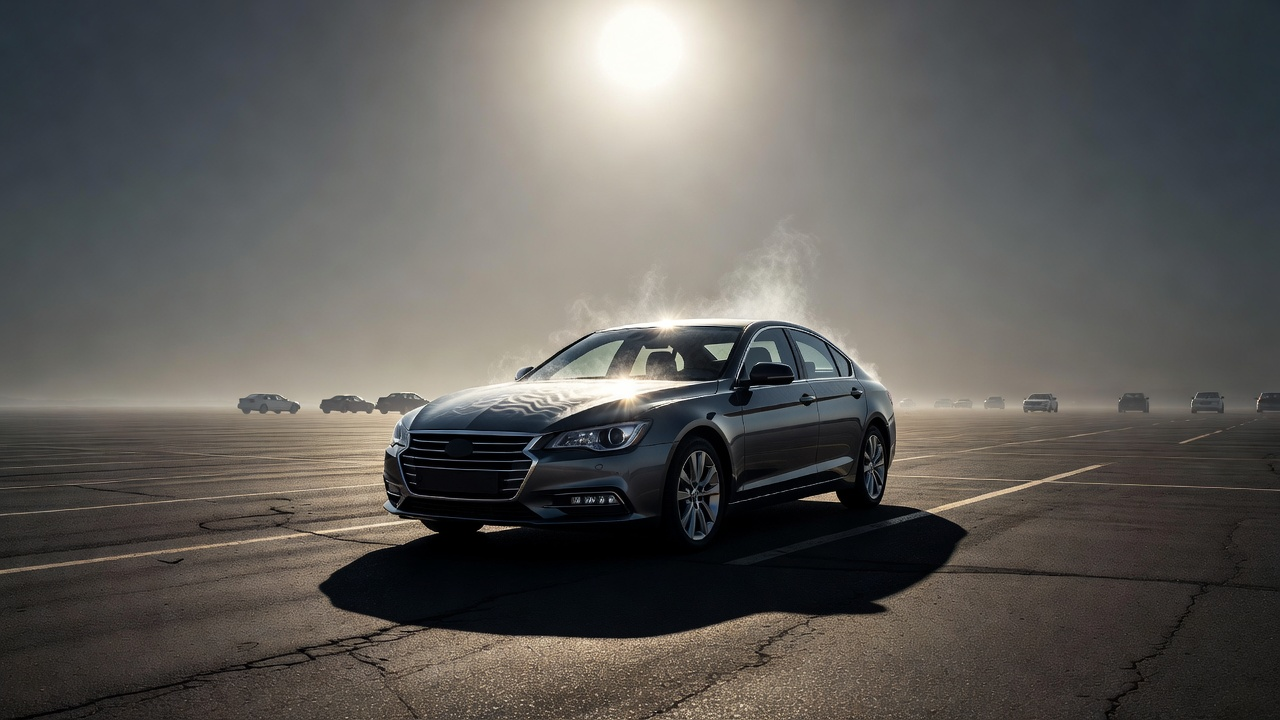
Ordinary physics helps here. Heated air is lighter than cold air and accumulates in the upper part of the cabin. Accordingly, the driver's task is to replace it as quickly as possible with cooler air from the street.
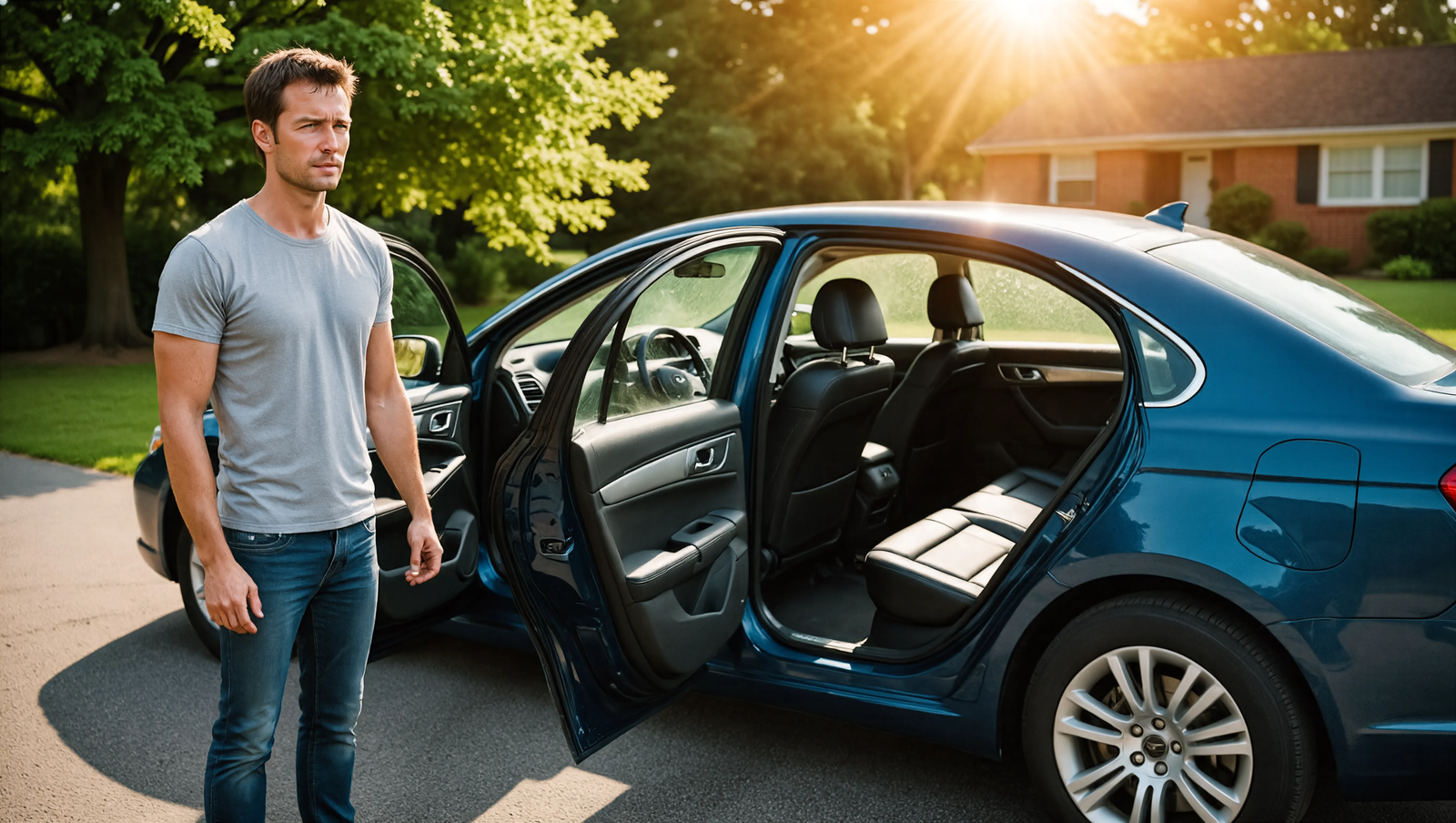
To do this, simply perform a few simple steps:
- open the driver's door;
- then open the front passenger door on the opposite side;
- wait a few seconds for a through draft to pass through the cabin.
Even if it's hot outside, the air outside is usually still noticeably cooler than what has accumulated under the car's roof.
How to properly use the fan
After initial ventilation, you can start the ventilation system.
It is important to follow the correct sequence:
- set the temperature control to the coldest position;
- turn the fan to maximum speed;
- direct the airflow not at your face, but at the windshield and the lower part of the cabin.
This mode helps to quickly displace overheated air outwards and accelerates the natural cooling of the interior space.
Many underestimate this stage, although it is precisely what allows the cabin temperature to reach comfortable values much faster.
Why you shouldn't open all windows wide open
It seems logical to just roll down all the windows completely and drive on. However, this method is not always the most effective.
A partial window opening scheme works much better.
After starting to move, you can:
- open the rear windows about a third;
- lower the driver's window by a similar amount.
In this case, a peculiar exhaust effect occurs. The airflow begins to pass through the entire cabin, carrying accumulated heat outwards.
As a result, ventilation occurs faster than with fully open windows, and the noise level is noticeably lower.
In the first minutes of driving, the temperature inside the car can significantly decrease, which is especially important after a long stop in the sun.
Old method with a wet towel
Before the advent of affordable climate systems, many drivers used a simple but quite effective method.
For this, you will need:
- a regular terry towel;
- cold water.
The fabric must be wet and wrung out well, then hung inside the cabin so that air can freely pass through it while driving.
As water evaporates, it absorbs some of the thermal energy from the surrounding air. This principle has been known for decades and is the basis of evaporative cooling.
Of course, this method cannot replace a full-fledged air conditioner, but it can certainly make the atmosphere in the cabin more comfortable.
Frozen bottles also work
Another simple trick involves using ordinary plastic bottles of water.
Before the trip, they can be frozen in advance, leaving some volume free for ice expansion.
While driving, the bottles are placed:
- on the center console;
- near the dashboard;
- next to the driver's or passenger's seat.
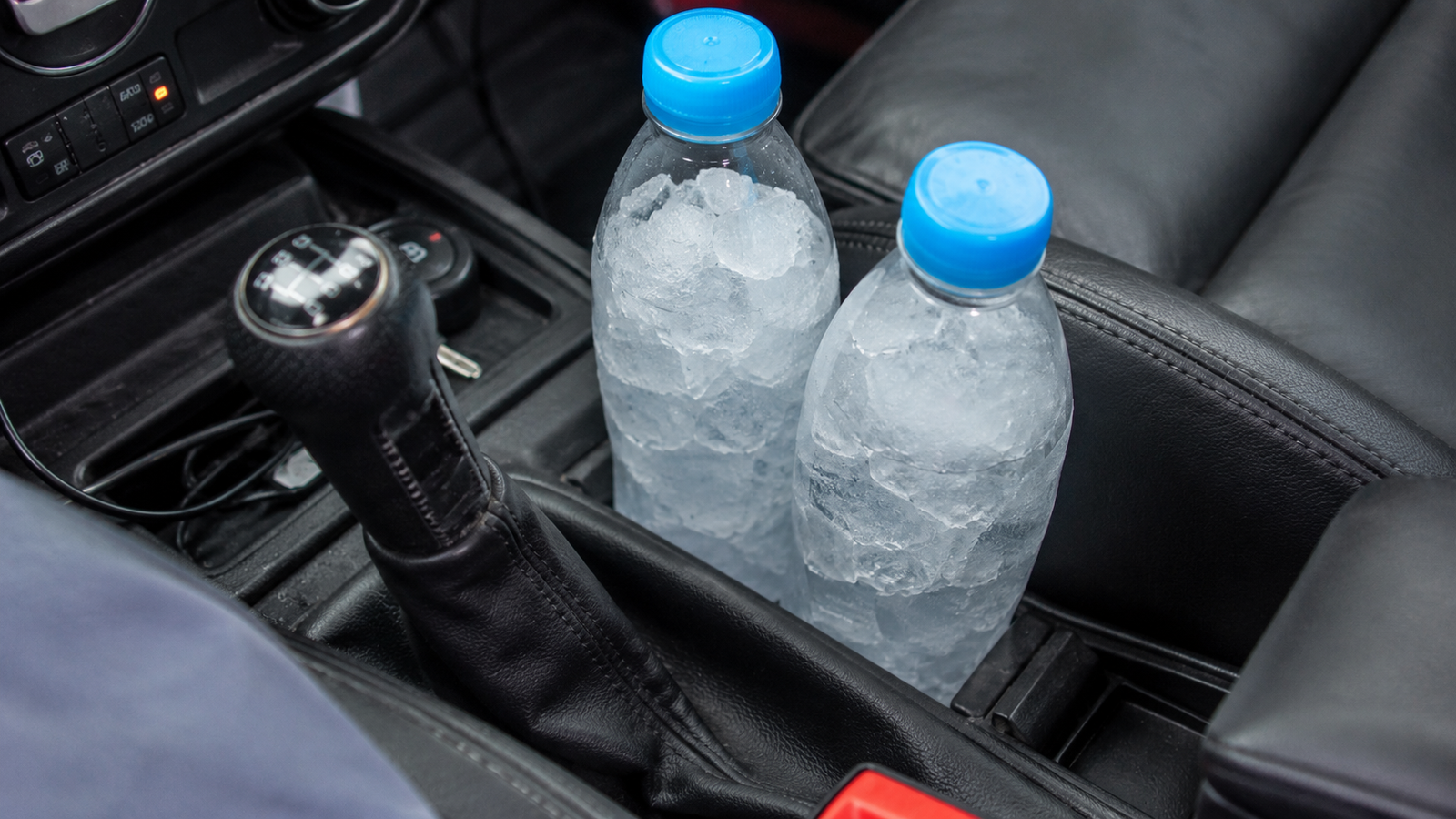
A local cold source will not be able to cool the entire cabin, but it becomes noticeably more comfortable in its immediate vicinity.
This method is especially helpful during short city trips.
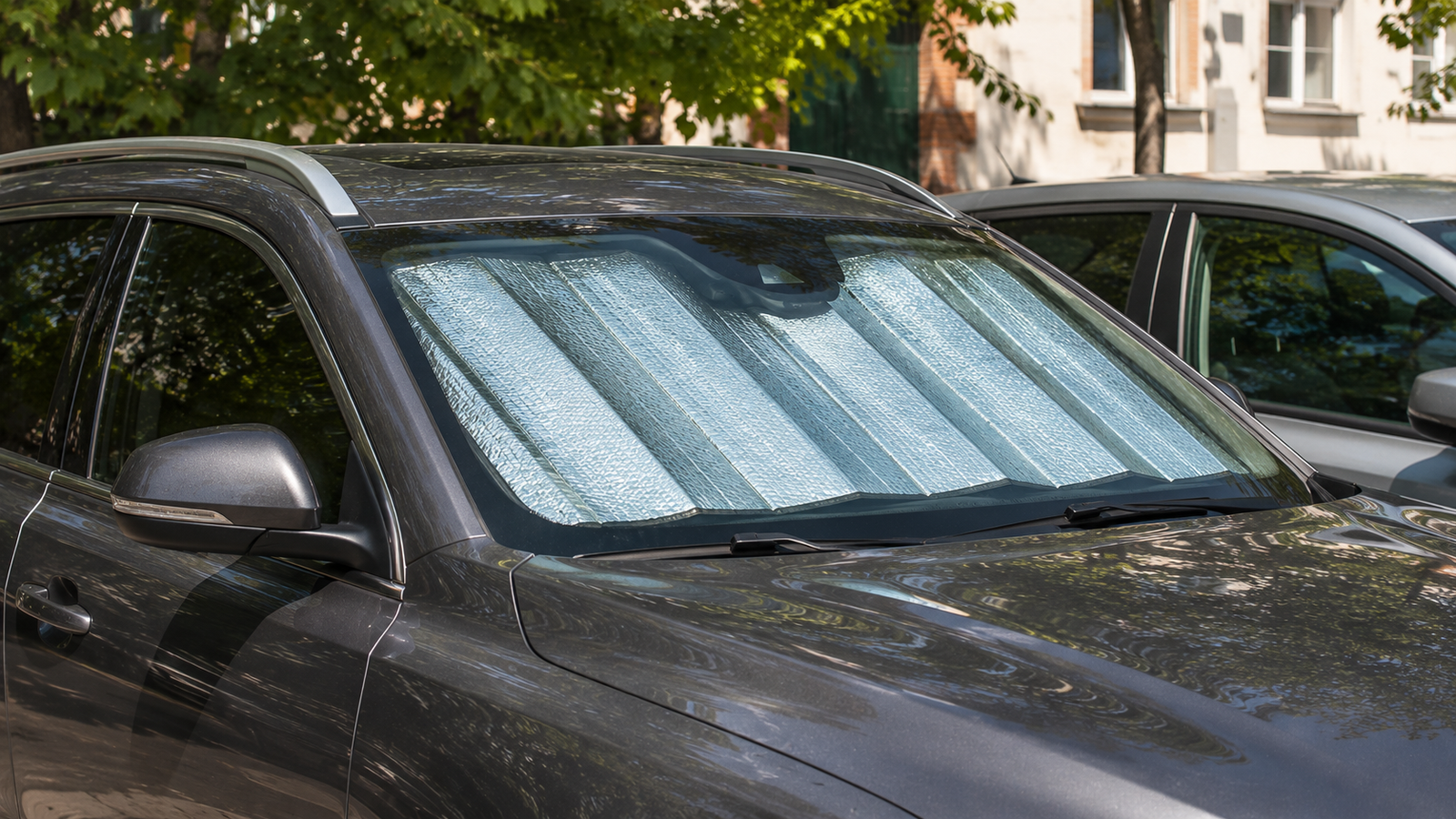
Sunshades: a simple solution to a big problem
It is much easier to prevent overheating than to deal with its consequences.
That is why sunshades for windows remain one of the most useful summer accessories.
They allow you to:
- reflect a significant part of solar radiation;
- reduce dashboard heating;
- protect the steering wheel and seats from overheating;
- lower the overall temperature inside the car.
The difference becomes especially noticeable after several hours of parking in direct sunlight.
What advice is best not to use
Along with useful recommendations, there are also popular misconceptions that can do more harm than good.
Pouring cold water on a hot car
At first glance, the idea seems reasonable. However, a sharp temperature drop can negatively affect the condition of the paintwork.
In addition, heavily heated windows sometimes do not tolerate sudden cooling well.
Therefore, it is better to leave such experiments for an evening car wash, when the body has already cooled down.
Immediately turn on recirculation
Many drivers make this mistake immediately after getting into the car.
If the cabin has not yet been ventilated, the recirculation mode starts circulating the same hot air.
It is much more effective to first remove the heat outside, and only then use internal air circulation if necessary.
Driving with windows fully open
At high speeds, this often leads to a strong hum and turbulence inside the cabin.
Air exchange is not always better, and the comfort level is noticeably reduced.
Partially open windows are often more effective and create a more pleasant microclimate.
The main thing is to use physics to your advantage
The absence of air conditioning does not mean that summer trips will necessarily turn into a challenge.
A few simple actions can significantly improve the situation:
- quickly ventilate the cabin before getting in;
- properly use the standard fan;
- organize effective airflow through the windows;
- apply evaporative cooling;
- protect the car from overheating while parked.
Of course, it will not be possible to achieve arctic coolness without a climate system. But it is quite realistic to make the trip significantly more comfortable. Sometimes this does not require expensive equipment, but just a couple of minutes of time and an understanding of how hot air behaves in an enclosed space.
Read more materials:
- GAZ-53S: the forgotten conqueror of the Far North
- Why electric vehicles wear out tires so quickly
- Why engineers mark bolts with paint
Комментарии