Over the past decades, automatic transmissions have practically supplanted classic manual gearboxes. Exceptions still exist, but they are becoming rarer. Especially when it comes to an everyday car where, after a workday, you just want to drive, not endlessly work the gear lever in dense city traffic.
However, a curious feature remains constant: many drivers, even those who choose a car with an automatic transmission, occasionally want to control gear changes themselves. This is why manufacturers continue to look for ways to maintain an emotional connection between a person and a car.
Today, complex software is used for this. Recently, Porsche engineers developed a gear shift simulation system for the Taycan electric car, which effectively has no traditional gearbox. This approach adds engagement to the driving process without sacrificing the convenience of an automatic transmission.
But the idea was far from new. More than half a century ago, Oldsmobile engineers, together with specialists from Hurst Performance, solved a similar problem.
When Automatic and "Manual" Lived in One Lever
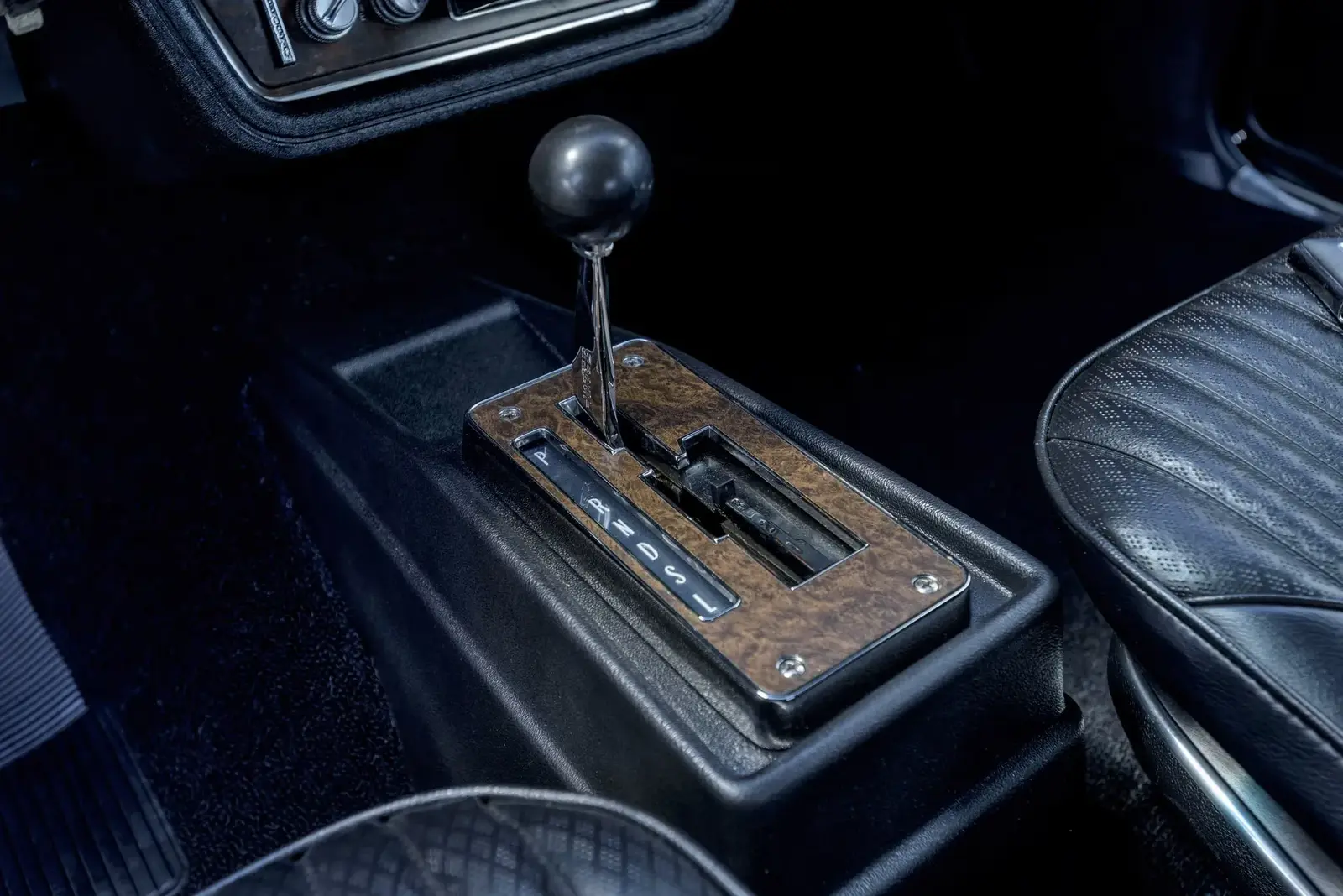
In the late 1960s, developers created an unusual transmission control system called Hurst Dual Gate. In history, it received a more famous nickname — His and Hers.
The concept was based on a simple idea:
- one mode was intended for normal automatic driving;
- the second allowed the driver to manually select gear shift points.
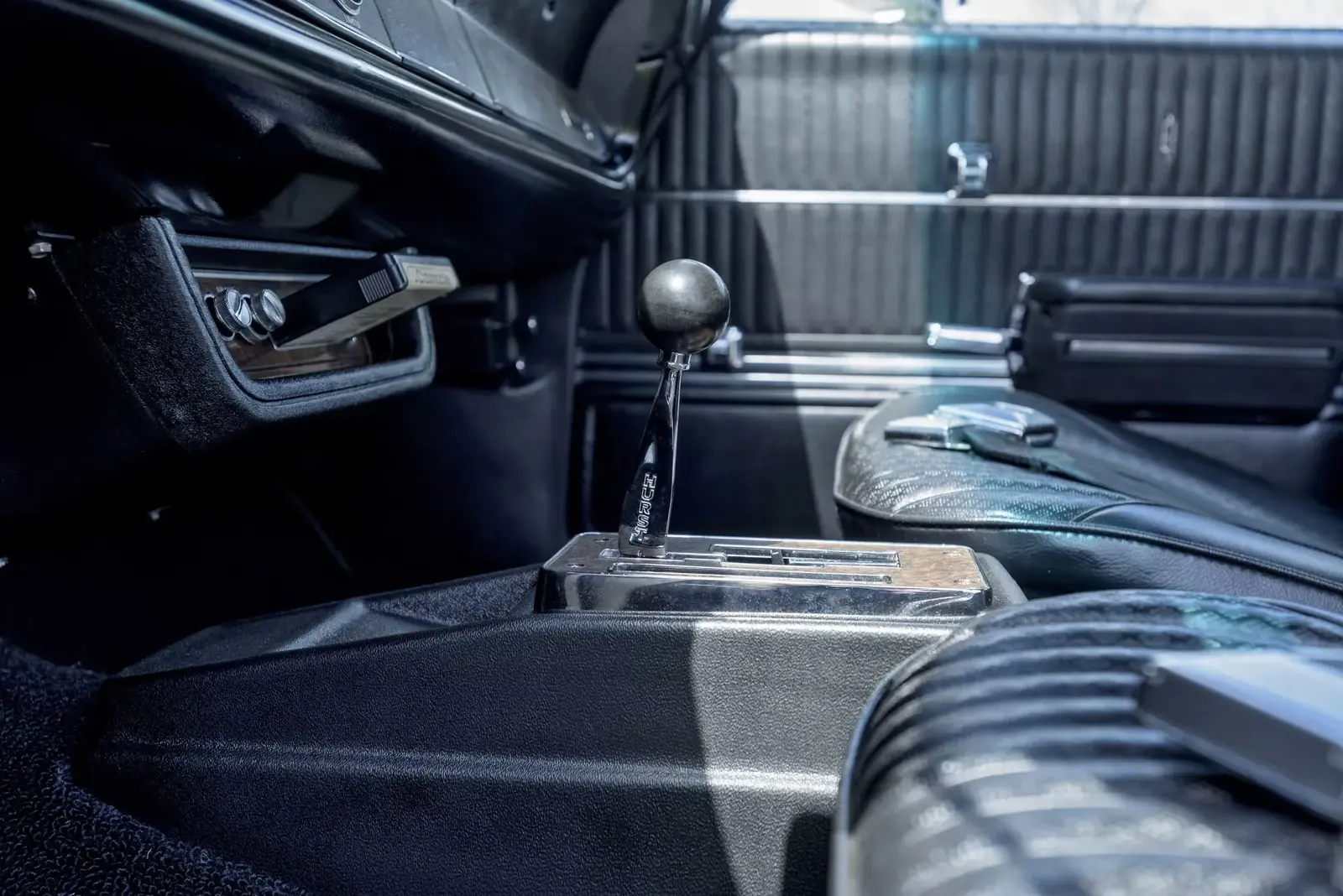
By the standards of its time, the solution looked very unusual. The selector moved not along one, but along two guide channels.
In the first channel, everything worked like a standard automatic. The driver only needed to select Drive mode and continue driving without any additional actions.
In the second channel, it became possible to sequentially shift gears manually. The design prevented accidental engagement of an inappropriate gear or reverse while driving.
Essentially, it was a kind of mechanical version of modern manual control modes for an automatic transmission.
Advertising from Another Era
The name His and Hers causes a lot of debate today. In advertising materials from the late 1960s, the system was directly positioned as a solution for two types of drivers: the automatic mode was intended for calm everyday driving, and the manual mode was for those who wanted to be more actively involved in controlling the car.
Modern Western publications often recall this advertisement as an example of gender stereotypes characteristic of that time. Today, such a marketing presentation would hardly be possible, as the emphasis on separating drivers by gender has long since passed.
Nevertheless, the design itself proved so successful that it went down in the history of the American automotive industry.
Engineering Trick Instead of a Real "Manual"
Compared to the later Hurst Lightning Rod system, primarily aimed at drag racing, the Dual Gate design looked surprisingly elegant and practical.
Among its features:
- two independent lever movement channels;
- automatic mode for everyday operation;
- sequential manual gear shifting;
- protection against incorrect gear selection.
On early versions, there was another interesting detail. The mechanical part of the system could be locked with a key.
It is important to understand that such a scheme did not provide any real gain in dynamics. Gears were still shifted by the automatic transmission, and the driver only selected the moment of transition between them. Nevertheless, customers liked the idea.
This was largely due to the peculiarities of the American market. Most drivers in the USA already preferred cars with automatic transmissions and often simply did not know how to use a classic manual.
One of the Rarest Oldsmobiles
The Hurst Dual Gate system was installed on several sports models of the General Motors concern. Today, the most desirable car with such a selector is considered to be the 1969 model year Oldsmobile Hurst/Olds.
Recently, one of the perfectly restored examples was sold at the Mecum auction in Indianapolis for 187 thousand dollars, which is equivalent to approximately 14 million rubles.
However, the value of the car is explained not only by the unusual gear lever.
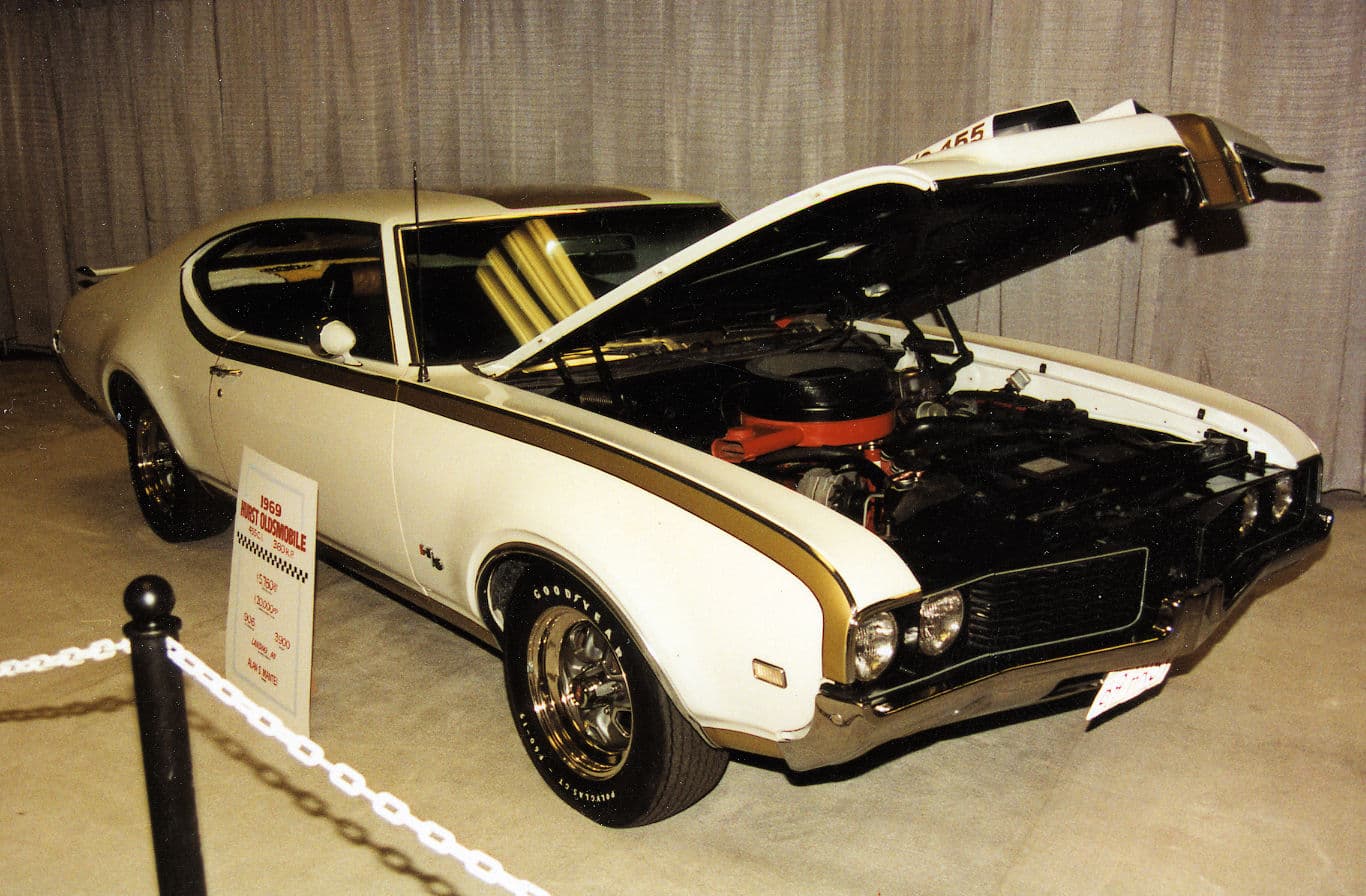
Only 906 examples of the 1969 Hurst/Olds were produced. Under the hood was an Oldsmobile Rocket V8 engine with a volume of 7.5 liters and a power of 380 horsepower.
This car became a reflection of a very curious period in the history of General Motors.
How Engineers Circumvented Corporate Bans
In the late 1960s, there was a rule within the concern that prohibited installing engines larger than 400 cubic inches in mid-size cars.
However, managers and engineers found a way to circumvent the restrictions.
As a result, the Hurst/Olds received an engine with a volume of 455 cubic inches, which significantly exceeded the established limit. Thus, the car effectively avoided the corporate ban.
In a sense, the Hurst Dual Gate lever also reflected this spirit of engineering ingenuity. Formally, the car remained equipped with an automatic transmission, but at the same time, it allowed the driver to feel like a participant in the gear shifting process.
Today, similar solutions are implemented using complex electronics, software algorithms, and digital interfaces. But more than half a century ago, American engineers were able to achieve a similar effect exclusively by mechanical means.
That is why the Hurst Dual Gate system remains one of the most interesting examples of how automakers tried to combine the comfort of an automatic transmission and the pleasure of manual control long before the advent of modern technologies.
Read more materials:
- Finnish Lada Baltic: The Best "Nine" in History
- How Engineers Tamed the Noise of Diesel Engines
- GAZ-62B: An Eight-Wheeled Monster for Swamps
Comments