The robotic gearbox remains one of the most ambiguous transmission options when choosing a used car. It inherited its structural basis and potential economy from a conventional manual transmission, and ease of control from an automatic. But along with this, an AMT may require more careful maintenance and expensive repairs.
However, not all robotic gearboxes can be considered the same. Their design, behavior, and operational requirements vary significantly.
Types of Robotic Gearboxes
Conventionally, all AMTs can be divided into two main types.
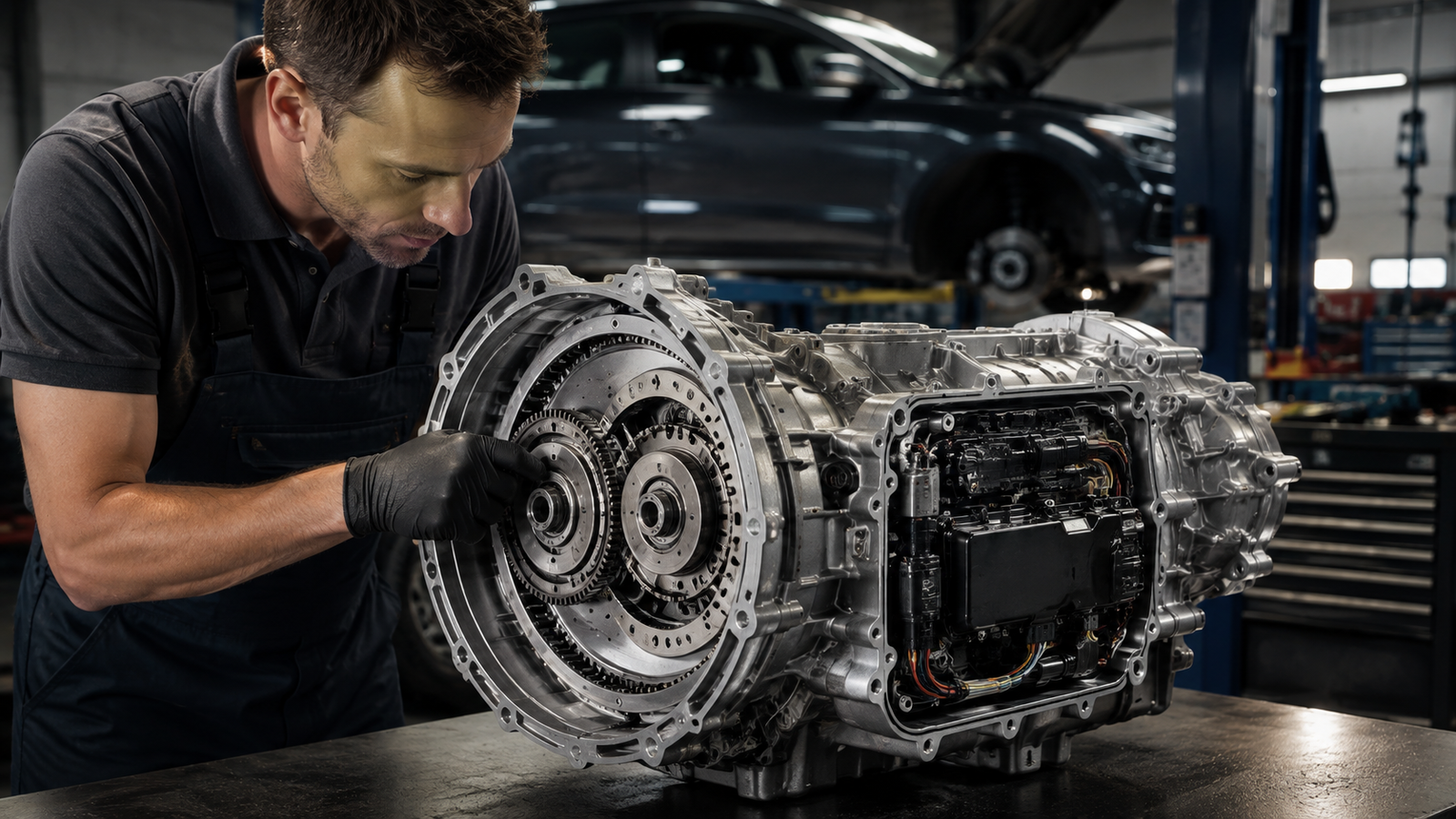
The first option is a single-clutch robot. It is based on a conventional manual gearbox, but gear shifting and clutch operation are handled by electronics using actuators. Such transmissions were installed, in particular, on budget Lada cars with an AMT gearbox.
It was single-clutch robots that largely formed the ambiguous reputation of the entire class. When driving in heavy city traffic, they can shift with jerks, and constant starts and stops create increased load on the clutch.
The second option is a robotic gearbox with two clutches, also called a preselective gearbox. This type includes DSG in Volkswagen, PowerShift in Ford, and 7DCT used by Korean and Chinese manufacturers.
The operating principle here is different: two gears are actually ready simultaneously. While one gear transmits torque, the next is already prepared for engagement. Thanks to this, shifts occur very quickly and almost without interruption of traction.
Dual-clutch gearboxes, in turn, come in two main types:
- with dry friction clutches, like the DSG DQ200;
- with wet clutches operating in an oil bath.
The latter option usually tolerates high loads and heat better, and also offers more comfortable operation.
Therefore, when buying a used car, it is important to consider not only the presence of a "robot" itself, but also its specific design. Single-clutch gearboxes are simpler and usually cheaper to repair, but are inferior in smoothness. Dual-clutch gearboxes provide a more pleasant ride, but require more attention to maintenance and can be more expensive to restore.
Who a Robotic Gearbox is Really Suitable For
Those who drive a lot on the highway
Outside the city, a robotic gearbox reveals its advantages better than in heavy traffic. With uniform movement, it can quickly shift gears, maintain suitable engine speeds, and provide good dynamics.
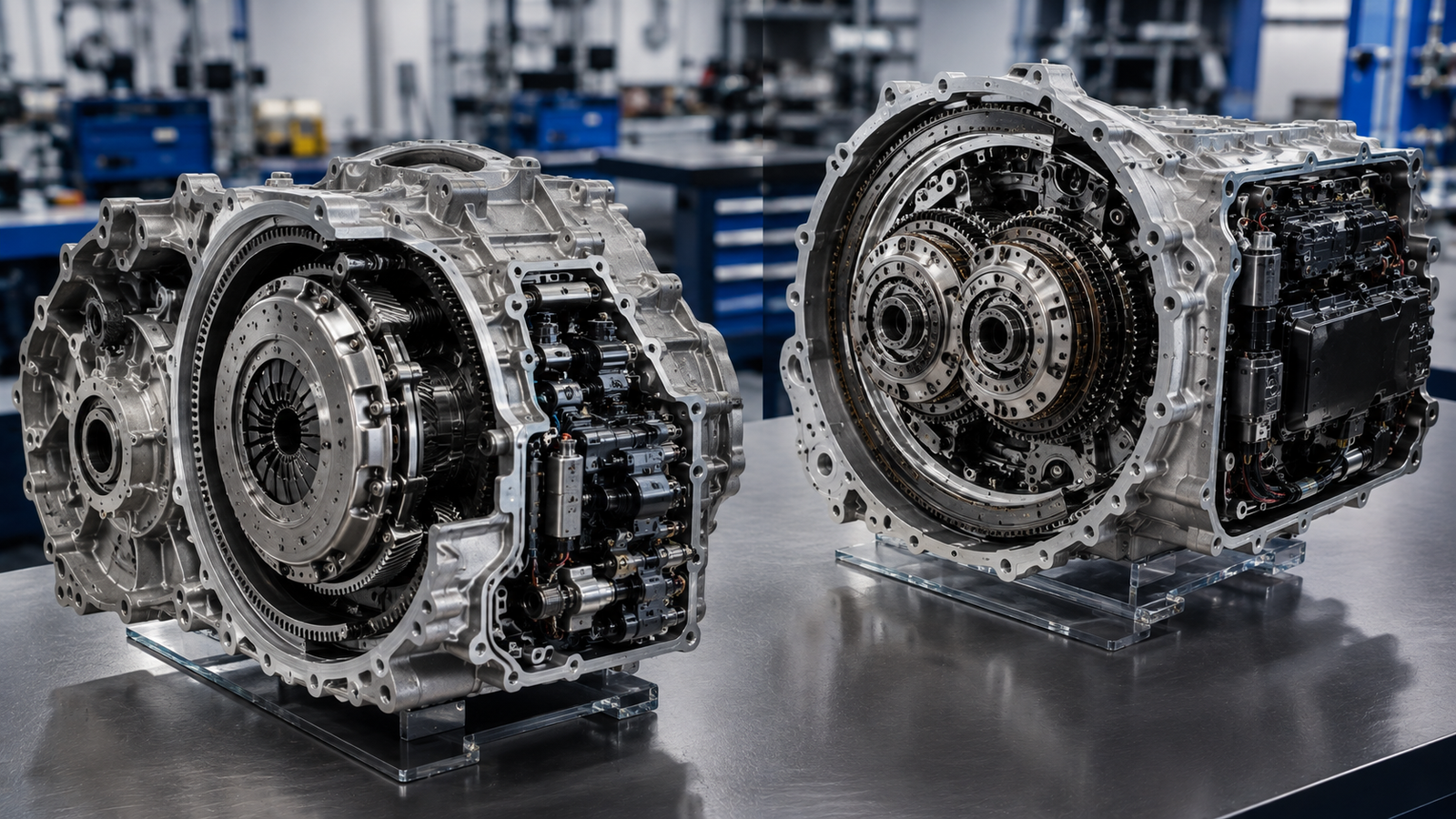
This is especially true for dual-clutch AMTs. With a calm driving style, they can simultaneously provide comfort and fuel economy.
If the car is mainly used for daily highway trips, without constant accelerations and stops, a robot can be a quite successful choice.
Economical motorists
Cars with AMTs often consume less fuel than comparable cars with classic automatic transmissions. With calm operation, the difference can reach 1–2 liters per 100 km, which, with large annual mileages, turns into significant savings.
In addition, the cost of a car with a robotic gearbox itself can be lower than that of a similar model with a traditional automatic transmission.
Experienced drivers
A robot requires a somewhat different approach to control. A driver who understands the features of such a transmission and can anticipate shifts in advance will find it easier to adapt to its behavior.
In some situations, jerks can be reduced by changing the driving style. For example, when shifting, you should not press the gas sharply, and it sometimes makes sense to release the pedal a little earlier than when driving a conventional automatic.
Those who do not plan to own the car for a long time
For a relatively short period of operation, a robot can also be a reasonable option. If the car is planned to be used for 2–3 years, and the mileage during this time will not exceed 50–70 thousand kilometers, the likelihood of encountering serious problems is lower – provided that the gearbox itself is in good condition and has been serviced according to regulations.
Who should avoid an AMT
Novice drivers
For an inexperienced person, unpredictable shifts and possible jerks can become an additional source of discomfort. In addition, an inexperienced driver can wear out the clutch faster with incorrect actions.
Especially harmful are sharp starts, wheelspin, and prolonged driving in traffic with constant holding of the car "under tension".
Those who constantly drive in the city
The dense "start-stop" mode is one of the most difficult for robotic gearboxes. Clutches are constantly engaged and disengaged, which increases their temperature and accelerates wear.
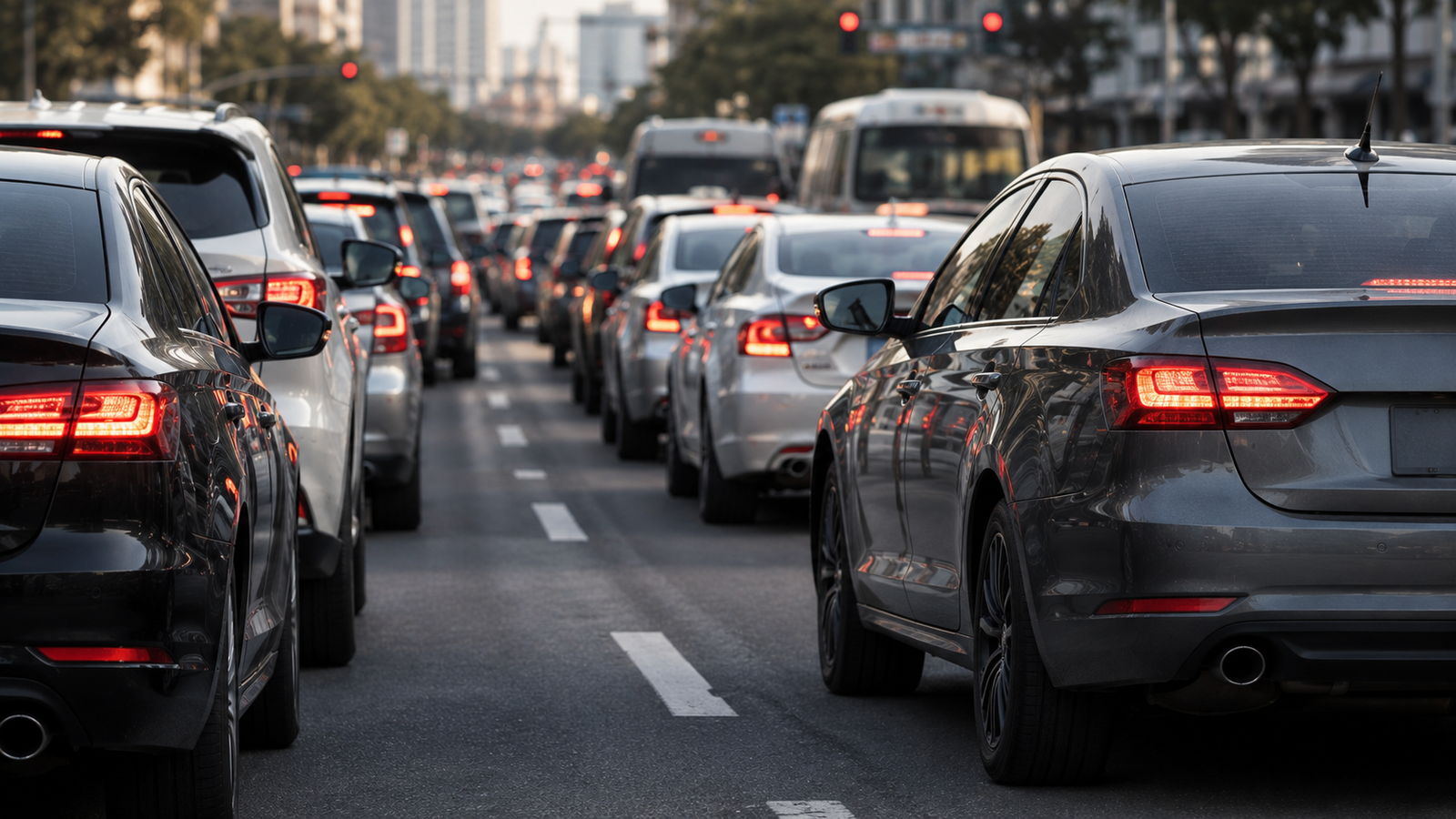
This especially applies to dry dual-clutch designs, including the DSG DQ200. In hot weather, when driving in heavy traffic, such gearboxes can overheat.
Those who need a maximally trouble-free car
If the main requirements are simplicity, predictability, and minimal hassle, a robotic gearbox may not be the best solution.
In this case, you can consider a classic automatic or a variator, although each of these transmission types also has its own characteristics.
An AMT requires regular attention: it is necessary to observe service intervals, monitor the condition of the clutch, perform adaptation, and take into account the features of a particular design.
Fans of heavy loads
Aggressive driving, sharp accelerations, wheelspin, towing heavy trailers, and driving through mud create a serious load on a robotic transmission.
Even modern dual-clutch gearboxes are not designed for constant operation in such conditions.
What to check before buying a car with an AMT
A used car with a robot cannot be chosen only by the condition of the body, interior, and engine. Special attention should be paid to the condition of the transmission.
First of all, it is worth studying the service history. You need to find out when the clutch was changed, whether adaptation was performed, and whether the oil in the gearbox was changed. This is especially important for dual-clutch designs. Skipping oil changes can reduce the service life, and for wet clutches, regular renewal of the transmission fluid is of great importance.
A full test drive is no less important. It is advisable to check the gearbox in different modes:
- in heavy city traffic;
- with smooth acceleration;
- with intense acceleration;
- during upshifts and downshifts.
You should pay attention to strong jerks, delays, extraneous noises, and other unusual transmission reactions.
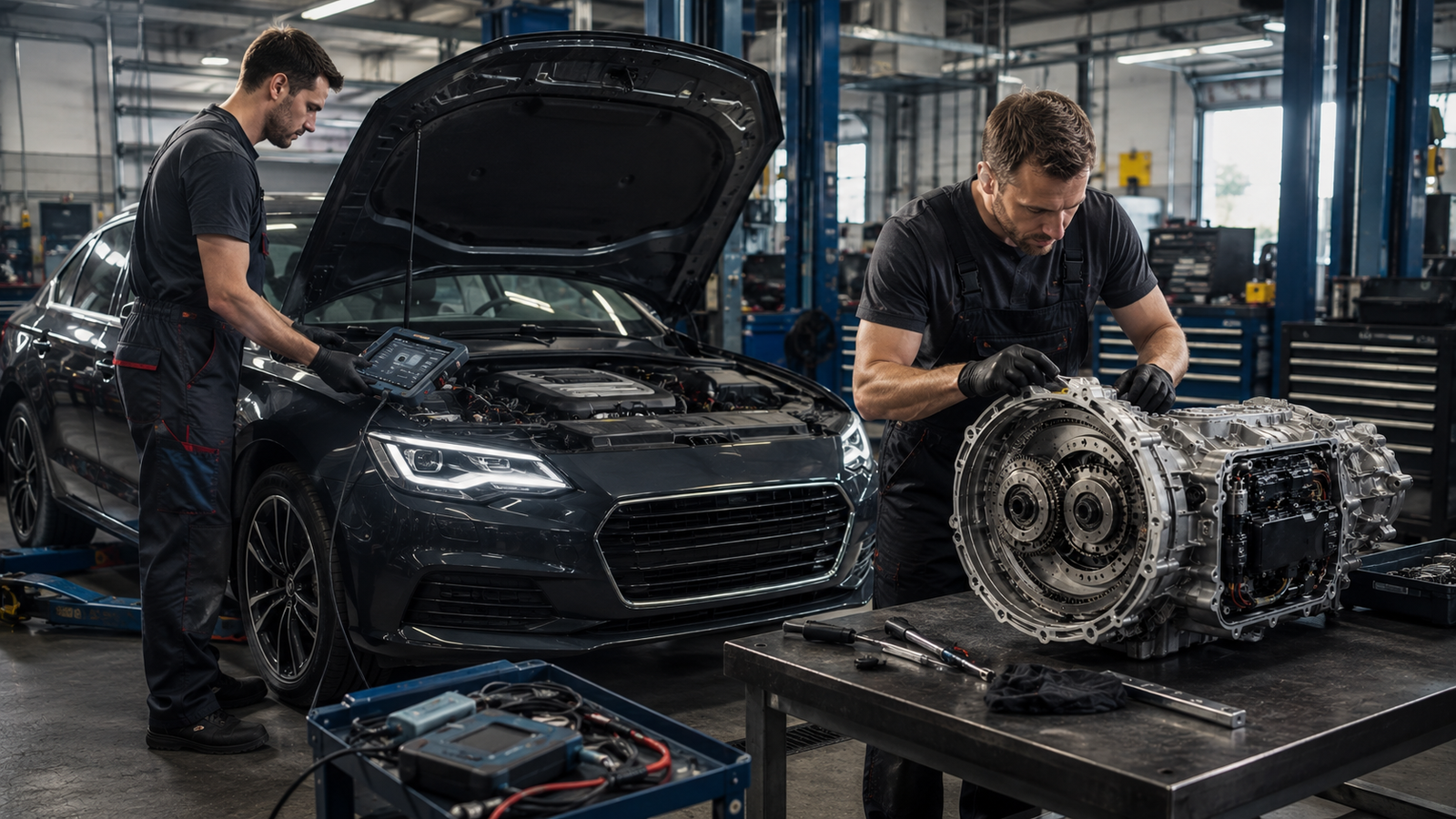
Ordinary computer diagnostics may not be enough. It is advisable to contact a service that specializes specifically in robotic gearboxes. Specialists will be able to assess the parameters of clutch wear, check the mechatronics, and the condition of the actuators.
Finally, it is necessary to take into account the age and mileage of the car. In dry dual-clutch gearboxes, the clutch often requires replacement already around 100–120 thousand kilometers. In single-clutch robots, problems can appear earlier, although their repair is usually cheaper.
How to properly operate a robot
Even a perfectly working AMT requires certain habits. In winter, it is useful to let the gearbox warm up a little before starting to move.
In traffic jams, it is advisable to avoid prolonged driving in constant "crawling" mode under tension. If the stop lasts more than 20–30 seconds, it is recommended to engage neutral.
Sharp starts and wheelspin should also be excluded. These modes can wear out the clutch especially quickly.
Maintenance must be performed according to the established schedule. It is important to change the oil in a timely manner, perform the necessary adaptations, and monitor the condition of the electronic part of the transmission.
Saving on these procedures can subsequently lead to much more serious expenses.
When the first signs of malfunction appear, there is no need to panic either. Today, there are specialized services that can repair mechatronics and replace clutch packs. Nevertheless, restoring a robotic gearbox is usually more difficult and expensive than repairing a mechanical transmission or a classic automatic.
So, is it worth buying a car with a "robot"?
A robotic gearbox is a compromise between comfort and economy. For a driver who understands the peculiarities of its operation, is ready to comply with operating rules, and carefully chooses a car with a transparent history, an AMT can be a good option.
This choice looks especially logical for calm suburban operation and moderate loads.
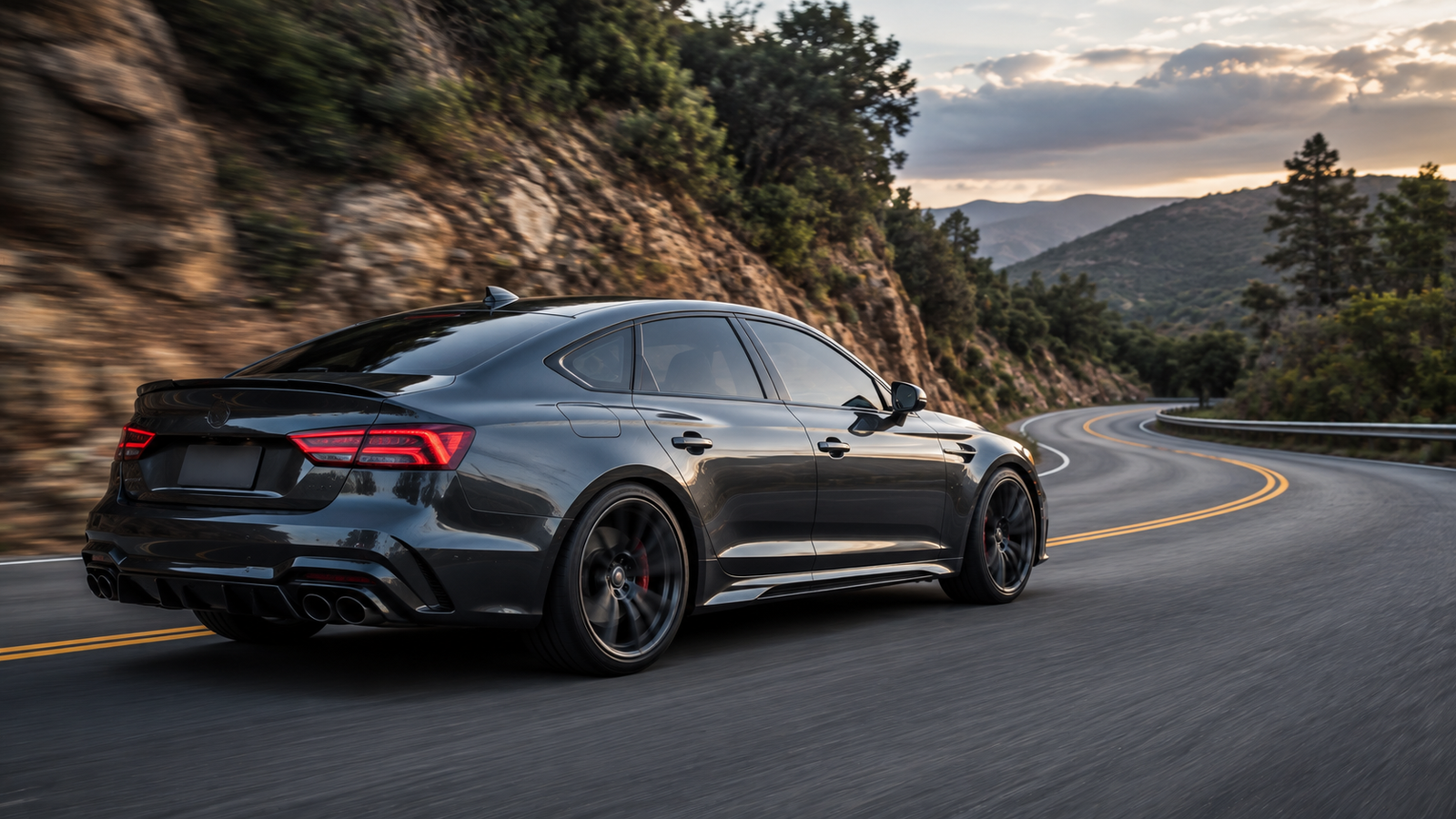
However, those who are looking for a maximally trouble-free car for daily trips around the metropolis, regularly get stuck in traffic jams, prefer an aggressive driving style, or do not want to delve into the intricacies of maintenance, should consider another type of transmission.
At the same time, the inscription "AMT" itself says nothing about the condition of a particular car. Even a robotic gearbox with an ambiguous reputation can work for a long time if it was properly operated and serviced on time. Conversely, an outwardly well-maintained car may require serious investment if the previous owner ignored the regulations and constantly subjected the transmission to excessive loads.
Therefore, when buying a used car, it is more important to evaluate not only the type of gearbox, but also the condition of the entire car. And the AMT itself must be checked in operation and diagnosed at a specialized service.
Read more materials:
- The Secret of the Central Engine of the Legendary Ikarus Buses
- From the First Civic to Type R: The Best Versions of the Legend
- Why the Headlights of Late Moskvich Cars Quickly Turned Yellow
Comments