The idea of putting larger diameter wheels on a car sooner or later occurs to many owners. The car really starts to look different: large wheels and low-profile tires visually make it more massive, sportier, and aggressive.
But changing the standard size is not just a matter of appearance. Wheels are part of the car's design, so their parameters are directly related to how the suspension, braking system, and transmission work.
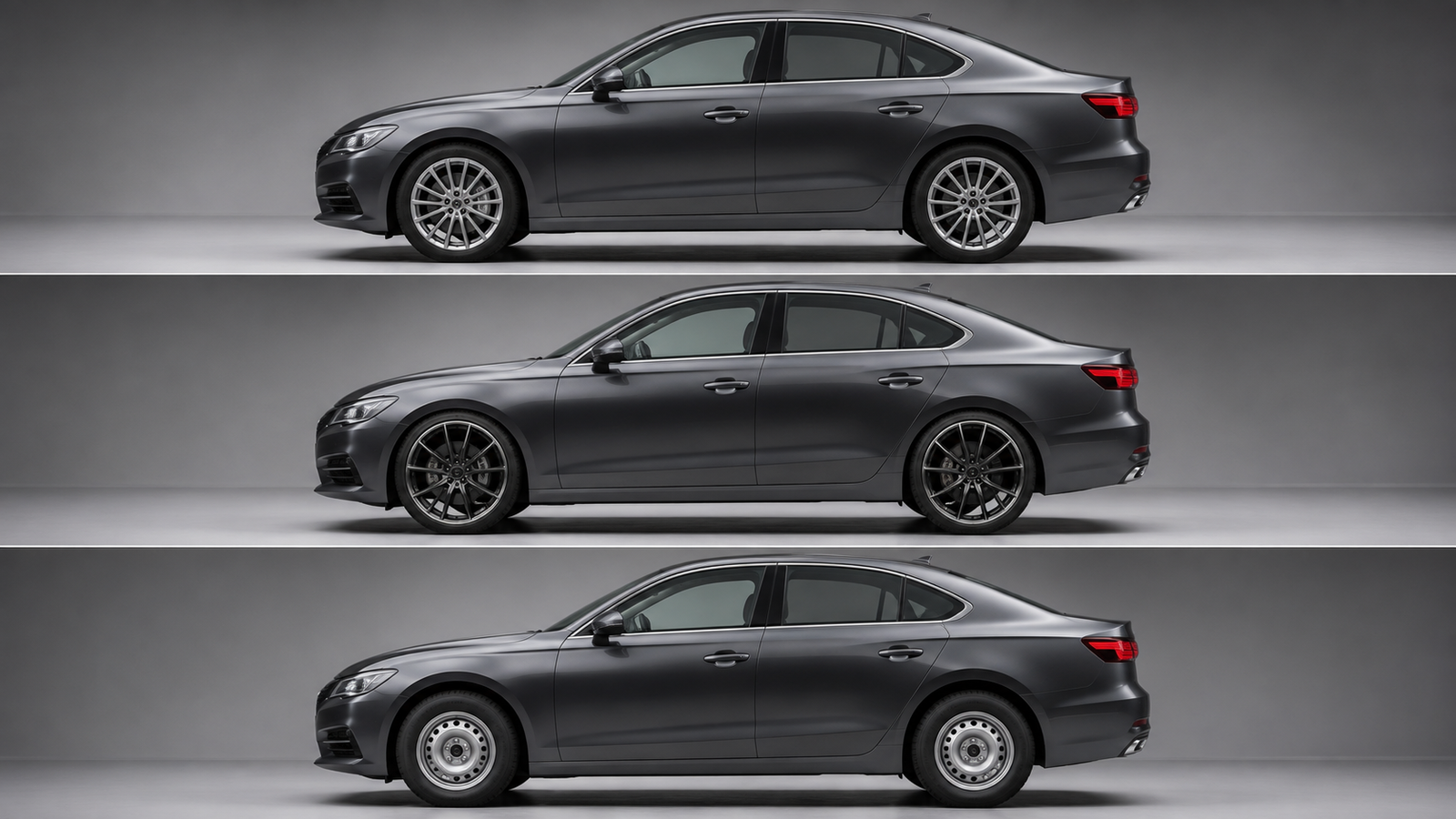
The main question here is not whether large wheels look good. It is much more important to understand what exactly changes in the car's behavior after such a refitting and how far one can deviate from factory parameters.
Factory sizes are not specified by chance
The car's owner's manual usually lists the permissible tire and wheel sizes. These values are not there for formality. They are based on calculations related to the loads on various car components.
The manufacturer takes into account the impact of wheels on:
- suspension;
- braking system;
- transmission;
- body.
Sometimes the factory provides several size options. For example, for a car with standard 15-inch wheels, 16-inch wheels may be allowed, and in some cases, even 17-inch wheels. However, such options are part of the manufacturer's intended range, not permission to arbitrarily increase the diameter.
On the roads, however, you can find cars with wheels that noticeably extend beyond the wheel arches and almost touch the fender liners. For the owner, such tuning may look impressive, but the additional load does not disappear. Every kilometer of operation can affect the condition of the chassis and related costs.
What increasing the diameter gives
Installing larger diameter wheels usually means using a tire with a lower profile. This solution has certain advantages in terms of handling.
The car's reactions to steering become sharper, and the car leans less in corners. At high speeds, it holds its direction better. The contact patch with the road also increases.
This results in a noticeable set of advantages, especially if the owner values the driving experience. However, along with them come the downsides.
The first is stiffness. A low-profile tire compensates less for unevenness, so road potholes and joints are felt much more strongly in the cabin. The ride becomes less comfortable, and the load from unevenness is transferred further to the car's components.
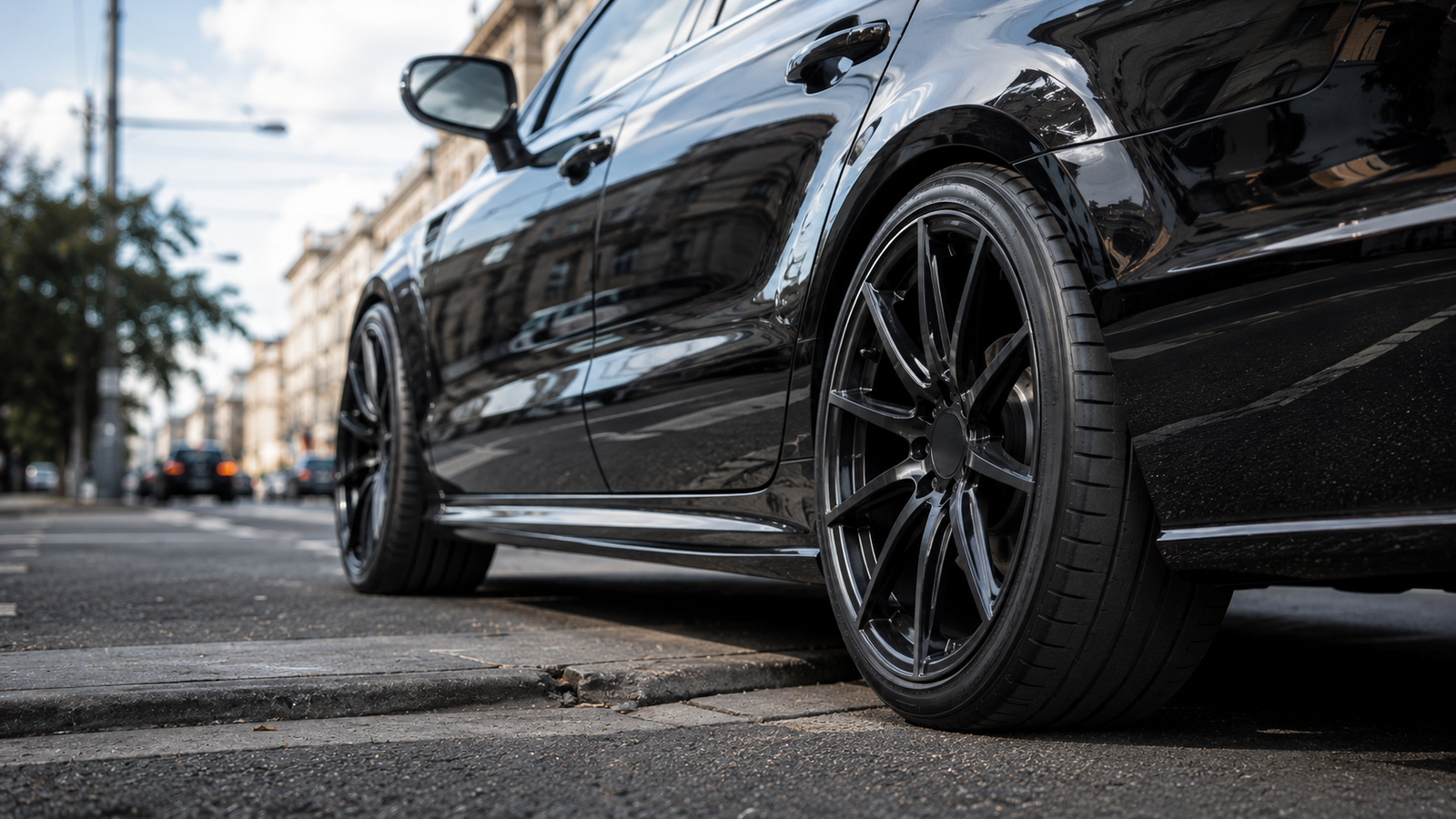
The second point is related to dynamics. Heavy wheels are harder for the engine to spin. As a result, acceleration can increase by 0.5–1 second, and fuel consumption can rise.
There are also consequences for the braking system. An increased wheel radius reduces braking efficiency, and impaired ventilation of the brake discs increases the likelihood of their overheating.
Finally, the transmission receives additional loads. If its components are not designed for such an operating mode, wear occurs faster.
Thus, increasing the diameter does not automatically turn the car into a more perfect machine. Sharper handling comes at the cost of comfort, dynamics, and the lifespan of individual components.
When a smaller diameter is more useful
The opposite option — installing smaller diameter wheels — is not as common. Nevertheless, it has very specific areas of application.
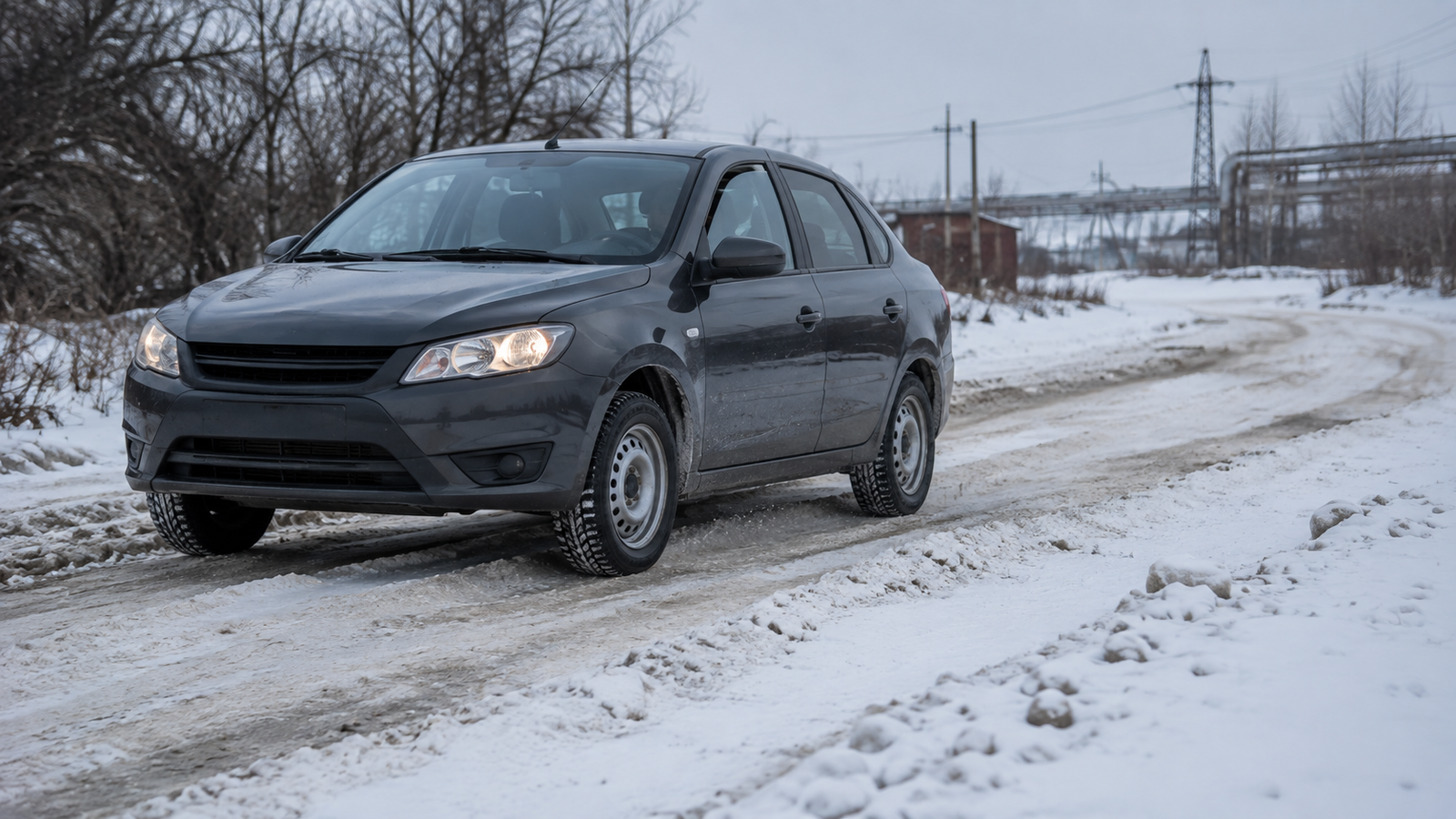
This solution is especially often considered when preparing a car for winter or for light off-road use. A smaller wheel allows for the installation of a tire with a higher profile.
As a result, an additional ground clearance of 1–3 cm appears. On a snowy road or broken dirt road, such an increase can be significant.
High-profile tires also have another advantage: they absorb bumps and unevenness better. Therefore, the car can move on a bad road much more comfortably.
But even here, compromises are inevitable. A high profile affects the handling characteristics, so the car begins to react less sharply to the driver's actions.
Among the main disadvantages of this solution are:
- less sharp handling;
- worse course holding at high speeds;
- increased braking distance;
- increased risk of skidding on slippery surfaces.
Therefore, reducing the diameter of the wheels makes sense primarily for specific operating conditions. For normal city driving and highway travel, the advantages of such a solution are less significant.
Not only size, but also material matters
When choosing wheels, not only the size matters. The material from which the wheel is made plays a large role.
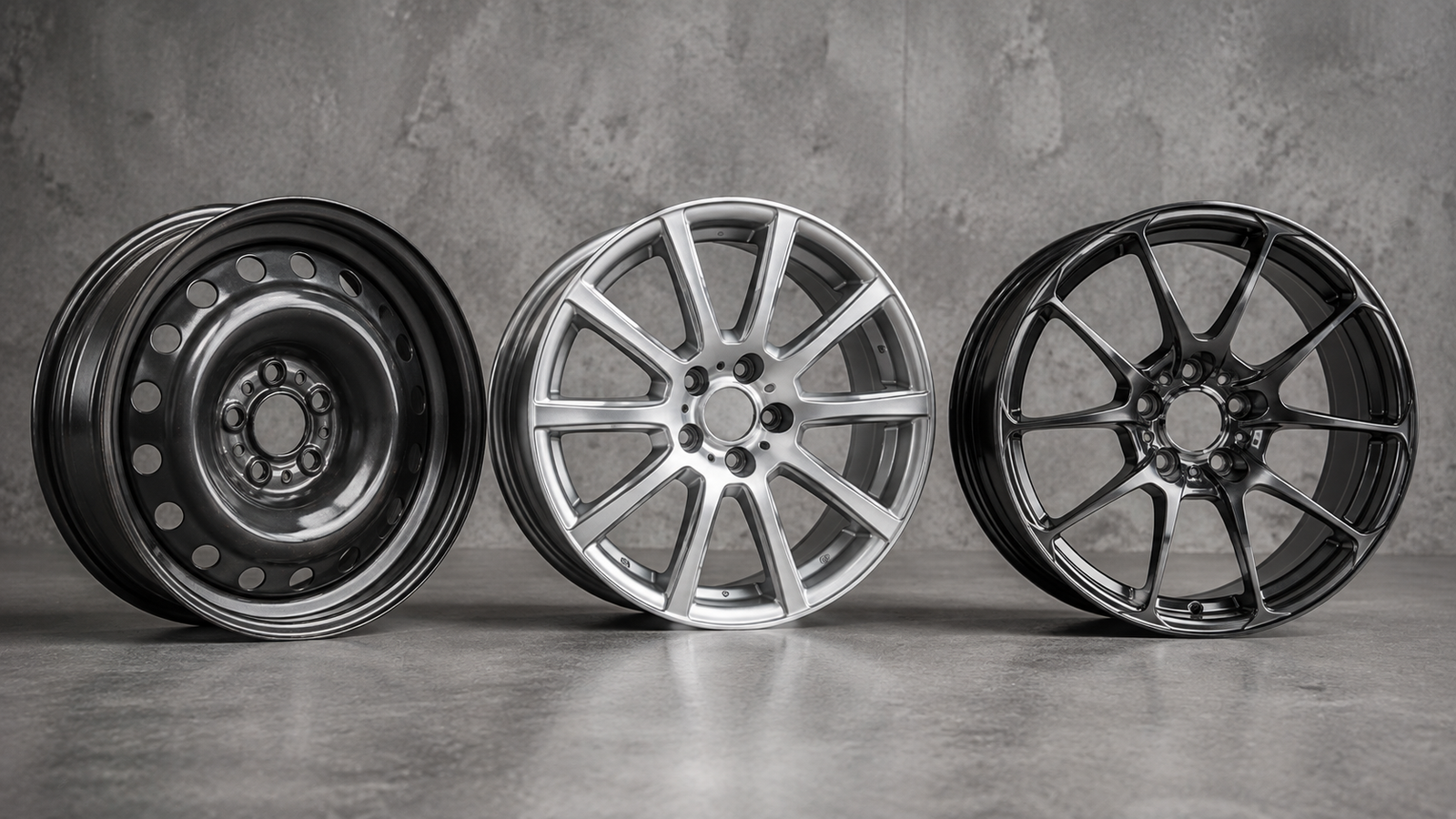
Steel wheels remain the most traditional option. Their strengths are affordable price and reliability. They tolerate impacts well, are not afraid of chips, and can bend under strong impact.
The main disadvantage of steel is its large mass. It affects the car's dynamics and fuel consumption.
Alloy wheels represent a kind of compromise. They are lighter than steel, which can positively affect the car's dynamics. In addition, they improve brake cooling and contribute to increasing the service life of wheel bearings.
But this option has its drawbacks. Alloy wheels are more expensive, and with a strong impact, they may not bend, but crack.
Forged wheels stand apart. In the text, they are considered the pinnacle of technology in this area. They are characterized by very low weight and high strength, and their appearance can turn the wheels into an independent design element.
However, the cost of forging is so high that such an option is primarily available to owners of really fast cars. For a regular car, the choice often comes down to a compromise between price and weight — steel or cast wheels.
Cheap wheels can be the most expensive purchase
Inexpensive wheels from unknown manufacturers deserve special attention. The original material specifically mentions Chinese and Turkish companies using second-grade aluminum.
Outwardly, such products can look quite decent. Problems may appear already during operation. The geometry of the wheel may not be accurate enough, balancing may be disturbed after several thousand kilometers, and a strong impact on a pothole can lead to damage to the spoke or rim.
As a result, saving on the purchase can lead to much greater expenses. If wheel damage begins to affect the suspension, repairs turn out to be more expensive than purchasing a quality set initially.
Therefore, with a limited budget, there are other ways to change the appearance of the car:
- repaint the standard wheels;
- install neat hubcaps;
- maintain the factory wheel size.
This approach in the original material is considered a safer and cheaper alternative to buying dubious wheels.
Appearance should not be more important than the car's behavior
Wheel rims are far from a secondary decorative detail. Their size, weight, and design affect how the car behaves on the road and how long the associated components retain their resource.
Therefore, changing the appearance of the car makes sense to start not with the maximum diameter that could be installed, but with studying the factory tolerances.
If the task is only to make the car more attractive, you can limit yourself to changes that do not affect the parameters provided by the manufacturer. Repainting standard wheels or installing hubcaps allows you to change the appearance without experimenting with size.
Exceeding the established tolerances can lead to several consequences at once:
- worsening dynamics;
- reduced comfort;
- additional load on components;
- worsening braking characteristics;
- accelerated wear of individual car components.
Therefore, large wheels cannot be considered solely as a style element. Behind the visual effect lies a whole set of engineering compromises.
Spectacular wheels can indeed completely change the car's appearance. But if for the sake of appearance you have to sacrifice handling, comfort, and resource, such a change already requires a much more careful approach. The car must not only look good, but also react predictably to the driver's actions.
That is why, when choosing wheels, it is not the maximum size that can be installed that matters, but the correspondence of the parameters to the calculations for which the car was originally designed.
Read more materials:
- German sedan for 1.57 million: what's the catch
- Car as a reward: who was given cars in the USSR
- "Ural-5323": why the unique truck was produced piece by piece
Comments