Smartphone use while driving before an accident occurs much more frequently than reflected in police reports. This conclusion was reached by the US Insurance Institute for Highway Safety (IIHS) after studying anonymous mobile telematics data.
According to researchers, phone use immediately before an accident may be at least seven times more common than police data indicate.
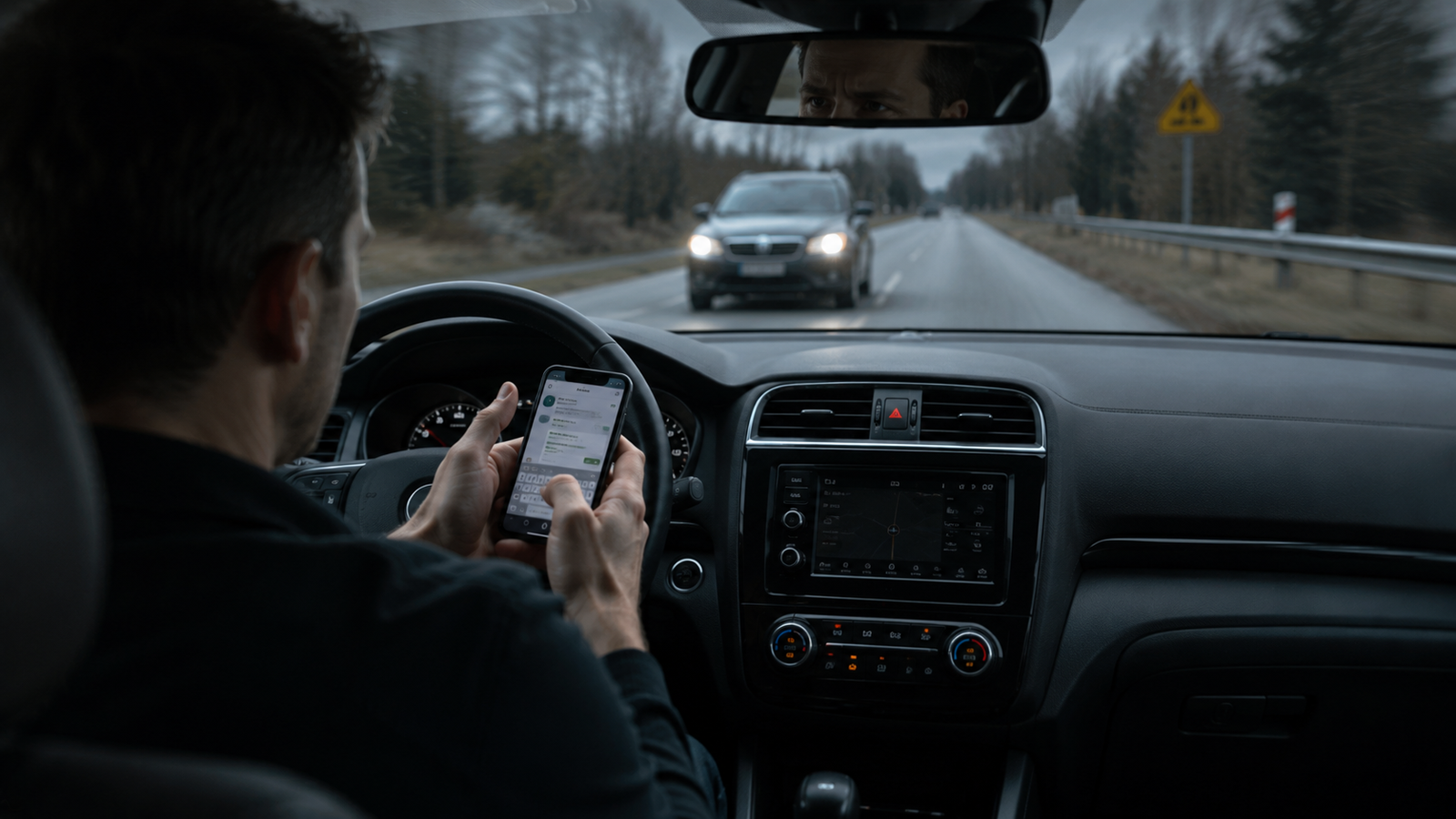
The study was published by IIHS on Thursday. For the analysis, specialists used anonymized data from Cambridge Mobile Telematics and compared it with accident information recorded by law enforcement agencies. The results were revealing:
- 7% of drivers involved in single-vehicle accidents used a smartphone;
- among participants in two-vehicle collisions, this figure was 8%;
- in police reports, mobile phone use was mentioned in less than 1% of accidents.
Thus, official statistics can only show a small fraction of cases where a smartphone actually contributed to driver distraction.
Why police don't record phone use
According to IIHS President David Harkey, the problem is not necessarily related to law enforcement officers poorly investigating accidents.
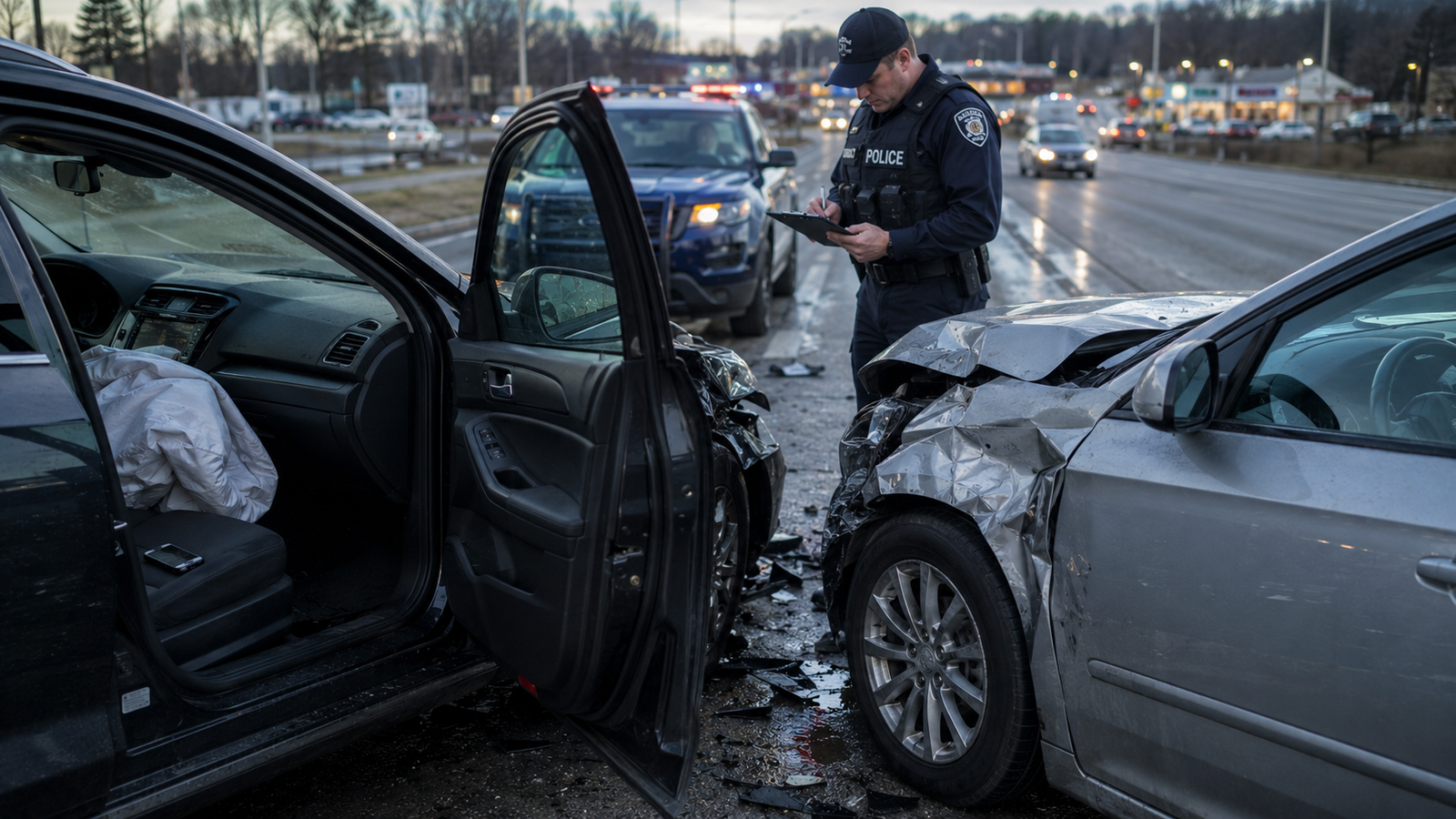
The main difficulty lies in the very nature of such incidents. Police usually arrive at the scene of an accident after the collision and rarely directly observe the moment of the accident. Therefore, it can be difficult to determine whether the driver was holding a phone or using it seconds before impact. There is another problem: drivers are not always willing to admit they were distracted by a smartphone.
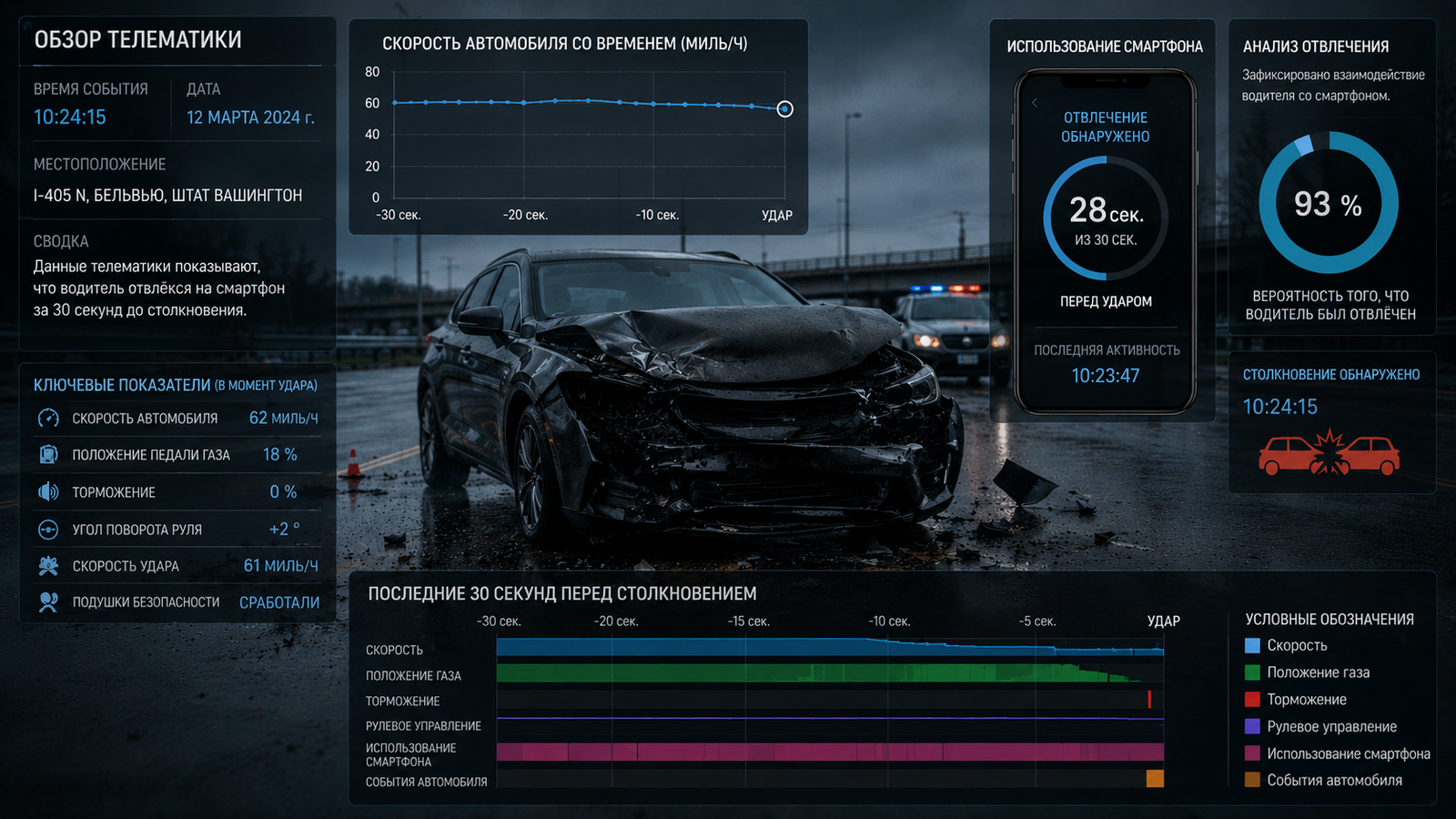
Furthermore, many phone actions are impossible to see from the outside. A driver might be using navigation, looking at the screen, or performing another action that is practically unnoticeable to an eyewitness. Telematics systems, in this regard, provide researchers with much more information. They allow determining what was happening with the smartphone immediately before the collision, even if there were no eyewitnesses to that moment.
How the study was conducted
For the study, IIHS researchers combined accident data obtained from safe driving applications with accidents recorded by the police. The study included accidents that occurred in four states between 2021 and 2024. The total sample comprised 17,000 accidents.
Telematics data allowed not only to establish the fact of smartphone use but also to determine the nature of interaction with the device. Specifically, researchers divided driver actions into several categories:
- passive use, such as Google Maps operation;
- active interaction with the screen — taps and swipes;
- hands-free phone calls;
- phone calls with the phone held in hand.
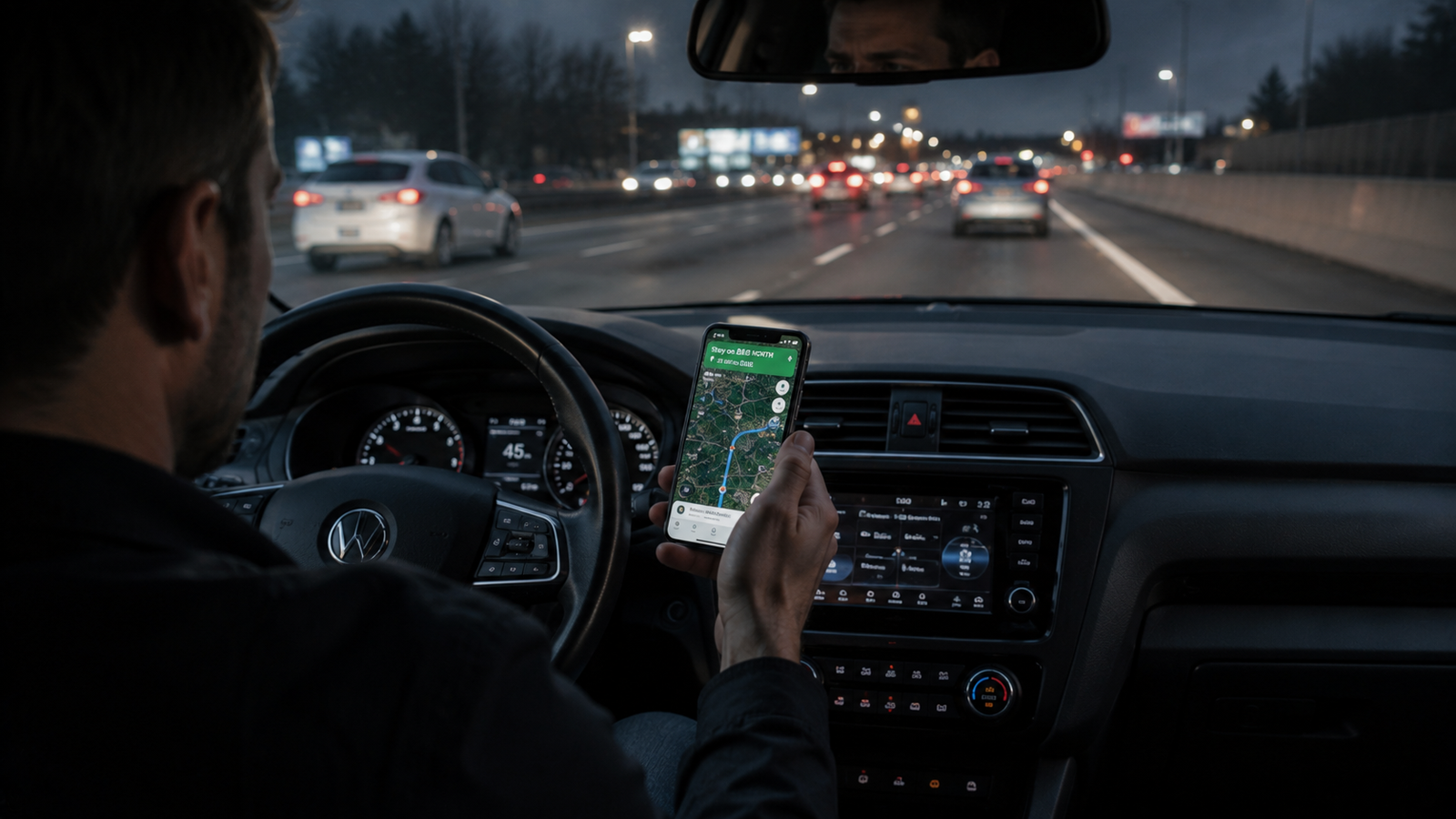
Passive use accounted for the most significant share. Such actions were identified in 5% of all studied accidents. Active smartphone control — taps, swipes, and other screen manipulations — occurred within 30 seconds before the collision in almost 4% of recorded two-vehicle accidents.
At the same time, phone calls, regardless of whether hands-free was used or the phone was held in hand, did not show significant figures in the overall accident statistics.
Navigation is not the only problem
Researchers suggest that a significant portion of passive smartphone use may be attributed to navigation applications. However, the results of a separate IIHS survey show that distraction can be much more serious. Almost 25% of drivers participating in this study admitted that at least once in the previous 30 days, they watched videos on their phone while driving.
This shows how broad the range of actions a driver performs with a smartphone while driving can be. Moreover, not every such action necessarily appears in police statistics.
Police and telematics don't even always identify the same cause
Differences between the two sources of information were found not only in the number of recorded cases. Even when both police and telematics systems identified phone use before an accident, their conclusions regarding the nature of the distraction could differ.
In the study of 17,000 accidents, police reports indicated the same category of phone use identified by telematics data in only three cases.
One of the reasons researchers cite is legislation. In some states, only certain ways of using a mobile phone while driving are prohibited. Therefore, when investigating an accident, police do not always look for the fact of smartphone use if the specific action does not fall under an existing prohibition. As a result, some cases of distraction may simply not appear in official data.
Laws are gradually becoming stricter
The legislative situation is changing, however. According to IIHS, 21 US states already prohibit drivers from holding a phone in their hand while driving. The Institute believes that such policies work.
However, the study results simultaneously reveal another problem: if legislation and control focus only on specific smartphone actions, a significant portion of distracted driving cases continues to remain outside official statistics.
There is a noticeable gap between what law enforcement agencies can see after an accident and what can be established using telematics data immediately before a collision.
Telematics in this case provides a much more detailed picture of driver behavior. And if one relies only on police reports, the scale of smartphone use before accidents may be significantly underestimated.
Read more articles:
- Ford Crown Victoria: Why the body-on-frame sedan outlived everyone
- Renault Logan: How an "impossible car" became a people's car
- Car soundproofing: What the owner actually pays for