While more and more car manufacturers are striving to enter Formula 1, BMW is conspicuously staying out. The company has not participated in the championship as a factory team for a long time and, judging by the latest statements from BMW M management, has no intention of returning.
The reason is surprisingly practical. BMW believes that modern Formula 1 has become too detached from ordinary cars and provides almost no experience that engineers can use in creating road models.
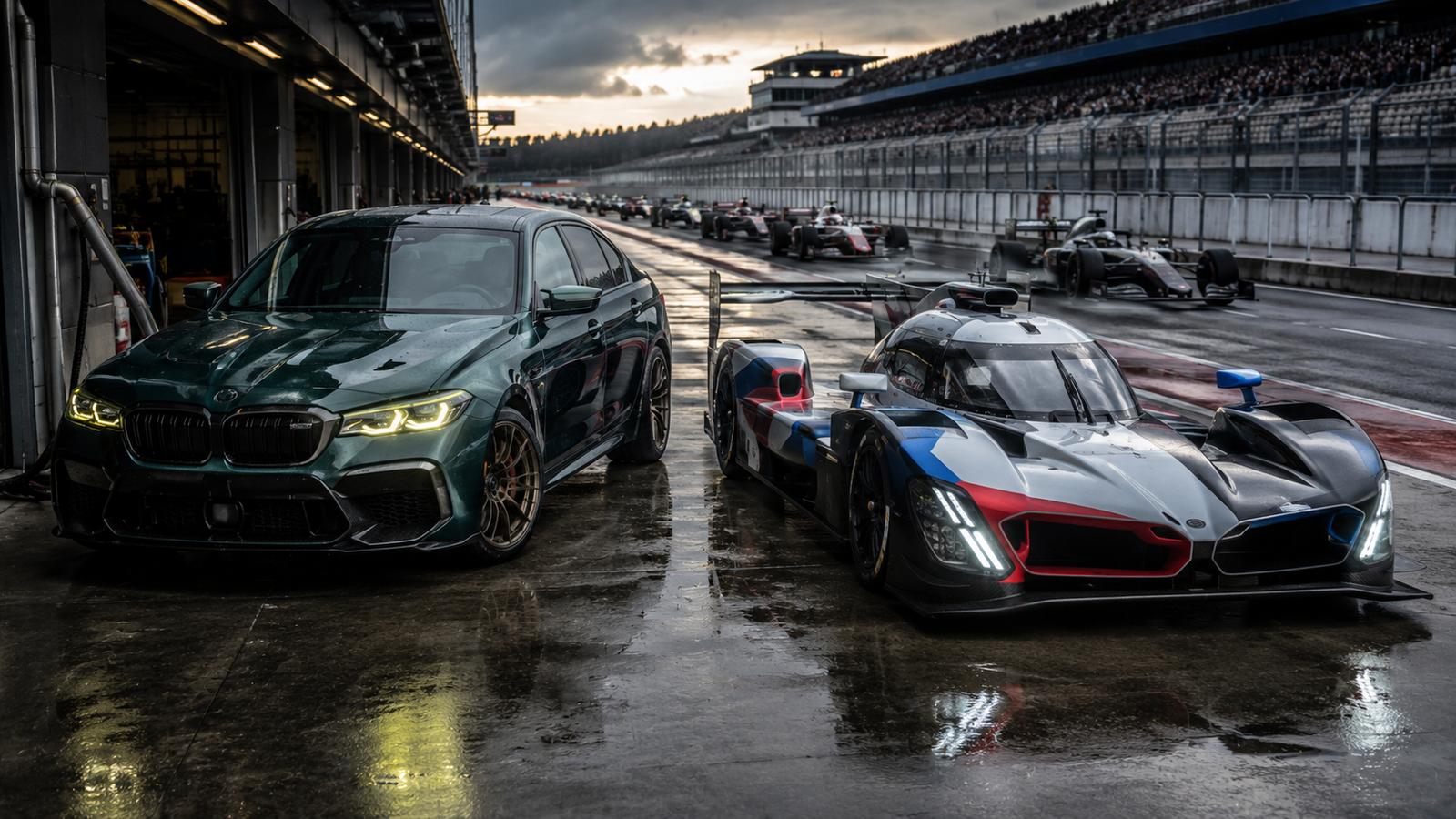
For BMW, this is a fundamental point. The company wants motorsport to be not just an advertising platform, but a real laboratory for production cars. And that's why, instead of Formula 1, BMW is investing in WEC, IMSA, and GT racing.
Why BMW is Not Impressed by Formula 1
BMW has not participated in Formula 1 as a factory team since 2009, when it sold its stake in the Sauber team. During this time, the situation in the championship has changed dramatically. Formula 1 has become one of the most popular global sports brands, and major car manufacturers have begun to join or return to the championship.
However, for BMW M, the popularity of Formula 1 alone is not a sufficient argument. BMW M head Frank van Meel explains the company's position quite directly: Formula 1 has moved too far away from production cars.
In his opinion, F1 engineering developments are effectively turning into a separate technological center that exists on its own and is practically unrelated to the cars that the buyer later sees in the dealer's showroom. For BMW, this approach is not very interesting.
The philosophy of the M division is based on the opposite principle: to take motorsport experience and transfer it to a production car. And here BMW faces a fundamental question: why spend huge amounts of money on Formula 1 if a significant part of the developments will remain exclusively within the racing program?
BMW Chose Le Mans and IMSA
Instead of Formula 1, BMW has focused on endurance racing. The brand's main racing car is currently the BMW M Hybrid V8. The prototype competes simultaneously in the WEC World Endurance Championship and the American IMSA series. This allows BMW to participate in the main races of this type, including the 24 Hours of Le Mans and the 24 Hours of Daytona.
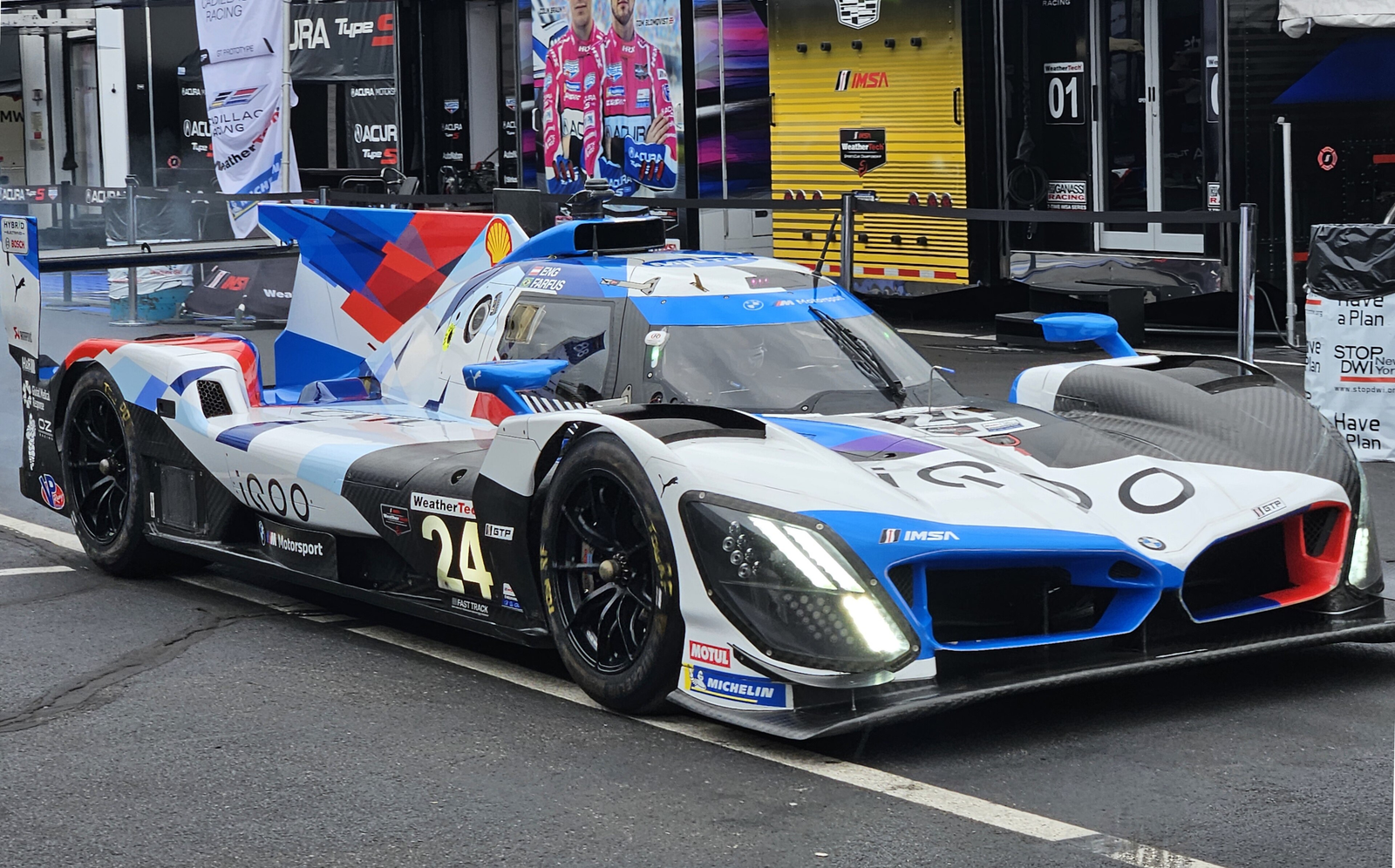
In addition, the company sells racing versions of the BMW M4 in GT3 and GT4 categories to private teams around the world. From BMW's point of view, such a program is much better suited to the tasks of the M division.
The racing car and the production car are much closer to each other in design, which means that engineers can test various solutions faster in real conditions.
The American Market Plays a Huge Role Here
There is another reason for choosing IMSA - the USA. The American market accounts for approximately 40% of BMW M's global sales volume, making it a crucial individual market for the division.
At the same time, BMW itself largely grew in the USA precisely thanks to motorsport. Therefore, participation in American races for the company is not just a sports program, but a way to maintain contact with customers. BMW directly links its presence in IMSA with the development of the brand in the American market.
And here, Formula 1 really looks like a less suitable tool. It provides a huge global audience, but is almost unrelated to specific BMW production models. IMSA, on the other hand, allows the company to simultaneously work with the American audience, participate in major races, and demonstrate technologies that are relevant to road-going M models.
What BMW Gets from Endurance Racing
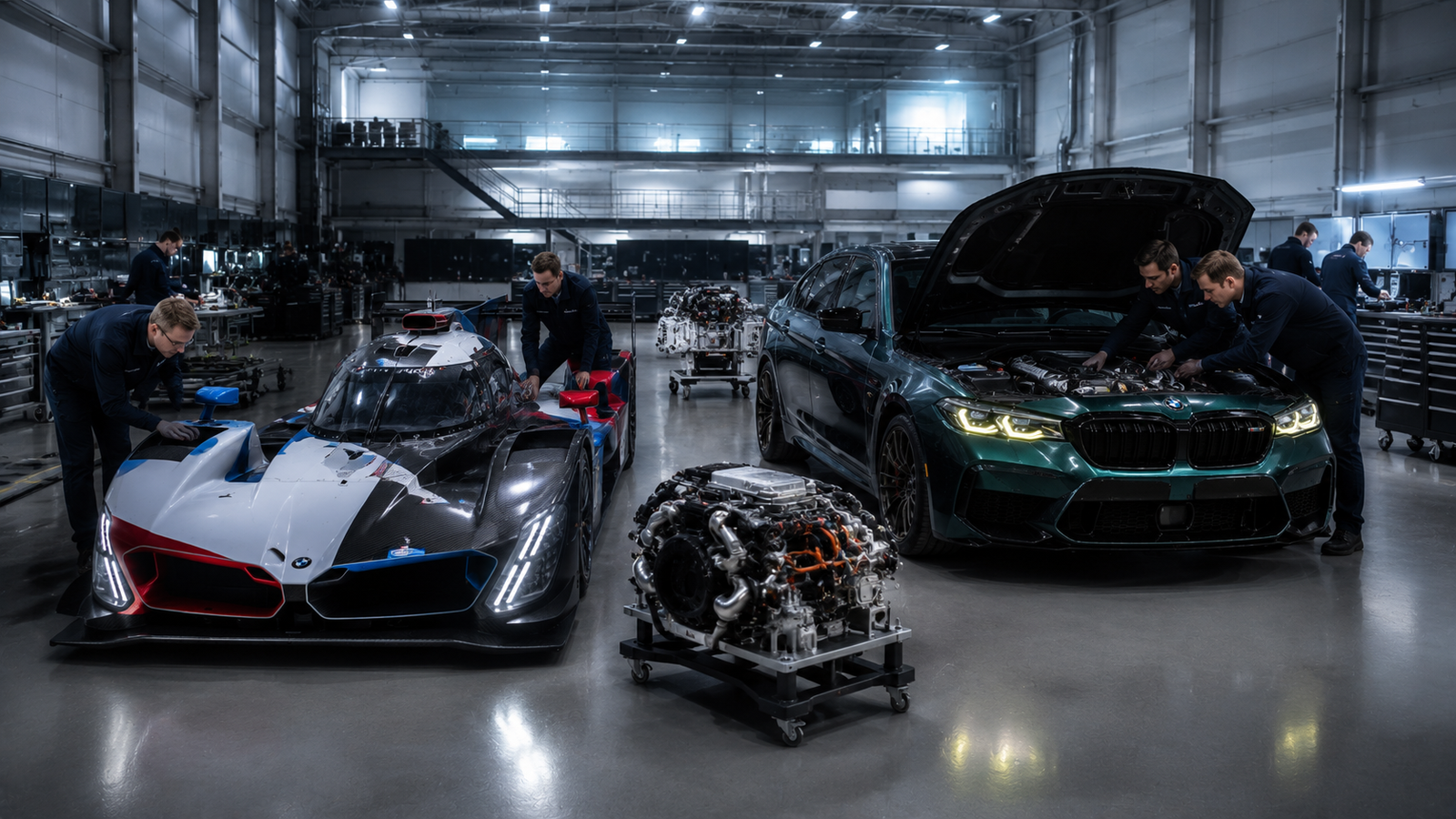
BMW's main argument is technological transfer. For example, BMW uses hybrid power units in both the racing M Hybrid V8 and the production M5 and XM. However, this does not mean that the engine of a racing prototype is simply installed under the hood of a road car. The designs of the cars differ, and IMSA uses standardized elements of the hybrid system.
However, the engineering principles, hybrid system control methods, and approaches to working with high loads remain common. BMW also notes that in some cases, the same specialists work on the power units of racing and road cars. This is what is especially important for BMW. The racing series allows a specific solution to be tested faster, and then the experience gained can be used in the development of a production car.
Racing Technologies Are Already Appearing on Regular BMWs
Technology transfer applies not only to engines. BMW cites the M Neue Klasse concept as an example. Its design uses solutions inspired by the M4 GT3 and M Hybrid V8 racing cars.
For example, this refers to aerodynamic elements and lighting design. That is, the buyer of a production BMW M will eventually get not just a car that outwardly resembles a racing car. Some ideas really make their way from the track to the road car.
BMW considers this approach more useful than developing technologies solely for the sake of winning in Formula 1.
Why BMW Is Not Afraid to Stay Out of Formula 1
From a marketing perspective, BMW's decision seems somewhat strange. Formula 1 is currently experiencing a real boom. The championship attracts new viewers, manufacturers, and sponsors. Mercedes continues to compete in the series, Audi has entered the championship with its own team, Ford participates through cooperation with Red Bull, and Cadillac is also preparing for a full factory presence.
Against this background, BMW remains one of the few major German manufacturers that does not try to capitalize on the popularity of F1. But for BMW M, the question looks different. If the goal of motorsport is to sell more cars and simultaneously improve their technical characteristics, then endurance championships may indeed be more effective.
BMW can simultaneously showcase its cars on the track, test technologies, work with the American market, and develop production M models. Formula 1 would give the company a huge advertising platform. But a significant part of the engineering developments would remain within Formula 1 itself.
BMW Chooses Not the Fastest Races, But the Most Useful
Ultimately, BMW's decision looks quite pragmatic. The company does not claim that Formula 1 is bad or technically uninteresting. On the contrary, BMW M management recognizes its attractiveness to fans.
The problem is different: for BMW, there is too little direct connection between F1 and production cars. WEC and IMSA give the company what it wants from motorsport: long races, high loads, hybrid technologies, work with aerodynamics, and the ability to relatively quickly transfer the experience gained to road cars.
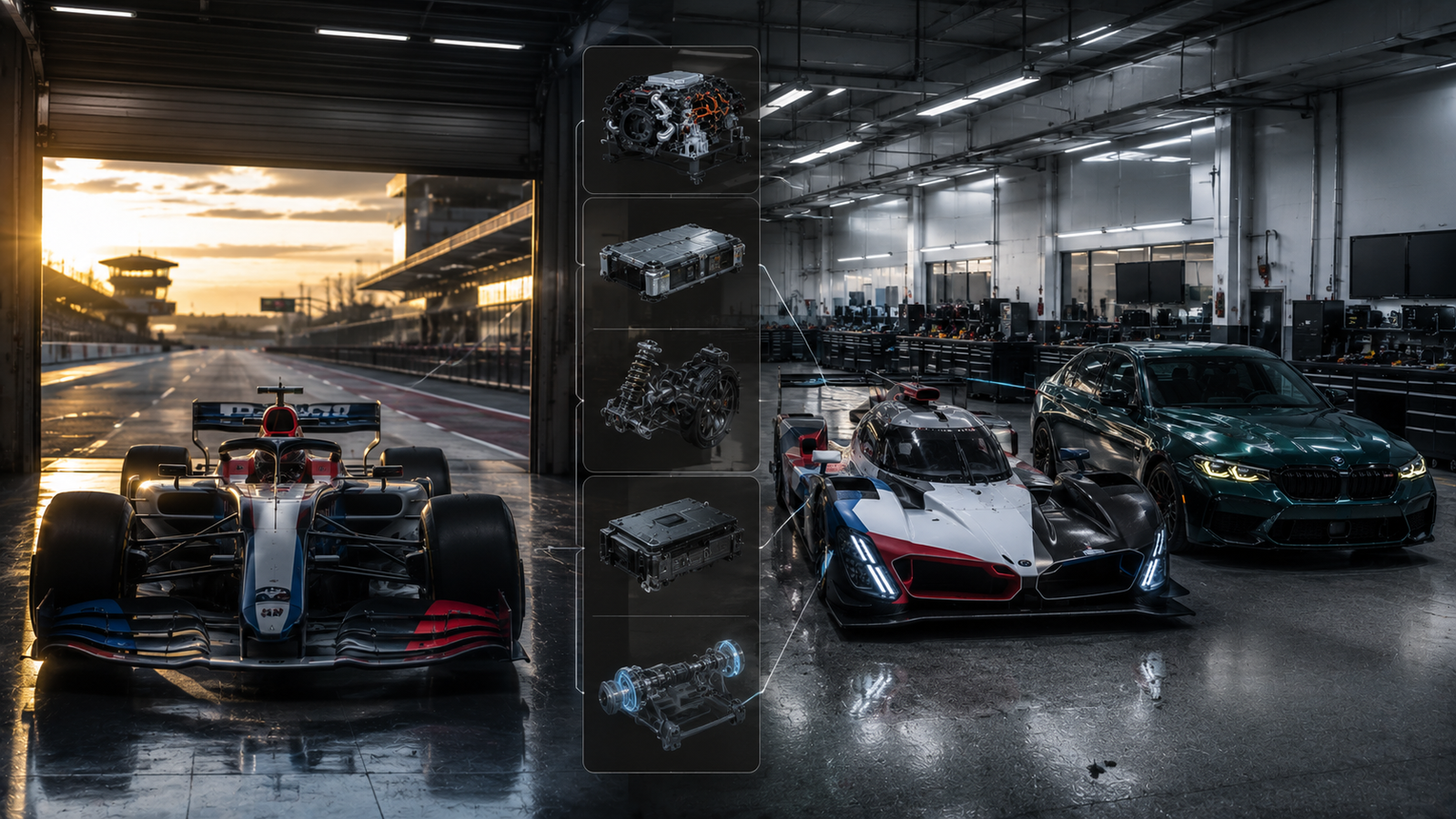
Therefore, BMW is not trying to win the race for a place in Formula 1. For the company, another race is much more important - the one that takes place between the racetrack and the assembly line. And as long as BMW engineers can use the experience of the M Hybrid V8 in creating new M5, XM, and future Neue Klasse models, the brand's management sees no serious reasons to change this strategy.
Formula 1 may be the most prestigious racing series in the world. But for BMW M, prestige turned out to be less important than the ability to one day turn a racing development into a part of a car that the buyer can actually put in their garage.
Read more materials:
- Drivers with smartphones get into accidents more often than they think
- Car soundproofing: what the owner actually pays for
- How cars abandoned square bodies