Every autumn, the same story repeats itself: with the onset of the first frosts, a yellow horseshoe-shaped icon with an exclamation mark appears on the dashboards of thousands of cars. The driver goes to a tire shop, checks the wheels, and is told that the pressure is fine. After a few hours of driving, the warning disappears, but the next cold morning it reappears. The reason in most cases is not a car malfunction, but the normal reaction of the air in the tire to a drop in temperature.
Why cold weather triggers the warning
When cooled, the air inside the tire compresses, so the pressure gradually decreases. Approximately, for every 10-degree drop in temperature, the indicator loses about 0.1–0.2 bar. For example, if in summer at plus 20 degrees, a wheel was inflated to 2.2 bar, then at minus 10, the pressure can drop to about 1.9 bar, and at minus 30, it can approach 1.7 bar.
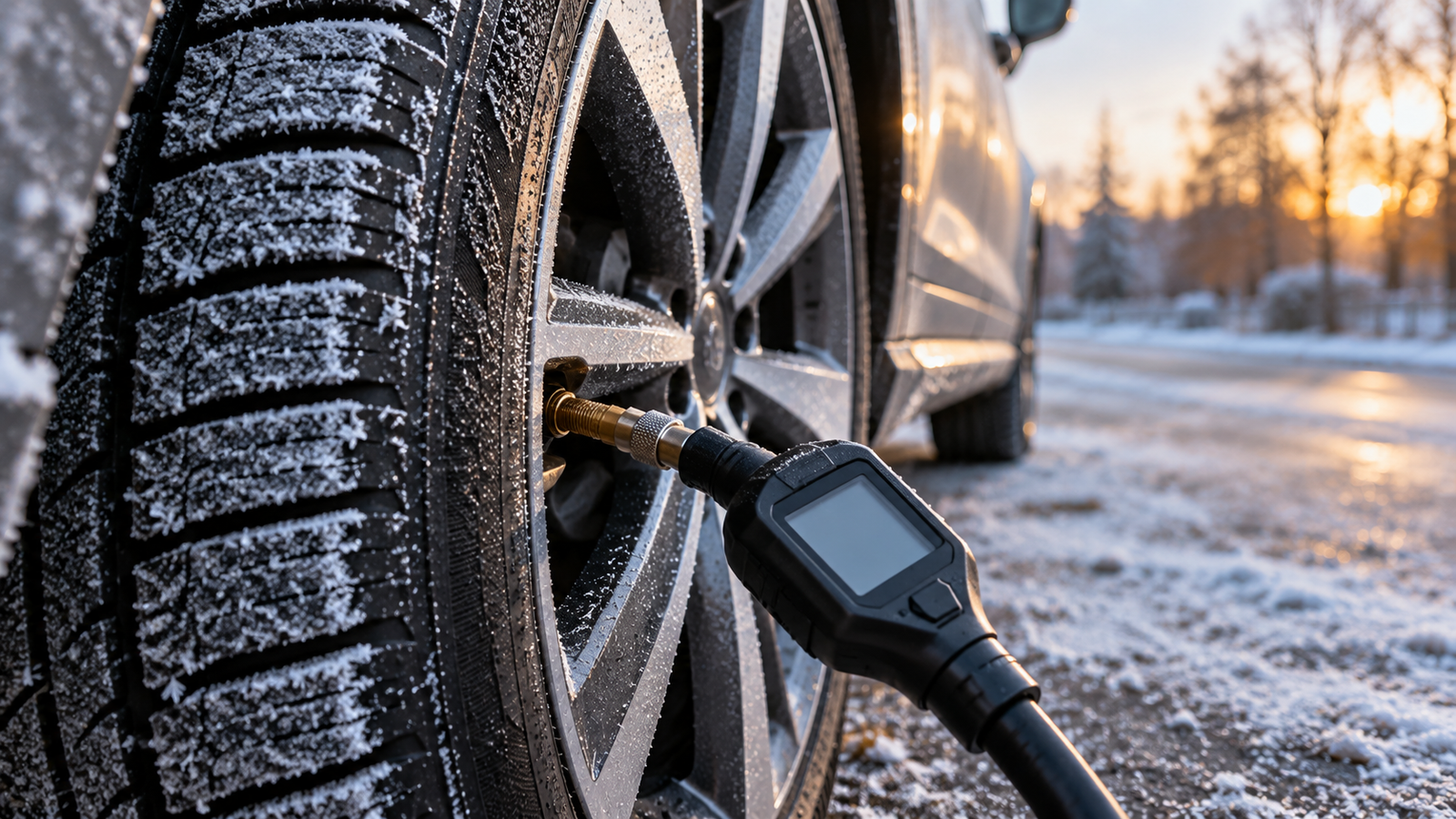
The tire pressure monitoring system reacts not just to the fact of cooling, but to reaching a certain threshold. In most cars, the warning appears when the pressure drops by approximately 20–25% relative to the set value. Therefore, for the recommended 2.2 bar, the activation threshold will be around 1.7–1.8 bar, and the first truly frosty morning can easily cross it.
After starting to drive, the situation changes. Tires heat up from contact with the road, the air temperature inside increases, and with it, the pressure rises. As a result, the warning may turn off on its own by mid-day, but will reappear the next cold morning.
To prevent this from happening, tire pressure should be checked and adjusted taking into account winter temperatures. The basic rules are simple:
- measure pressure on cold tires, preferably in the morning and before starting the trip;
- after prolonged driving, do not use the obtained value as a guide, as the pressure may already be about 0.2–0.3 bar higher;
- during seasonal cold weather, inflate the tires to the manufacturer's recommended value.
You should not independently add a fixed 0.2 bar above the norm just because winter has arrived: you should focus on the pressure prescribed for a specific car, taking into account operating conditions.
What's inside the monitoring system
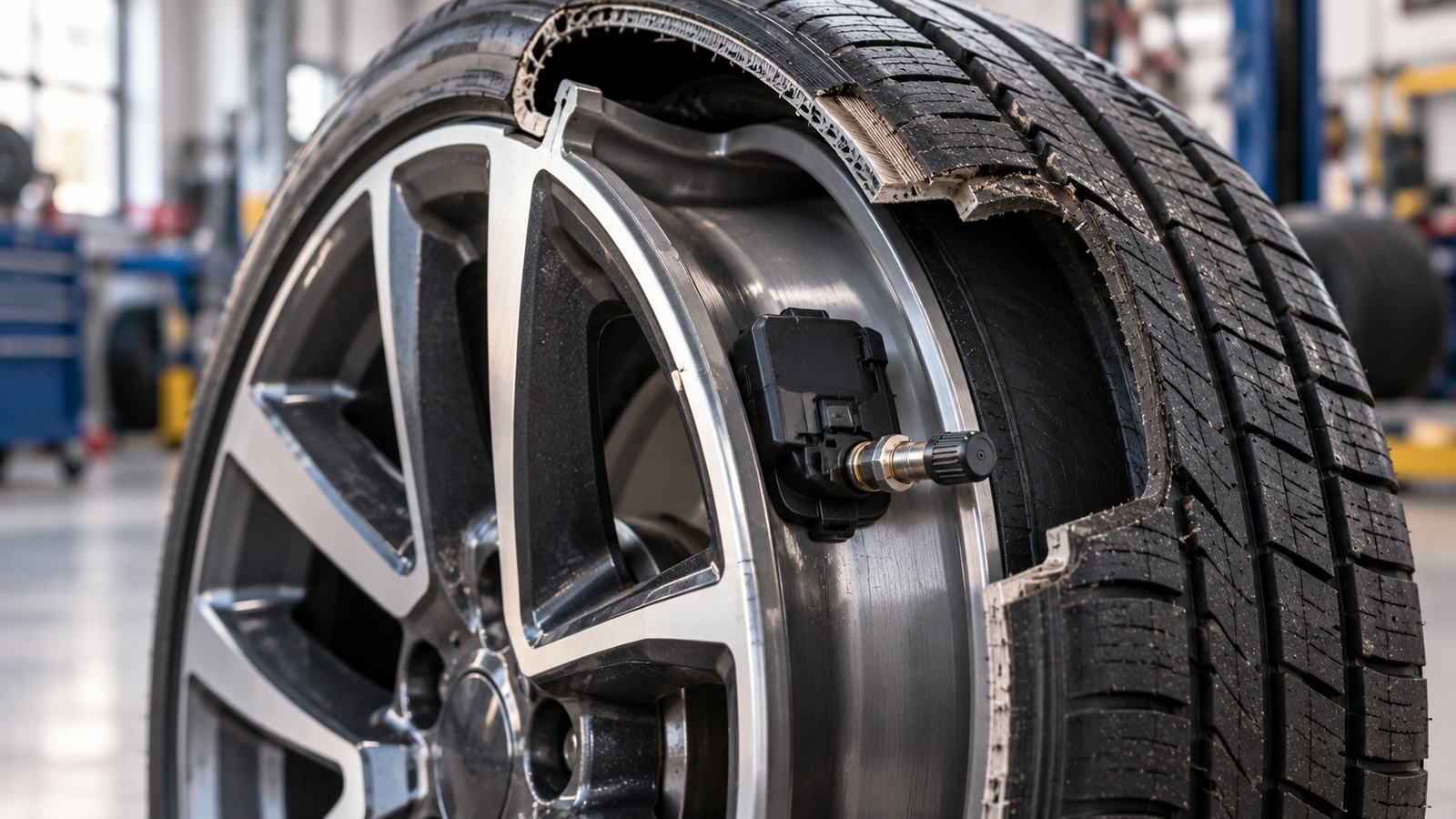
Tire pressure monitoring systems come in two main types. In the first case, real sensors are used, installed inside each wheel on the valve. They measure pressure and temperature, and then transmit information via radio channel to the car's electronic control unit.
The direct system has an obvious advantage: the driver can see the pressure for each wheel separately. But such sensors have their own battery, which is usually not replaced separately. Its lifespan is approximately 5–7 years, after which the sensor has to be replaced entirely.
The indirect option is arranged differently. There are no separate pressure sensors inside the wheels here: the electronics use ABS data and compare the rotational speed of the wheels. If one tire loses pressure, its diameter decreases, so it starts to rotate faster than the others.
This scheme is cheaper and does not require batteries, but it is less accurate. In addition, if the pressure has simultaneously dropped in all four wheels, the system may not recognize the problem by the difference in rotational speeds. Such solutions are found, among others, in budget cars and some Lada models.
The type of system can usually be determined directly from the car's interface. If the car shows pressure in numbers separately for each wheel, direct sensors are used. If only a general warning icon appears on the panel, it is most likely an indirect system, and after inflating the tires, it may require a reset via a button or menu.
When the problem is no longer about temperature
There is an important sign that allows distinguishing low pressure from a malfunction of the TPMS complex itself. If after starting, the yellow indicator first flashes for about a minute, and then continues to glow constantly, the system usually reports a communication problem with one of the sensors. In this case, the cause may be a dead battery, sensor damage during tire fitting, or its lack of binding to the car.
The issue arises particularly often after installing a second set of wheels. If the winter wheels also have sensors installed, they must be registered with the car. Depending on the specific model, this can happen automatically after 10–20 minutes of driving or require diagnostic equipment to be connected.
Therefore, before the start of the winter season, several points should be considered:
- after replacing the sensor, check its registration in the car's system;
- when buying a second set of wheels, make sure compatible sensors are present;
- if the system requires manual binding, perform the procedure before operation;
- do not leave the glowing indicator on all winter without checking.
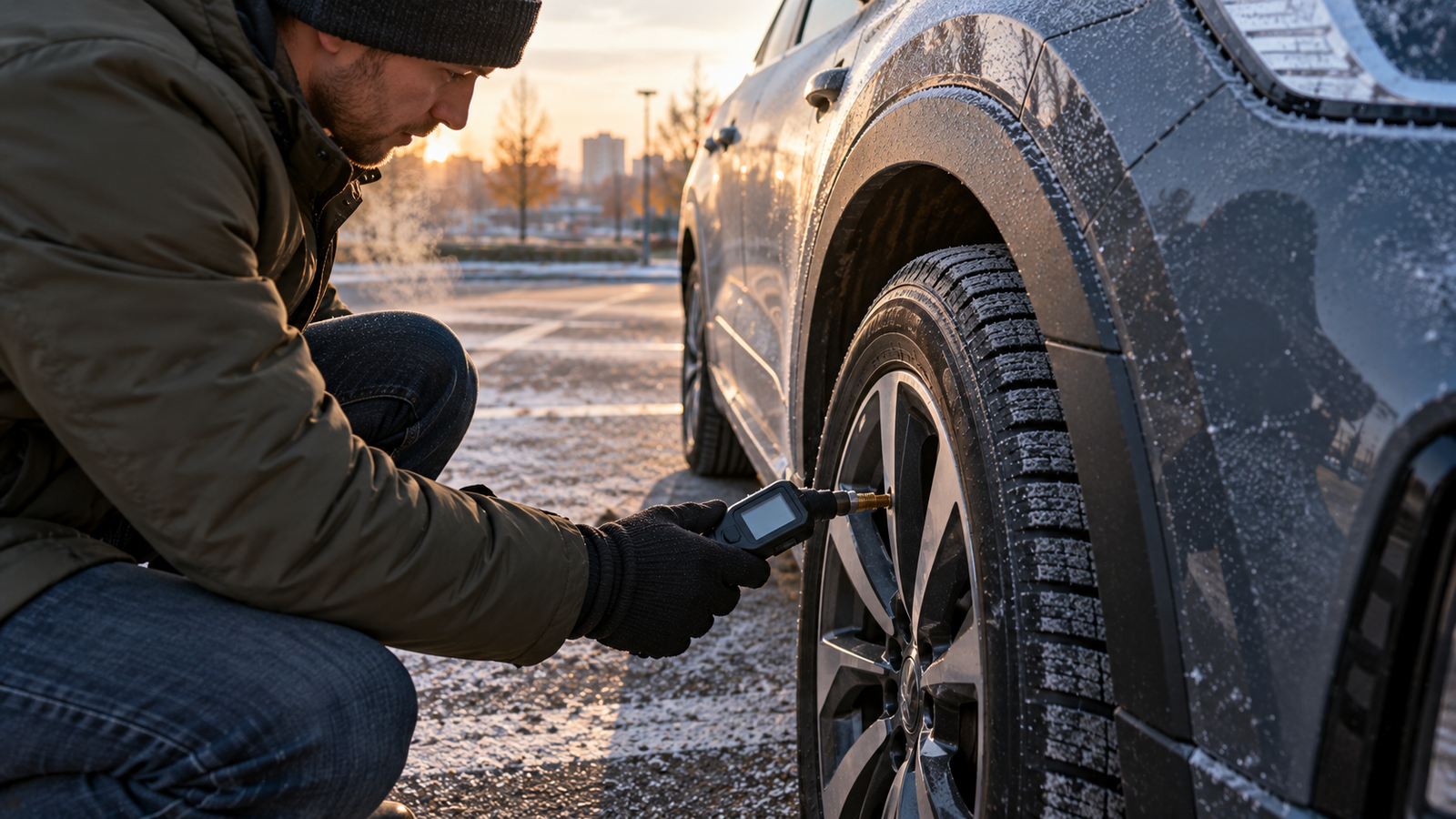
Wheels without sensors on a car designed for a direct monitoring system can cause a constant warning. Formally, it is possible to continue driving in such a situation, but the driver loses normal control over the system and risks not noticing a new puncture, because they quickly get used to the constantly glowing light.
When the pressure gauge shows normal
There is another situation: the indicator continues to glow, although the check shows normal pressure in all four wheels. Then the problem may be related to the sensor itself or to the loss of system calibration.
For some first-generation Haval models, sensor failure is among the typical complaints of owners and can be considered a warranty case. However, the specific cause still needs to be established by diagnostics, as the same symptom can arise due to different malfunctions.
How much will the repair cost
The cost of a new sensor significantly depends on its origin and car brand. For a Chinese crossover, a non-original option can cost approximately 2,200–2,500 rubles, European analogues — about 3,300–3,800 rubles, and an original sensor from a dealer can cost approximately 7,000 rubles per piece.
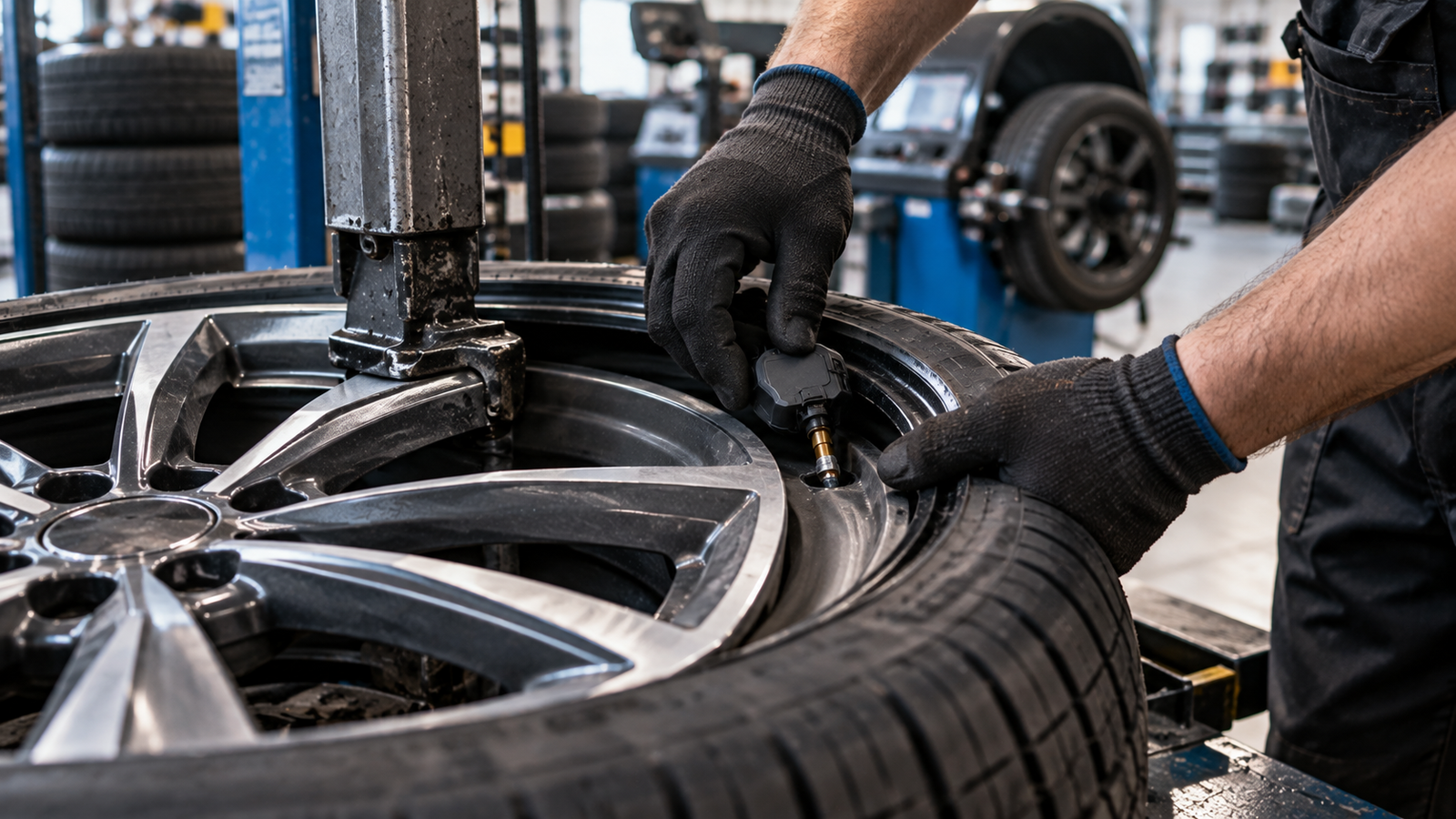
To this amount, labor is added. The service will need to remove the tire, install a new sensor, assemble and balance the wheel, and then, if necessary, register the device in the car. Depending on the specific service, the entire complex of work can cost another 1,500–3,000 rubles.
If you equip all four wheels of the second set of rims with sensors, the total budget will be approximately 10–15 thousand rubles, including installation. These are additional costs, but they allow you to use the tire pressure monitoring system normally instead of constantly driving with a warning on the dashboard.
Can I continue driving
With the indicator light on, you can usually drive to the nearest tire shop if no wheel visually appears flat. But you should not perceive a constantly glowing light as a normal element of the dashboard. In such a case, the next real puncture can easily be missed.
The algorithm after a warning appears takes only a few minutes. First, you need to stop and inspect all four wheels, then check the pressure with a gauge at the first opportunity. If the indicator differs from the norm, the problem should be fixed, and not wait until it gets warmer and the light temporarily disappears.
That is why the autumn yellow horseshoe does not always mean a sensor malfunction. Sometimes it simply indicates that after summer inflation, the pressure has encountered real cold for the first time — and now the wheels require a normal seasonal adjustment.
Read more articles:
- Why Soviet traffic lights were inverted in 1959
- Why brake discs rust and if it's dangerous
- How to make your windshield perfectly clean
Comments