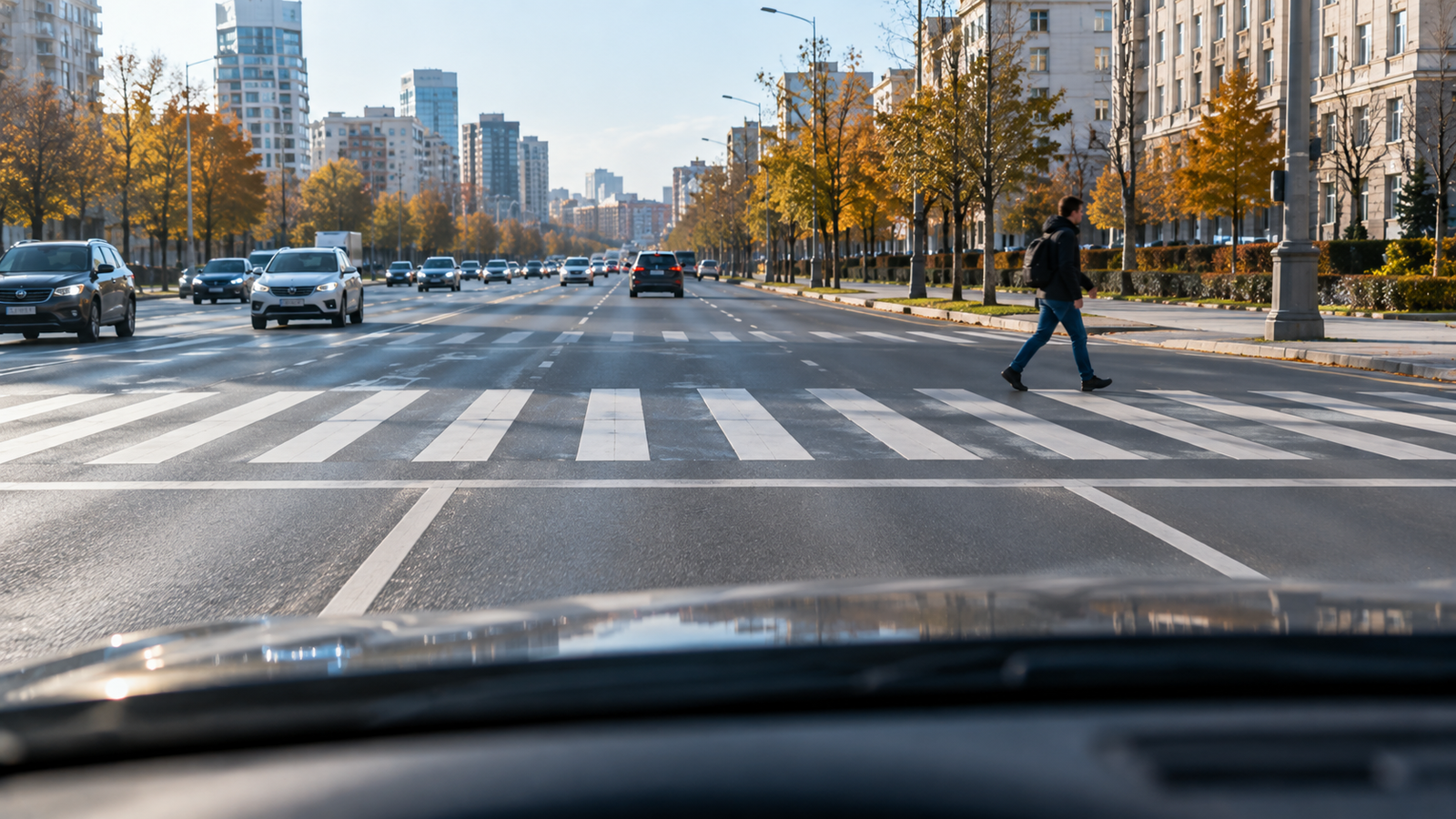
A fine for failing to yield to a pedestrian does not always mean that the driver actually violated the rules. In Kemerovo, a story involving a 2400 ruble penalty reached several judicial instances and ultimately ended up in the Supreme Court. The dispute arose from a situation where a car was turning right, and a person began to cross a wide road from the opposite side.
In practice, such episodes often become contentious. The pedestrian is already on the crosswalk, so the driver feels that they must yield in any case. However, clause 14.1 of the traffic rules requires considering not only the mere presence of a person on the crosswalk but also whether the car obstructs them.
How the 2400 ruble fine came about
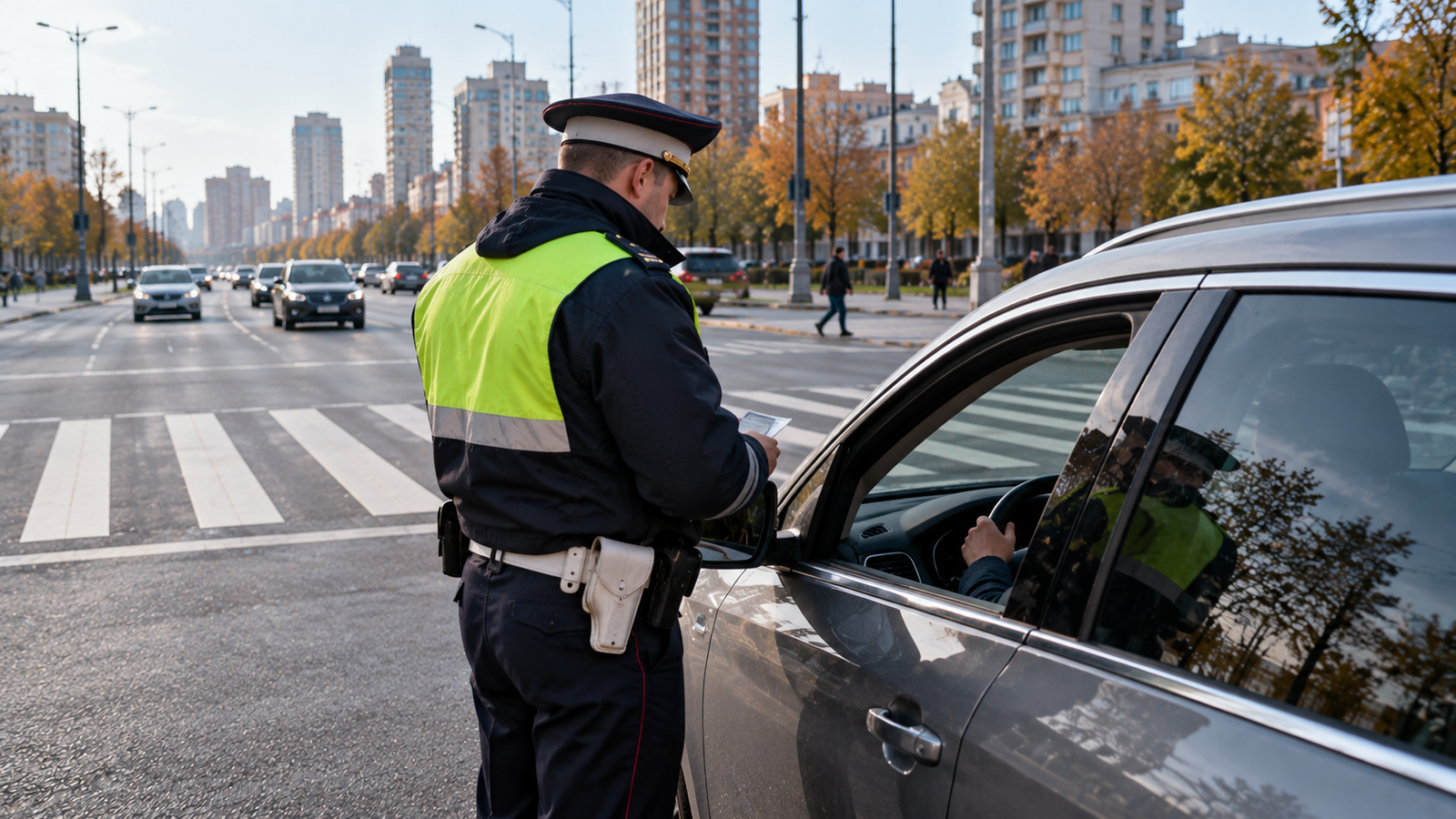
In the summer of 2025, in Kemerovo, citizen Maingardt was driving a car and was stopped by a traffic police inspector while turning right. The officer believed that the driver failed to yield to a pedestrian at an uncontrolled crosswalk and issued an administrative penalty of 2400 rubles.
The driver disagreed with the ruling and tried to appeal it. However, the district court upheld the inspector's position and left the penalty unchanged. After that, the case moved to the regional court, where the circumstances of the incident were examined with the help of video footage.
The recording proved crucial for the subsequent decision. It allowed to establish not only the fact of the pedestrian being on the crosswalk but also the distance between them and the car at the moment the car was moving.
The pedestrian was on the other side of the road
According to the court's decision, the road at the crossing point was wide and had several lanes of traffic. Before the crosswalk, Maingardt slowed down and stopped to let people who were crossing the road in the lane closer to the car pass.
After these pedestrians had passed, the car started moving. At that moment, there was no one near the car. The only person who remained in the frame was just beginning to cross the road from the opposite side and continued to move straight, without changing direction.
The court specifically assessed whether a real obstruction occurred between the car and the pedestrian. The conclusion was negative: the person did not have to stop, slow down, speed up, or change their trajectory of movement because of the car.
This circumstance was key. The regional court overturned the inspector's ruling, and with it, the decision of the district court, which had previously upheld the penalty.
Why the case reached the Supreme Court
The dispute could have ended there, but the opposite happened next: the traffic police inspector himself decided to appeal the decision. His appeal was considered by the Eighth Cassation Court, but the officer's position was not supported there, and the regional court's decision remained in force.
After that, the inspector appealed to the Supreme Court. But the case did not reach the merits of the arguments due to the expiration of the period during which a person can be brought to administrative responsibility.
It turned out that the dispute about the violation itself went through several judicial levels, but the inspector's final appeal to the Supreme Court was rejected on procedural grounds.
What changed after the amendments to the traffic rules
The main reason for such disputes is related to how to understand the driver's obligation to yield to a person at a pedestrian crossing. Before the 2014 amendments to the traffic rules, the approach in practice was significantly stricter: the mere movement of a car when a pedestrian had already stepped onto the crosswalk, even if the person was far from the car, could be grounds for punishment.
After the changes, the issue had to be further clarified. The Plenum of the Supreme Court compared Russian rules with the provisions of the international Convention on Road Traffic and clarified the meaning of the requirement to “yield the road.” The head of the State Traffic Inspectorate of the Russian Ministry of Internal Affairs, Mikhail Chernikov, also spoke separately about the application of this rule to the work of inspectors.
The meaning of the clarifications boils down to the fact that the driver is obliged to yield when the continued movement of the car actually prevents the pedestrian from exercising their right of way. The mere presence of a person on the crosswalk does not automatically mean a prohibition for the car to continue moving.
The specific road situation is important. If the car and the pedestrian are moving along trajectories that do not intersect, and the car does not force the person to change their behavior, the requirement to yield the road is not violated.
What does “yield the road” mean
In the rules and judicial clarifications, this concept is associated not just with stopping the car before the crossing. The driver must not start moving, continue moving, or perform a maneuver if, due to their actions, a road user with the right of way would need to change speed or direction.
In practice, this refers to several possible situations:
- the pedestrian has to slow down or stop completely because of the car;
- the person has to speed up to avoid a collision;
- the pedestrian is forced to deviate from their original direction of movement;
- the car's trajectory actually obstructs them when crossing the road.
If nothing of the sort happens, the mere presence of a person on the crosswalk does not yet prove a violation on the part of the driver.
Why several lanes are important
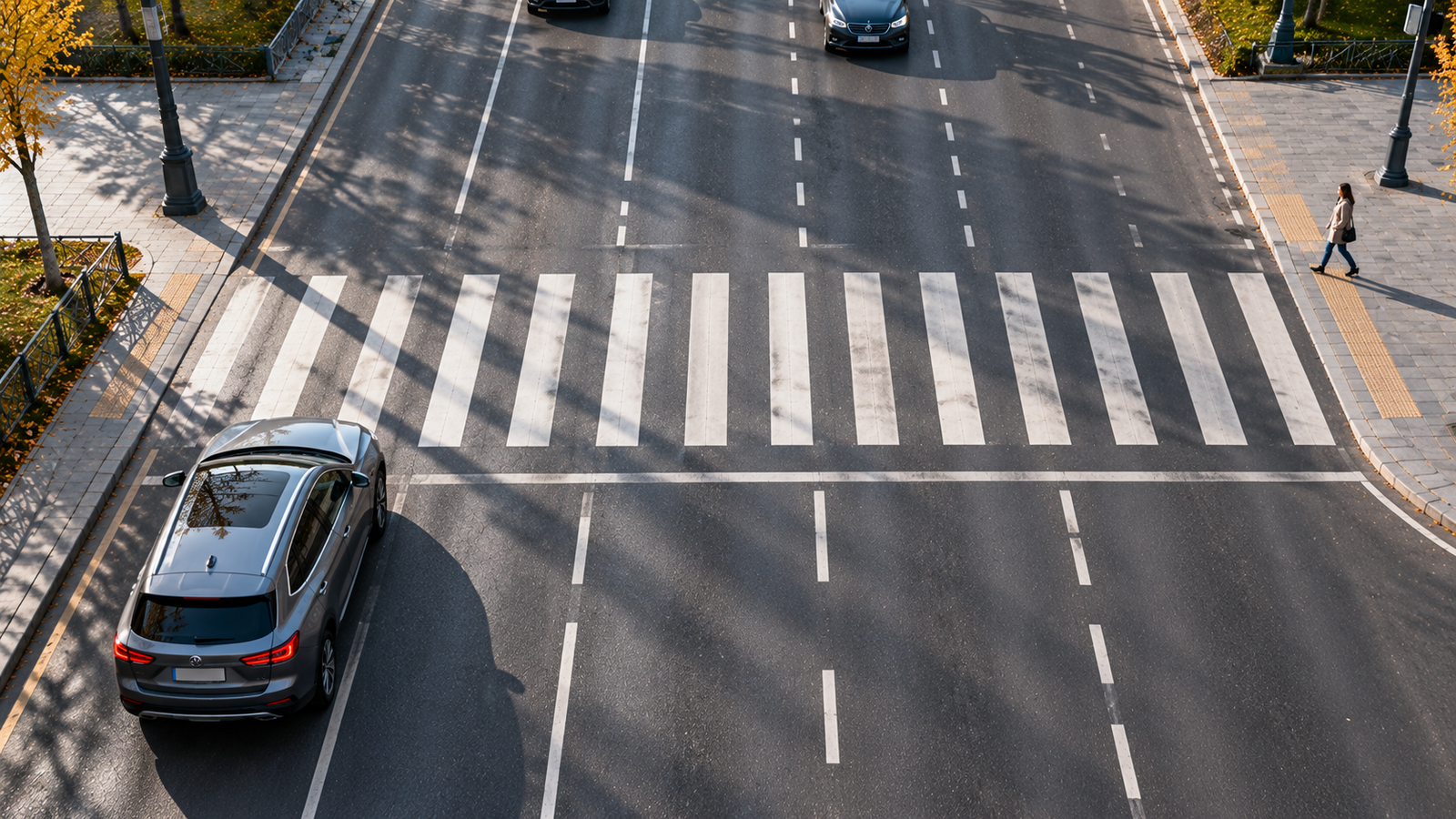
The width of the road was one of the main circumstances in the Kemerovo case. When a pedestrian is on the opposite side of a multi-lane road, the distance between them and the car can be so great that their trajectories of movement effectively do not obstruct each other.
In the described situation, the driver first stopped and let people who were on the part of the crosswalk closer to her pass. After that, she started moving, while another pedestrian was just beginning to cross from the opposite side.
Therefore, evaluating such situations solely on the principle of “pedestrian is on the crosswalk – car must stop” is incorrect. It is necessary to look at the car's location, the person's direction of movement, the number of lanes, and most importantly, whether there was a real need for the pedestrian to change speed or trajectory.
How a driver should act
For a motorist, a very practical conclusion follows from this story. Upon seeing a person on an uncontrolled crosswalk, it is necessary to assess not only their presence on the crosswalk but also whether their path and the car's trajectory intersect.
You can follow several sequential actions:
- Slow down before the crosswalk and assess the position of pedestrians.
- Let people who are in the car's trajectory of movement pass.
- Before starting to move, make sure that continuing the journey will not force the pedestrian to brake, stop, speed up, or change direction.
- If the car and the pedestrian are in different sections of a wide road and do not obstruct each other, assess the situation taking into account this distance.
The Kemerovo case shows why the formal presence of a pedestrian on the crosswalk should not automatically result in a fine. For a violation, it is necessary to establish the fact of creating an obstruction for a person who has the right of way at the crossing.
In the situation under consideration, the court concluded that there was no such obstruction. Therefore, the inspector's ruling was ultimately overturned, despite the fact that the district court initially took the opposite position.
Read more materials:
- Why 22 US states do not have a front license plate
- Why a car has ribs on the roof: it's not about strength
- What do the numbers on a fuel truck mean and how to go for the right one?
Comments