A portable jump starter easily makes one wonder why a car even needs a heavy lead-acid battery. A compact device weighing less than a kilogram can start an engine, while under the hood, there's usually a battery weighing about 15 kg. At first glance, it seems that lithium batteries should have long since replaced traditional lead-acid batteries, but in practice, this has not yet happened.
The main reason becomes clear if you compare not only the size and weight of the two technologies but also their cost, winter operation features, and safety requirements. Lithium indeed offers a whole host of advantages for a car, but the familiar lead-acid battery has qualities that are especially important in everyday use.
The difference in size is immediately noticeable
If you place lead-acid and lithium batteries of the same capacity side by side, the differences will be obvious even without special measurements. The lithium option can be significantly more compact and lighter than a traditional battery.
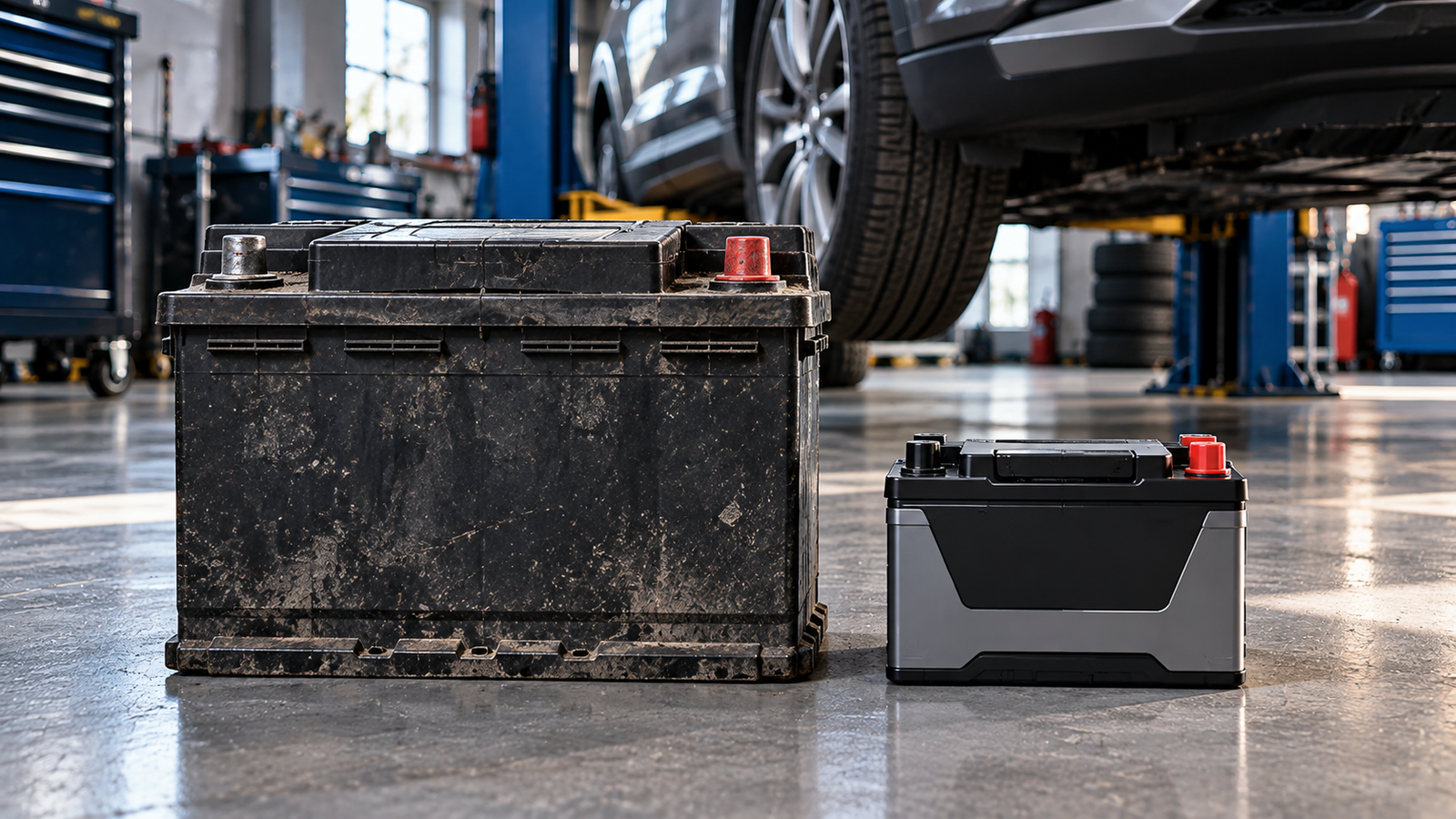
With the same stated capacity, a lithium battery takes up much less space under the hood. This is especially interesting for cars where free space is limited and weight reduction has practical significance.
Why lithium charges faster
The advantage of lithium technology is evident not only in its dimensions. The charging speed also differs significantly: a lead-acid battery requires 8 to almost 20 hours for a full charge, while a lithium battery can handle this task in about 3 hours.
Energy density is also used to compare batteries. Modern lithium batteries provide approximately 100–160 Wh per kilogram, while lead-acid batteries have a figure of 25–40 Wh. This high energy density largely explains why a lithium battery of the same capacity can be made much more compact.
It also has an advantage in terms of lifespan. Lithium batteries can withstand approximately 2000–7000 charge cycles, while for acid batteries, the range is 400–1200 cycles. At the same time, a lead-acid battery does not tolerate deep discharge well: if it is completely discharged to zero once, its capacity can significantly decrease.
At this stage, the comparison indeed looks unambiguous. But this is where the main question arises: if lithium is lighter, more compact, charges faster, and has a longer lifespan, why do lead-acid batteries still remain a mass solution?
Why lithium batteries have not yet become the standard
Is there a strong feeling that all the advantages are categorically gathered in lithium batteries? This is a deceptive impression: it's worth understanding the disadvantages as well, otherwise, it will be unclear why we don't see their widespread use in all cars. In fact, lead-acid batteries still dominate the market.
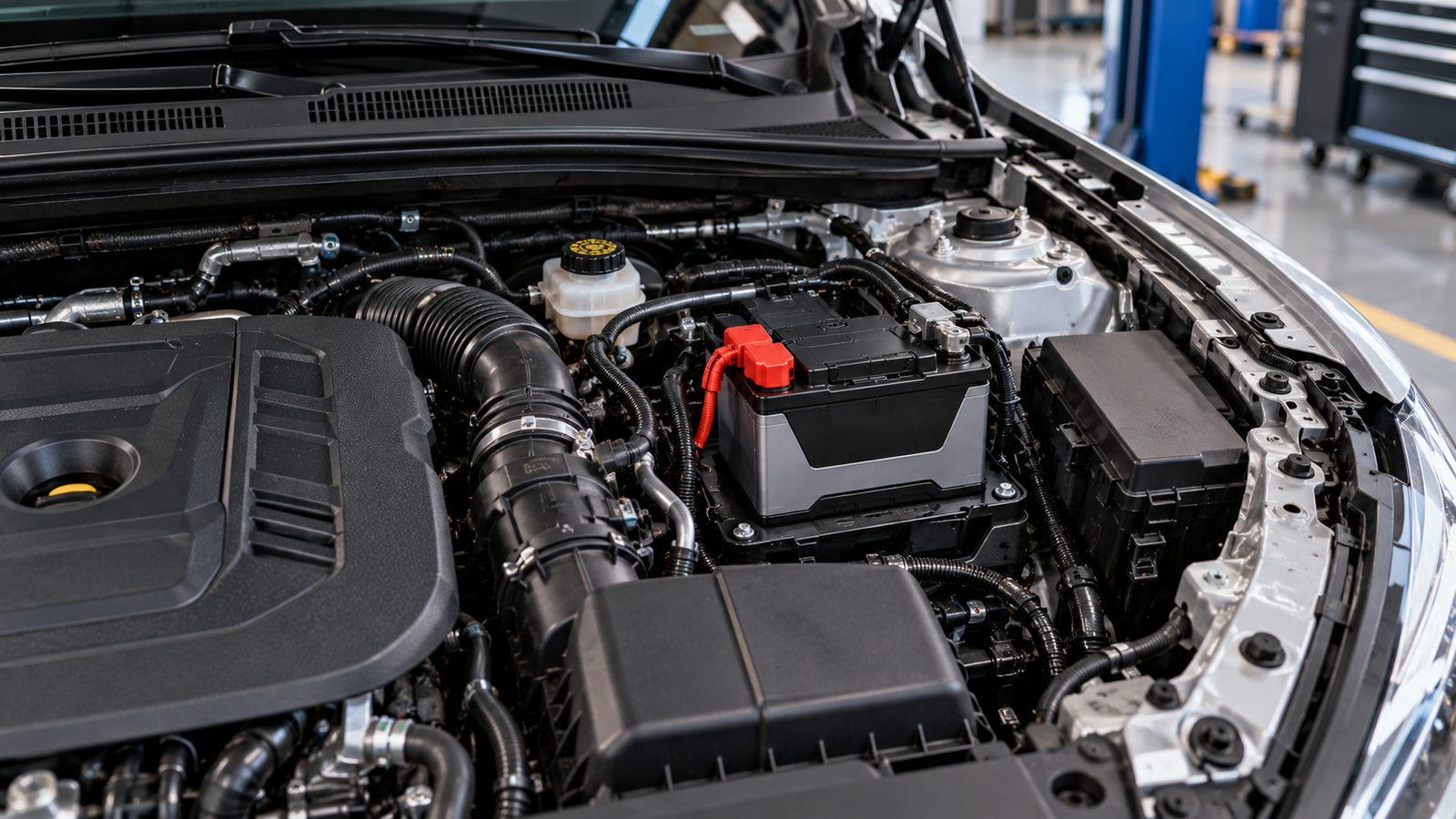
The first obstacle is the price. For the same capacity, lithium starter batteries are approximately 2–3 times more expensive than conventional ones. As a result, the cost of one battery can reach 40 thousand rubles or more, which significantly changes the economics of such a replacement.
If a classic battery costs about 20 thousand rubles, then instead of a significant overpayment for a lithium battery, the remaining money can be directed, for example, to inter-service maintenance with oil and filter changes.
Design explains the cost
Both technologies use one basic principle: an electrochemical power source with positive and negative electrodes immersed in an electrolyte. However, the further implementation of this scheme differs significantly between lead-acid and lithium batteries.
A traditional battery is relatively simple. The basis is a plastic case, inside which are fairly large lead grids immersed in an electrolyte. This design has long been refined and well-mastered by industry.
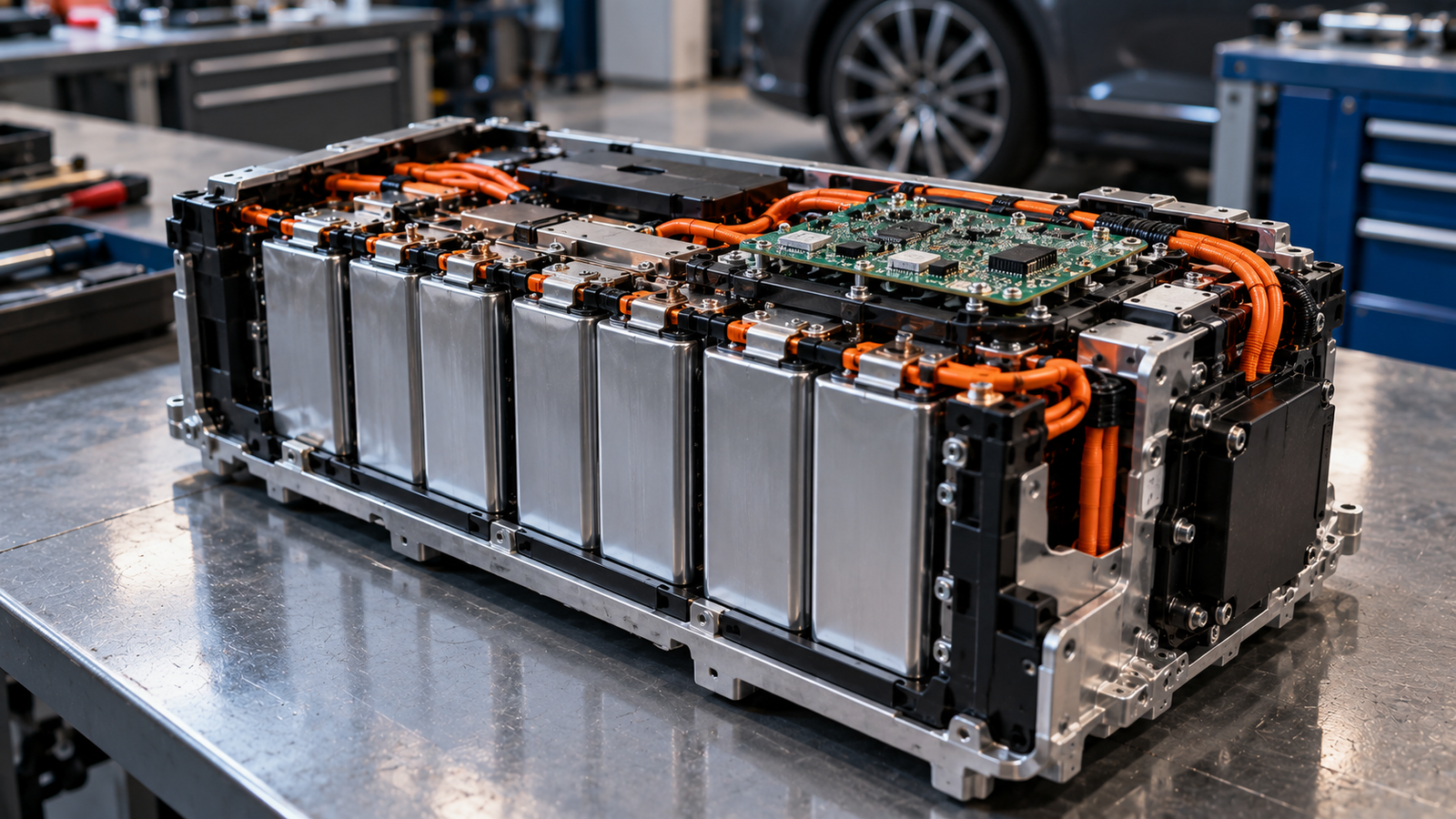
A lithium battery is significantly more complex. Inside are numerous sensitive cells with very thin electrodes, the production of which requires expensive precision equipment. In addition to the cells themselves, the battery needs an electronic control module.
It turns out that the high price of a lithium battery is associated not only with the materials inside the case. The cost includes more complex production of the elements themselves and an electronic system that controls their operation.
What happens to a lithium battery in winter
For operation in cold climates, lithium technology has another serious feature. Such batteries are sensitive to low temperatures, and the problem is especially noticeable during charging.
Charging a lithium battery at sub-zero temperatures is not possible without special heating solutions. Therefore, for normal operation in frost, an additional heating system will be required, and leaving a car with such a battery in night frost without considering this limitation is not possible.
For conditions where a car regularly spends the night outdoors in winter, this factor becomes fundamental. Lead-acid technology in this regard is more familiar to owners and services.
Safety is another factor
Lithium batteries also have a problem that goes beyond cost or ease of use. Fire safety stands out separately. Lithium batteries are prone to spontaneous combustion, and fighting such a fire has its own peculiarities.
Class D fire extinguishers are required to extinguish lithium, and it is necessary to react to the fire quickly. It is separately emphasized that water cannot be used for extinguishing.
Therefore, when comparing the two technologies, one cannot be limited to indicators of mass, capacity, or the number of cycles. A lithium battery has additional requirements for car design, operation, and safety.
Why lead-acid batteries still remain primary
If you compile the characteristics of both technologies into one list, the differences look as follows:
- lithium batteries are lighter and more compact with comparable capacity;
- their energy density is approximately 100–160 Wh/kg versus 25–40 Wh/kg for lead-acid;
- a full charge can take about 3 hours versus 8–20 hours for lead-acid;
- the lifespan is estimated at 2000–7000 cycles versus 400–1200 for acid batteries;
- lithium batteries are significantly more expensive;
- their operation at sub-zero temperatures requires additional solutions;
- lithium batteries impose higher requirements on the control and safety system.
That is why lithium starter batteries exist, but have not yet become a mass solution. The traditional lead-acid battery loses out on a whole range of technical characteristics, but remains a simple, relatively inexpensive, and well-mastered technology.

Lead-acid batteries currently dominate the mass market because they are simpler, cheaper, and thoroughly tested. But in the near future, we can expect a technological update. Who knows, perhaps very soon they will have to move aside and make way for modern solutions.
For now, a compact lithium battery can indeed offer an impressive combination of weight, size, and characteristics, but technical efficiency alone is not enough for mass replacement. A car battery must remain affordable, predictable, and suitable for operation in a wide variety of conditions — and this is where lead-acid technology still holds strong positions.
Read more articles:
- Tire pressure drops in the cold: what to do
- When can you drive if a pedestrian is already on the crosswalk
- Why Soviet traffic lights were inverted in 1959
Comments