Tesla builds humanoid robots, develops driver assistance systems, and even sent a car into space. But on the Cybertruck's windshield, engineers had to use a solution that is over 120 years old: a huge mechanical wiper about 1.2 meters long. This is the largest such blade among production cars, and its appearance is particularly indicative against the backdrop of Tesla's attempts to replace the traditional design with a laser.
Tesla filed a patent for a laser glass cleaning system in 2019 — the same period when the Cybertruck was unveiled to the public. The idea looked much more futuristic than a conventional rubber blade: a camera was supposed to detect contamination, after which a pulsed laser would remove it from the surface. Tesla considered the technology not only for car windows but also for solar panels.
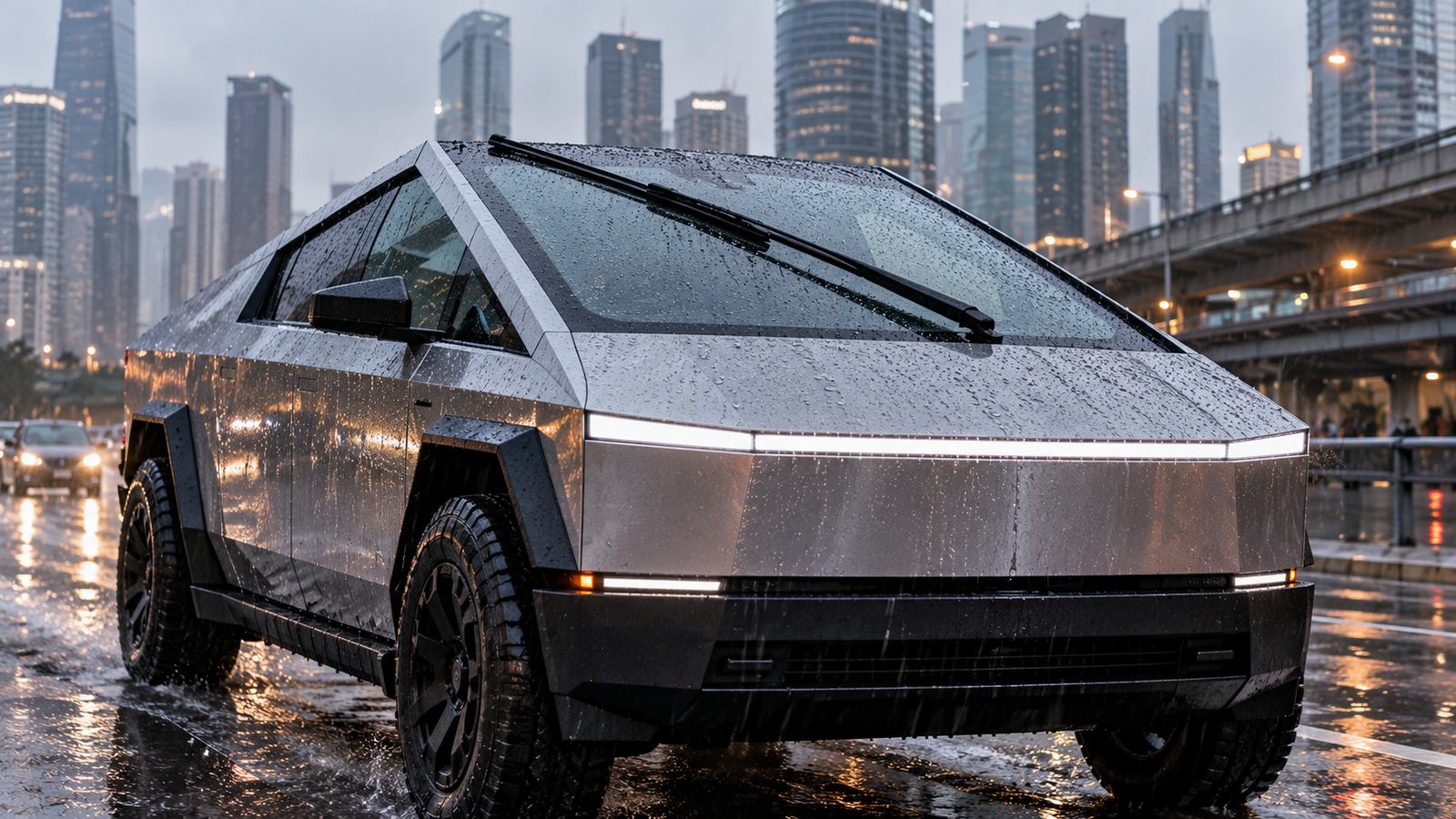
However, the production Cybertruck did not feature a laser. Instead, engineers installed a giant wiper with a powerful 40-volt drive and a special aerodynamic solution designed to keep the blade on the glass at high speeds. The reason is simple: cameras are located behind the Cybertruck's windshield, so a clean windshield is of practical importance for the car's electronic systems to function. The more a car relies on cameras, the higher the requirements for their visibility.
At the same time, the patent itself does not mean that the technology was brought to mass production. The patent system protects a new technical idea, but the issuance of a patent does not guarantee its economic or operational suitability. In Tesla's case, laser cleaning remained a promising development, while a very large, but quite traditional, wiper appeared on the car.
An Invention That Outlived the Automobile
The history of the wiper began long before the advent of modern cars. In 1902, Mary Anderson, during a trip to New York, observed how a tram driver had to open the window and manually clear snow and ice from the glass. After that, she developed a design with a lever from the cabin and a rubber strip on the outside, and in 1903, she received a patent.
Anderson tried to interest manufacturers in her invention but did not achieve commercial success. The patent eventually expired, and the inventor herself earned almost nothing from it. Today, the principle proposed by Anderson is used on almost every production car, although engines, brakes, headlights, and electronic systems have changed over the past decades.

The wiper even survived attempts to make it more intelligent. In the 1960s, engineer Robert Kearns developed an intermittent wiper mode, where the wiper pauses between strokes during light rain. After a conflict with car manufacturers, Kearns sued large companies for many years and eventually received multi-million dollar payouts. The story became so famous that it later formed the basis of the film “Flash of Genius.”
Why Ultrasound and Self-Cleaning Glass Don't Work
Attempts to replace the mechanical blade were not limited to lasers. In 2013, McLaren announced the development of a system that was supposed to clean glass with ultrasound. High-frequency vibrations were intended to repel water, snow, dirt, and insects from the surface, eliminating the need for conventional wipers.
The problem was found in the difference between clean water and real road grime. Ultrasound can relatively easily affect water droplets, but dried dirt, road dust, and insect residue are much more strongly bonded to the glass. To effectively remove such contaminants, a significantly more powerful system would be required, and with it, size, cost, and energy consumption would increase.
A similar problem arose with concepts of self-cleaning glass. In 2008, the Italian studio Fioravanti presented a design in which an electric field was supposed to move contaminant particles to the edges of the glass. In practice, the technology could primarily affect light, dry dust, while denser contaminants still required mechanical removal.
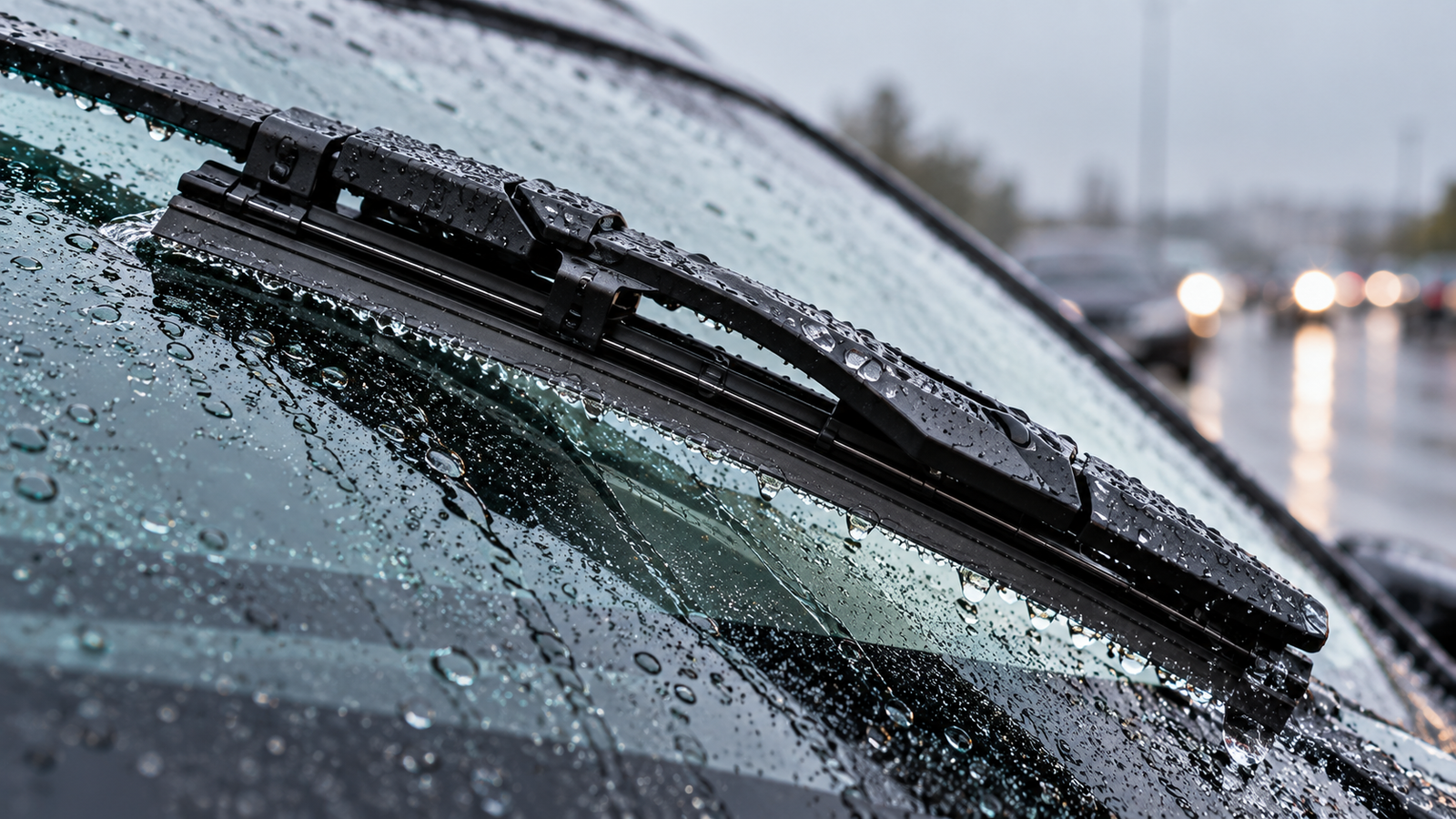
Hydrophobic coatings proved to be significantly more practical, but they also did not eliminate wipers. The coating helps water collect into droplets and run off the glass faster, but it does not remove dust, dirt, and insects. Therefore, modern compositions rather complement mechanical cleaning than are capable of completely replacing it.
Why the Ordinary Blade Still Wins
The main advantage of the wiper is its simplicity. The rubber edge directly contacts the glass and mechanically removes almost everything that enters the cleaning zone: water, snow, dirt, and insect residue. It does not need complex sensors, a laser source, a powerful ultrasonic generator, or a special electrically conductive coating.
There is also an economic side. A conventional blade is relatively inexpensive, quickly replaced, and does not require complex maintenance. If it wears out, it can be replaced without interfering with the car's electronics.
At the same time, the design is constantly being improved. The shape of the blades, rubber materials, aerodynamics, drives, and automatic control algorithms are changing. But the principle itself remains the same because it solves the main problem in the most direct way: contamination is physically moved off the glass.
That is why the Cybertruck turned out to be a good illustration of the contradiction in modern automotive technology. A car can use the most complex electronics, cameras, and automation systems, but when it comes to a thick layer of dirt on the glass, a mechanical rubber blade is still more practical than a laser.
When Wipers Might Actually Disappear
The automotive industry will be able to completely abandon wipers if the task itself changes. A large windshield is primarily necessary for a human who needs a wide, direct view of the road. For an autonomous vehicle, such an element is no longer so fundamental.
If control completely shifts to a computer, information about the road can be obtained from cameras, lidars, and other sensors located at different points on the body. A small lens is much easier to protect from water and dirt than a huge windshield.
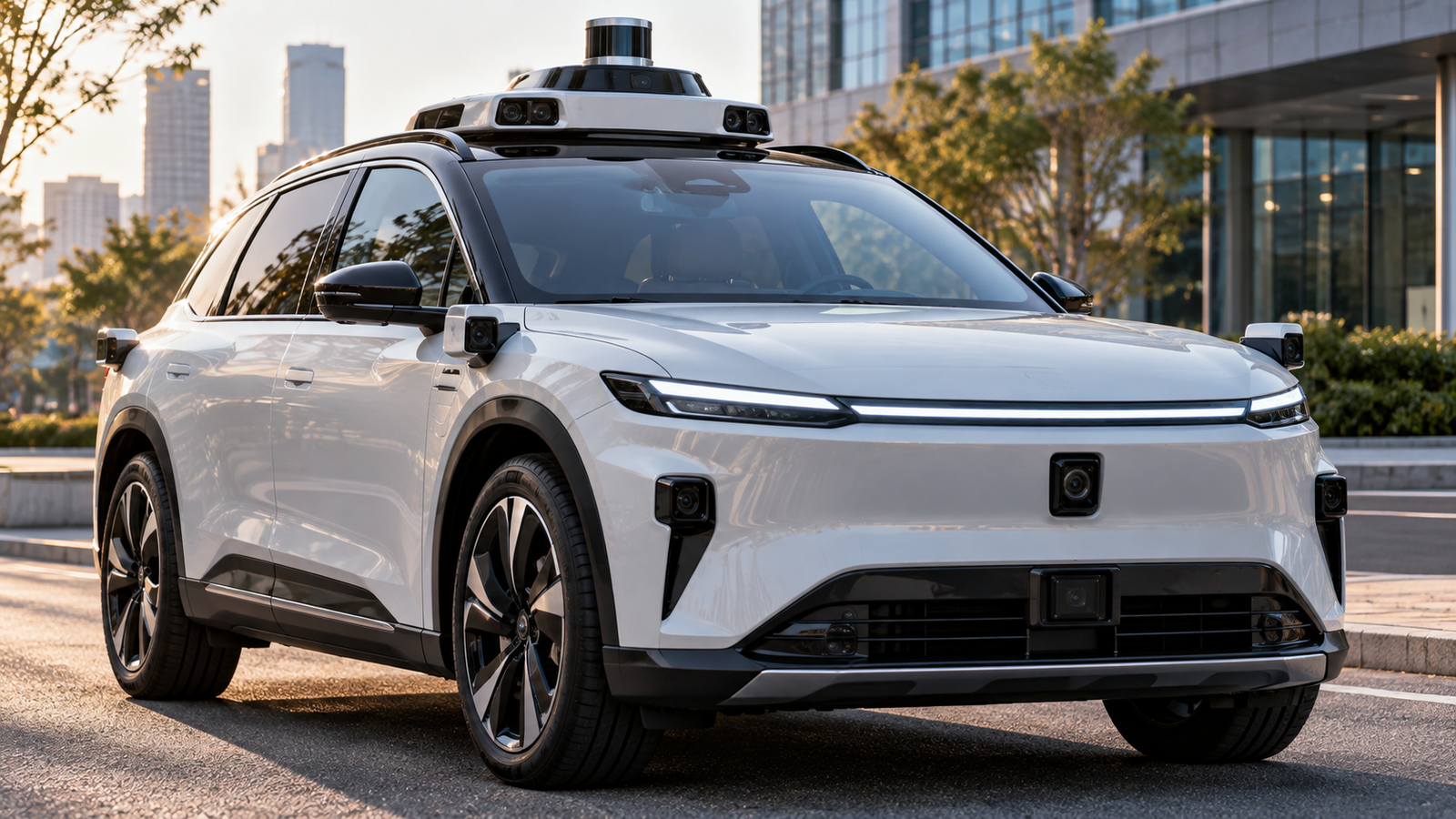
For individual cameras, local blowing, small nozzles, or other cleaning methods can be used. Therefore, the paradox is that the wiper may disappear not thanks to the invention of a more advanced blade, but because the car of the future may not need to clean a huge glass for human vision at all.
For now, the situation looks different. Tesla managed to build a car with a huge amount of modern electronics, but its windshield still features the good old wiper. For 120 years, engineers have invented lasers, ultrasound, electromagnetic systems, and self-cleaning coatings, but a simple rubber edge remains the most versatile way to quickly clear rain, snow, and dirt from the road.
Read more materials:
- What to check in the spare tire before the first puncture
- Why the V10 disappeared from modern production cars
- Why the accelerator pedal controls air, not fuel
Comments