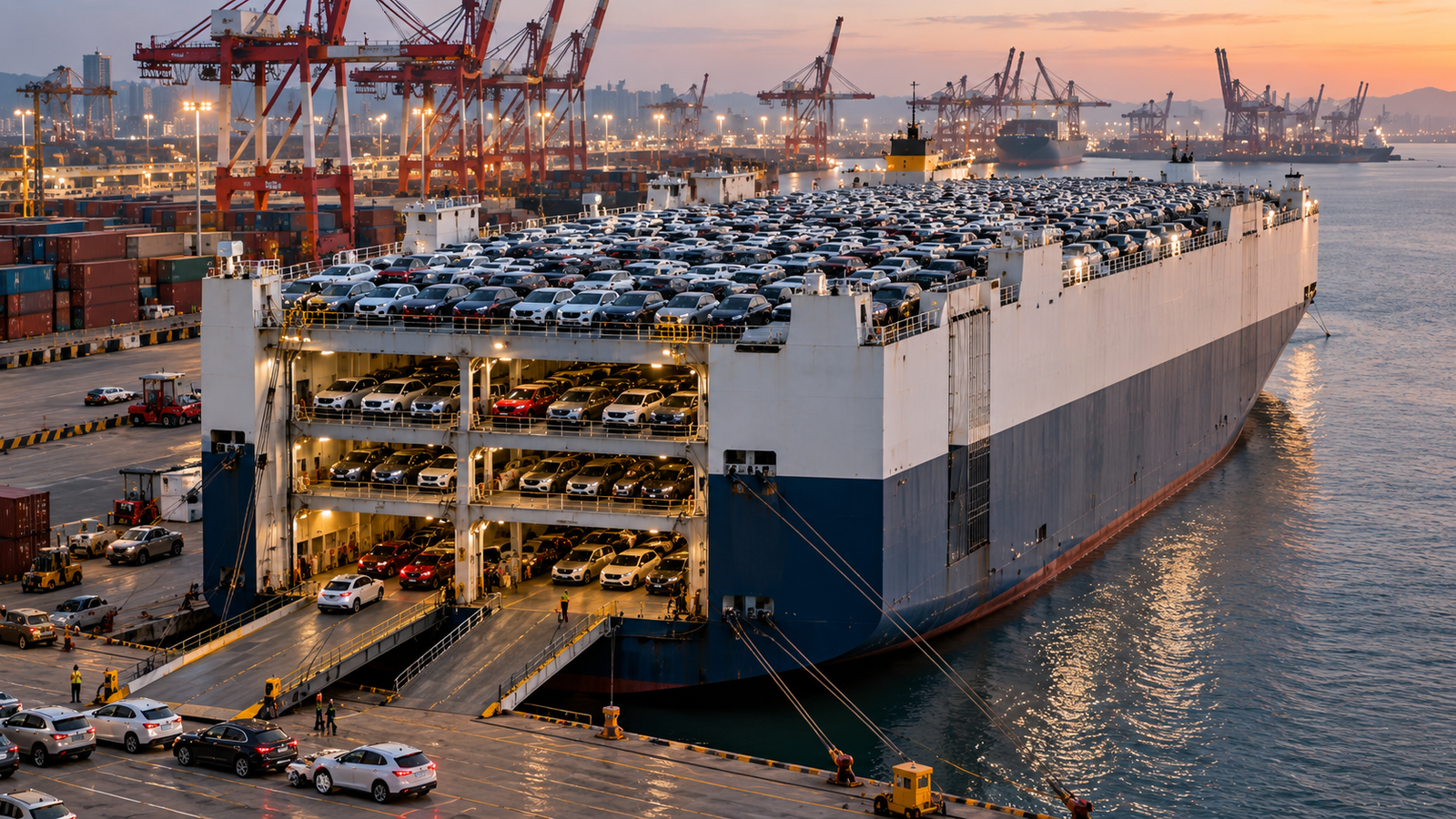
The Chinese automotive industry continues to increase production and exports, but behind this growth lies a serious problem: cars are produced and sent abroad faster than real demand grows. In July 2026, Chinese factories produced 2.573 million cars and sold 2.584 million. Exports reached 1.043 million vehicles, an 81.3% increase year-on-year. From January to July, China exported 6.14 million cars — 66.8% more than the previous year.
The domestic market, meanwhile, looks significantly weaker. In the first seven months, passenger car sales in China decreased by 5.4%, to 14.988 million vehicles. This creates a paradoxical situation: production remains huge, domestic demand is shrinking, and an increasing share of output is directed abroad.
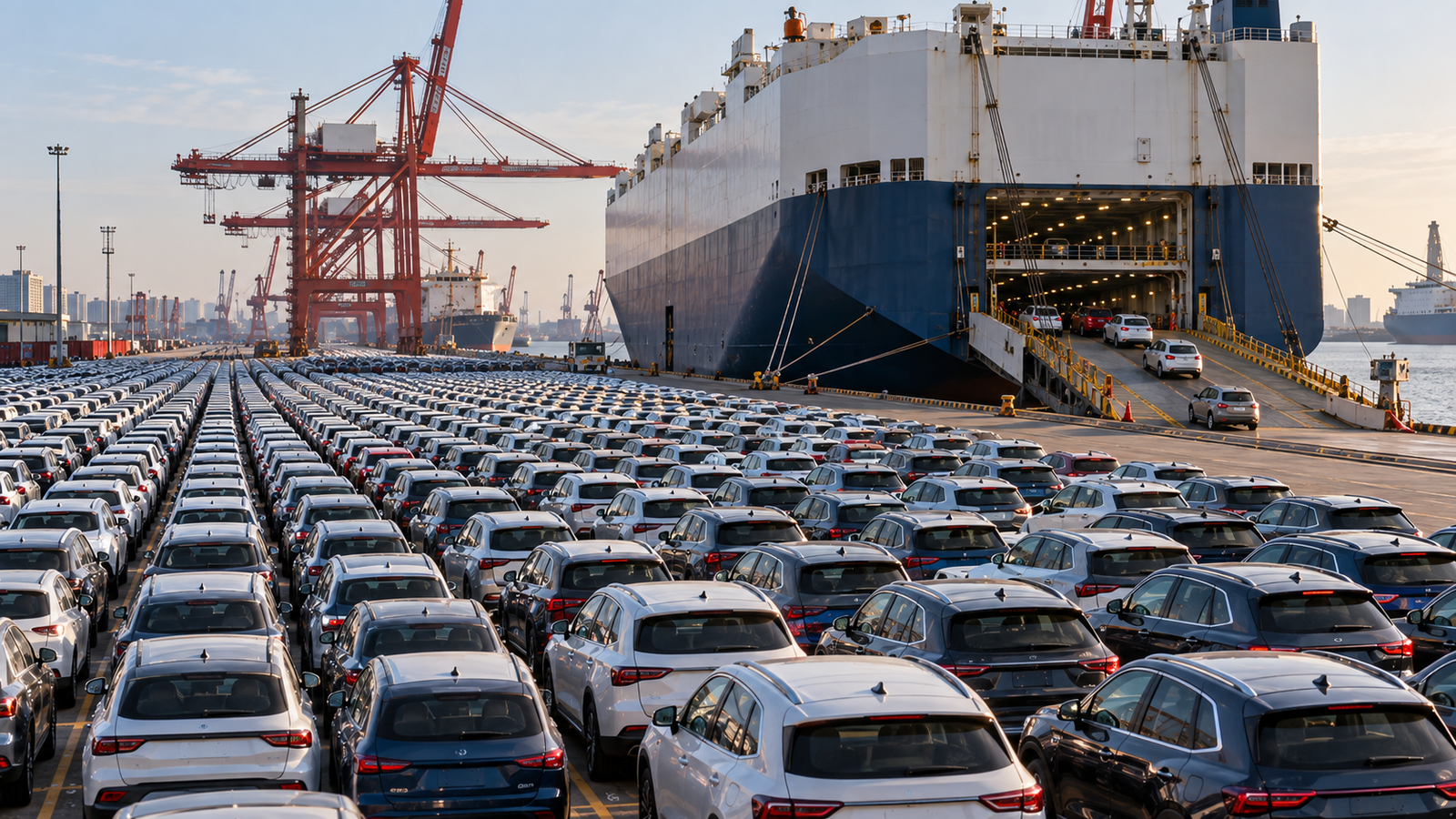
The International Energy Agency records the same trend. In the first half of 2026, car sales in China decreased by more than 20% year-on-year, while exports grew by approximately 65%. For electric vehicles, the gap is even more noticeable — their exports increased by more than 120%. At the same time, the IEA estimates that over a million electric vehicles have been exported from China in the last 18 months, which have not yet been registered as sales in destination markets.
How China created its automotive industry
For decades, China developed its automotive industry through joint ventures with foreign concerns, gaining technology, engineering expertise, and mass production experience. When it became clear that catching up with European and Japanese manufacturers in traditional gasoline engines would be difficult, the focus shifted to batteries, electric motors, power electronics, and software.
The state actively supported this transition. The OECD notes the use of direct subsidies, tax incentives, research funding, and other industrial policy tools. As a result, China became the world's largest center for electric vehicle production: according to the IEA, in 2025, the country accounted for about 75% of global output.
But enormous production capacities created a new problem. There were too many manufacturers, and they began to compete for customers by lowering prices and increasing equipment levels. For consumers, this means cheaper cars, and for companies, falling margins.
Production grows, profits fall
Official Chinese statistics show the scale of the problem. From January to July 2026, the automotive industry's revenue grew by 3.8%, but profit decreased by 20.4%. For comparison, the profit of large industrial enterprises in China as a whole increased by 17.6% during the same period. This means the automotive industry sells a huge number of cars but earns less and less from them.
The problem also extends to suppliers. When car manufacturers operate with small margins, they seek to reduce purchase prices and extend payment terms. In 2025, Chinese authorities demanded that payment terms to suppliers be reduced to 60 days, and by early 2026, the average for most large manufacturers was about 54 days.
Even the largest companies are forced to cut costs. BYD in 2025 reported 32.6 billion yuan in net profit — 19% less than the previous year, although revenue continued to grow. At the same time, the company reduced its staff by approximately 10.2%, to 869,622 employees.
Weak brands are already leaving
Young companies are most affected by cash flow problems. Neta Auto entered restructuring proceedings in 2025: 1,631 creditors filed claims for more than 26 billion yuan, while the company had about 15.46 million yuan in cash. Later, potential investors appeared and attempts were made to resume production, so this is about severe restructuring, not simply the disappearance of the brand.
This shows how the Chinese market has changed. During a period of rapid growth, dozens of manufacturers could simultaneously expand production and launch new models. Now, companies have to prove their ability to exist in conditions of price wars and limited cash flow.
At the same time, the industry's financial problems do not mean that Chinese cars have become worse. In recent years, manufacturers have significantly improved product quality, especially in batteries, electronics, and equipment. However, rapid model updates and constant discounts can further reduce the residual value of cars, which is important for owners to consider.
What this means for Russia
For the Russian market, what is happening in China is directly relevant. Chinese brands already occupy a significant share of new car sales in Russia, and growing exports from China affect the assortment, prices, and number of cars in stock.
If Chinese manufacturers have to offload excess cars, the Russian market may receive additional batches and stronger competition among sellers. For the buyer, this creates opportunities for discounts, but at the same time increases the risks associated with the future residual value of individual models and the stability of specific brands.
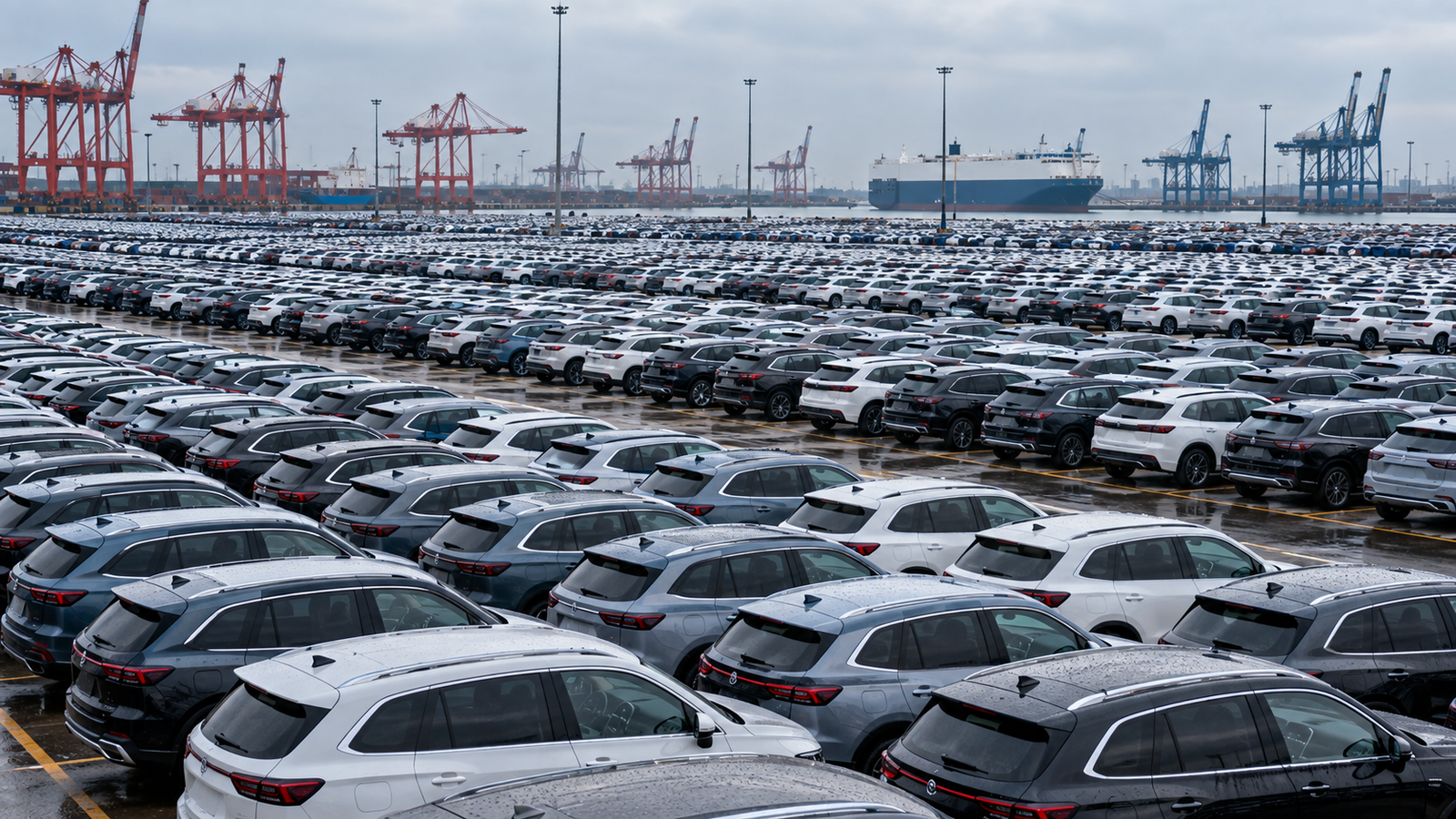
The main problem of the Chinese automotive industry today is no longer its ability to produce cars. China has proven its ability to produce millions of cars and quickly bring them to the global market. Now the industry faces another challenge — learning to generate sustainable profits with huge production volumes.
For now, statistics show a contradictory picture: exports are growing, domestic demand is weakening, revenue is increasing, and profit is shrinking. A new stage is beginning for the global automotive industry, where the main advantage is no longer the ability to produce millions of cars, but the ability to earn from each of them.
Read more articles:
- VAZ-2115 Spoiler: Not Just a Trunk Decoration
- Deep Tread is Deceptive: How Winter Tires Age
- 5 Things to Put in Your Car Before Winter
Comments