Have you ever wondered why some drivers use high beams on the highway, while others prefer low beams? Or why it's necessary to turn on headlights in a tunnel even when it's bright enough inside? Correct use of lighting devices is not only a matter of comfort but also safety, and in some cases, compliance with traffic regulations. For improper lighting mode, a driver can receive a warning or a fine.
A GAI representative, in an interview with the naavtotrasse.ru portal, explained when to use low and high beams, daytime running lights, and fog lights, as well as the responsibility for violations. Let's analyze the main requirements and typical situations drivers face on the road.
When to turn on high beams
High beams are used in the dark on poorly lit roads. They allow the driver to spot obstacles, turns, or other objects on the road earlier. However, when an oncoming vehicle approaches, high beams must be switched to low beams. Traffic regulations specify a distance of at least 150 meters, but if necessary, this should be done earlier — for example, if an oncoming driver signals that their eyes are being dazzled by the headlights.
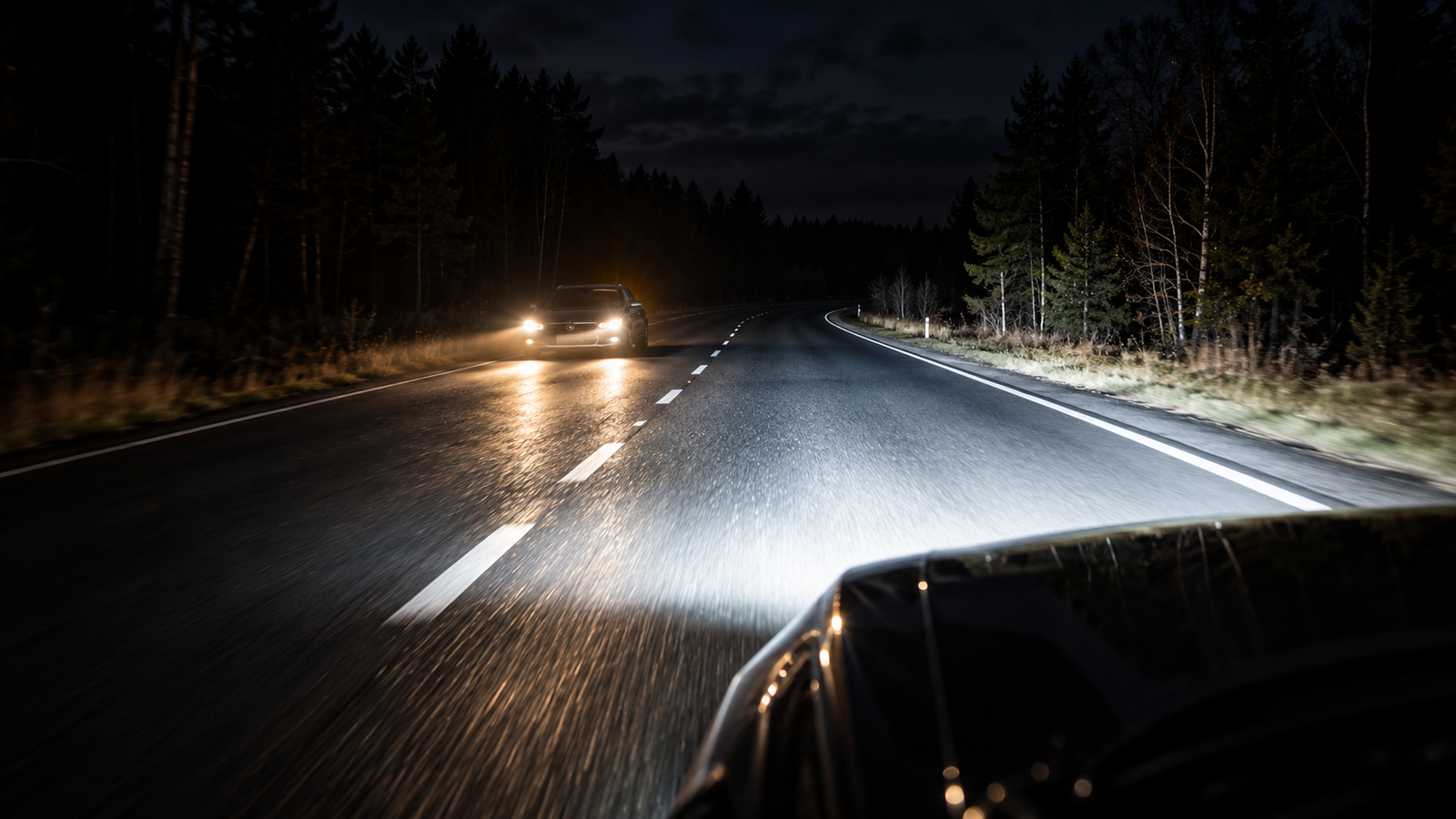
High beams should not be used on well-lit sections of the road. However, a brief switch to high beams before overtaking can be used to warn other road users, provided it does not create interference.
Where low beams are necessary
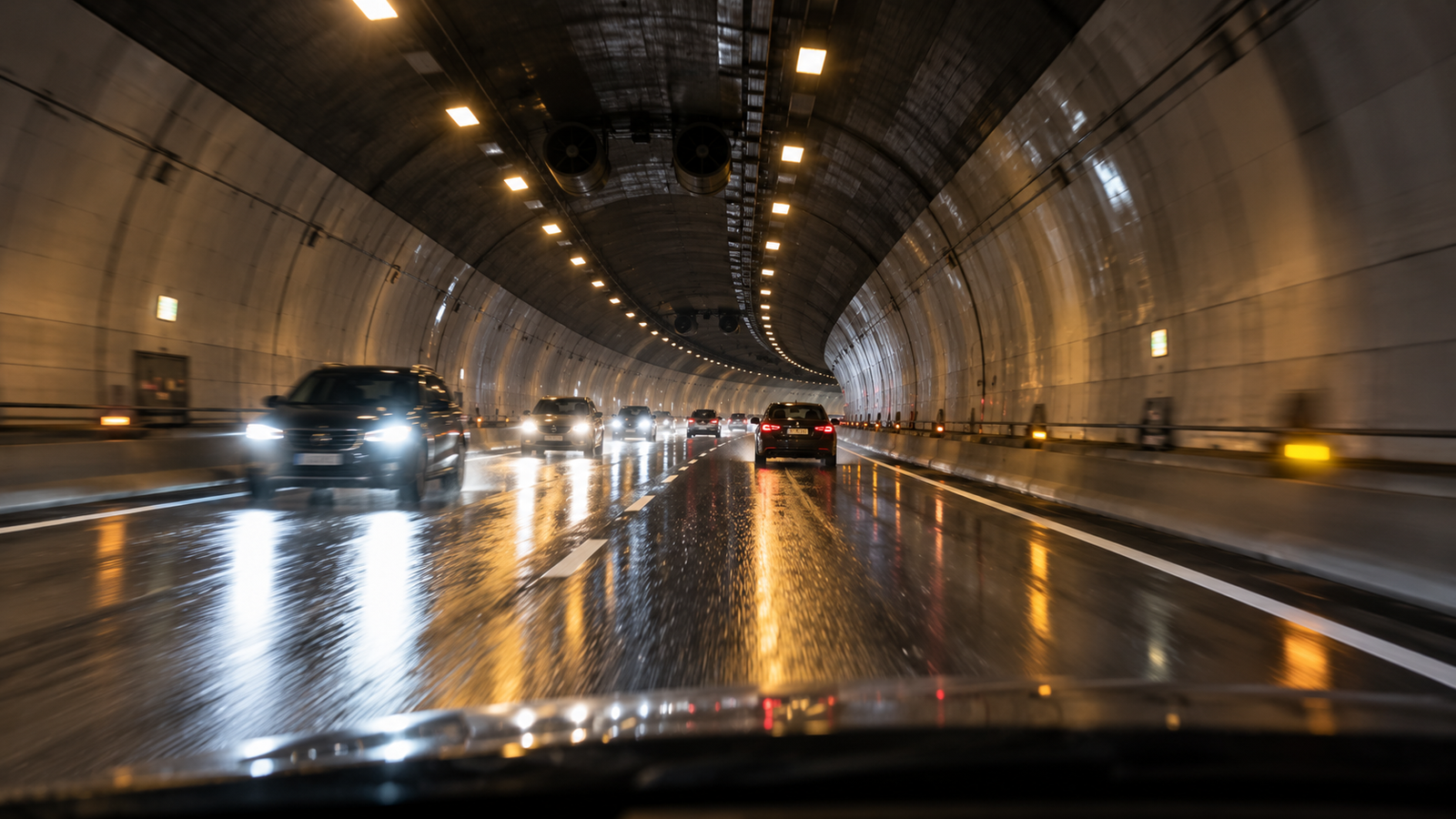
Low beams must be used in the dark and when driving in tunnels. They are also necessary in conditions of insufficient visibility. Daytime running lights do not replace low beams in such situations, as their primary task is to mark the vehicle, not to provide the driver with the necessary road illumination.
During the day, the vehicle must also be marked with lighting devices. For this purpose, daytime running lights, low beam headlights, or front fog lights are used in cases provided for by traffic regulations. Parking lights are not a substitute for DRLs or low beams.
DRLs and fog lights
Daytime running lights are primarily intended to make the vehicle visible to other road users. They are not designed to illuminate the road and therefore do not replace low beams at night, in a tunnel, or in conditions of insufficient visibility.
Front fog lights can also be used in modes provided by traffic regulations, including instead of low beams or DRLs during the daytime. Rear fog lights have a different purpose: they are used only in conditions of insufficient visibility. They should not be turned on unnecessarily, as their bright red light can bother drivers behind.
What the law says
The main requirements for the use of external lighting devices are contained in paragraph 19 of the Traffic Regulations of the Russian Federation. Depending on the specific violation, responsibility may arise under Article 12.20 of the Code of Administrative Offenses of the Russian Federation. For violating the rules for using external lighting devices, a warning or a fine of 500 rubles is provided.
A separate situation is a malfunction of a lighting device. If a headlight is not working under circumstances where its use is mandatory, responsibility may arise under Part 1 of Article 12.5 of the Code of Administrative Offenses of the Russian Federation. The sanction also provides for a warning or a fine of 500 rubles.
Briefly flashing high beams in itself is not a separate violation. Drivers use such a signal to warn each other about the road situation, but it should not be used in a way that creates danger or dazzles other road users.
How to avoid problems on the road
Before driving, it is worth checking the serviceability of headlights, DRLs, parking lights, and fog lights. Special attention should be paid to situations where the car is used at night, on an unlit road, or in poor visibility.
In a tunnel, low beams must be used. When passing an oncoming vehicle, high beams should be switched to low beams in a timely manner, without waiting until the headlights begin to bother the oncoming driver.
During the day, under normal conditions, the lighting devices provided by traffic regulations — DRLs, low beams, or front fog lights in appropriate modes — are sufficient to mark the vehicle. Parking lights cannot be used for this purpose.
Rear fog lights should only be turned on in conditions of insufficient visibility. In clear weather, they are not needed and can cause discomfort to other drivers.
Typical situations
High beams on a lit road. If the road section is sufficiently well-lit, the use of high beams is not required. In addition, it is important not to dazzle oncoming drivers.
DRLs in a tunnel. Daytime running lights do not replace low beams when driving in a tunnel. Even if there is sufficient bright lighting inside, the driver must use the light mode provided by traffic regulations.
Malfunctioning headlight. A malfunction of a lighting device can be a reason for bringing to responsibility under Part 1 of Article 12.5 of the Code of Administrative Offenses of the Russian Federation.
Rear fog lights in clear weather. They should not be used unnecessarily: they are intended for conditions of insufficient visibility and can bother drivers behind.
Frequent questions
When to turn on high beams?In the dark on poorly lit roads, if their use does not interfere with other road users. When an oncoming vehicle approaches, it is necessary to switch to low beams.
Can I drive during the day only with DRLs?Yes, if traffic conditions allow the use of DRLs in accordance with traffic regulations. In a tunnel, at night, and in conditions of insufficient visibility, the DRL mode alone is not enough.
What is the penalty for violating the rules for using lights?Under Article 12.20 of the Code of Administrative Offenses of the Russian Federation — a warning or a fine of 500 rubles.
Can I use parking lights instead of low beams or DRLs?No. Parking lights do not replace the lighting devices that must be used to mark the vehicle while driving.
Can I briefly flash high beams?Briefly using high beams to signal in itself is not a separate violation, but the signal should not create danger or dazzle other road users.
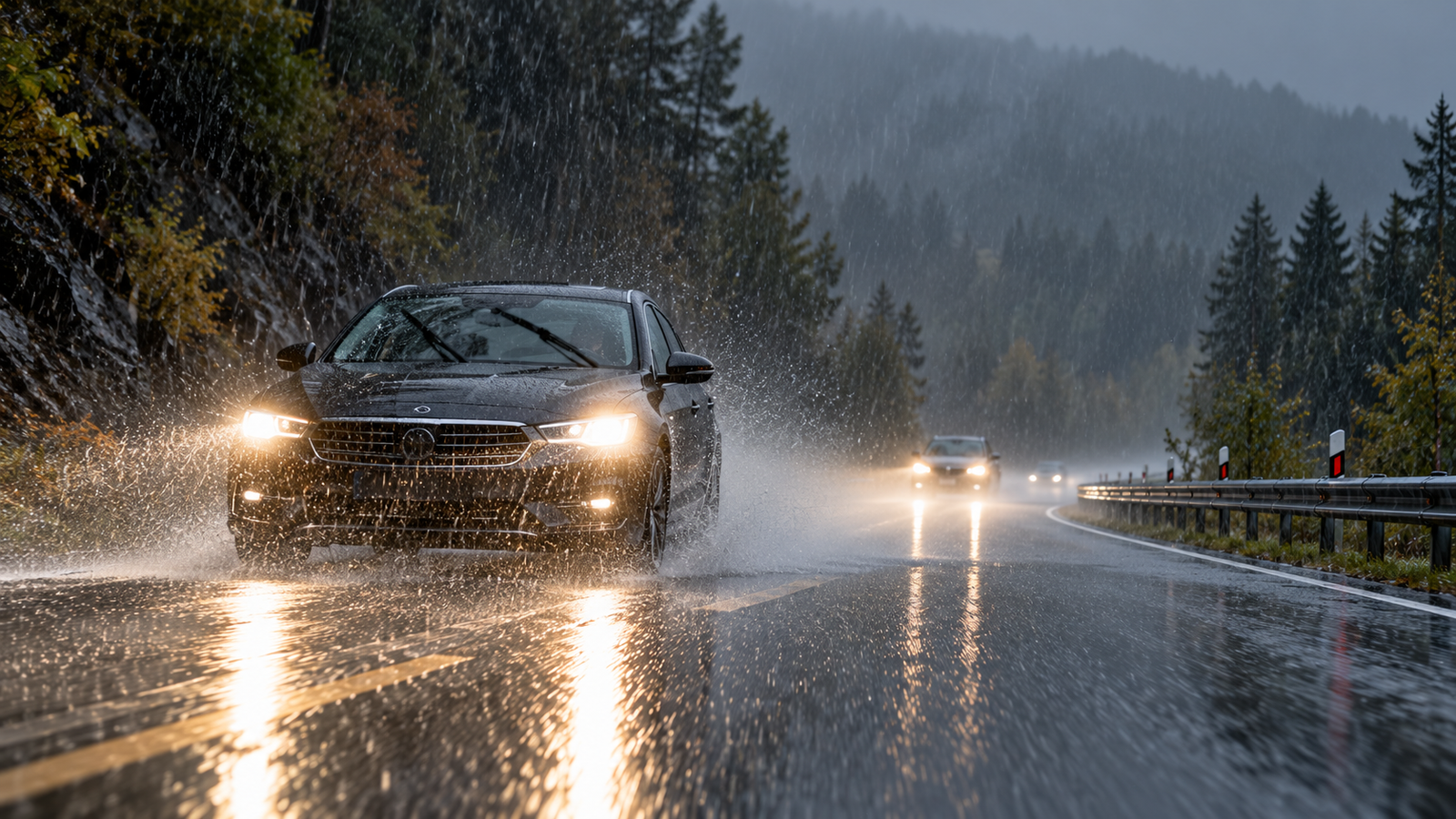
Correct use of lighting devices is both a requirement of traffic regulations and an important part of safety. Low beams are needed in tunnels and in conditions of insufficient visibility, high beams — on unlit roads in the dark when there is no interference with other drivers, and DRLs are primarily intended to mark the vehicle during the day.
Before driving, it is worth checking the serviceability of lighting equipment and taking into account driving conditions in advance. Timely switching of high beams, using the correct mode in a tunnel, and refraining from unnecessary rear fog lights allow avoiding both dazzling other drivers and claims from inspectors.
Read more materials:
- Deep tread is deceptive: how winter tires age
- 5 things to put in your car before winter
- What to check in the spare tire before the first puncture
Comments