A minute ago, the windows were clear, and now the windshield is covered with a hazy film. Visibility has sharply deteriorated, the driver tries to turn on the fan, opens the windows, or starts wiping the glass with their hand. This situation occurs especially often in autumn and winter when cold air from outside meets warm and humid air inside the cabin.
Fogging itself does not always indicate a car malfunction. More often, the reason lies in increased humidity in the cabin or improper operation of the ventilation system. However, if the windows regularly fog up without an obvious reason, it is worth checking the car more carefully: sometimes a heater or cooling system malfunction is hidden behind this problem.
Why do windows fog up at all?
Condensation forms when humid cabin air comes into contact with the cold glass surface. The higher the humidity inside the car and the greater the temperature difference between the cabin and the outside, the faster water appears on the windows.

In autumn and winter, conditions for this are especially frequent: it's cold and damp outside, heating is on inside, passengers release moisture when breathing, and water and snow from shoes and clothes additionally enter the cabin. A properly functioning ventilation system gradually removes excess moisture, but if the air is poorly renewed or there is too much water source, the windows start to fog up again and again.
Where does excess moisture come from?
The most obvious source is people. Each passenger constantly emits heat and moisture when breathing, so after several people get in, the humidity in a small enclosed cabin can quickly increase. This is especially noticeable in cold or rainy weather when the temperature difference between the glass and the air inside the car becomes maximal.
Wet items create no less problems. Snow from shoes melts, water remains on the mats, wet jackets and umbrellas evaporate moisture already inside the car. Moreover, the driver may not notice the problem: the mat looks almost dry on top, while under it or in the floor insulation, water may remain, which gradually evaporates and maintains high humidity in the cabin.
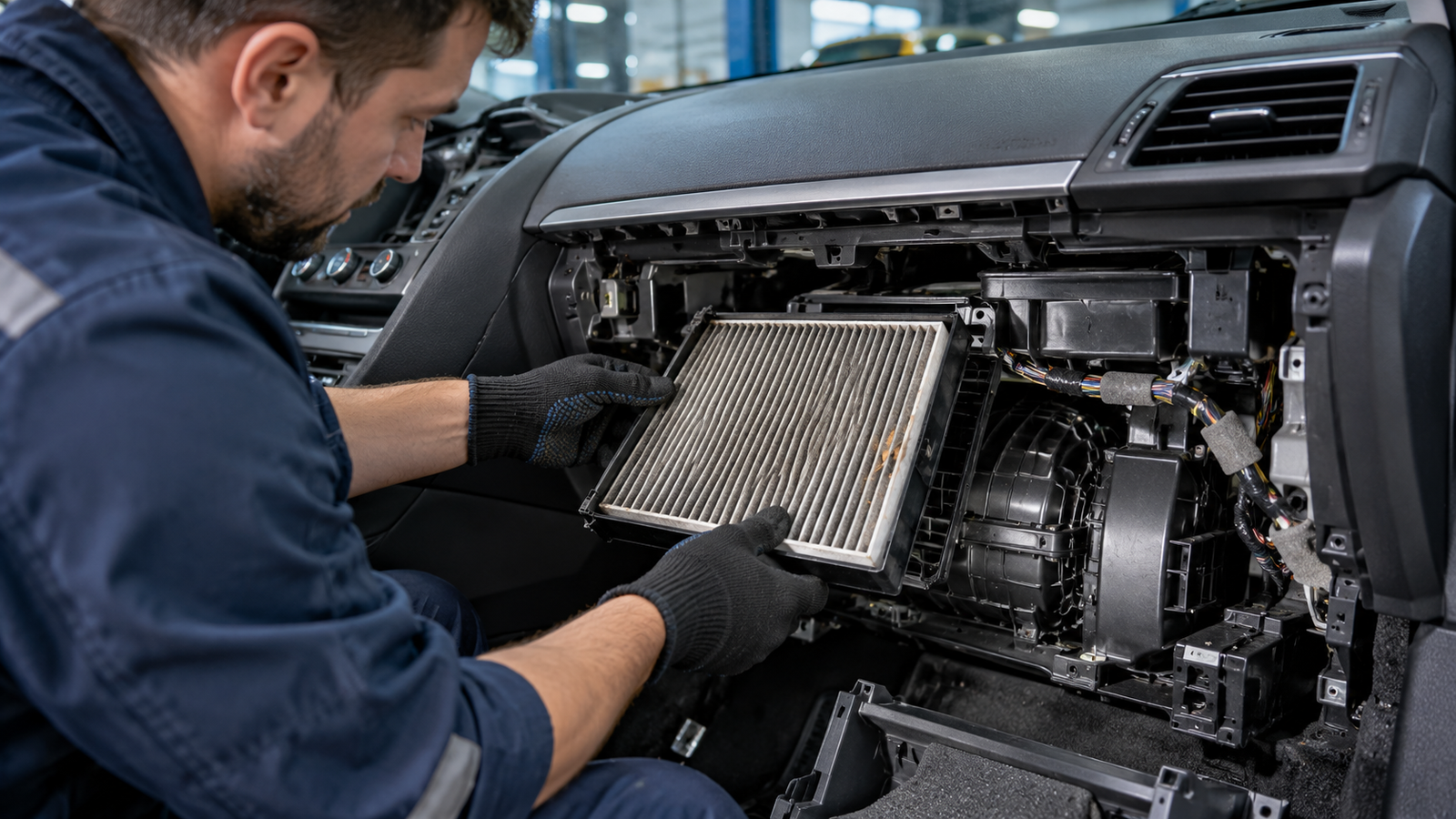
Another common reason is the cabin filter. A clogged filter restricts airflow through the ventilation system, which means the cabin is ventilated more slowly and moisture is removed less effectively. Therefore, if the windows are constantly fogging up, the condition of the filter should be checked first.
Recirculation can worsen the situation
One of the most common mistakes is prolonged driving with recirculation on. In this mode, the system primarily circulates air inside the cabin, practically not taking in fresh air from outside.
For short-term use, recirculation is quite useful, for example, when you need to quickly reduce the ingress of external odors or dust. But if there is already a lot of moisture in the cabin, constant circulation of the same air works against the driver: passengers continue to release moisture, and there is practically nothing to remove it outside.

If windows fog up under normal conditions, you should turn off recirculation and ensure outside air enters. This is especially relevant in autumn and winter.
Rain and fog also affect
Sometimes there is no malfunction – the car is simply operated in difficult weather conditions. During rain and fog, the outside air contains a lot of moisture, so the ventilation system has to simultaneously combat high humidity outside and the moisture added by people inside.
Therefore, rapid fogging after getting into the car during rain is not in itself a sign of a breakdown. In such a situation, it is especially important to properly adjust the ventilation and direct the airflow to the windshield.
When the cause may be antifreeze
A completely different situation arises if an unusual translucent coating or greasy streaks appear on the inner surface of the glass. One possible reason could be a coolant leak in the heater area.
Normal condensation, after drying, does not leave a characteristic oily film. Traces of coolant can remain on the glass and become noticeable again when the heating is on. In such a case, simply wiping the glass will not solve the problem: it is necessary to check the cooling system and heater elements.
It is especially important not to delay diagnosis if the coolant level simultaneously decreases or a characteristic smell appears inside the cabin.
Why the problem gets worse in winter
In winter, the glass can be so cold that moisture first condenses on its inner surface, and with a further decrease in temperature, it freezes. Therefore, after overnight parking, some motorists find ice not only outside but also inside the cabin.
A one-time appearance of a small amount of condensation after people get into a cold car is quite explainable. But if the inner surface of the glass has to be regularly cleared of ice, it is worth looking for a source of constant humidity.

First of all, you need to check the mats and floor, the condition of the cabin filter, the operation of the ventilation, and the recirculation mode. If an unusual coating appears on the glass, you will additionally need to check the cooling system and heater.
What you can do yourself
Before going to a service, it makes sense to go through a few simple steps:
- Turn off recirculation. During normal driving, outside air should enter.
- Turn on the air conditioner. It is not only used for cooling: the air conditioner evaporator dries the air passing through it, so the system helps combat condensation even in cold weather.
- Direct the airflow to the windshield. You can simultaneously increase the fan speed.
- Check the cabin filter. If it hasn't been changed for a long time or is heavily contaminated, replacing it can improve air exchange.
- Inspect the mats and floor. You need to make sure that water does not accumulate anywhere inside the car.
- Check the glass for unusual deposits. An oily film or persistent streaks require additional diagnosis.
If the problem disappears after these actions, most likely the cause was high humidity or insufficient air exchange. If the windows continue to fog up quickly, it is better to check the ventilation and heating system.
What to do if the window fogs up on the road
When visibility suddenly deteriorates, the main thing is not to continue driving as usual. The airflow should be directed to the windshield, the fan intensity should be increased, and recirculation should be turned off. If there is an air conditioner, it should also be turned on: dried air helps remove condensation faster.
Wiping the glass with your hand while driving is a bad idea. Grease remains on the surface, and then dust and dirt stick to it faster, so the problem may become even more noticeable.
Special anti-fog compounds can indeed be used as an additional measure, but before application, the glass must be thoroughly cleaned and degreased. Otherwise, the product may not have the expected effect and may even leave additional streaks.
Before a long stop, airing the cabin can sometimes help. If you equalize the temperature and reduce the amount of humid air inside the car for a few minutes, the likelihood of heavy condensation after parking decreases.
When fogging can no longer be considered normal
If the windows are covered with moisture during heavy rain, after several passengers get in, or with a sharp temperature drop, this in itself does not indicate a malfunction. You should be concerned when the problem becomes constant and occurs even with normal ventilation.
Particular attention should be paid to a combination of several signs: the glass quickly becomes covered with a film, increased humidity persists in the cabin, airflow has deteriorated, or a specific smell and coating have appeared. In such a case, the cause may be not only the filter or climate control settings but also a malfunction of the heater or cooling system.
Window fogging is not a standalone breakdown, but a consequence of excess moisture and insufficient removal of humid air. Therefore, it is worth starting the diagnosis with simple steps: check recirculation, turn on the air conditioner, assess the airflow, inspect the filter, and make sure there is no water in the cabin.
If the problem does not disappear after this, you should not delay checking the car. In this case, it is not only about comfort: a clean windshield directly affects visibility and driving safety.
Read more articles:
- Why the Chinese auto industry found itself in a price trap
- 120 years of attempts to replace the wiper: why nothing worked, even for Tesla
- VAZ-2115 Spoiler: not just a trunk decoration
Comments