Before the start of the winter season, many motorists take a set of winter wheels out of the garage and first inspect the tread. The grooves seem deep enough, the depth is about six millimeters, and most of the metal studs remain in place. A logical conclusion arises: if the tire looks normal externally, it can be used for several more seasons.
However, with the first frosts, such confidence may turn out to be mistaken. On wet or icy asphalt, a car with an outwardly quite decent set can noticeably lose braking efficiency, and ABS activation does not always compensate for the lack of grip.
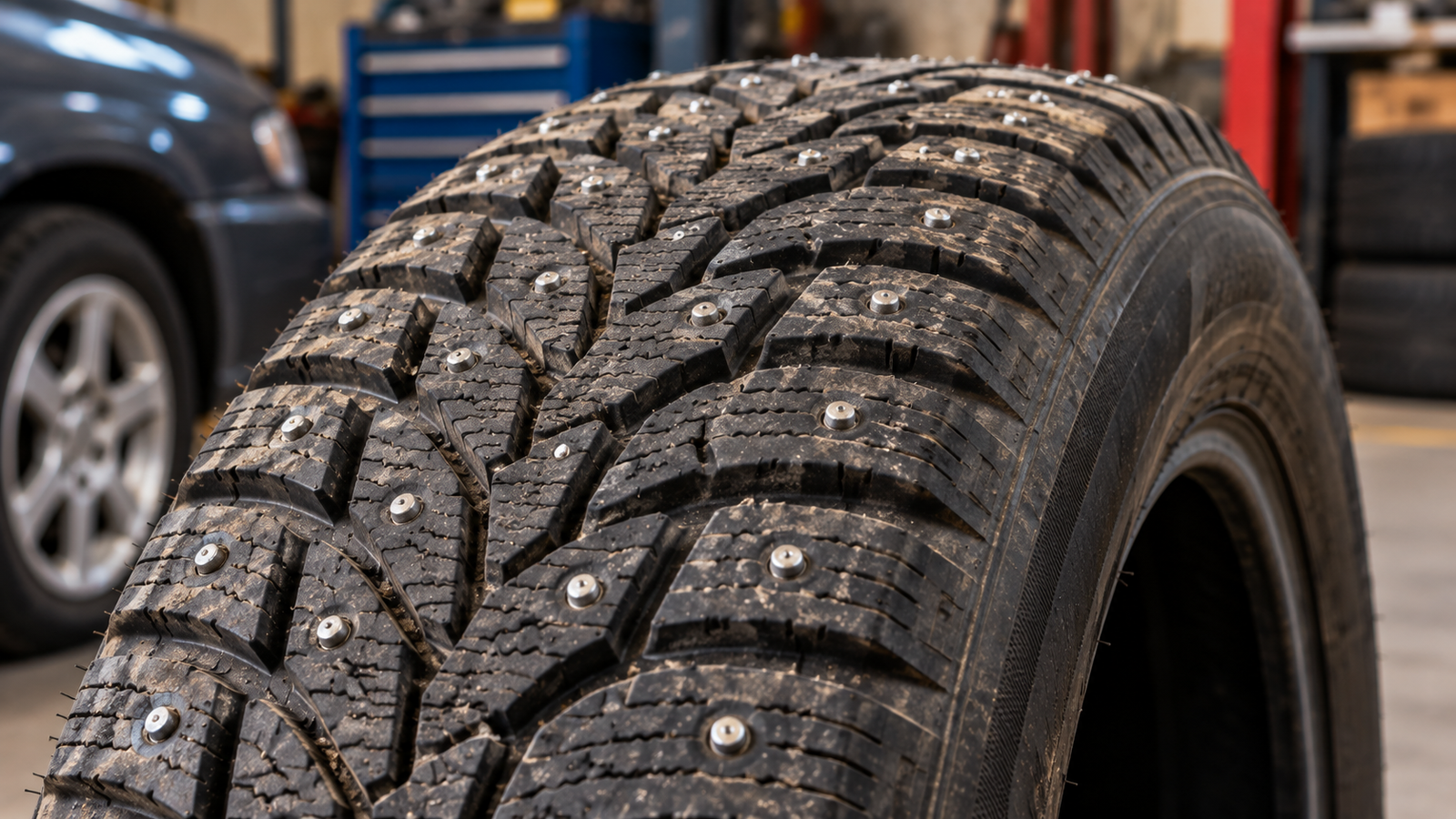
The reason is that the condition of a winter tire is determined not only by the residual tread depth. The rubber compound, sipes, and stud seating areas change over time, and some of these processes cannot be determined by a simple visual inspection.
How the rubber compound ages
A winter tire differs from a summer tire in the composition of its rubber compound. At low temperatures, the tread must maintain elasticity to follow the micro-relief of the road surface and provide the necessary grip.
For this, natural rubber, silicic acid, and various plasticizers, including components based on vegetable oils, are used in production. A new winter tire has a relatively low hardness on the Shore scale — approximately 50–55 units.
Over time, the effects of oxygen, ultraviolet light, and elevated temperatures accelerate the aging processes of rubber. Some components of the mixture are gradually lost, the polymer structure changes, and the tread becomes stiffer.
By the fifth year of operation, the hardness of the rubber in the example given can reach 75 units. At temperatures around zero degrees, such a tire no longer has the characteristics of a fresh winter compound and adapts worse to the micro-irregularities of an icy surface.
In practice, aged rubber can be distinguished by several signs:
- the tread becomes noticeably stiffer;
- elasticity at low temperatures decreases;
- signs of aging may appear on the surface;
- actual grip deteriorates while maintaining normal groove depth.
Therefore, the residual tread depth alone does not allow a complete assessment of the suitability of a winter set.
Why sipes stop working as effectively
Sipes play an important role in the operation of a winter tire — numerous thin cuts in the tread blocks. On a new tire, they have pronounced working edges that deform upon contact with the road surface.
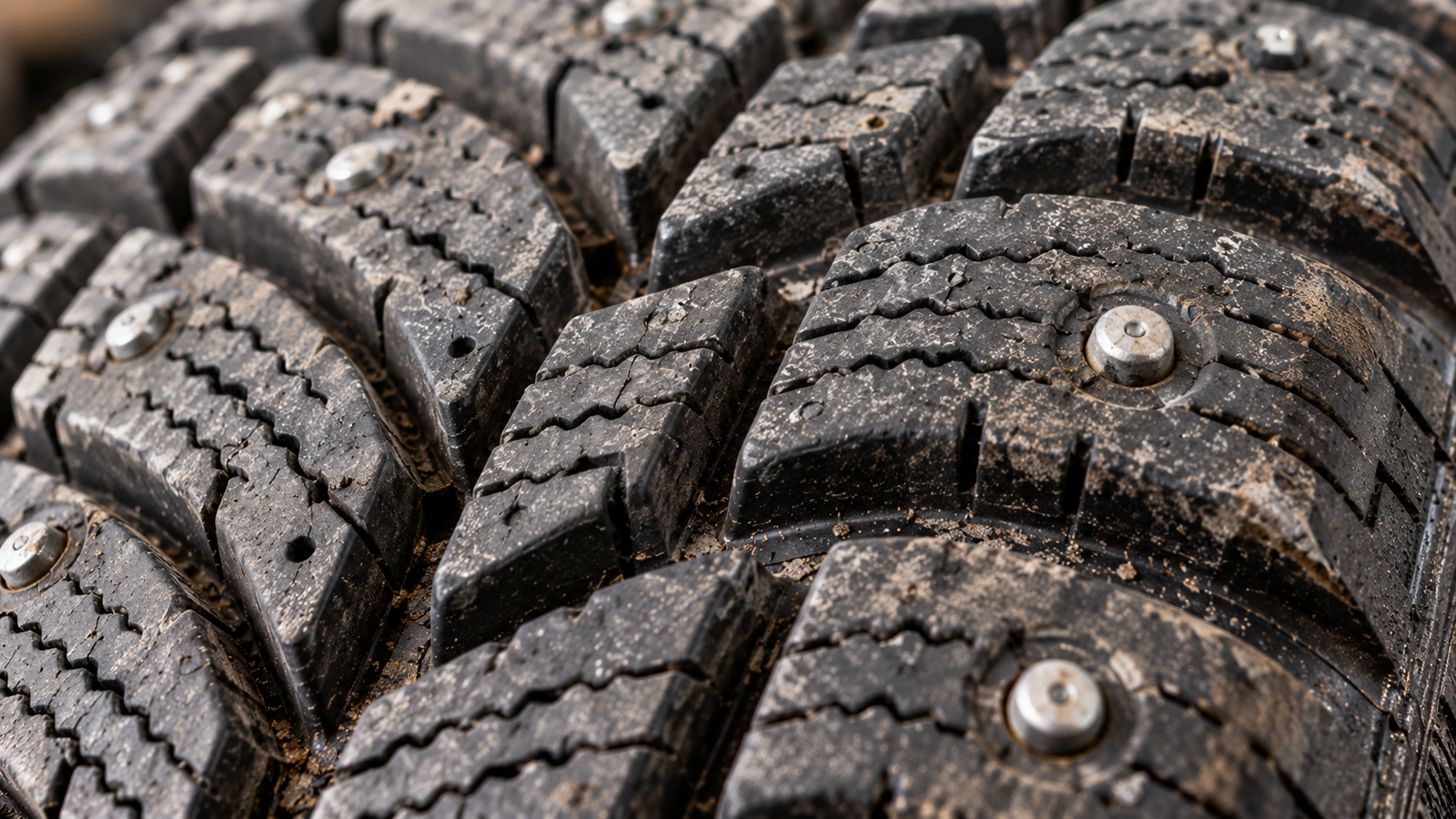
On ice and packed snow, sipes help increase the number of working edges and improve grip. They also help remove moisture from the tire's contact patch with the road.
During prolonged use, the edges of the sipes gradually wear out. This happens especially quickly with high mileage on dry asphalt, when the winter tire experiences constant mechanical stress.
As a result, the tread may retain significant depth, but its working geometry already differs from that intended by the manufacturer. Rounded edges interact worse with an icy surface, so the actual grip is lower than one might assume from the tire's appearance.
Why studs can lose effectiveness
Studded tires face a similar problem. Visually, most studs may remain in place, but this does not mean that each of them works as effectively as on a new set.
For normal operation, a stud must be securely fixed in the rubber and maintain the correct position relative to the road surface. During repeated accelerations and braking, the load is transferred to the rubber around the seating area, gradually increasing its wear.
Over time, the seating hole can become loose, and the rubber around the base of the stud can deform and be damaged. Additional impact is caused by sand and road dirt that get into the seating area.
As a result, the stud may develop play or tilt. Then the carbide tip no longer occupies the optimal position relative to the ice surface and cannot work with the same effectiveness.

When evaluating studded tires, it is therefore important to look not only at the number of remaining studs, but also at the condition of their seating.
How to determine the age of a winter tire
Before the season begins, it is worth checking the production date of each wheel. It is indicated on the tire sidewall as part of the DOT marking.
The last four digits of the code indicate the week and year of manufacture. The first two digits correspond to the week number, the next two to the year.
For example, the marking 4220 means that the tire was manufactured in the 42nd week of 2020, i.e., approximately in October 2020.
However, the age of a tire cannot be assessed solely by its external condition. Even if the tire has been stored for a long time and hardly used, the aging processes of the rubber compound continue.
When choosing between continued use of an old set and its replacement, a combination of factors matters: age, storage conditions, mileage, condition of the tread, sipes, and studs.
How to check a tire yourself before the season
A preliminary assessment of the set's condition can be carried out even before visiting a tire shop. To do this, it is enough to carefully inspect the tread and check its elasticity.
There are several simple actions:
- Assess the elasticity of the tread. At temperatures around zero degrees, you can press a fingernail into a tread block. Severely hardened rubber will deform poorly and feel significantly stiffer than a fresh winter tire.
- Check the studs. Several studs in the central part of the tread can be gently wiggled with your fingers. They should not have noticeable play or easily retract into the rubber.
- Inspect the sipes and tread blocks. It is important to pay attention not only to the depth of the grooves, but also to the condition of the working edges, the presence of cracks, and signs of general rubber aging.
- Find the production date. The four digits at the end of the DOT marking allow you to determine the week and year of manufacture of a specific tire.
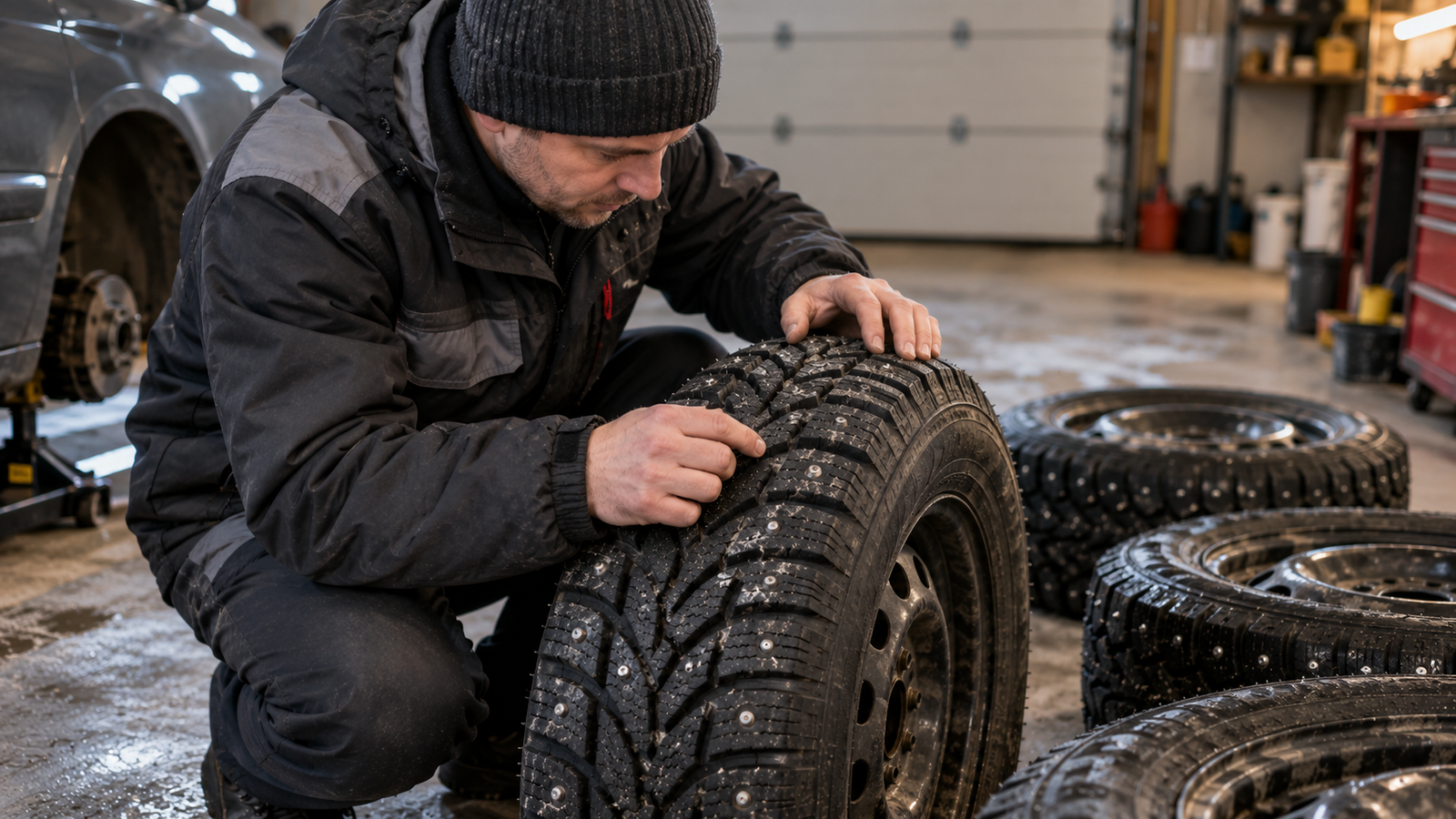
Thus, deep tread and intact studs do not yet guarantee normal grip on a winter road. The rubber compound becomes stiffer over time, sipes wear out, and stud seating areas can lose their initial rigidity.
Therefore, before the season begins, it makes sense to evaluate winter tires comprehensively. If the set has noticeably lost elasticity, has damage, or the studs are poorly held in the tread, its further operation requires particularly careful assessment. In icy conditions, the condition of the tires directly affects the car's ability to slow down effectively and maintain control.
Read more materials:
- Why the gas pedal controls air, not fuel
- Why lithium-ion batteries have not replaced lead-acid batteries in cars
- Inline-six: how the engine balances itself
Comments