Translated with AI from the Russian original.
In the year KamAZ produced its one-millionth truck, only 129 passenger cars were assembled at the same plant. These were subcompacts about 3.2 m long with a two-cylinder engine producing less than 30 hp. They were assembled in a separate bay of the delivery building, with initial plans to produce up to 20,000 cars a year.
The project was conceived in Tolyatti, but production was slated across three enterprises at once. In Naberezhnye Chelny and at VAZ, plans called for assembling 20,000 cars a year each, with another 10,000 at the Serpukhov Automobile Plant. For KamAZ, which specialized in heavy trucks, a passenger subcompact was an unusual addition to the production lineup. However, the USSR at the time was seeking to increase the output of affordable cars for the public, and the truck giant was tasked with mastering the new model.
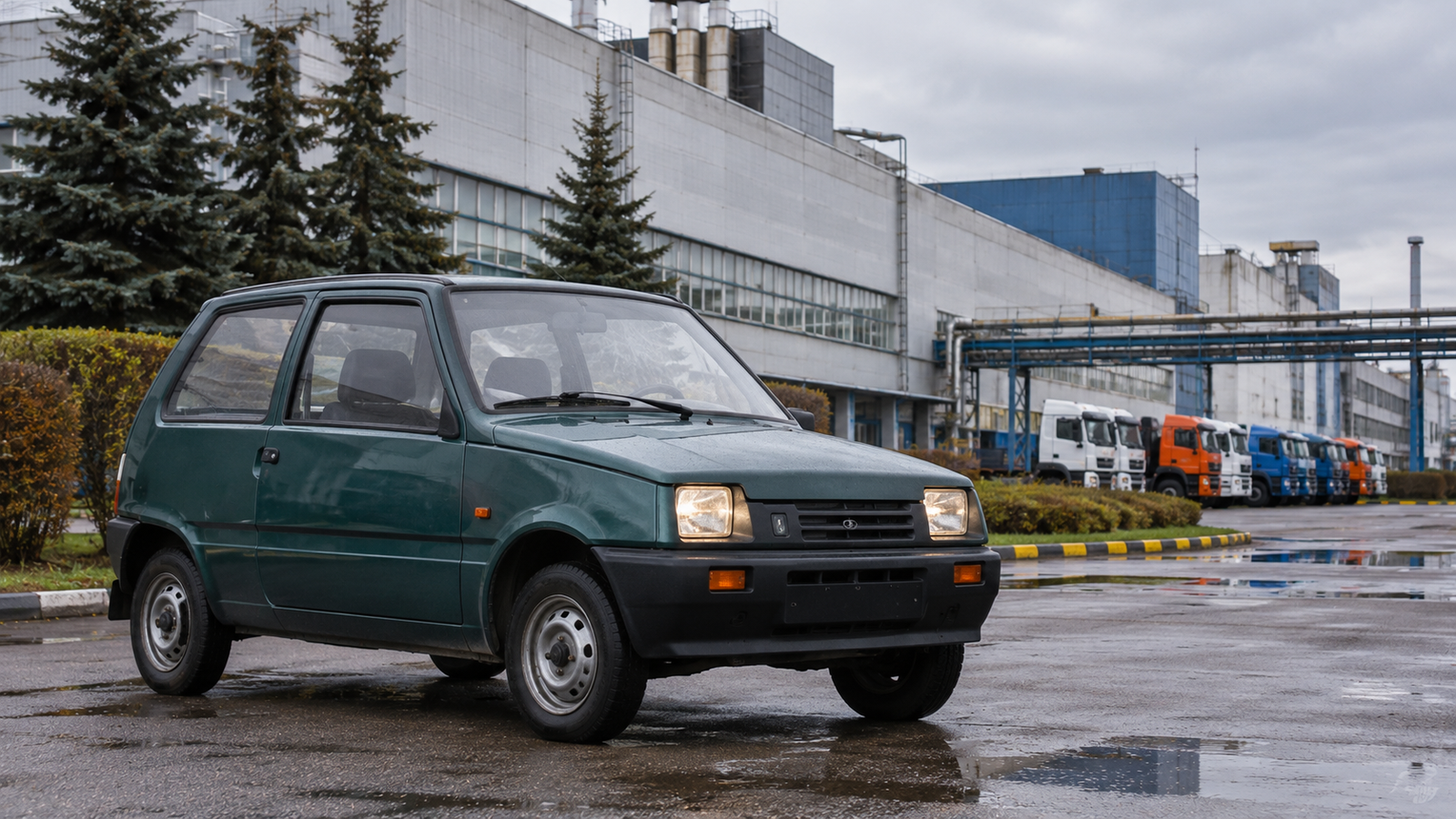
KamAZ had attempted to create its own subcompact even before the mass-produced Oka appeared. An experimental car with a 23-hp engine was named Mishka—after the youngest son of chief designer Vladimir Barun. But it was the VAZ design that went into production. The first Chelny Oka was assembled in late 1987, with KamAZ launching mass production earlier than Tolyatti. The plant tried to promote the name Kama, but ultimately the car was officially named Oka, associated with the Serpukhov plant and the river on which the town is located.
In parallel, a gigantic complex was being built not far from Naberezhnye Chelny in Yelabuga. An unfinished tractor plant was intended to be turned into an enterprise producing up to 900,000 subcompacts a year. However, the project proved too massive for the economy of the era. Yelabuga lacked the necessary workforce, and calculations pointed to enormous costs for urban and infrastructure development. Mass production of the Oka never began there, and the facilities were later repurposed for other manufacturing operations.
How the Oka survived a fire and the KamAZ crisis
In 1993, a massive fire broke out at KamAZ, destroying part of the engine manufacturing operations. The plant was restored in about a year and a half, but the recovery costs were staggering. Meanwhile, the passenger car division continued to develop. In 1994, it gained a separate building and became an independent enterprise—the Small Car Production Plant, or ZMA.
Soon VAZ became a co-owner of ZMA. At the same time, Tolyatti gradually phased out in-house production of the Oka: in 1995, VAZ halted its assembly, retaining only the manufacturing of engines and a number of components. ZMA became the primary manufacturer of the subcompact, while body panels for the entire program were manufactured by the KamAZ press and frame plant. Consequently, problems in the production of stamped parts immediately affected vehicle assembly in Naberezhnye Chelny and Serpukhov.
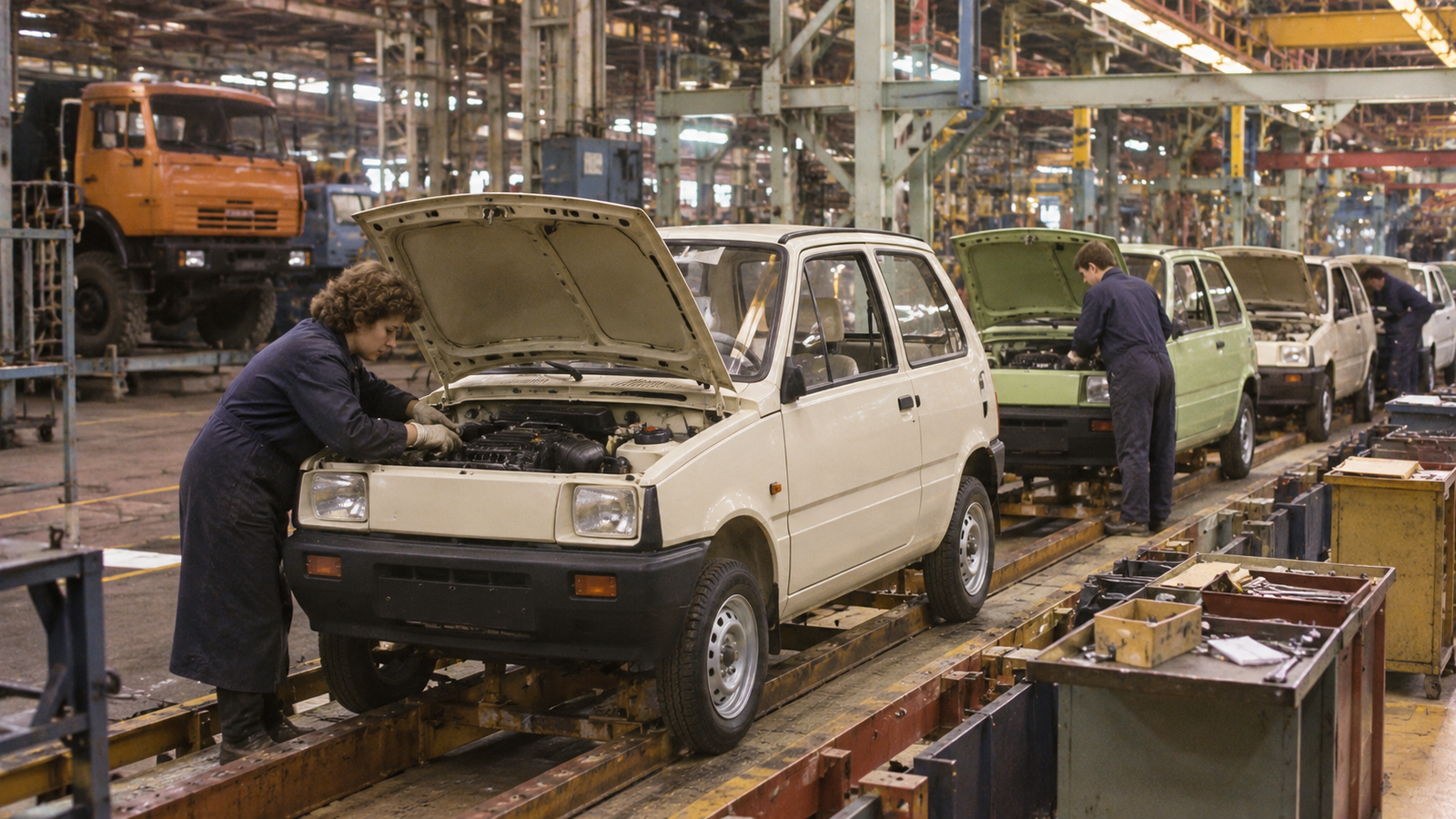
At the same time, the Chelny-built Okas were considered to have poorer interior trim quality than the cars from Tolyatti, which was attributed to the nature of the production setup. KamAZ had been created as a heavy truck plant, whereas passenger car requirements differed noticeably. Concurrently, the Oka itself was becoming rapidly more expensive. In 1995, its price surpassed $3,000, while production remained unprofitable: for every ruble of output, ZMA spent around 1.05–1.06 rubles. Reaching break-even required an output of roughly 30,000 cars a year.
The Oka surpassed KamAZ trucks
In late 1997, the fate of KamAZ hung in the balance: the enterprise had accumulated massive debts, and creditors were pursuing its bankruptcy and sale. A government commission arrived in Naberezhnye Chelny to decide the plant’s fate just as ZMA was marking ten years since the start of Oka production. The state decided to support production of the subcompact with a loan, counting on strong mass-market demand.
In early 1998, KamAZ’s main assembly line came to a virtual halt. Over the entire year, the plant assembled just over 3,000 trucks. Meanwhile, ZMA produced around 20,000 Okas—more than six times as many. A paradoxical situation emerged: during the most difficult period for KamAZ’s core business, its passenger car division was operating far more actively than the truck assembly line.
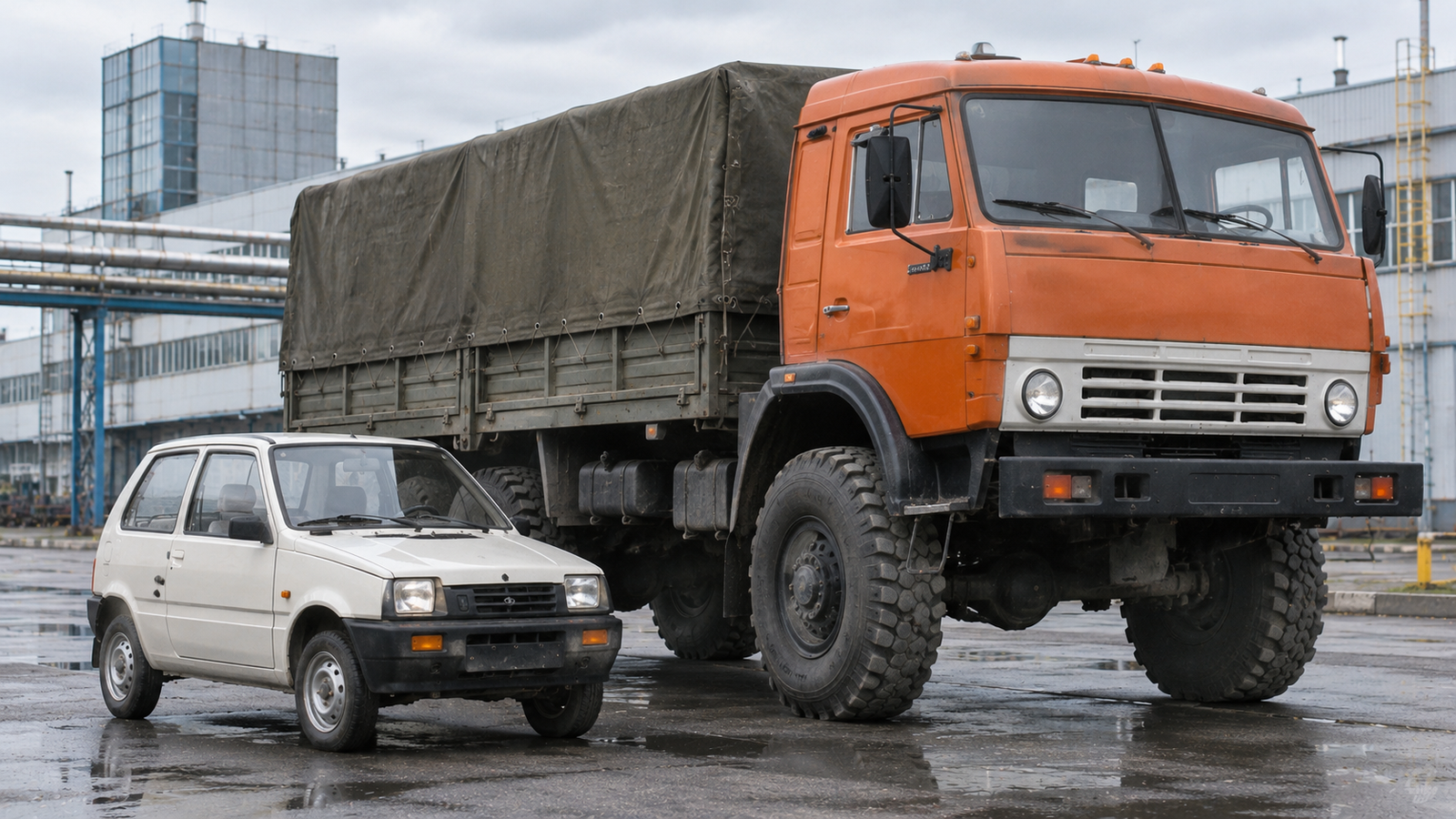
Following the default, the price of the Oka dropped to around $1,500, making it even more appealing to buyers. Output in Chelny continued to climb: in 2004, ZMA assembled 41,200 subcompacts. However, further expansion was constrained by engine supplies from Tolyatti. In 2000, VAZ could build no more than 52,000 such engines annually for both plants, whereas sustainable operations across both factories required significantly higher vehicle volumes.
Why Oka production in Chelny was shut down
In 2005, ZMA came under the control of Severstal-Avto. The new owner needed production capacity to assemble SsangYong vehicles, so the fate of the Oka was virtually sealed. The decision was made to discontinue the subcompact, in part due to tighter environmental regulations.
To comply with Euro-2 standards, the car required a different engine, and there was no suitable Russian powertrain for the Oka. Using an imported unit, in turn, would have stripped the car of its primary advantage—its low price.
The final 4,300 Chelny-built Oka cars were manufactured under a government welfare contract, after which production in Naberezhnye Chelny was permanently terminated in 2006. Dealers, still seeing steady demand for the inexpensive subcompact, shifted their focus to Serpukhov. Meanwhile, the former ZMA plant was already retooling: instead of the tiny Oka, larger and more expensive SsangYong Rexton SUVs rolled onto its assembly line.
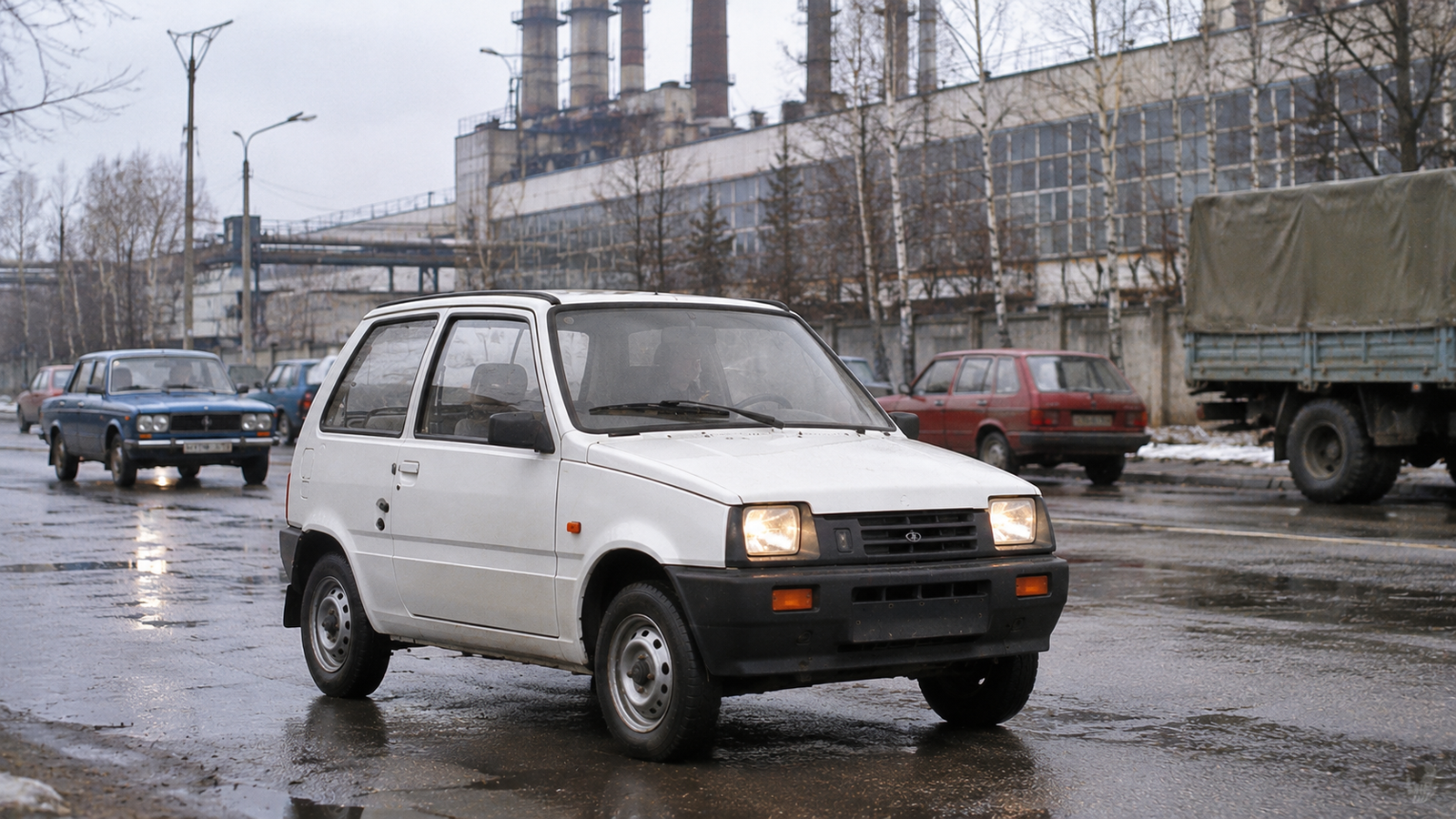
The story of the Oka at KamAZ turned out to be paradoxical. A passenger car initially imposed on the plant as an auxiliary social program became, in the late 1990s, one of the company’s few stably functioning operations. However, dependence on engine deliveries, low profit margins, and changing vehicle standards ultimately rendered the project incompatible with the plant’s new economic reality.
Read more articles:
- A car blocked the driveway in the yard: how to find the owner without facing criminal charges
- Citroën DS was ahead of its time: why the French car got a single-spoke steering wheel
- Battery in the trunk: what are the advantages and drawbacks of this unusual layout