Translated with AI from the Russian original.
A tire blowout at high speed is one of the most dangerous situations for a driver. The vehicle can pull sharply toward the damaged wheel, and an attempt to slam on the brakes immediately can further compromise its stability. Much depends on which wheel is damaged, the suspension design, the type of tires, and the driver's actions in the first seconds after the blowout.
When a tire fails, its lateral stiffness drops sharply, and rolling resistance increases. The damaged wheel begins to create significantly more drag than the intact wheels, producing a yawing moment. If a front tire is damaged, the driver may feel a strong tug on the steering wheel in its direction, while a rear tire failure can cause the car to sway and spin out.
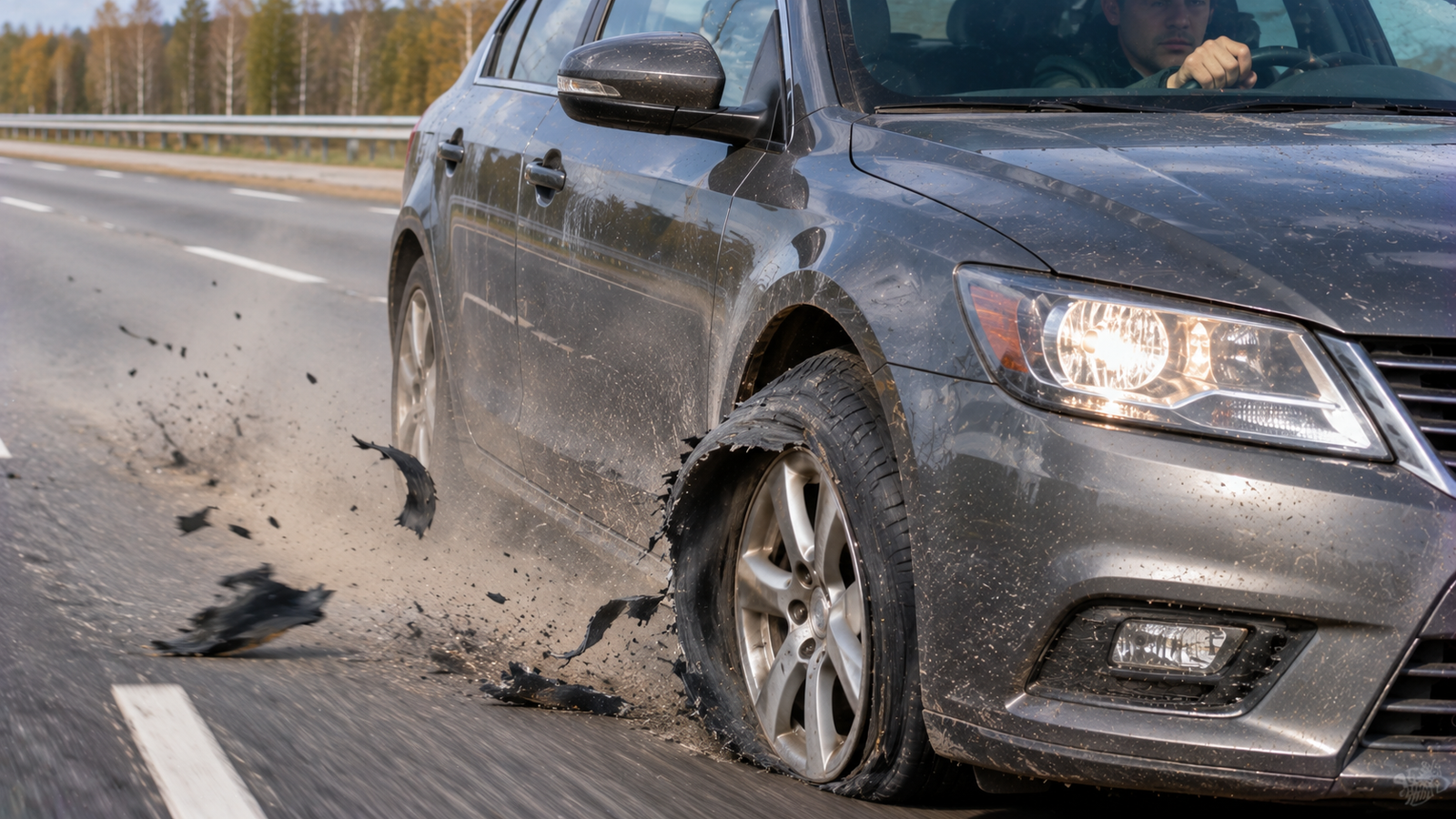
The effect is most pronounced at high speeds. Sudden braking in this scenario increases the load on the front axle and can exacerbate the pull, while wheel lockup further diminishes the ability to control the trajectory.
The driver's primary task in the initial moments is to prevent a sharp change in course. The steering wheel must be held with both hands, avoiding sudden movements, and the brakes should be used with extreme caution. If the vehicle is equipped with cruise control, it should be disengaged. Speed should be reduced smoothly, allowing the car to stabilize before gently transitioning to braking.
Pulling over to the shoulder immediately after the blowout is also not advisable: with a damaged tire, the car may handle road surface changes poorly, so it is safer to first stabilize your trajectory and reduce speed, then smoothly pull over to the edge of the road with your hazard lights on.
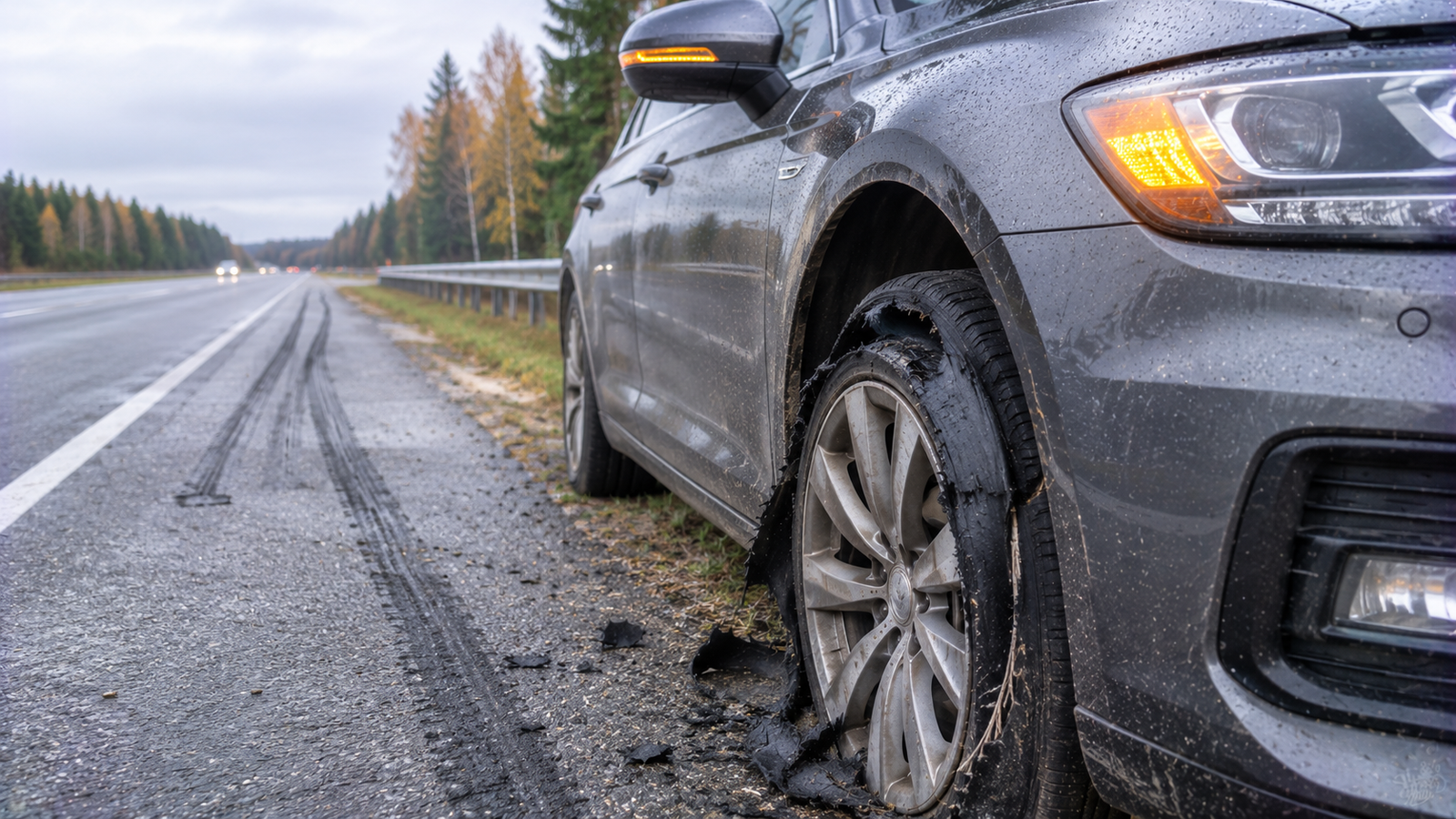
Modern ABS and ESP systems can provide significant assistance during a tire blowout, as the electronics can independently apply individual wheel brakes to correct the vehicle's trajectory. However, they cannot override the laws of physics or replace the driver's actions.
Tests have shown that a car does not necessarily lose control immediately after a tire blowout: the danger spikes specifically during a panic reaction—hard braking or erratic steering. Therefore, in the event of a blowout at speed, the most crucial thing is to maintain direction, avoid abrupt maneuvers, and bring the vehicle to a gradual stop.
Read more articles:
- Summer spare tire in winter: will you be fined for a single wheel without winter rubber
- Summer tires on snow: why MTPL might not cover all damages
- Where a car costs more than an apartment: how Singapore, Denmark, and Ethiopia inflate car prices