Translated with AI from the Russian original.
After freezing rain, a car can become covered in a thick crust that locks the doors, freezes to the windshield wipers, and impairs visibility. The main mistake in such a situation is trying to quickly break the ice by force. A sharp yank on a door handle can damage the mechanism or weatherstripping, an attempt to turn on frozen wipers can damage the electric motor, and a metal scraper can leave scratches on the body and glass. It is best to start clearing by inspecting the car and removing loose snow, and then gradually warming the necessary surfaces using the vehicle's standard systems.
If the door does not open, first make sure that the central locking is unlocked, and then try opening another door. When ice holds the door panel along the seal contour, you should not pull the handle sharply. Sometimes pushing gently inward on the door helps—this crushes the thin layer of ice around the seal.
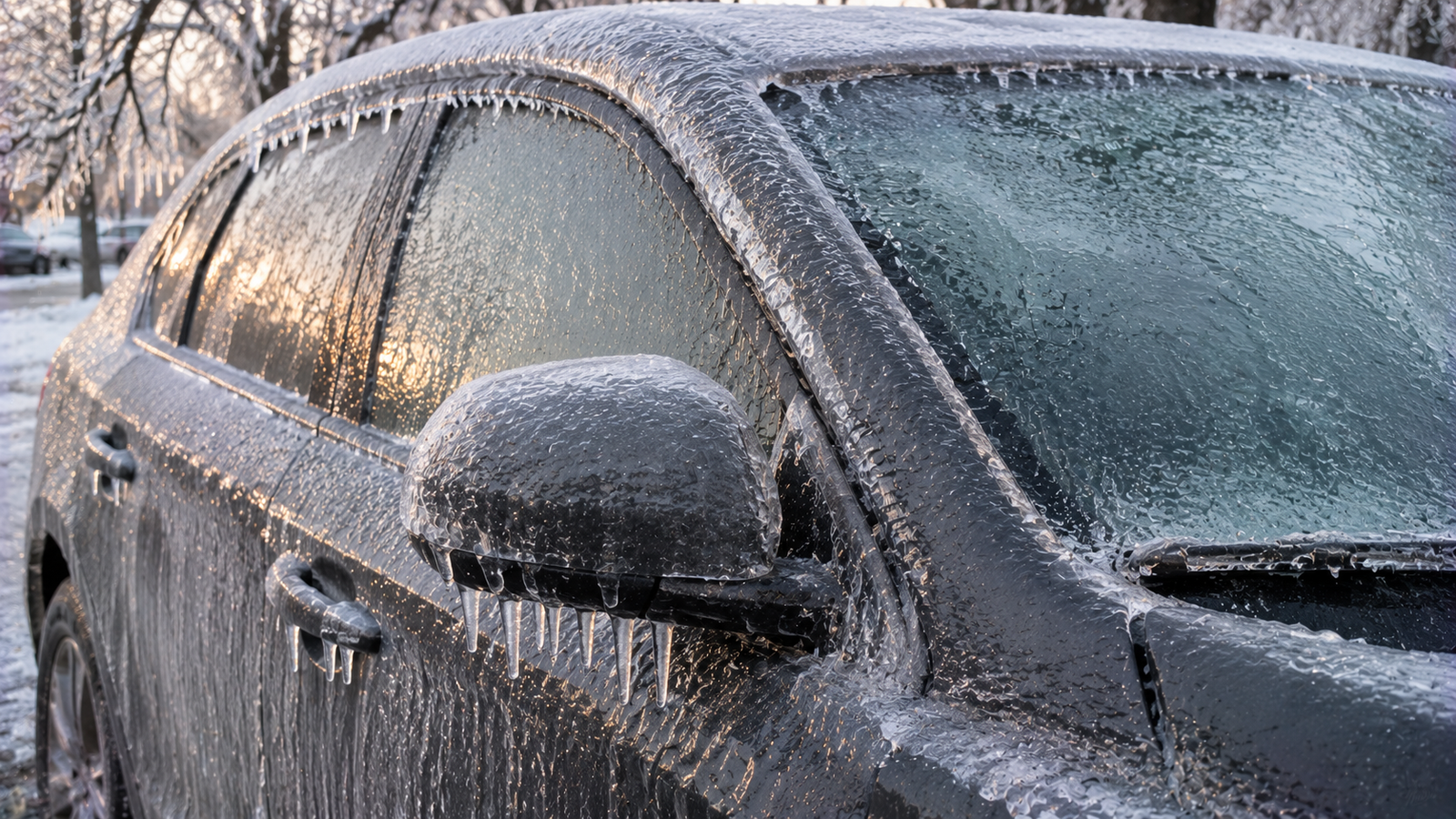
For locks and thick ice, you can use an automotive de-icer according to the instructions. Once inside the cabin, you should turn on the heater and direct the airflow to the windshield, as well as activate the standard rear window and mirror defrosters, if equipped. You should not try to immediately lower side windows frozen to the weatherstrips using the power window switches.
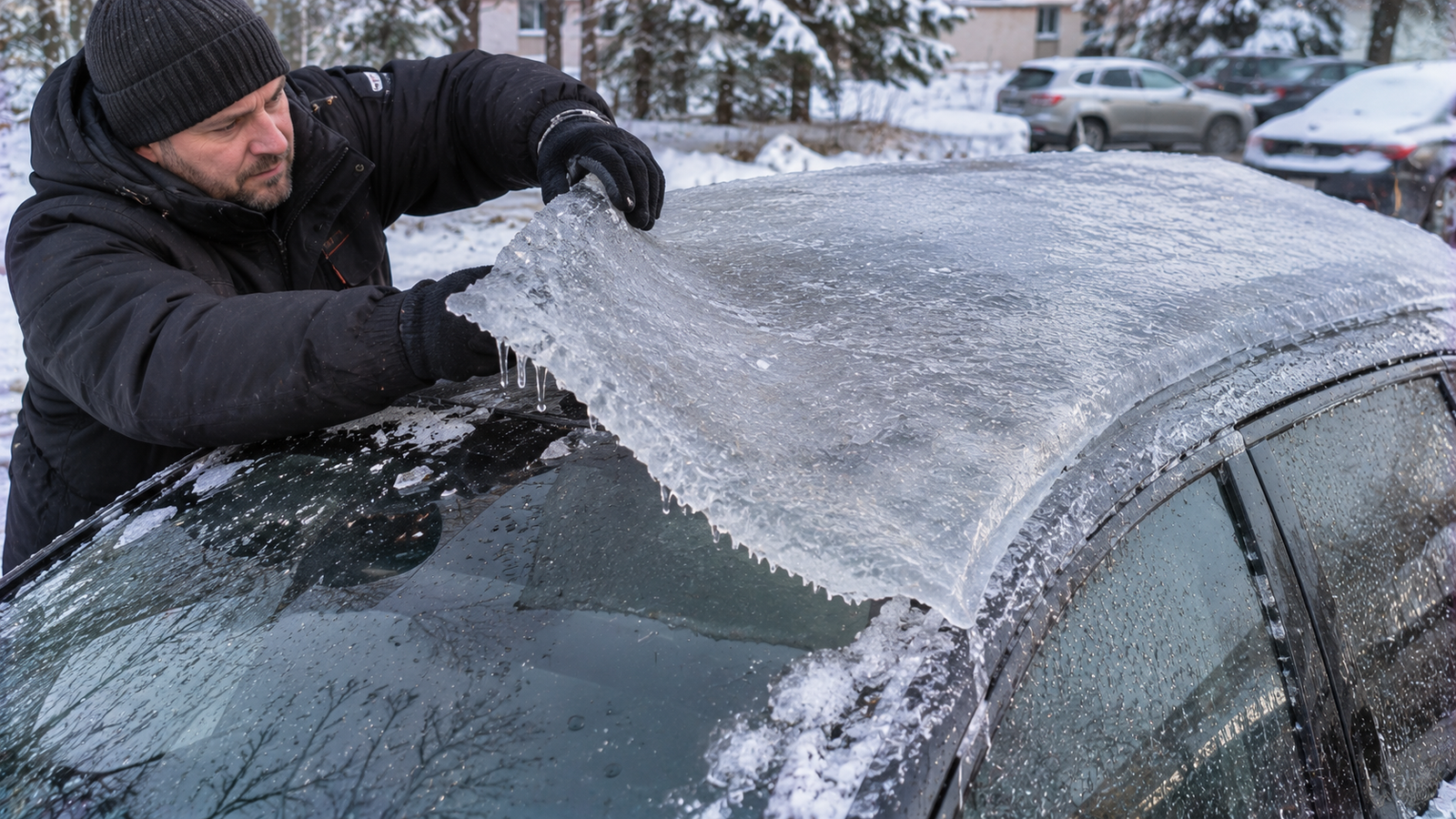
Windows are cleaned after the ice begins to soften. First, remove snow and loose particles, then apply a de-icing solution and carefully remove the remaining ice with a plastic scraper. It is best not to rush with the car body: a thick crust should not be pried off with sharp objects or scraped off vigorously, as you could damage the paint along with the ice. An ice sheet on the roof is especially dangerous.
Before driving, it must be removed, because when braking it can slide onto the windshield, and while driving it can break off and create a hazard for other road users. You should also clean headlights, taillights, cameras, parking sensors, mirrors, and license plates.
You should not use boiling water, metal objects, gas torches, or heat guns to remove ice. A sudden local temperature change can damage glass or plastic parts, and metal tools can scratch surfaces. The situation is similar with a household hair dryer: a moderate stream of warm air can help with certain areas, but you must not overheat glass, plastic, or rubber parts.
Before setting off, make sure that the windows are completely clear, the wipers move freely, the wheels and brake mechanisms are not seized by ice, and the exhaust pipe of an internal combustion engine vehicle is not blocked by snow or ice. If the car cannot start moving freely because of ice, do not attempt to force it loose by hitting the gas.
Read more materials:
- Tire blowout at speed: why you should not brake hard and what to do
- Summer spare in winter: will you be fined for one wheel without winter tires
- Summer tires in the snow: why OSAGO might not cover all damages