Modernization of production has been completed at the Belarusian Belgee plant. The changes affected the welding and painting shops.
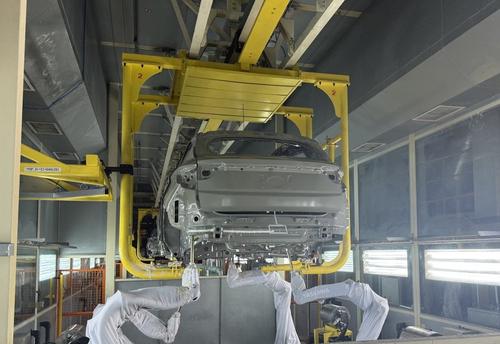
Welding shops have new equipment for welding and stud welding, as well as additional posts.
The number of manual processes has decreased, including thanks to two new robots. Robots for painting openings, applying primer, closing and opening doors, hood and trunk lids have been added to the painting shop.
Some of the procedures that were previously performed manually have been transferred to a fully robotic mode. Two robots were used to apply sealant to the sills, four robots perform tasks to seal welds, and four robots were added to apply anti-gravel coating. Thanks to this, the human error factor was completely eliminated during these operations.
After the modernization, the number of robots at the BelGee plant was increased from 10 to 43 units. The measures taken made it possible to increase car production from 15 to 30 units per hour.
Read our other materials:
Do it yourself: how the idea of assembling a Kit Car turned into a full-fledged production?
Sports car in the body of a kei car: Autozam AZ-1
Russian sports car from the 2000s: the difficult fate of the Tagaz Aquila project
Comments