The flagship crossover Geely Galaxy M9, positioned as a competitor to Li Auto L9, has caused a stir in the Chinese market. In the first 24 hours after the start of accepting orders on September 17, 23 thousand purchase requests were recorded. This reflects the high demand for spacious family hybrids with advanced technologies, where Geely offers a balance of price and equipment, emphasizing the brand's leadership in the new energy vehicle segment.
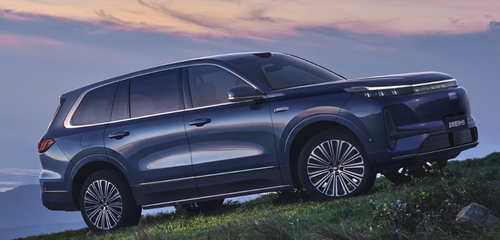
The model is available in six trim levels, priced from 173.8 to 238.8 thousand yuan (approximately 2.05-2.8 million rubles). The dimensions are 5205 × 1999 × 1800 mm with a wheelbase of 3030 mm, providing a spacious 6-seater interior with efficient use of space at 88.3%. Front-wheel drive versions are equipped with a hybrid powertrain with a capacity of 408 hp and a range of up to 1505 km, including 230 km on electricity. The top all-wheel drive version develops 870 hp, accelerating to 100 km/h in 4.7 seconds, with a total range of up to 1300 km.
The equipment includes the Qianli Haohan H5 autonomous driving system based on 27 sensors, a 32-inch projection display and a 30-inch media system screen. The second row stands out for its comfort with ventilated and massage seats, and the suspension with double cameras adjusts the ground clearance by 95 mm.
Read more materials on the topic:
- Production of new XCite cars in Russia suspended
- Updated Belarusian crossover Belgee X70 started selling in Russia
- Russian importers suspended accepting applications for cars up to 160 hp
Комментарии