While global automakers are transitioning to hybrid powertrains and electric vehicles, two high school graduates from Pennsylvania, USA, have proposed an unusual way to make cars with internal combustion engines more environmentally friendly. Rohan Kapoor and Jack Reichert, both 18, developed the Go Green Filter device, which is installed on the exhaust system and uses living microalgae to process harmful substances.
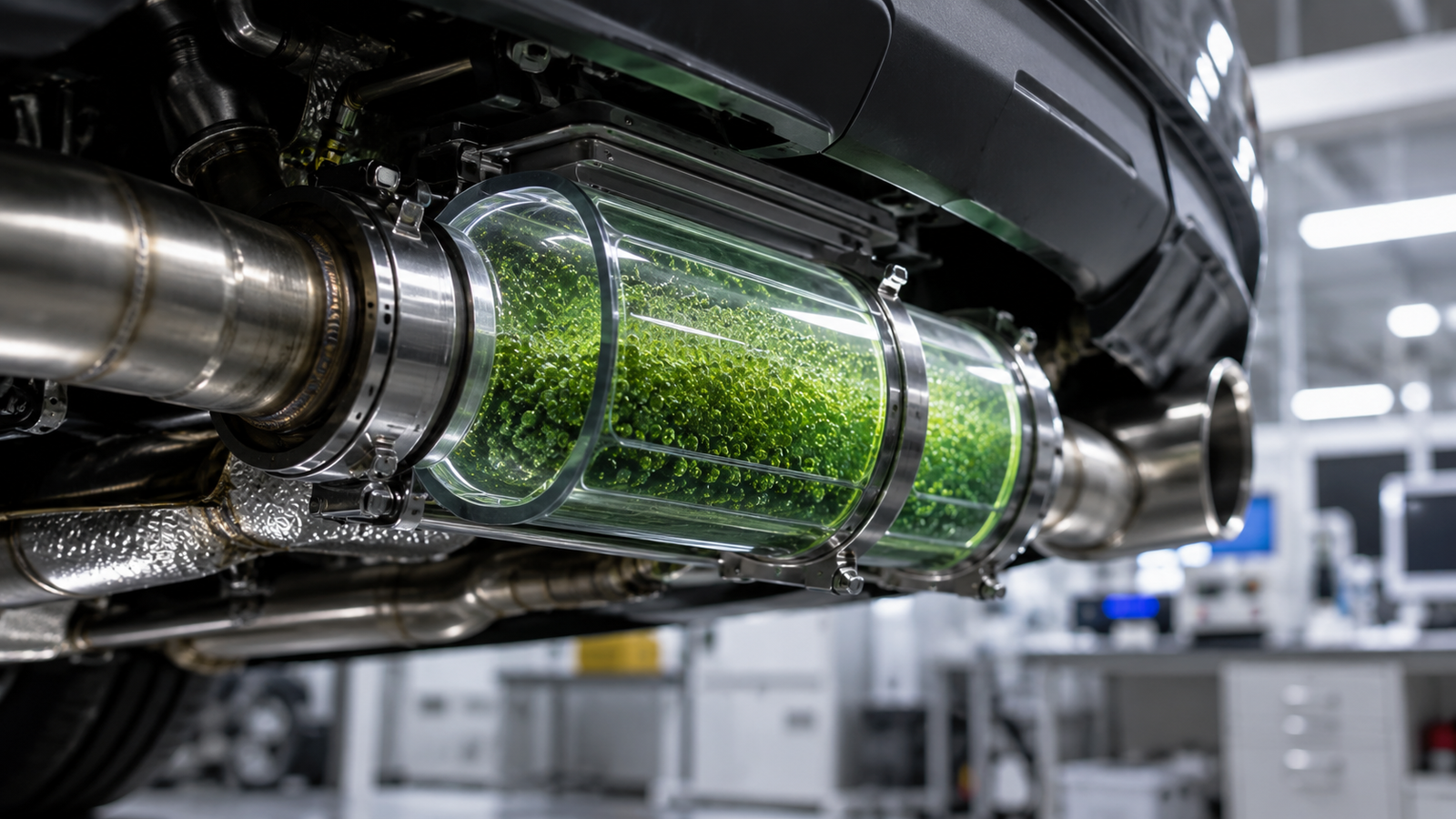
The principle of operation is based on the natural process of photosynthesis. Inside the filter are microalgae, water, and a light source. While the engine is running, they absorb some of the carbon dioxide from the exhaust gases and release oxygen. According to the developers, the idea came after studying research by MIT specialists.
Creating the first working prototype took almost a year. Test results showed that the device reduced harmful emissions by approximately 74%. The estimated cost of the filter is about 50 dollars, making the technology potentially accessible for mass production. The authors also suggest that widespread implementation of such systems could significantly reduce global carbon dioxide emissions, but this assessment remains theoretical and requires independent verification.
The interest in such solutions is understandable. Major automakers continue to look for ways to preserve internal combustion engines while reducing their environmental impact. Mazda is developing a system for capturing carbon dioxide directly while driving, while BMW, Toyota, and Lamborghini are exploring the possibilities of using synthetic and renewable fuels.
It is not yet known whether the Go Green Filter will reach the market, but this project shows that innovations in environmental technology can emerge not only in large research centers but also through the initiatives of young engineers.
Read more articles:
- BMW for the first time compared electric M3 with gasoline: the company has already named a favorite
- Geely showed Galaxy Cruiser 700: an SUV with five screens, 1113 hp, and preparation for serious off-road
- Subaru is preparing a new iteration of sports models: the company is changing its approach to STI development
Комментарии