On August 25, Melexis entered into a Master Purchase Agreement with BYD, becoming a direct supplier to the Chinese automotive giant within its global procurement system. The financial terms of the deal were not disclosed.
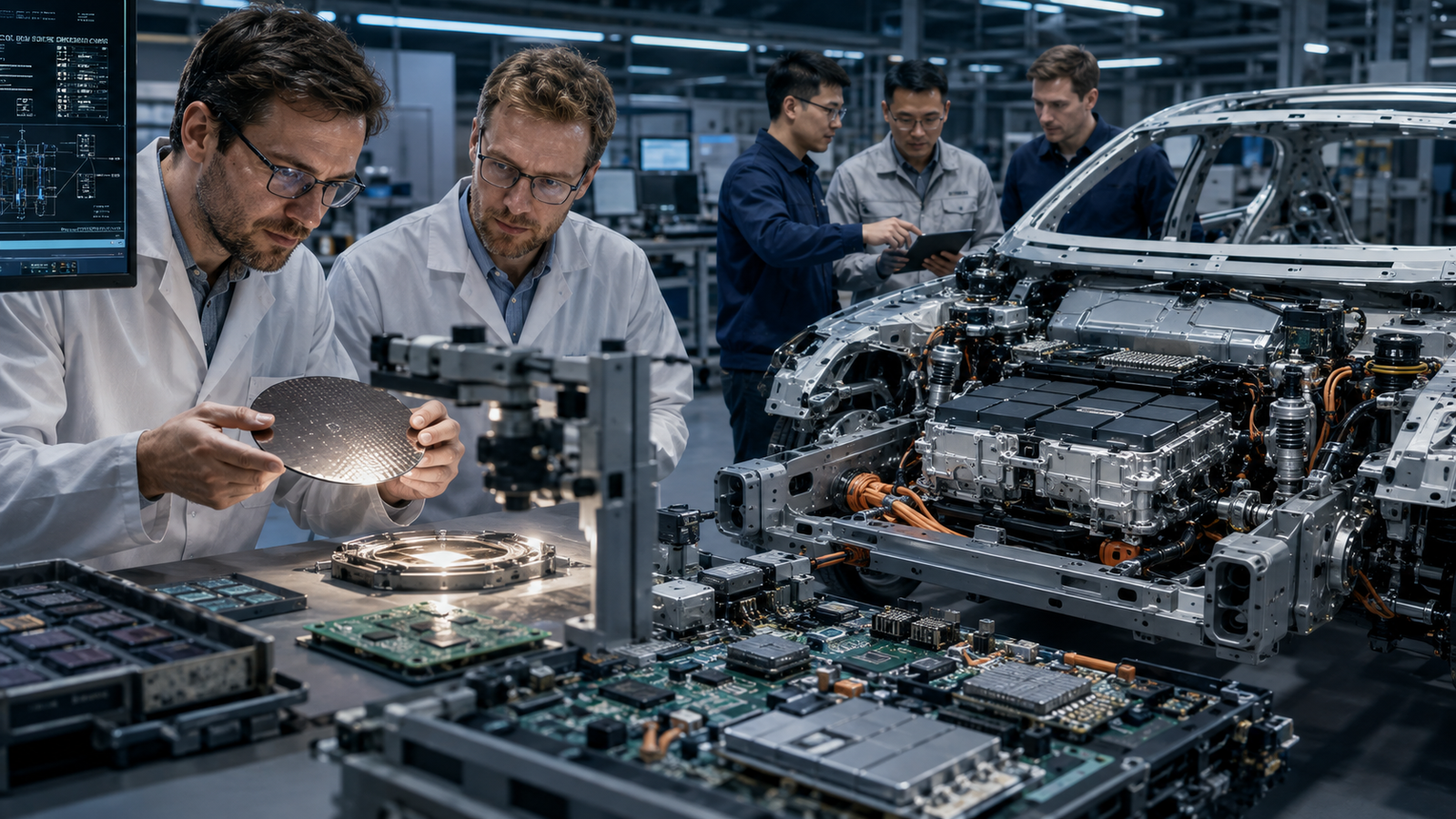
Melexis specializes in automotive microchips and sensors. The company claims that, on average, a new car uses about 18 of its chips. They monitor the position of mechanisms, temperature, current, and pressure, transmitting data to the car's electronic systems.
Previously, Melexis supplied components to BYD through Tier 1 manufacturers: chips became part of a finished module and then went to the car factory. The new agreement eliminates this intermediary. Now BYD directly purchases components from Melexis, and engineers from both companies can work directly with each other.
Moreover, this is not about one specific system. The agreement covers powertrains, thermal management, batteries, brakes, steering, and lighting. In addition to automotive components, Melexis will supply solutions for industrial automation and robotics.
Another circumstance is particularly indicative for Europe. BYD has already started serial production at its factory in Szeged, Hungary, where it initially plans to produce about 200,000 cars per year. The first model was the Dolphin Surf. The agreement with Melexis is not directly tied to the Hungarian plant, but BYD's expansion of production in Europe creates additional demand for local suppliers.
And this is not an isolated case. Chinese automakers are building factories in Europe, and with them, they are forming their own supply chains. As a result, European companies can profit from the growth of Chinese brands even when European automakers themselves are losing market share.
Read more materials:
- BMW taught a car to block the door before a cyclist
- Xiaomi started looking for dealers in Europe: car launch scheduled for 2027
- Chery brings new brand Lepas to Europe: electric L6 gets 449 km range