Volkswagen is preparing to cease car production at four German sites. However, this does not yet mean the immediate closure of the plants. The plan envisages the end of production of current models, after which their successors are to be transferred to other group factories. Volkswagen's Supervisory Board is expected to consider the proposal on September 3-4, so there is no final decision yet.
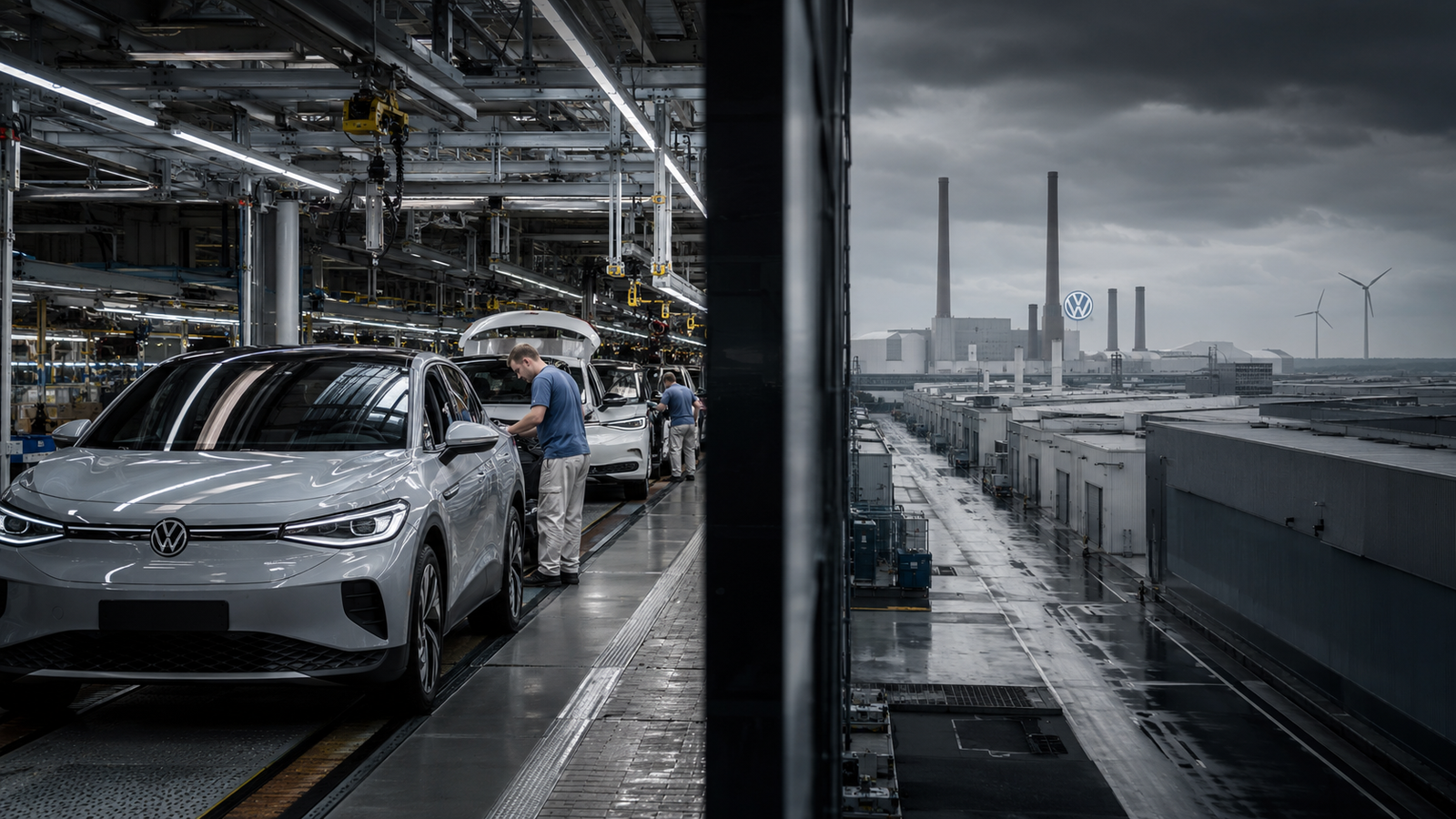
Around 40,000 jobs are at risk, and the combined production capacity of the four sites is approximately 750,000 cars per year. Zwickau currently produces the Volkswagen ID.3, ID.4, and ID.5, Cupra Born, and Audi Q4 e-tron. Emden produces the ID.4, ID.7, and ID.7 Tourer, Hanover produces the ID. Buzz and Multivan, and Neckarsulm remains one of Audi's key plants.
The fate of the Zwickau plant is particularly symbolic. Volkswagen spent about 1.2 billion euros on re-equipping the plant exclusively for the production of electric vehicles. The plant became fully electric in June 2020. Now the concern is considering the possibility of stopping car production there as early as 2031 – just 11 years after the completion of a large-scale transformation.
The reason is not so much Volkswagen's abandonment of electric vehicles as the cost of their production in Germany. The concern is trying to reduce costs and reallocate production capacity to where car production is cheaper.
It is indicative that all four future successors have already received new sites. The next ID.4, designated as ID.Tiguan in documents, is planned to be produced at the Škoda plant in Mladá Boleslav. The successor to the Audi Q4 e-tron should go to Bratislava. The new family of B-Space electric vans for Hanover will replace Poznań, Poland, and the successor to the Audi A8 after 2034 may move to Leipzig.
If the plan is implemented, it will be one of the most significant changes to Volkswagen's production structure in Germany in recent decades. And it is indicative that the reduction is not happening because the concern is completely abandoning European production, but because German plants are becoming too expensive compared to other sites within the Volkswagen Group itself.
Read more materials:
- WRC changes owners and format: new bosses want to make rallying more understandable for spectators
- Li Auto compared the new Mega to the first iPhone: the minivan received technologies from crossovers
- Lamborghini released a baby stroller for $5000: only 500 will be made