Translated with AI from the Russian original.
Mercedes-Benz is intensifying its cost-cutting program in Germany. The company's management proposes extending the work week without a proportional increase in salary. Currently, a 35-hour week applies to a significant portion of automotive industry employees, so discussing a return to 40 hours effectively means five additional hours of work.
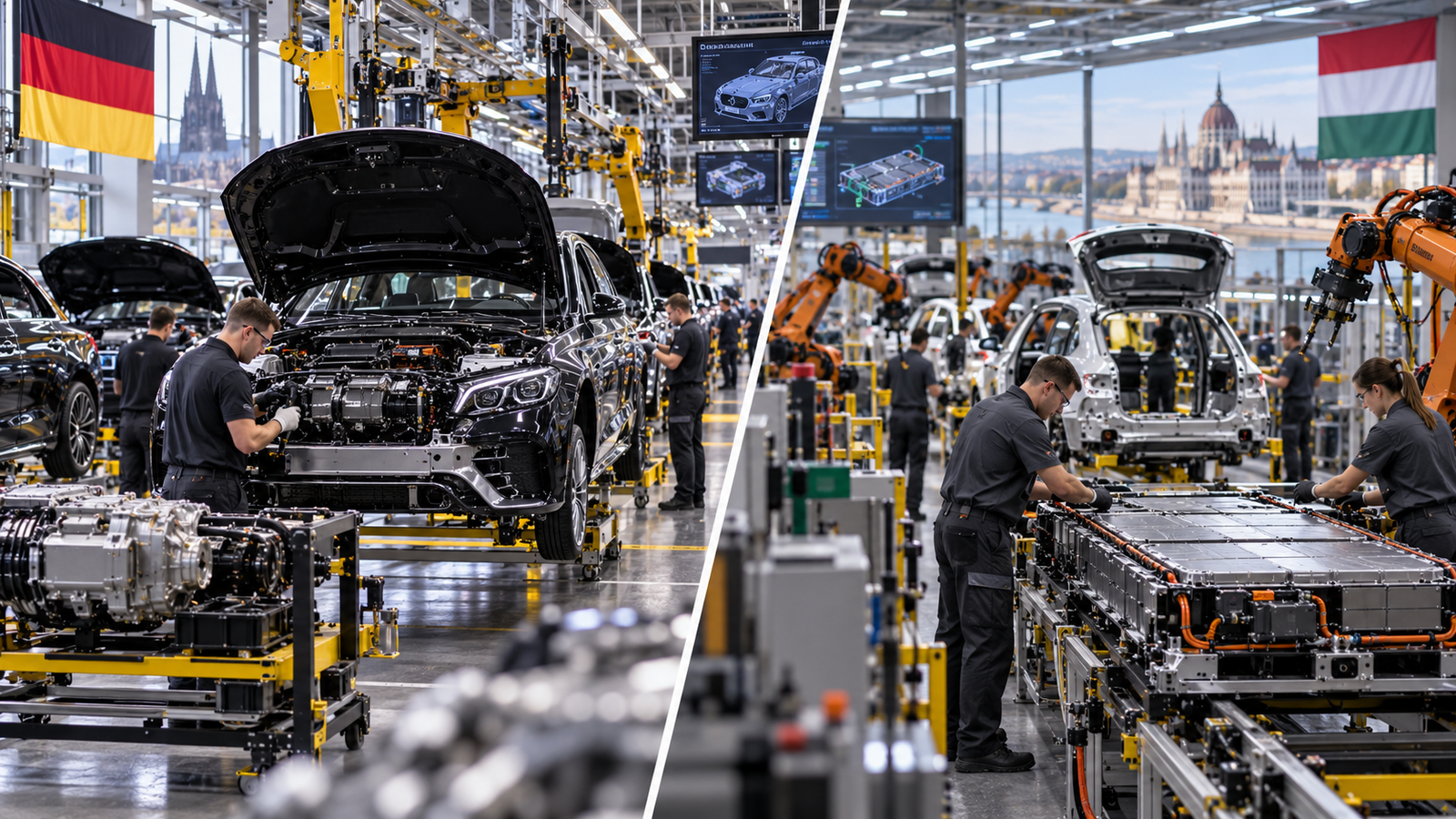
At the same time, Mercedes is already relocating part of its production to countries with lower costs. The company previously stated that factor costs at the Kecskemét production site are approximately 70% lower than in Germany. It is there that capacity is now being expanded, and the production of the electric C-Class has begun.
In 2026, Mercedes also moved A-Class production from Rastatt to Kecskemét, freeing up the German plant for future models. After expansion, the Hungarian site will be able to produce up to 400,000 cars per year.
However, there is no confirmed closure of a specific German plant yet. Mercedes has officially stated that it does not plan to close its plants in Germany but rather optimize the utilization of its production network. The company's goal is to reduce production costs by 10% from 2027 compared to 2024 levels.
For the automotive industry, this is a clear signal: production is gradually becoming distributed among sites, and digital systems allow for faster relocation of a model's production to where its manufacturing is cheaper.
Read more materials:
- Russians May Be Allowed to Drive Their Cars to China: Five Checkpoints Named
- New Requirements for Car Safety Systems Are Being Delayed in the USA: Technologies Capable of Preventing Accidents Are Under Threat
- Volkswagen to Halve Model Range and Cut 50 Thousand Jobs: Betting on More Expensive Technologies