A comparative test of three popular sedans - Lada Iskra, Changan Alsvin, and Solaris HS - showed that the gap between them was minimal, but the emphasis was placed differently. While the Solaris HS retained its leadership in dynamics and ergonomics, the Iskra pleasantly surprised with its smooth ride and build quality, and the Changan Alsvin became the most economical, but not without compromises.
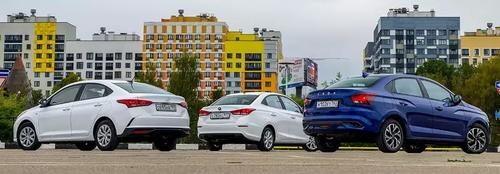
This test was especially important for the Lada Iskra: for the first time in a decade, AvtoVAZ presented a completely new model, created on a deeply modernized Renault-Nissan platform. In terms of size and price, it is positioned between the Granta and Vesta. In the top-end Techno version for 1.58 million rubles, the Iskra had to prove that a domestic sedan is capable of competing with famous competitors.
The Solaris HS is essentially the former Hyundai Solaris with a modified design and the familiar 1.6-liter engine with 123 hp and a classic "automatic". It confidently accelerates to 100 km/h in 11.6 seconds and pleases with a comfortable fit, but disappoints with noise in the cabin and a stiff suspension. The Alsvin offers a 1.5-liter engine with 98 hp and a robot with two wet clutches, providing good responsiveness, although the level of finish and sound insulation is noticeably simpler.
The Iskra in this trio stands out with its cast-iron cylinder block, reliable six-speed manual transmission, and surprisingly quiet suspension. Acceleration to hundreds is modest - 13.8 seconds, especially with the air conditioner on, but the comfort and energy intensity of the suspension on Russian roads turned out to be the best. The car smoothly passes bumps, remaining stable and predictable.
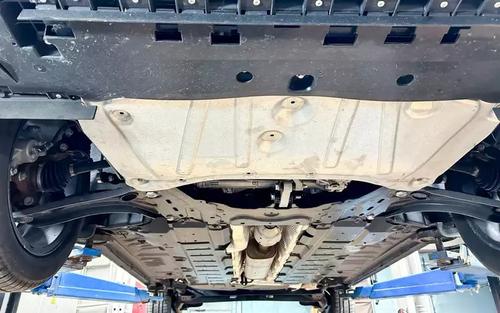
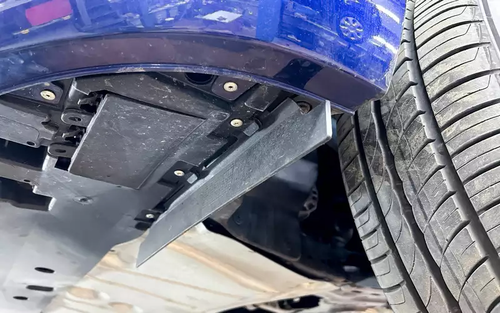
The build quality of the Lada Iskra exceeded expectations: the galvanized body (except for the roof), dense anti-corrosion treatment, and even gaps distinguish it from its competitors. The thickness of the paintwork is about 125 microns, which is more than that of Changan and Solaris. The disadvantages include hard plastic in the cabin and an unsuccessful handbrake location that interferes with the passenger.
Inside, the Iskra is greeted by a modern design and a comfortable multi-steering wheel from Vesta, heating, a media system with an 8-inch screen, and Yandex services. The ergonomics are well thought out, but there are almost no soft materials, and tall drivers lack the seat adjustment range.
The Changan Alsvin, on the contrary, looks old-fashioned and economical: a crooked steering wheel, short seats, hard plastic, and no adjustments. The sunroof and soft armrests save the situation. The Solaris pleases with a balanced interior, comfortable fit, and better visibility. In addition, it offered electric adjustment of the lumbar support and height adjustment of the belts.
In terms of handling, the Solaris turned out to be the most accurate and responsive, but also the most shaky. The Alsvin suffers from pronounced understeer and weak tires, while the Iskra demonstrates a good balance between stability and comfort, while remaining the quietest of the trio.
In the final assessment, the Solaris HS scored slightly more points than the Iskra, thanks to its well-thought-out ergonomics and dynamics, but lost in price - its cost is almost 700 thousand rubles higher. The Changan Alsvin took third place, losing in comfort and quality of materials.
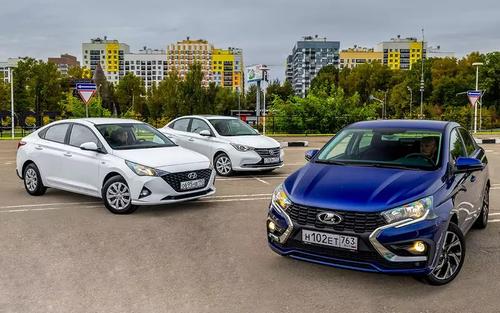
The result was in favor of the new Lada: despite some compromises in the cabin and moderate traction, the Iskra showed an excellent combination of handling, sound insulation, and suspension, which seems to be created for Russian roads. Given the prospects of the updated 120 hp engine, planned for 2026, the chances of Iskra's leadership are only growing.
Read more materials:
- AvtoVAZ Officially Explains Which Gasoline to Pour into Lada
- "Moskvich" Announces Prices for the "Moskvich 6" Sedan of the 2026 Model Year
- Tank Raises Prices for the Entire Model Range in Russia: Tank 500, 700, and 400 Become More Expensive
Комментарии