Mazda is famous for going against the grain - it creates naturally aspirated engines, rotary engines, and sports coupes when the whole world is betting on turbo and electric vehicles. But in the era of SUVs, the company decided to conquer new territory and released the flagship CX-80 - a large plug-in hybrid capable of accommodating seven people. It would seem to be the perfect compromise between practicality and the spirit of the brand. However, a lengthy test showed that this car is far from perfect.
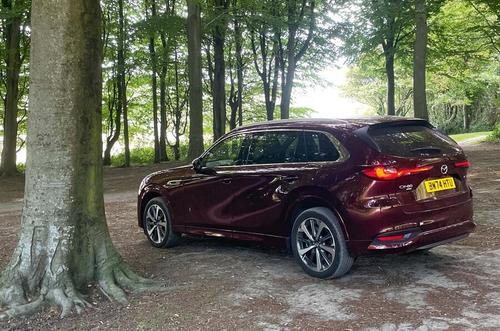
The CX-80 became a continuation of the CX-60, receiving an extended wheelbase and a third row of seats. The developers took into account the criticism of the previous model and promised to fix the problems with the suspension and transmission. On the outside, the new product looks solid and expensive, and the interior with Takumi trim is impressive - light leather, wood inserts, and soft panel material create an atmosphere of premium quality. Ergonomics are top-notch: instead of an overloaded touch interface, a classic controller and a minimum of distracting elements are used. Everything is reminiscent of Mazda's best times - functional, cozy, without ostentatious luxury.
But as soon as you turn the key, the idyll collapses. Under the hood is a hybrid installation with a 2.5-liter naturally aspirated gasoline engine, an electric motor, and a 17.8 kWh battery. The total power is 323 hp, the range on electric traction is about 60 km. In theory, this sounds attractive: the tax on benefits is only 13%, CO₂ emissions are 35 g/km, and the average consumption is 1.6 liters per 100 km. In practice, without constant access to charging, the whole point of a plug-in hybrid is lost. The CX-80 can only be charged from slow alternating current, and even the promised 11 kW often turns out to be only 3.7 kW in reality. To "feed" the battery, you have to leave the car for several hours, and the benefit in mileage is minimal.
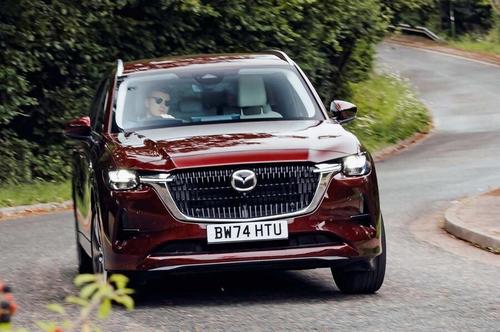
When the battery is discharged, the CX-80 turns into a gluttonous heavy crossover: the average consumption rises to 7.4 l/100 km, and the transitions between the engine and the electric motor occur with annoying jerks. During active acceleration, the 2.5-liter naturally aspirated engine sounds rough, and the transmission gets lost between modes. You expect a different kind of sophistication from a car costing over £50,000. Mazda tried to fix this with an updated suspension, but even with it, the CX-80 remains stiff and nervous on city bumps. Where the Volvo XC90 or BMW X5 maintain smoothness, the Mazda jumps and shakes like an old MX-5 with an enlarged body.
However, in fairness, it is worth admitting that the interior of the CX-80 is one of the best in its class. There is comfort and attention to detail, and high-quality materials create a feeling of handwork. There is also enough space: the second row is comfortable even for tall passengers, and the third row is suitable for children and teenagers. With the seats folded down, the trunk volume reaches almost 2000 liters - two full-size bicycles can easily fit. The only drawback is that the light fabric trim of the trunk gets dirty quickly, especially if you use the car for its intended purpose.
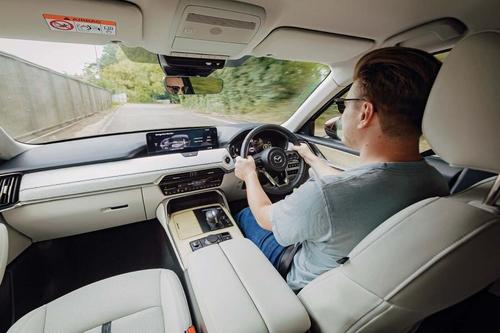
Nevertheless, the main question is whether the CX-80 feels like a real Mazda? In some ways, yes: the steering is precise, the handling is predictable, and the car demonstrates good balance in corners. But this is no longer the lively and exciting Mazda that we are used to. The CX-80 is more trying to be a premium SUV than an embodiment of the "Zoom-Zoom" philosophy. In this sense, the diesel version with a 251 hp in-line six-cylinder engine looks more honest: it is more economical, lighter and more comfortable, although it loses to the hybrid in terms of tax benefits.
The result of the test was twofold. The CX-80 is not bad - it just didn't live up to expectations. It is a spacious, beautifully decorated and technically advanced SUV that lacks the very essence of Mazda - a sense of lightness, naturalness and driving pleasure. Perhaps the company was trying to please everyone at once: environmentalists, families and business users, but as a result lost part of its individuality.
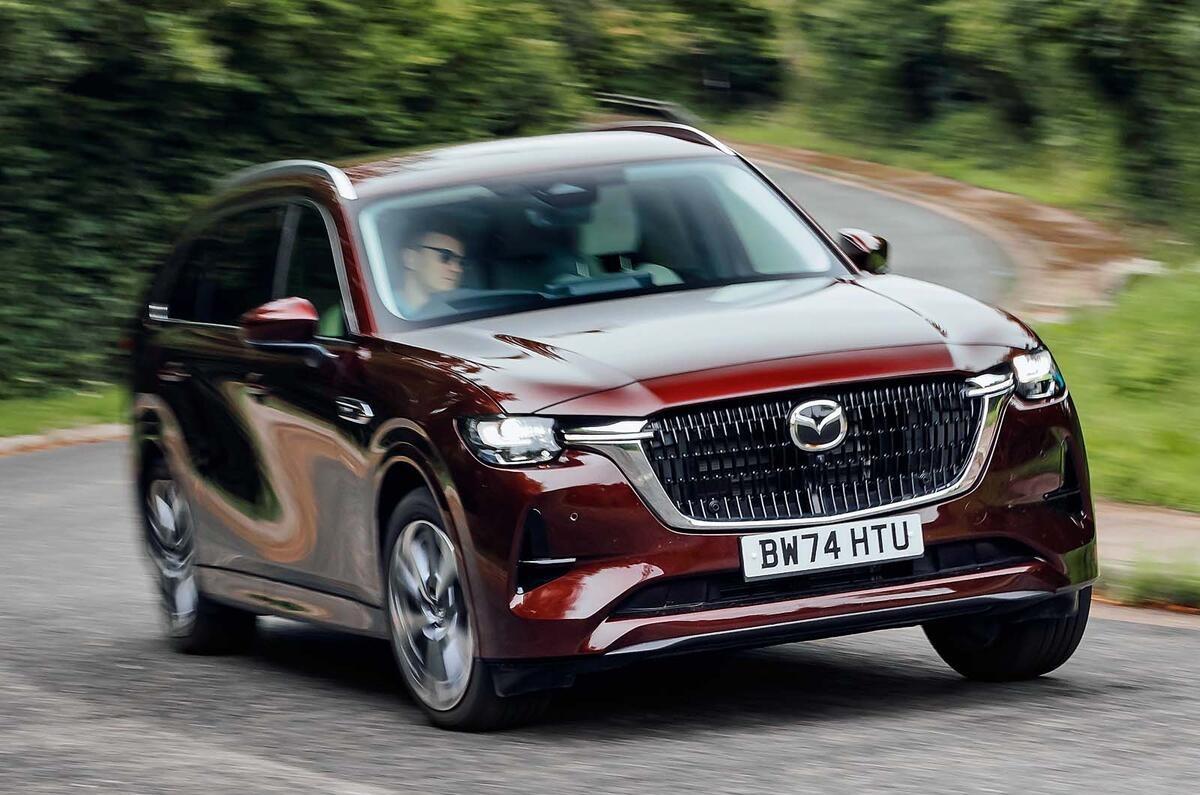
After six thousand kilometers, there remains a feeling of respect for the efforts of the engineers, but also regret that under the elegant shell is hidden a car that is not completely confident in itself. The CX-80 shows that Mazda can make large and modern crossovers, but in order for them to become truly great, it needs to remember again how to create cars that drive with the heart, not by calculation.
Read also materials:
- AvtoVAZ officially explained which gasoline should be poured into Lada
- "Moskvich" announced prices for the "Moskvich 6" sedan of the 2026 model year
- Tank raised prices for the entire model range in Russia: Tank 500, 700 and 400 have risen in price