The Tank 500 lineup now includes two hybrid versions at once, but it is the Hi-Charge (model preview on our website) that became the first truly "plug-in" one. Unlike the Urban with its tiny battery, this version uses a full-fledged traction battery that allows driving without starting the gasoline engine and charging from external sources. Visually, this Tank is almost no different from the regular one: the same imposing shape, the spare wheel on the tailgate, and a minimum of identifying details. The main feature is two flaps on different sides of the body: one hides a charging port of the Chinese GB/T standard, while the other conceals the fuel filler neck, which even accepts AI-92 gasoline.
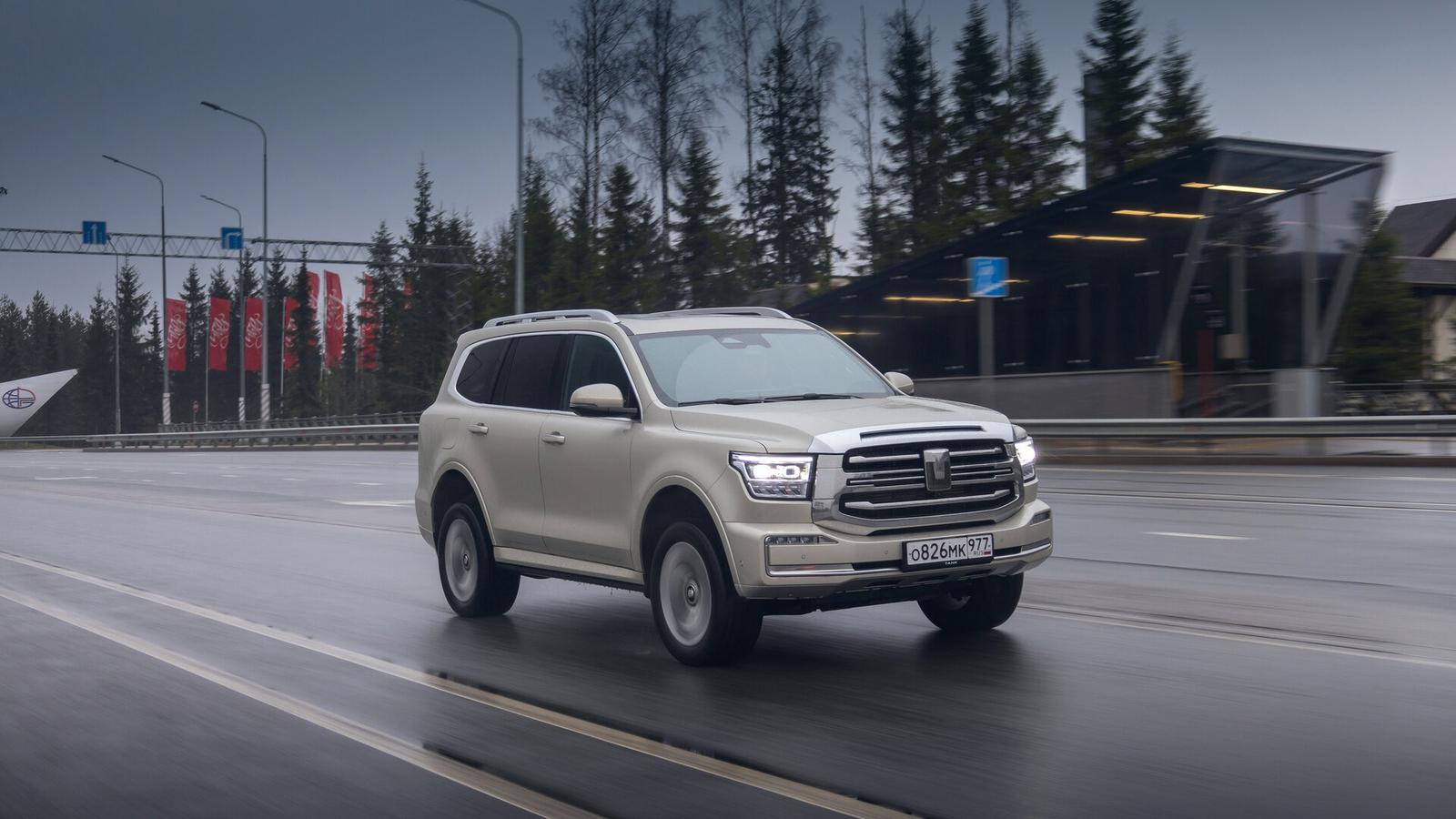
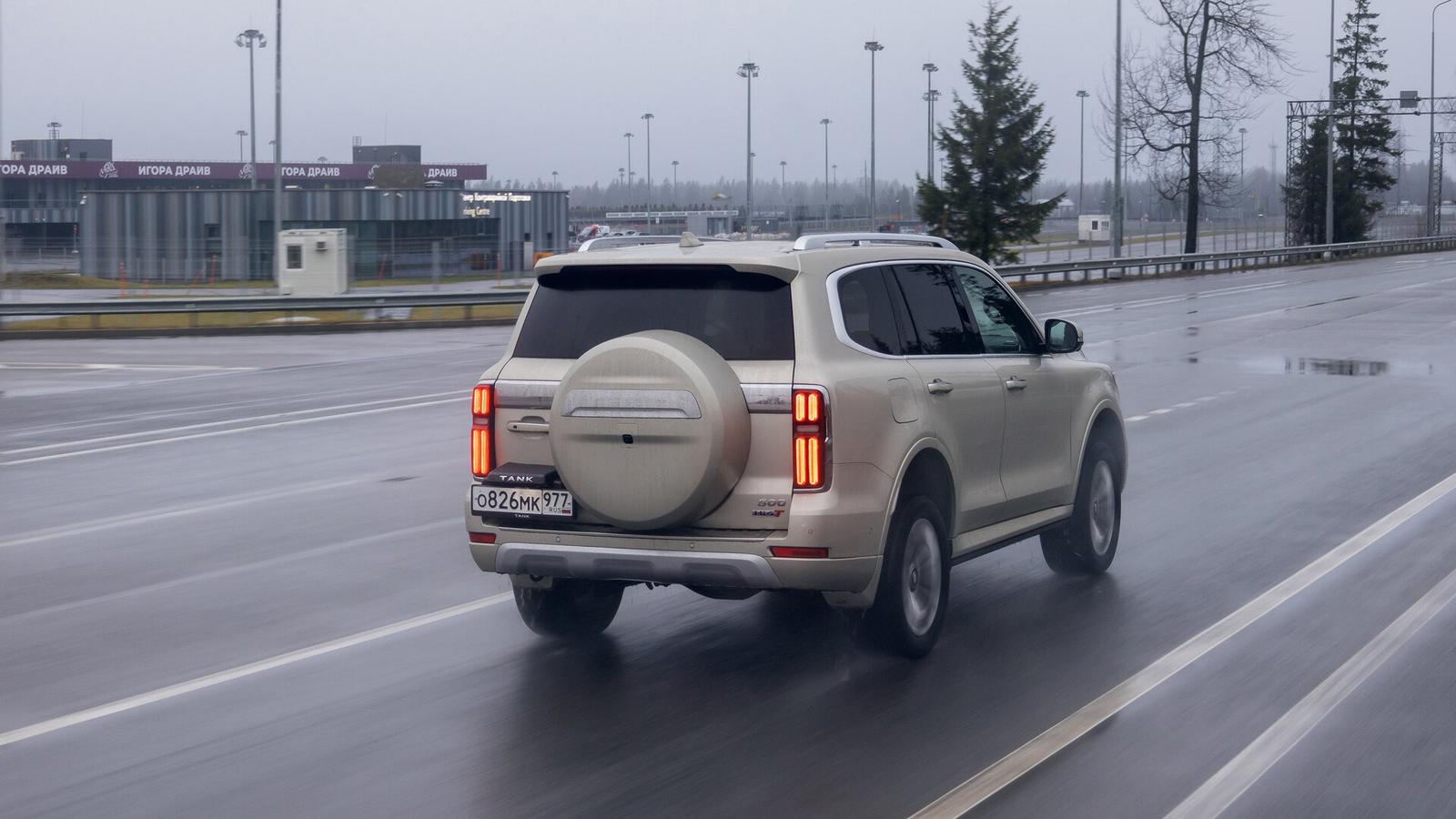
The dimensions of the Hi-Charge version are impressive even by segment standards. Including the spare wheel, the SUV is more than 5 meters long, its width and height are close to 2 meters, and its curb weight approaches 3 tons. At the same time, the battery is placed under the cargo floor, which made it necessary to abandon the classic lower mounting for the spare wheel. On city streets, and especially at charging stations, such a vehicle draws lively interest — a massive body-on-frame SUV with a cable plugged in still looks unusual even against the backdrop of premium electric cars.
The powertrain combines a 2.0-liter gasoline turbo-four producing 231 hp and an electric motor integrated into the transmission. Total output reaches 394 hp and 750 Nm, and the system is powered by a 37.1 kWh battery. The official electric-only range is claimed at 115 km, but in real urban driving without starting the internal combustion engine it comes to slightly less than 100 km, which still covers a typical daily route. Fast charging allows the battery to be replenished in about an hour, while from a regular household socket the process stretches to 7 hours.
Several modes are provided for controlling the powertrain. EV completely excludes the gasoline engine, HEV gives priority to electric drive, and the "Auto" mode actively uses the internal combustion engine to maintain a high battery charge level. The latter option is useful if you need to urgently restore charge on the move, but the trade-off is increased fuel consumption. When driving at 60–90 km/h, the battery really does recharge quickly, but average consumption easily climbs beyond 15 l/100 km, and the range drops to about 450 km.
For long trips, HEV mode is the better choice. With a full tank and a charged battery, the onboard electronics promise more than 900 km, although in reality the SUV consistently covers about 630 km. At the beginning of the trip, the Tank 500 Hi-Charge mainly runs on electric power, and the gasoline engine joins in only during active acceleration. As long as there is charge, fuel consumption can drop to 3.9 l/100 km; then the electronics hold the minimum battery level at about 15%, and the final average settles in the 11–12 l/100 km range.
The dynamics are confident in all modes for a vehicle of this format. Even on pure electric power, the SUV does not feel slow and calmly keeps up at slightly above the pace of city traffic. In hybrid modes, the nature of acceleration is almost independent of the charge level. The official 6.9 seconds to 100 km/h looks optimistic, but the car accelerates to its maximum 180 km/h without strain. At the same time, transitions between the powertrain's operating modes are almost imperceptible — a slight jolt is possible only at very low speeds.
On the move, the Tank 500 Hi-Charge surprises with its level of comfort. Sound insulation with acoustic glazing, straight-line stability, predictable steering, and the absence of sensitivity to ruts make long journeys easy. The body-on-frame design and weight make themselves felt over small bumps, but it is practically impossible to bottom out the suspension. The brakes could use more effectiveness, but overall the vehicle's manners match its class and purpose.
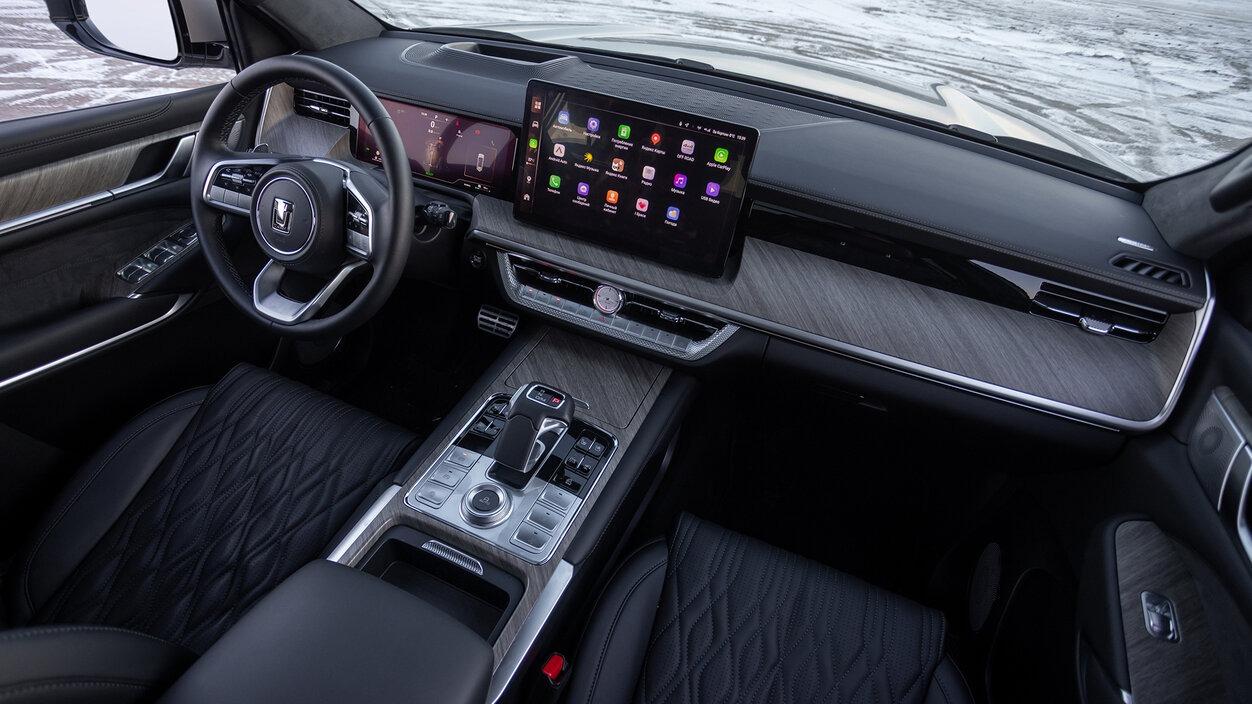
The interior emphasizes the model's status. The driver gets a head-up display, a comfortable steering wheel, and a seat with heating, ventilation, and eight massage modes. In the second row there is even more space and nearly the maximum set of options, including a separate climate zone, massage, a control tablet, and power outlets. The compromises appear in the trunk: because of the battery, volume has been reduced to 445 liters, the floor has become higher, and some practical solutions have disappeared. On the other hand, the 220 V outlet has been retained and has become more powerful — 2.2 kW.
With all this, the hybrid Tank 500 Hi-Charge turned out to be cheaper than the Premium version with the V6, while offering almost identical equipment and noticeably lower fuel consumption. This makes it an interesting alternative to the classic gasoline version for those who drive mostly in the city but are not ready to give up the format of a large body-on-frame SUV.
Read more materials:
- AvtoVAZ officially explained which gasoline should be used in Lada
- Moskvich announced prices for the 2026 model year Moskvich 6 sedan
- Tank raised prices across the entire model range in Russia: Tank 500, 700, and 400 became more expensive
Комментарии