Imagine an everyday scene: a person walks into a store to buy bolts and sees a display where hundreds of products made from the same blueprint are lying on one shelf — with the same thread shape and head type. They differ only in length and strength grade. The automotive industry works on a similar principle, except that instead of fasteners, it deals with full-fledged cars. When groups like Volkswagen or Toyota release dozens of models based on one platform, they rely on the same logic of standardization. This is not about cutting costs at the expense of quality, but about a well-thought-out engineering strategy. At the same time, the common idea of a platform as a "frame" or "floor" is far from the truth: in fact, it is an architectural foundation that sets the direction of a car's development for the next 10–15 years.
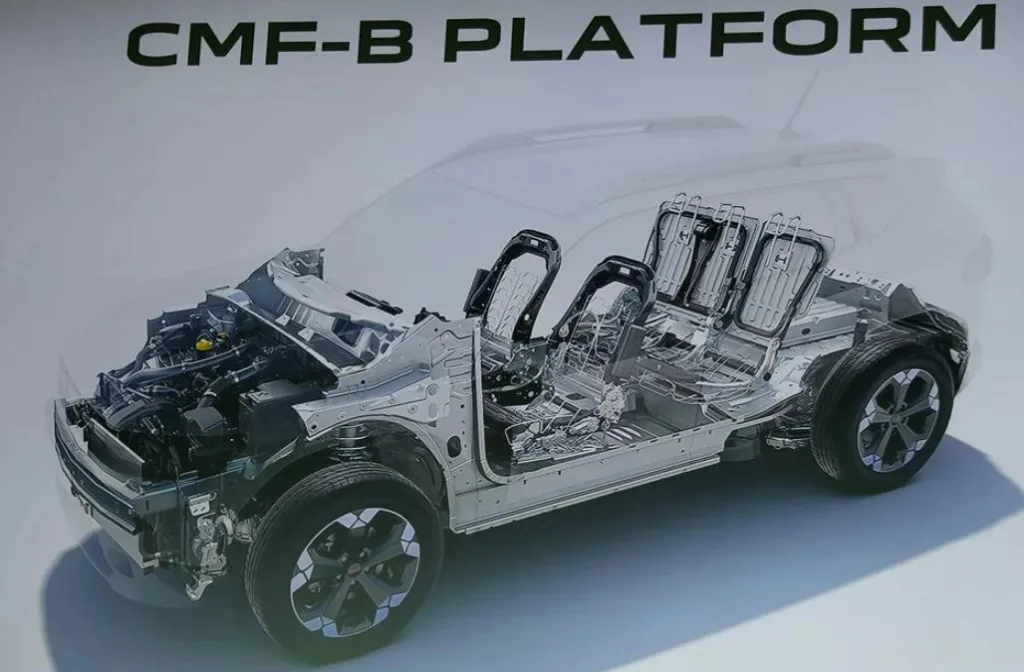
If you turn to manufacturers' technical documentation, it becomes clear that a platform means a standardized set of key elements. It includes the body's load-bearing structure, mounting points for the suspension, engine, steering mechanism, and even seat frames. It resembles a LEGO construction set, where there is a basic plane onto which different "blocks" can be installed — power units, body variations, and electronic solutions. Even at the design stage, the manufacturer calculates permissible loads and component placement angles and builds in potential for further modifications. A telling example is the Renault B0 platform, on which the Logan, Duster, and Largus were created: different bodies were added to a common base, while structural elements were reinforced with off-road use in mind.
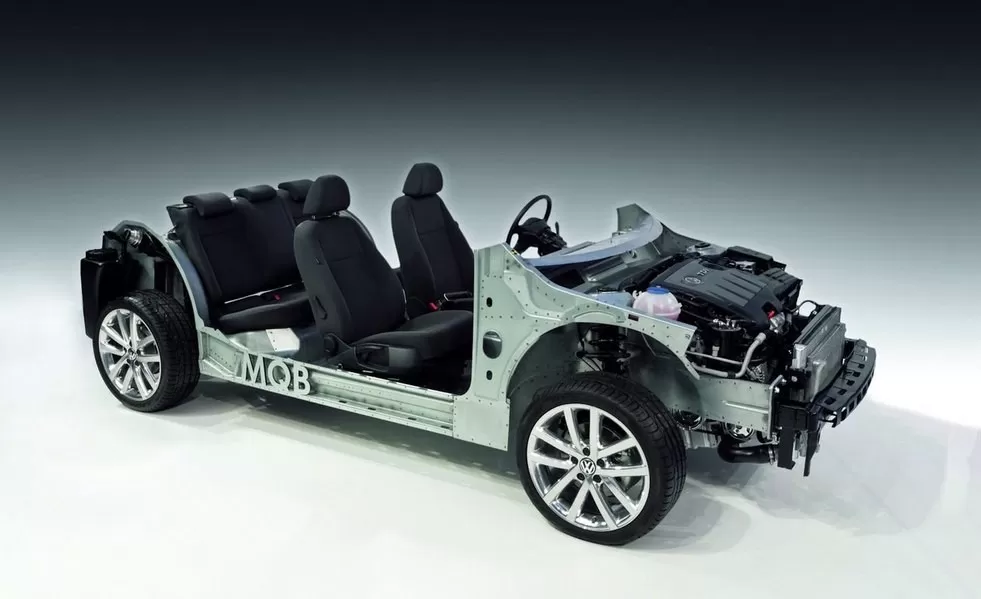
The economic effect of this approach is especially clear in the example of Volkswagen Group with its modular MQB architecture (Modularer Querbaukasten). About 8 billion dollars were spent on its development, but the investment quickly paid off: since 2012, more than 32 million vehicles have been produced on MQB — from the compact Polo to the large Teramont. The secret lies in standardization. For example, all engines on this platform are installed at a uniform inclination angle of 12 degrees and have standardized mountings. Thanks to this, the variety of engines and gearboxes was almost halved, while the number of heating and air-conditioning system variants fell from 102 to 28.
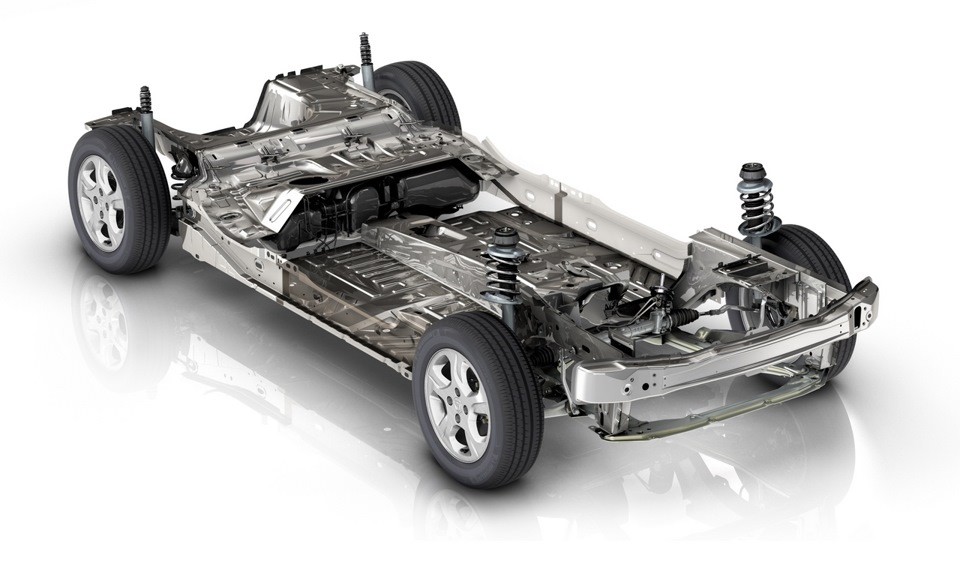
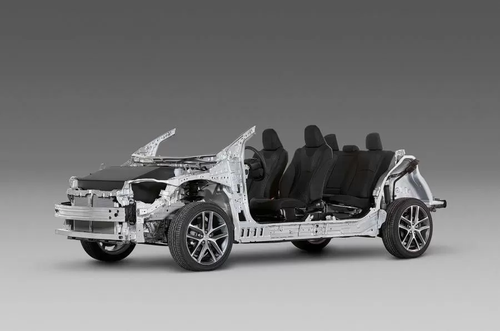
For Toyota, the transition to the TNGA architecture (Toyota New Global Architecture) also became a turning point. If the company had previously used about a hundred different platforms, now their number has been reduced to several modular solutions — TNGA-B, C, K, F, and L. This made it possible to bring parts standardization to 80% and cut production costs by 20%. It was on the basis of TNGA that new generations of the Prius and Corolla appeared, as well as the Lexus LS — cars that at first glance are difficult to classify as one technical family.
Creating different models on one platform is possible thanks to the principle of "flexible parameters." The architecture defines fixed rigidity points — for example, the distance to the pedal assembly or the position of the front axle mounting — but allows variations in wheelbase, track width, and body length. Thus, the compact Volkswagen Polo is produced on the MQB A0 platform, while MQB C serves as the basis for the larger Tiguan. Despite the differences in dimensions, they use similar suspension units, electronic modules, and even certain interior elements.
In its logic, this resembles a food processor: a single base to which you can attach a meat grinder, blender, or juicer. In the same way, automakers combine different body types, powertrains — gasoline, diesel, hybrid, electric — and drive layouts on a common platform.
The advantages of this approach are tangible both for the companies themselves and for car owners. Manufacturers save time and resources: creating a new model "from scratch" requires years of work and billions in investment, whereas a platform speeds up the launch of new products and reduces costs. For example, during the transition from the Golf VII to the Golf VIII, the Volkswagen plant in Wolfsburg managed to retain up to 80% of the existing equipment in the body shop.
Consumers also benefit. First of all, this means parts availability: if a component is used on millions of cars, it is easier to find and cheaper to buy. In addition, reliability increases because engineers refine the same architecture for years, eliminating most early shortcomings. For example, the Dynamic Force engine series developed for the TNGA platform was first tested on the Lexus NX and only later appeared on mass-market Toyota models.
However, deep standardization also has vulnerable sides. An error in a shared component can lead to large-scale recall campaigns affecting several models at once. In February 2024, Toyota was forced to recall hundreds of thousands of Tundra, Sequoia, and Lexus LX vehicles because of faults in the 10-speed automatic transmission installed on all of these cars.
Sometimes the drive for standardization goes too far, when nearly identical cars with different badges are brought to market. A typical example is the second-generation Mitsubishi ASX, which is effectively a copy of the Renault Captur. There was also an even more curious case in history: the Aston Martin Cygnet turned out to be a rebadged version of the Toyota iQ. Buyers expected a premium product, but received the technical foundation of a small city car.
Thus, an automotive platform is not a "trolley" at all, but the result of a complex engineering balance between standardization and diversity. It makes it possible to create dozens of models with their own character while relying on a proven technical base. Modern cars are the outcome of advanced technology and well-planned logistics.
So when you encounter a new Volkswagen Golf and Skoda Octavia on the road, it is worth remembering: these cars have much more in common beneath the bodywork than it may seem. The important thing is that such kinship should not turn into uniformity devoid of individuality.
Read more materials on the topic:
- Two Characters in One Engine: The VTEC Phenomenon
- Why BMW Is Not Burying Coupes and Large Engines
- Why ABS Brakes Worse in Winter Than It Seems
Комментарии